AI-Driven Warehouse Footprint Planning for Growing 3PLs
Growing 3PLs often don't realise they're out of warehouse capacity until service levels slip and lease renegotiation becomes urgent. This article looks at how AI-driven throughput and utilisation forecasting gives operators the visibility to decide — ahead of time — when to expand, consolidate, or renegotiate.
What is warehouse footprint and lease capacity planning?
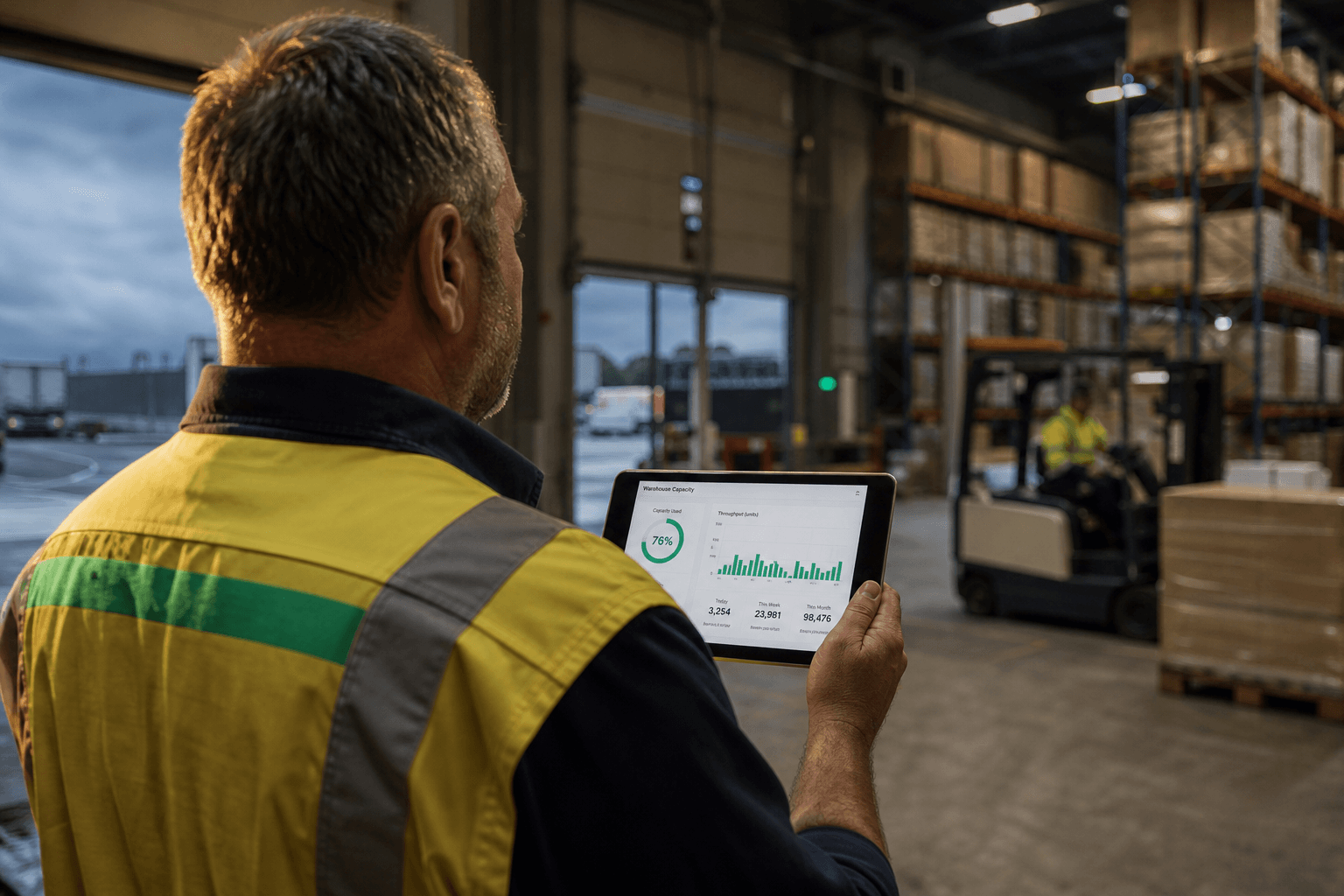
Warehouse footprint and lease capacity planning is the process of forecasting how much storage, throughput, and labour capacity a distribution network will need over a given period, then matching that forecast against existing lease terms, facility size, and layout. For growing 3PLs, this means deciding whether to expand into new space, consolidate underused sites, or renegotiate lease terms — ideally before a throughput plateau forces the decision.
Most mid-market operators don't do this proactively. They react. A site hits capacity, pallet positions run out, dock congestion starts delaying trucks, and only then does someone ask whether the lease should have been renegotiated six months earlier. By that point the options are limited and expensive.
Why do growing 3PLs hit throughput plateaus?
Throughput plateaus happen when storage, dock, or labour capacity caps out faster than demand forecasting anticipated, and nobody flagged the gap until service levels slipped. In our experience with mid-market logistics operators, this is almost always a visibility problem, not a demand problem — the warehouse was growing, but nobody was watching the right numbers.
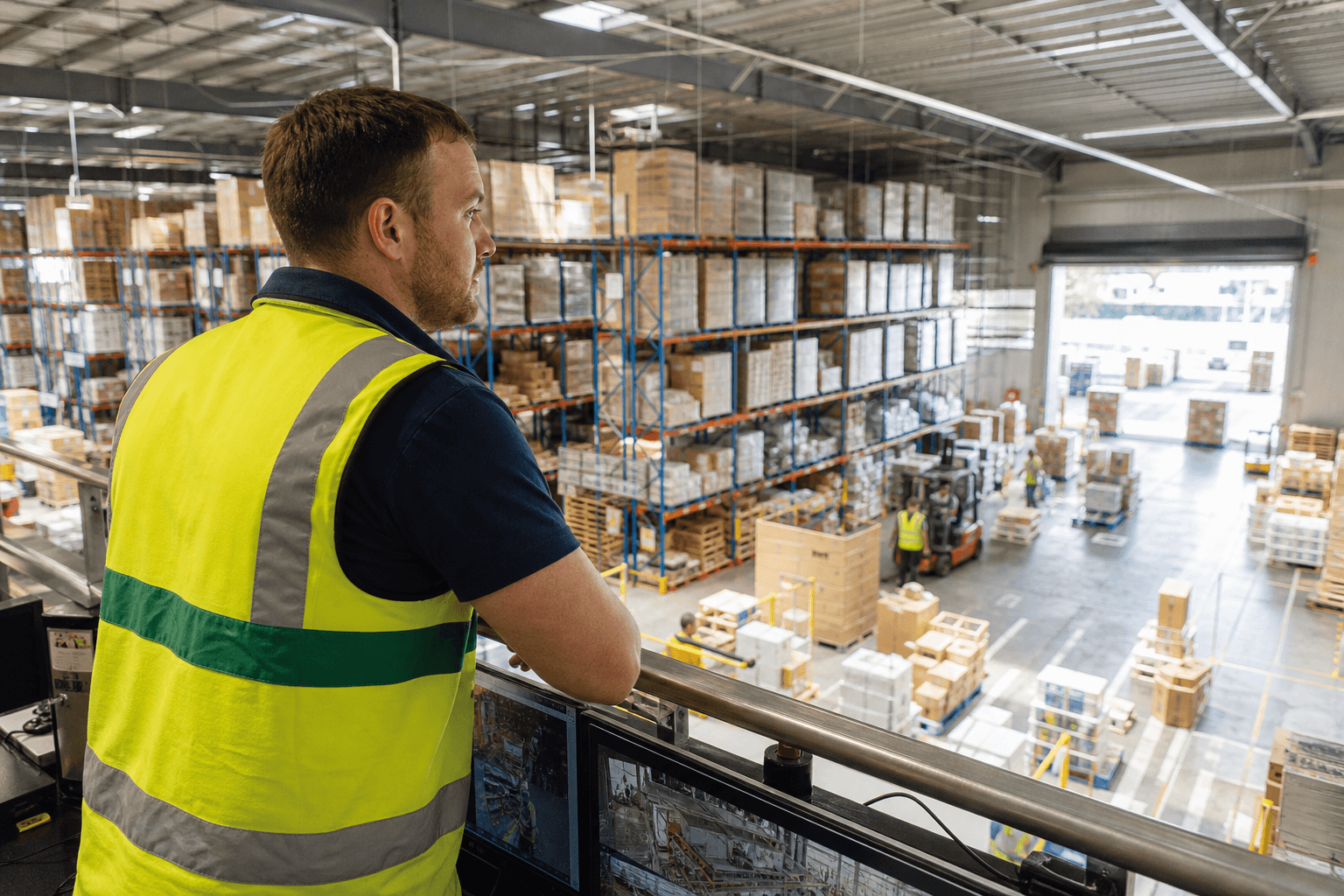
The root cause is usually a legacy warehouse management system (WMS) that wasn't built for forward-looking analysis. As we've covered in our piece on legacy TMS and WMS platforms, many systems in use across Australian 3PLs and distribution centres lack real-time visibility, reporting, or analytics capability. They can tell you what happened last week. They can't tell you that you'll be out of pallet positions in four months if current order growth continues.
That's a critical gap for operators who are scaling, bidding for larger contracts, or preparing for a merger or acquisition. Without forward visibility, expansion and lease decisions get made on gut feel — and gut feel doesn't hold up well in due diligence.
How does AI improve throughput and utilisation forecasting?
AI improves throughput and utilisation forecasting by applying predictive modelling to historical operational data — order volumes, pallet movements, dock turnaround times, labour hours — to project capacity needs months ahead, rather than relying on static spreadsheets or annual budget reviews.
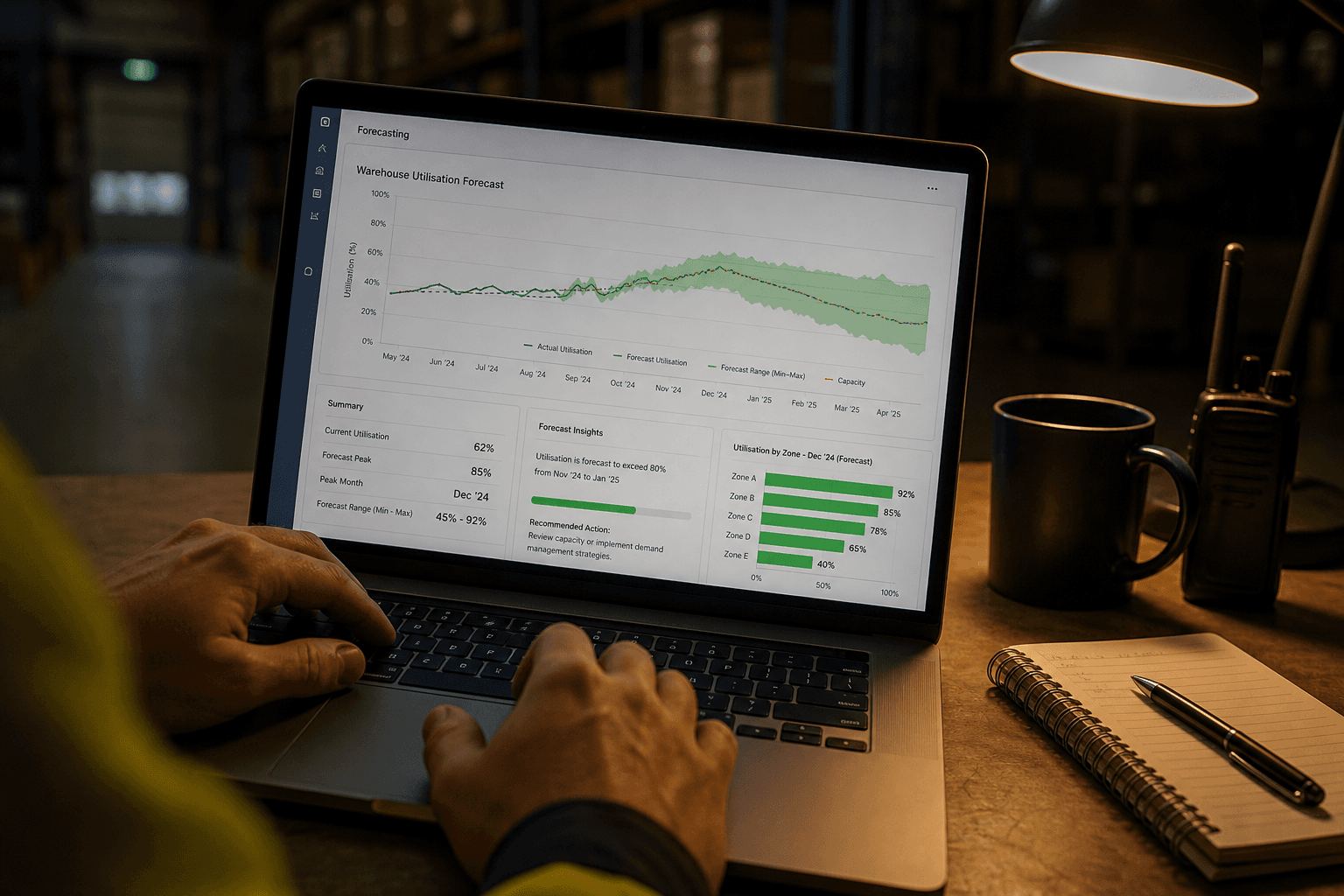
This is a natural extension of what's already proven out in logistics: AI layered on top of existing WMS and TMS data to build demand forecasting and operational prediction models, without needing to rip out and replace the underlying system. The same principle applies to footprint planning. If your WMS already captures pallet-in, pallet-out, and dock utilisation data, that data can be used to model where and when capacity constraints will bite — not just in the warehouse, but across a multi-site network.
For operators weighing up lease renewals, this matters because lease negotiations typically happen on a fixed timeline set by the landlord, not by your growth curve. Knowing six to twelve months out whether you'll need more square metres, less, or the same, changes your negotiating position entirely.
When should you expand, consolidate, or renegotiate a lease?
The right time to act is when forecasted utilisation trends — not current utilisation — signal a gap between capacity and demand, typically well before a lease break clause or renewal date. Waiting for the plateau to show up in daily operations means you're negotiating from a position of urgency, not strategy.
Common triggers worth watching for include:
- Sustained order growth that's outpacing current storage density, even if today's utilisation looks fine
- A lease approaching its break clause or expiry within 12–18 months
- New customer contracts requiring dedicated space or specific handling capability
- M&A activity, where an acquirer needs a clear view of the target's real facility capacity, not just its lease schedule
- Persistent dock or labour bottlenecks that look like a process problem but are actually a space problem
Reactive vs proactive footprint planning: what's the difference?
The table below compares the two approaches qualitatively. We haven't included invented percentages or dollar figures here — the point is the structural difference in how decisions get made, not a specific ROI claim.
| Factor | Reactive planning | Proactive, forecast-led planning |
|---|---|---|
| Trigger for action | Throughput plateau or service failure | Forecasted capacity gap, identified in advance |
| Lease negotiation position | Urgent, limited options | Planned, more leverage with landlord |
| Data used | Current-month snapshots, manual reports | Historical trend data modelled forward |
| M&A due diligence readiness | Capacity assumptions often unverified | Capacity and utilisation data defensible and documented |
| Decision timeframe | Weeks | Months to quarters |
How does this fit with legacy WMS and TMS systems?
Footprint and capacity forecasting doesn't require replacing your existing WMS or TMS. Most mid-market operators already have the raw operational data needed — it's locked inside a platform that wasn't designed to surface it in a forward-looking way, and that's a solvable problem.
This is the same starting point we use across other parts of the business — route optimisation works the same way, applying predictive modelling on top of existing dispatch and fleet data rather than forcing a system replacement. The same logic extends to document-heavy processes too, where document intelligence can extract structured data from BOLs, manifests, and lease paperwork that would otherwise sit in filing cabinets or inboxes.
What about emissions and lease decisions?
Facility decisions increasingly intersect with climate disclosure obligations. Scope 2 emissions from warehouse electricity use, and Scope 3 emissions tied to leased assets, are both relevant under AASB S2 reporting requirements for larger entities. If you're consolidating or expanding sites, it's worth factoring emissions reporting obligations into the decision early rather than retrofitting a carbon accounting process afterwards. Our emissions reporting work covers this in more depth for operators approaching AASB S2 deadlines.
Where do you start if you don't have this visibility today?
The starting point is an honest audit of what data your current systems already capture, and where the gaps are between that data and a genuine forward-looking capacity model. This is exactly what our AI Readiness Assessment is built to do — a structured review of your existing WMS, TMS, and operational data, with a clear view of what's achievable without a system overhaul.
For growth-focused 3PLs weighing expansion, consolidation, or an upcoming lease renewal, that visibility is the difference between negotiating on your terms and negotiating under pressure. You can read more operational guidance like this on our insights page.
If you're approaching a lease decision, a growth plateau, or an M&A process and want a clearer picture of your real facility capacity before you commit to anything, get in touch — we can talk through whether an AI Readiness Assessment makes sense for where you're at.
Zero Footprint
The Zero Footprint team — AI modernisation for Australian logistics.