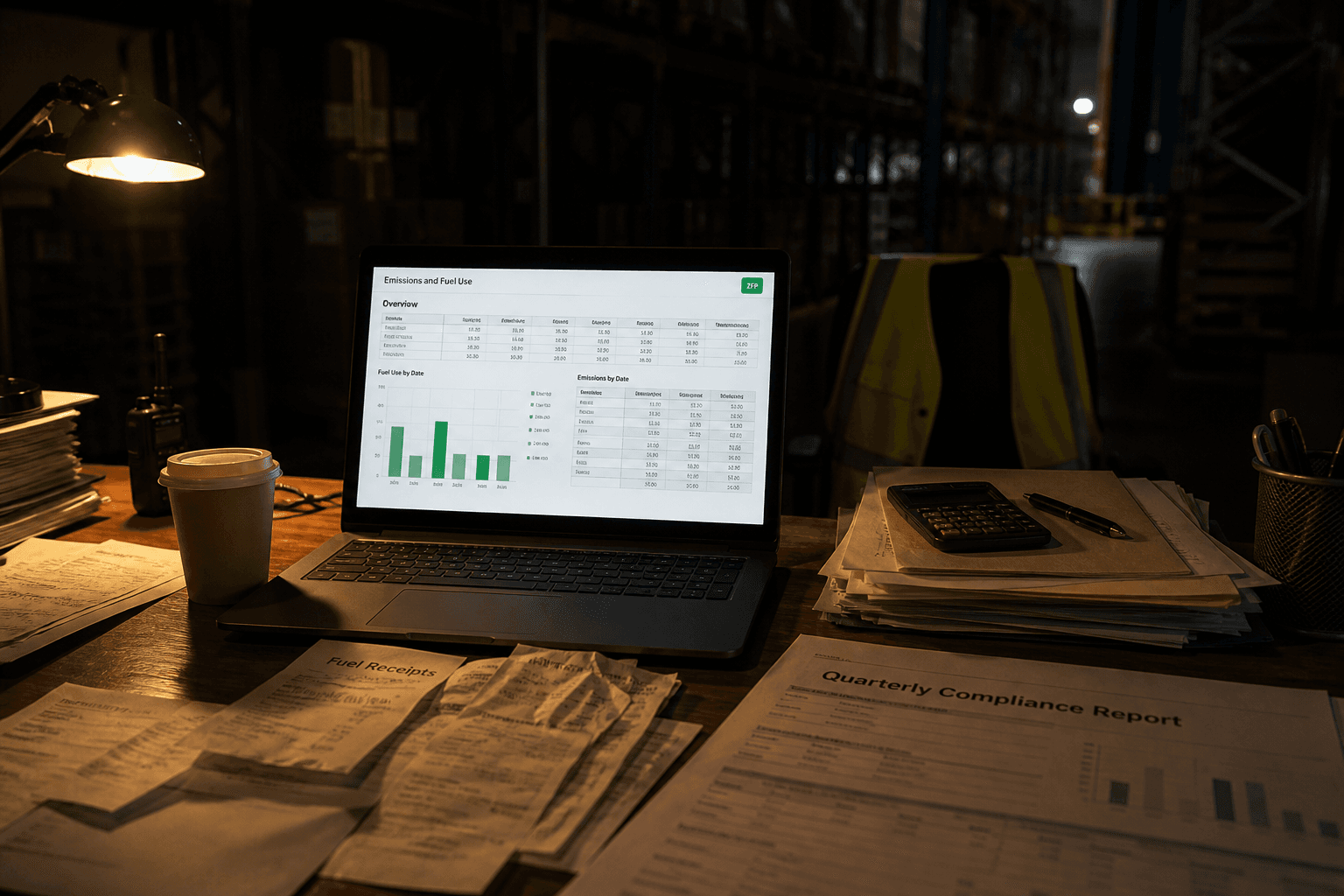
Logistics Emissions Reporting Software: Australian Compliance Guide
A comprehensive guide to emissions reporting software for Australian logistics operations. Covers NGER compliance, AASB S2 requirements, and implementation considerations for freight and warehousing businesses.

Logistics Emissions Reporting Software: Australian Compliance Guide
Logistics emissions reporting software automates carbon accounting for transport and warehousing operations. These platforms capture fuel consumption, vehicle movements, and facility energy use to generate NGER-compliant reports and meet AASB S2 disclosure requirements.
Australian logistics operators face increasing pressure to measure and report their carbon footprint. The National Greenhouse and Energy Reporting (NGER) scheme requires companies above certain thresholds to submit annual emissions data, while the upcoming AASB S2 standard will mandate climate-related disclosures for many mid-market operators.
What is Logistics Emissions Reporting Software?
Logistics emissions reporting software is a digital platform that automatically captures, calculates, and reports greenhouse gas emissions across freight, warehousing, and distribution operations. The software integrates with existing transport management systems (TMS), warehouse management systems (WMS), and telematics to pull operational data and convert it into emissions metrics.
These platforms typically handle three emission scopes: Scope 1 (direct emissions from owned vehicles and facilities), Scope 2 (purchased electricity), and Scope 3 (third-party transport, supplier activities, and customer logistics).
Key Features for Australian Logistics Operations
NGER Compliance Reporting
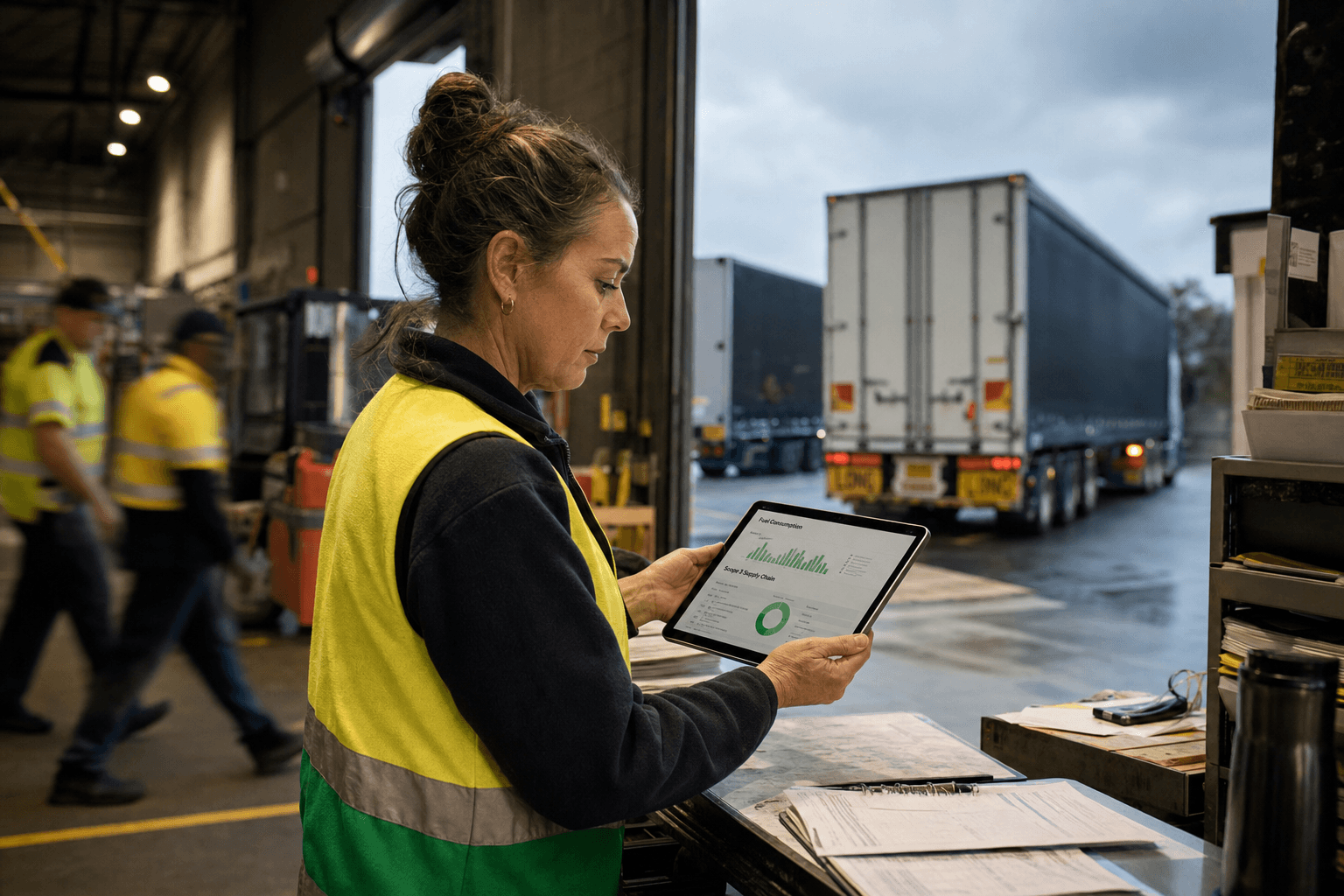
NGER reporting logistics requires specific data formats and calculation methodologies. Compliant software must use Australian government emission factors, handle the Clean Energy Regulator's reporting templates, and maintain audit trails for data verification.
The software should automatically calculate emissions using the National Greenhouse Accounts factors, which are updated annually. This includes different factors for diesel, petrol, natural gas, and electricity by state grid.
Scope 3 Supply Chain Tracking
Scope 3 emissions logistics represents the largest challenge for most operators. These indirect emissions from suppliers, subcontractors, and customer activities often account for 70-90% of total logistics emissions.
Effective platforms integrate with supplier systems through EDI connections or API links to capture actual transport data rather than relying on estimates. This includes tracking subcontractor movements, intermodal transfers, and last-mile delivery emissions.
Real-Time Data Integration
Modern emissions software connects directly to existing operational systems. Key integrations include:
| System Type | Data Captured | Emission Calculation |
|---|---|---|
| Fleet Telematics | Fuel consumption, distance, idle time | Direct Scope 1 emissions |
| TMS | Route plans, load weights, vehicle assignments | Transport efficiency metrics |
| WMS | Energy usage, throughput, storage duration | Facility Scope 2 emissions |
| Fuel Cards | Actual fuel purchases by vehicle | Verified consumption data |
How Does Emissions Reporting Software Work?
The software operates through automated data collection and calculation workflows. Vehicle telematics systems feed real-time fuel consumption and distance data. Warehouse sensors capture energy usage patterns. Financial systems provide fuel purchase records for verification.
Calculation engines apply appropriate emission factors to convert operational data into CO2 equivalent metrics. The platform maintains detailed audit trails showing how each emission figure was derived, essential for regulatory compliance and third-party verification.
Reporting modules generate standardised outputs for NGER submissions, sustainability reports, and customer carbon declarations. Many platforms also provide benchmarking tools to compare performance against industry averages.
Australian Regulatory Requirements
NGER Scheme Thresholds
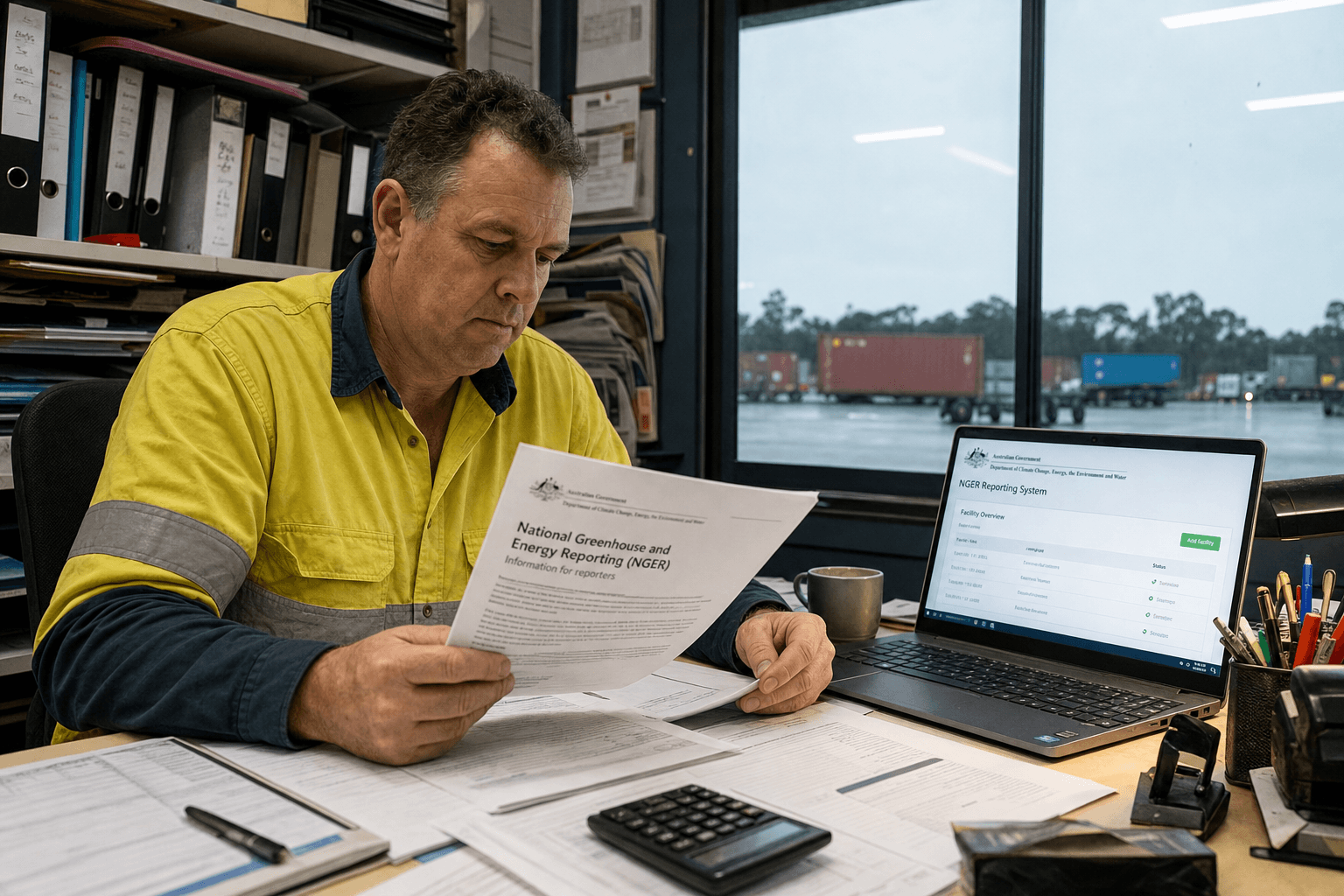
The NGER reporting logistics framework applies to companies that exceed specific activity thresholds. For transport operations, this typically means operators with significant fleet emissions or large warehouse facilities consuming substantial electricity.
Companies must register if they emit more than 50,000 tonnes CO2-e annually or consume more than 200 terajoules of energy. However, voluntary reporting below these thresholds is increasingly common as customers demand carbon transparency.
AASB S2 Climate Disclosures
AASB S2 compliance logistics will require many mid-market operators to disclose climate-related financial risks and emissions data. Unlike NGER's operational focus, AASB S2 emphasises financial materiality and forward-looking risk assessment.
The standard requires disclosure of Scope 1, 2, and material Scope 3 emissions. For logistics operators, this typically includes all transport activities, whether performed by owned assets or third-party providers.
Implementation Considerations for Australian Logistics
Data Quality and System Integration
Successful implementation depends on clean, consistent data flows from operational systems. Legacy TMS and WMS platforms may require middleware or API development to enable automated data extraction.
Many Australian operators still rely on manual dispatch and paper-based documentation. These businesses need document intelligence capabilities to extract emissions data from bills of lading, delivery dockets, and fuel receipts.
Supplier Engagement
Scope 3 supply chain reporting requires active collaboration with transport providers, freight forwarders, and other logistics partners. Australian regulations don't yet mandate upstream emissions disclosure, so engagement relies on commercial relationships and customer requirements.
Leading operators are building supplier portals that streamline emissions data collection. These platforms provide standardised templates and calculation tools to ensure consistent, auditable reporting across the supply chain.
Regional Considerations
Australia's logistics sector includes unique characteristics that impact emissions measurement:
- Long-distance interstate freight with varying state electricity grids
- Significant rail and intermodal transport requiring multi-modal calculations
- Regional and remote deliveries with different efficiency profiles
- Mining and resources logistics with specialised equipment and routes
Choosing the Right Platform
Effective emissions reporting software should integrate seamlessly with existing logistics operations rather than requiring wholesale system changes. Look for platforms that connect to your current TMS, WMS, and telematics through standard APIs.
Calculation accuracy is critical for regulatory compliance. Ensure the platform uses current Australian emission factors and handles the specific calculation methodologies required for NGER and AASB S2 reporting.
Audit trail capabilities are essential. The software should maintain detailed records showing how each emission figure was calculated, including source data, calculation methods, and any adjustments or estimates used.
Consider implementation complexity and ongoing support requirements. Many mid-market operators lack dedicated IT resources for complex software deployments. Look for platforms designed for logistics users rather than generic carbon accounting tools.
Getting Started with Emissions Reporting
Successful emissions reporting starts with understanding your current data landscape and regulatory obligations. Many operators benefit from an initial assessment to identify data gaps, system integration requirements, and compliance timelines.
The implementation typically begins with Scope 1 and 2 emissions from owned operations before expanding to cover Scope 3 supply chain activities. This phased approach allows teams to build competency while delivering early compliance value.
If you're exploring emissions reporting software for your logistics operation, understanding your specific requirements and regulatory timeline is the first step. Our emissions reporting service helps Australian logistics operators implement compliant carbon accounting systems that integrate with existing operations. Get in touch to discuss how we can help you meet NGER and AASB S2 requirements while building competitive advantage through carbon transparency.
Zero Footprint
The Zero Footprint team — AI modernisation for Australian logistics.