Multi-Agent AI Orchestration in Logistics: What's Real Today
Coordinated AI agents that pass information between dispatch, warehouse and customer service promise to close the gaps that single-purpose software can't reach. Here's what's genuinely achievable for Australian 3PLs today, and what's still hype.
What Is Multi-Agent AI Orchestration?
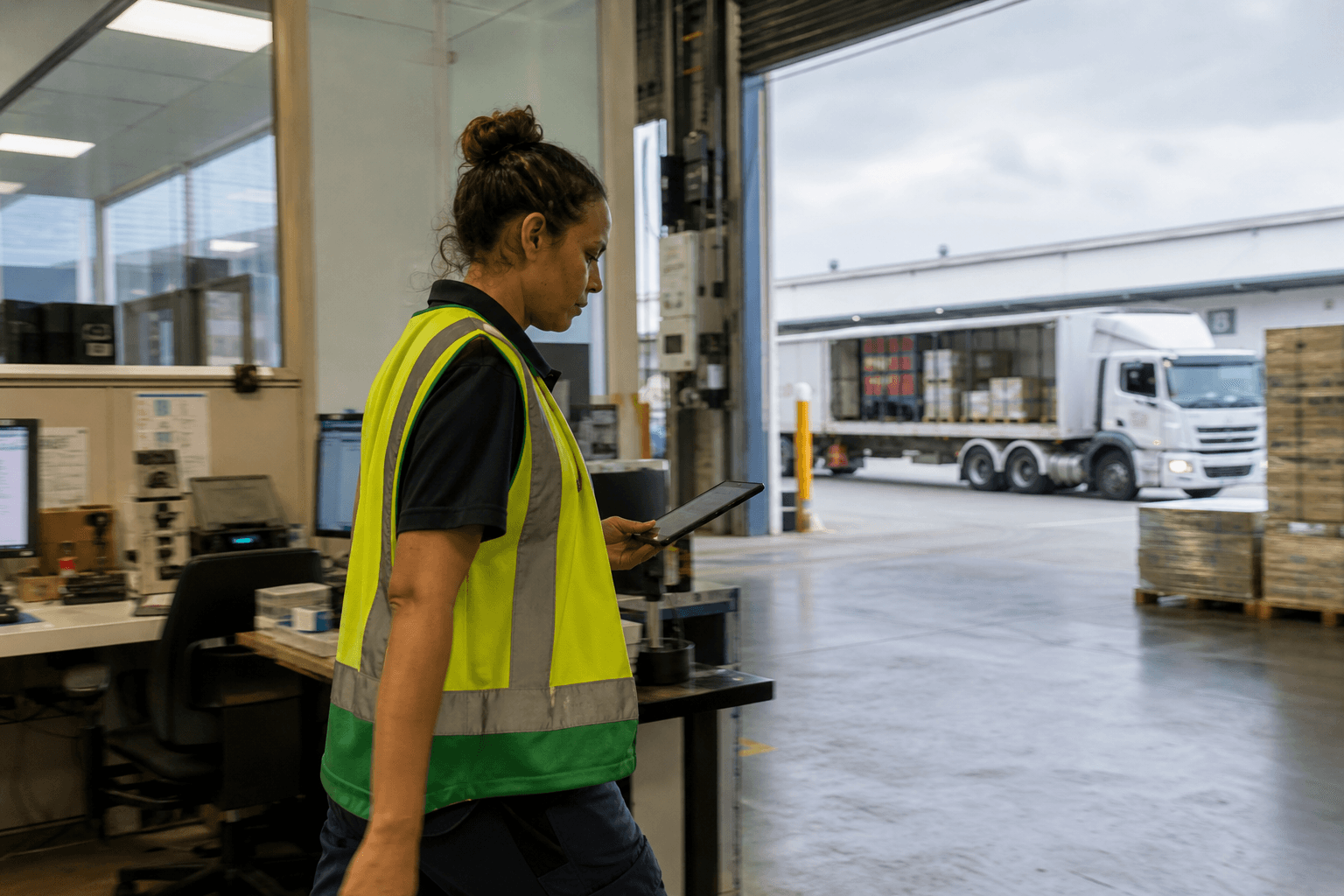
Multi-agent AI orchestration is an approach where several purpose-built AI agents — each handling a specific function like dispatch scheduling, warehouse task allocation, or customer enquiries — share data and hand off tasks to one another automatically, rather than operating as isolated tools. Instead of one chatbot answering customer questions in a vacuum, the customer service agent can query the dispatch agent for an ETA and the warehouse agent for stock status, then respond with a consistent answer.
For Australian 3PLs, this matters because the real friction in day-to-day operations isn't usually inside one department. It's in the gaps between them: dispatch doesn't know a warehouse pick is delayed, customer service doesn't know dispatch has already re-routed a job, and nobody updates the customer until they call in angry.
Why Do Dispatch, Warehouse and Customer Service Need to Talk to Each Other?
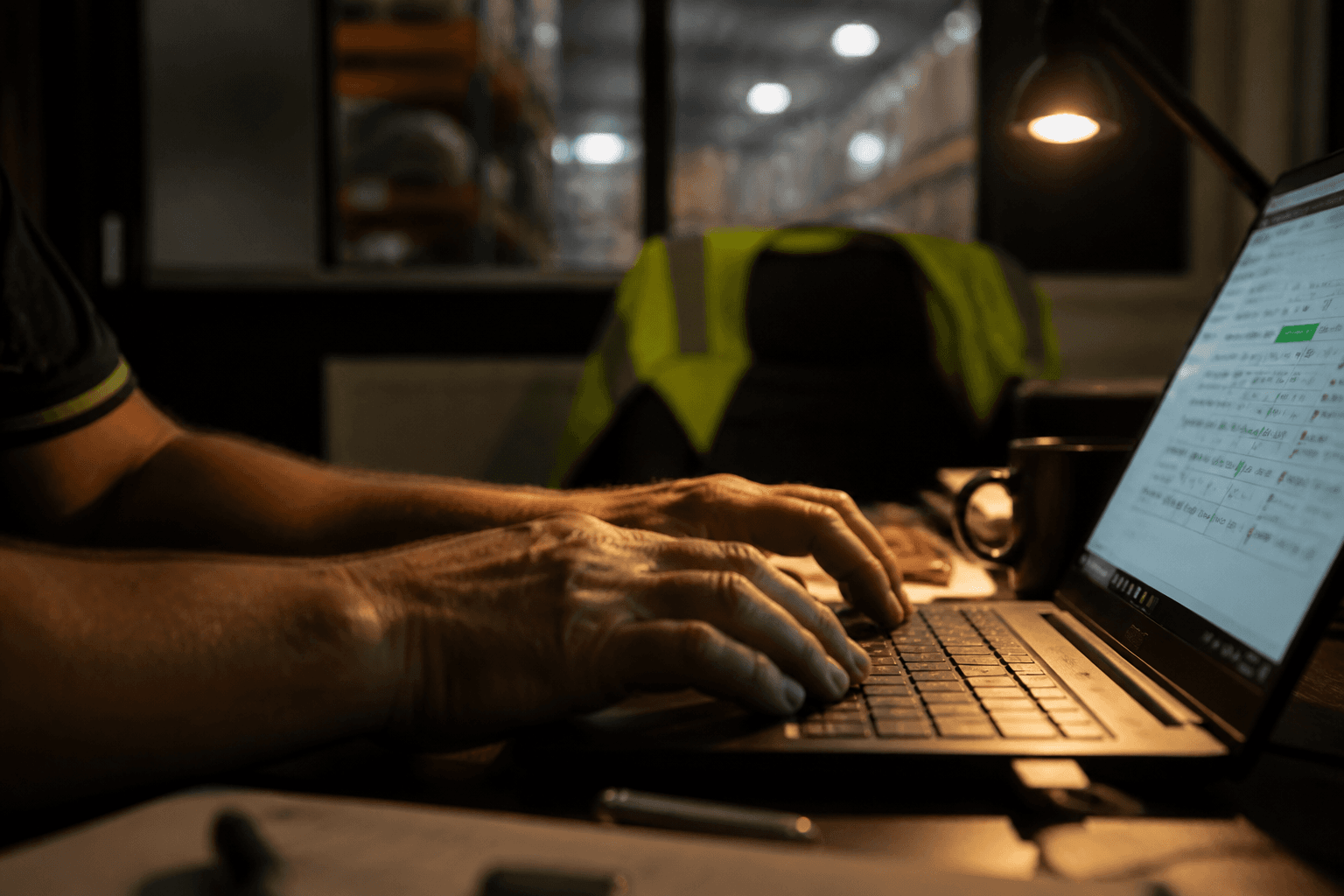
These three functions generate constant, interdependent information — booking changes, stock exceptions, delivery delays — but in most mid-market operators that information still moves through phone calls, email threads, and manual spreadsheet updates. A delay in the warehouse doesn't automatically reach the person fielding a customer call twenty minutes later.
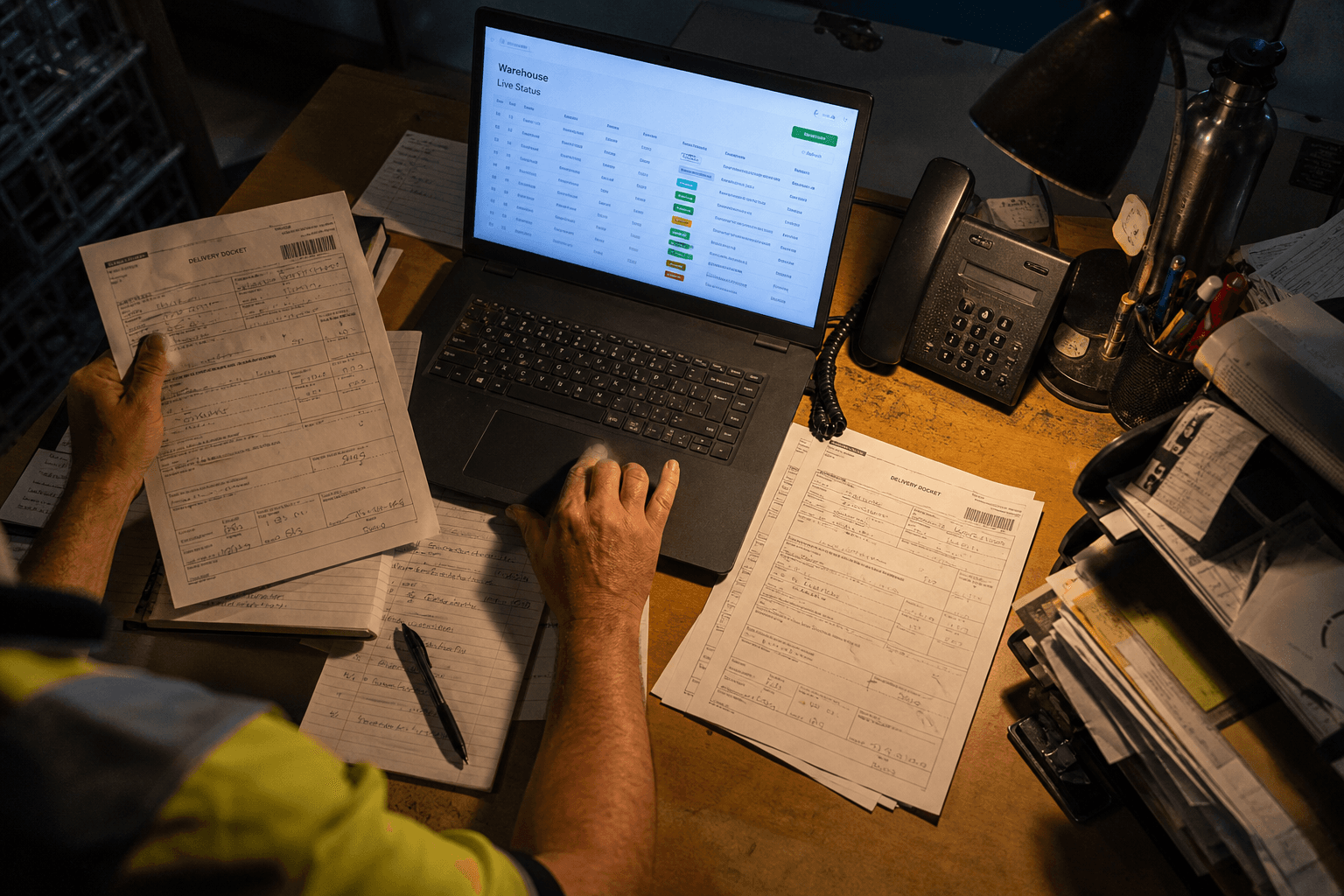
This is less about any single system being bad and more about the handoffs between systems being manual. Most legacy TMS and WMS platforms were never designed to talk to each other, let alone to a customer-facing tool. The cost shows up as duplicated effort, inconsistent answers to customers, and operations staff spending hours each day acting as the human glue between departments.
How Is This Different From Point-Solution Automation?
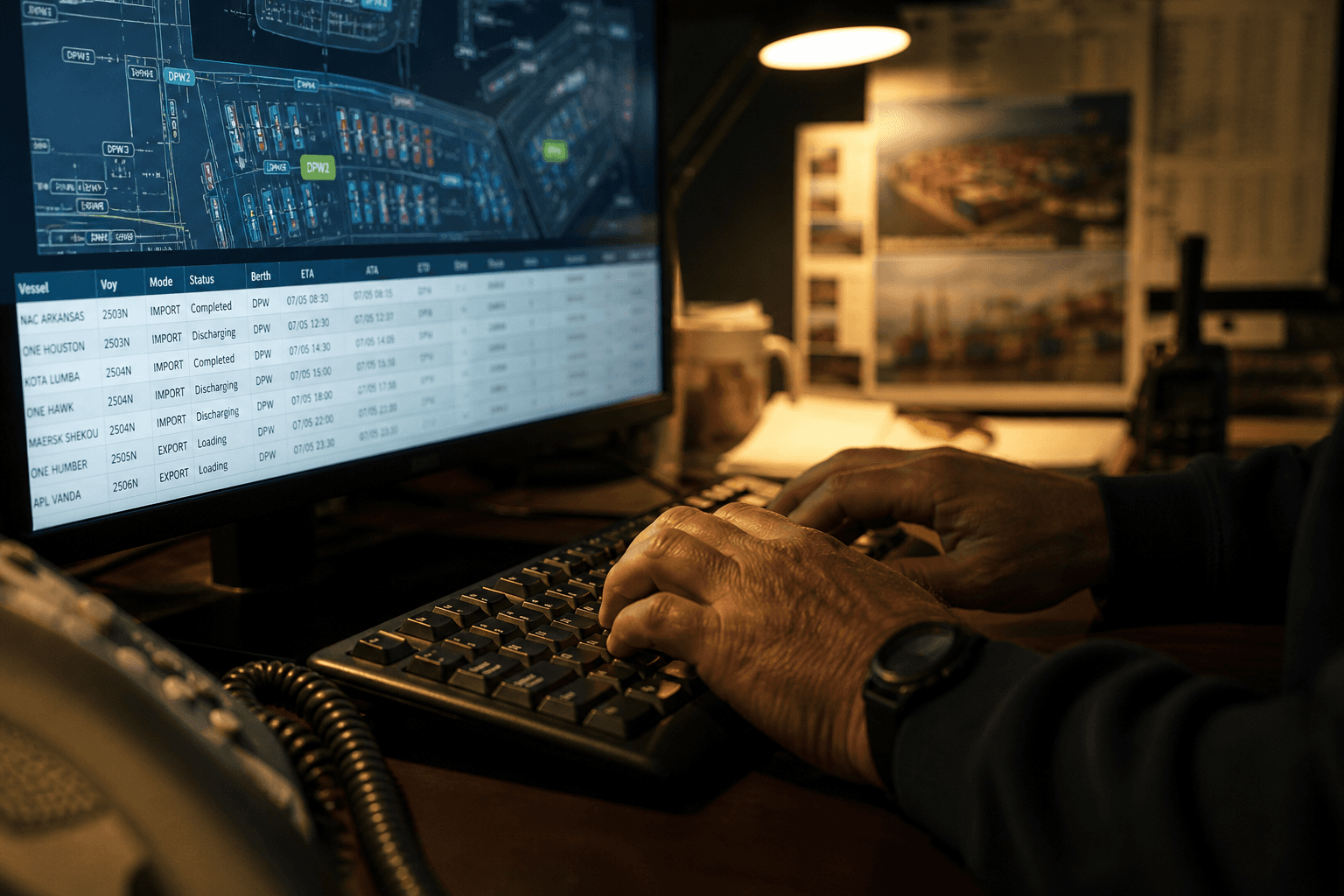
Point-solution automation is where you deploy a single tool to solve one problem — a route optimisation engine for dispatch, an AI-driven inventory system for the warehouse, a chatbot for customer queries. Each works well in isolation but doesn't share context with the others. Multi-agent orchestration is the layer that sits across these tools so information actually flows between them.
Much of the software available to Australian logistics operators today is built this way — strong within a single function, but not designed to reach across to transport, freight, or customer-facing workflows. A warehouse-focused platform can be genuinely good at inventory optimisation without ever being built to talk to a dispatch system or a customer service queue. That's not a flaw in the tool — it's simply outside its scope. Industry bodies like the Australian Logistics Council play a useful role in setting standards and advocacy, but they don't provide operational AI tooling either. The orchestration gap — getting these functions to coordinate — is still largely unaddressed in the market, which is exactly why it's worth separating the hype from what's achievable now.
What's Realistic Today vs What's Still Hype?
Realistically, coordinated AI agents can today reliably automate structured handoffs: flagging a delayed pick to dispatch, updating an ETA when a route changes, or surfacing a consistent status to a customer service rep without them having to open three systems. These are rules-based, data-driven workflows that modern integration and AI tooling can genuinely support.
What's still hype is the idea of fully autonomous, end-to-end decision-making across an entire operation with no human oversight. Agents coordinating complex exception handling — a damaged pallet, a disputed invoice, a compliance query — still need a person to make the final call. The technology is mature enough to remove the manual busywork of passing information between teams; it's not mature enough, nor should it be trusted, to replace operational judgement entirely.
A Practical Example: A Delayed Shipment
Consider a pallet that's picked late because of a warehouse exception. In a siloed setup, the warehouse system logs the delay, but dispatch only finds out when the driver calls in, and customer service only finds out when the customer calls to ask where their delivery is. Each conversation starts from scratch.
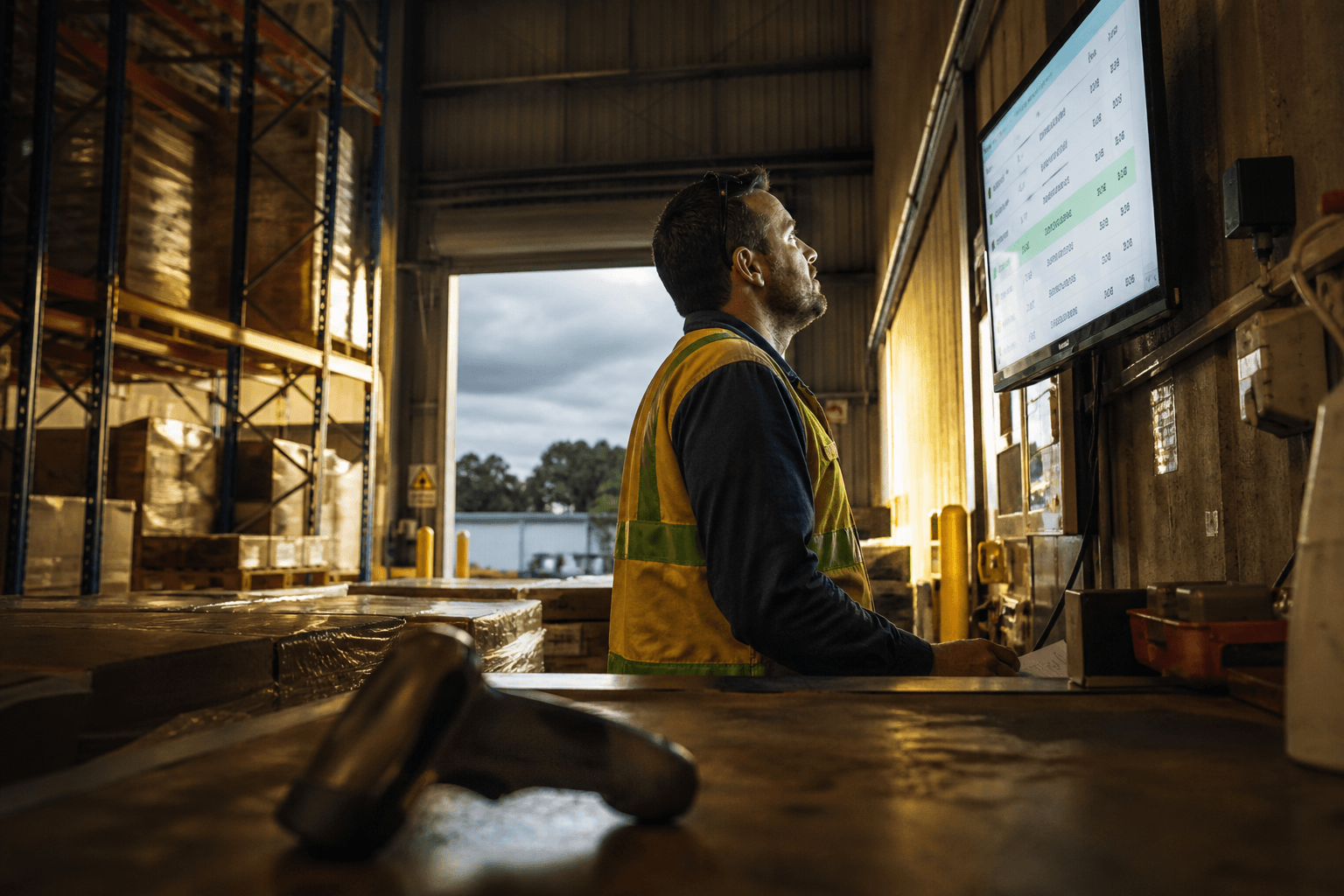
In a coordinated setup, the warehouse agent flags the delay the moment it's logged. The dispatch agent recalculates the ETA and adjusts the run sheet. The customer service agent has the updated ETA available before the customer even calls — or can trigger a proactive notification. No single piece of technology changed; what changed is that the information moved automatically between functions instead of through a person relaying it manually.
Coordinated Agents vs Single-Purpose Tools
| Dimension | Single-purpose automation | Coordinated multi-agent approach |
|---|---|---|
| Scope | One function (e.g. warehouse or dispatch only) | Spans dispatch, warehouse, customer service |
| Data visibility | Siloed to that system | Shared context across functions |
| Manual handoffs | Still required between teams | Reduced, but not eliminated |
| Exception handling | Human-driven | AI surfaces the exception; human decides |
| Implementation complexity | Lower | Higher — requires integration planning |
| Maturity in market (AU, 2025) | Established | Emerging, early-stage |
Where Should Australian 3PLs Start?
Most operators don't need to build a fully orchestrated, cross-functional AI system on day one — and attempting that without groundwork is a common way AI projects stall. The sensible starting point is understanding where your current handoffs break down, what data actually exists in each system, and which single workflow would deliver the most value if automated first.
That's typically dispatch and route planning, or document-heavy processes like proof-of-delivery and invoice matching, which also tend to have the clearest ROI case. From there, the coordination layer can be built incrementally — connecting two systems at a time rather than attempting a big-bang rollout. This is also where emissions and compliance data capture can be layered in later, since much of the same operational data feeds both efficiency and reporting needs.
If you're assessing where your operation sits today, an ai-readiness-assessment is designed to map exactly this — your current systems, data quality, and the handoffs worth automating first. For operators whose first priority is dispatch efficiency, our route-optimisation work is often the natural entry point, while document-heavy operations tend to start with document-intelligence. You can find more detail on related topics in our insights.
The Bottom Line
Coordinated AI across dispatch, warehouse and customer service is a genuine opportunity for mid-market Australian logistics operators, but it's an emerging capability, not an off-the-shelf product. The practical path is to fix the handoffs that cost you the most time and credibility first, using tools that are proven today, then expand coordination from there.
If you're exploring how AI coordination could work across your own dispatch, warehouse and customer service teams, get in touch — we can walk through what's realistic for your operation and where to start.
Zero Footprint
The Zero Footprint team — AI modernisation for Australian logistics.