Call Logging for Freight: NHVR Chain of Responsibility Compliance
AI-powered call logging transforms freight communications into searchable audit trails that demonstrate Chain of Responsibility compliance. Learn how automated transcription and archiving meet NHVR documentation requirements for regulatory defence.
Compliance Call Logging for Freight: Meeting NHVR and Chain of Responsibility Requirements
Freight operators face increasing scrutiny over Chain of Responsibility compliance, with NHVR audits targeting communication records as evidence of due diligence. AI-powered call logging systems transform scattered phone conversations into searchable, auditable records that demonstrate compliance with Heavy Vehicle National Law obligations.
What is Chain of Responsibility Call Logging?
Chain of Responsibility call logging is the systematic recording and archiving of all freight-related phone communications to demonstrate compliance with HVNL obligations. Under the Heavy Vehicle National Law, all parties in the supply chain must take reasonable steps to prevent breaches, and documented communication records serve as crucial evidence of due diligence during NHVR investigations.
The National Heavy Vehicle Regulator requires operators to maintain records that demonstrate reasonable steps were taken to prevent mass, dimension, and load restraint breaches. Phone conversations between dispatchers, drivers, and customers often contain critical compliance information that must be preserved for audit purposes.
NHVR Chain of Responsibility Communication Requirements
NHVR's Chain of Responsibility framework places specific obligations on freight operators to document their compliance efforts. Communication records must demonstrate that all parties were informed of their responsibilities and that reasonable steps were taken to prevent breaches.
Key HVNL Documentation Requirements
| Requirement | Documentation Needed | Retention Period |
|---|---|---|
| Load planning | Dispatch communications | 3 years |
| Driver instructions | Route briefing calls | 3 years |
| Customer coordination | Delivery scheduling | 3 years |
| Incident response | Emergency communications | 5 years |
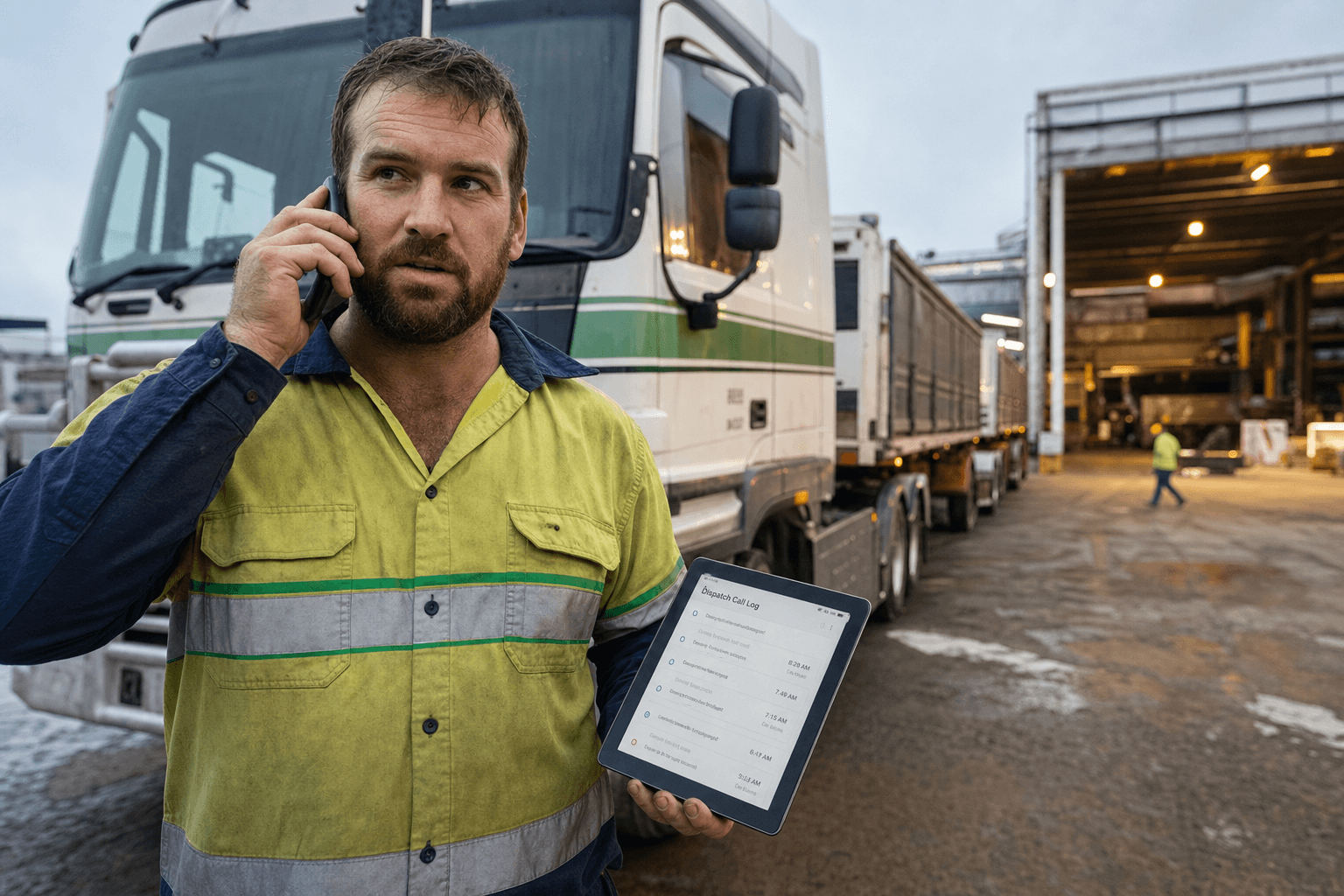
Phone conversations frequently contain evidence of compliance activities, including load planning discussions, route modifications for bridge restrictions, and customer notifications about delivery constraints. Without proper call logging, this evidence disappears when auditors arrive.
How AI Call Recording Creates Audit Trails
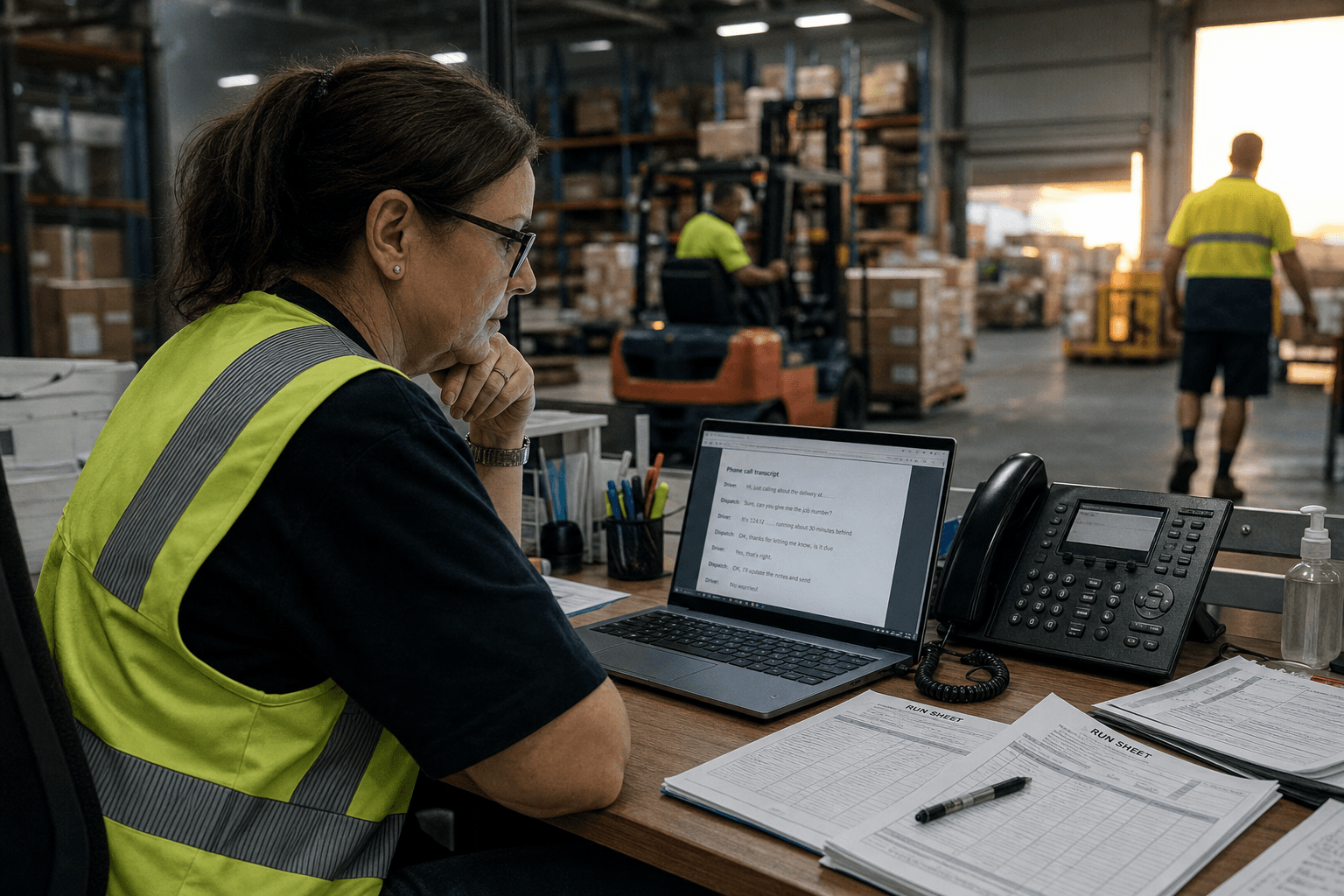
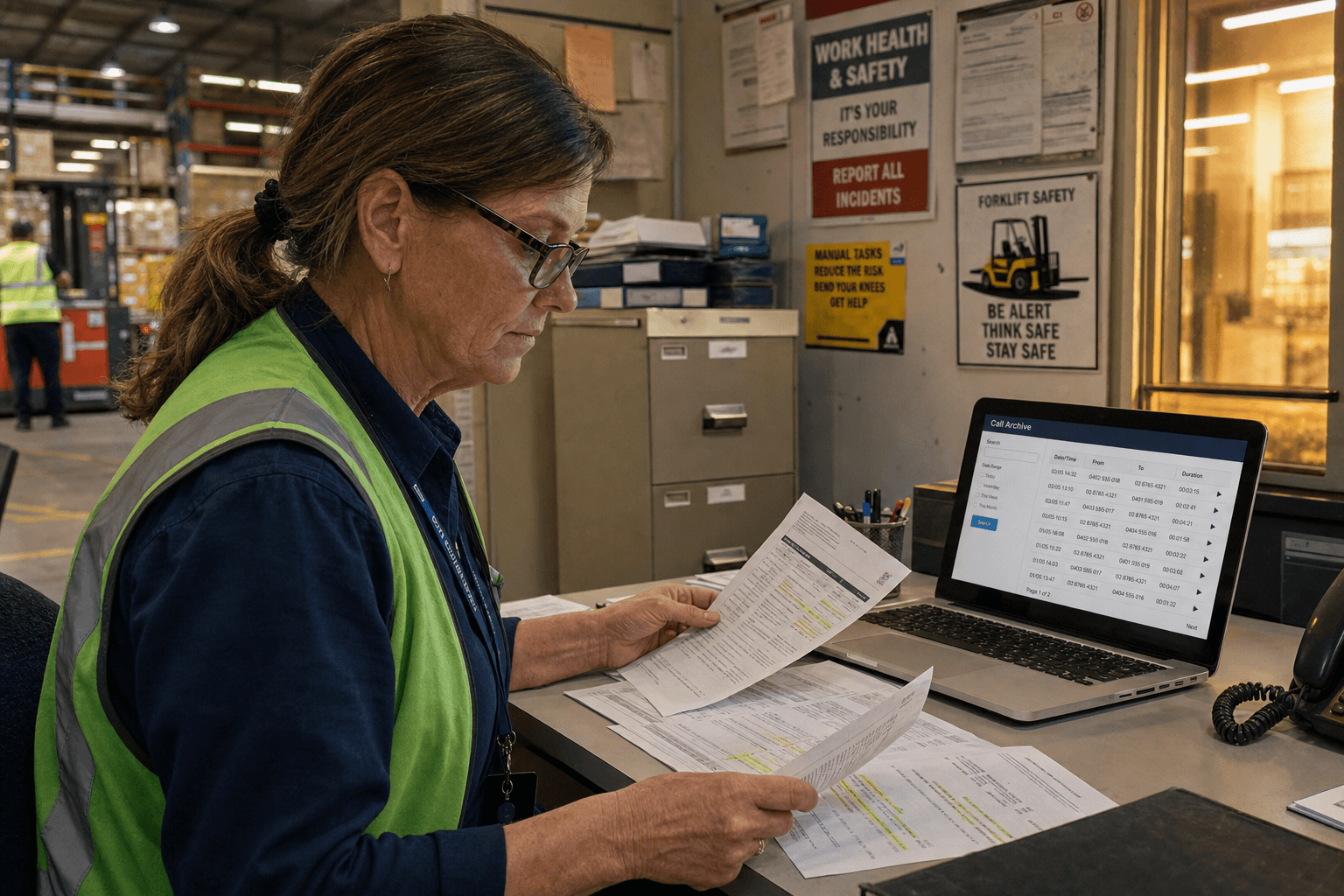
Modern AI call recording systems automatically capture, transcribe, and categorise freight-related communications. These systems use natural language processing to identify compliance-relevant conversations and create searchable transcripts that auditors can review.
Automated Compliance Detection
AI systems can automatically flag conversations containing compliance keywords such as "overweight," "permit required," or "route restriction." This automated flagging ensures critical compliance communications aren't lost in the volume of daily operational calls.
Advanced systems integrate with existing telephony infrastructure without disrupting operations. Calls are recorded in real-time, transcribed within minutes, and archived in compliance-ready formats that meet NHVR evidence standards.
Automated Transcript Archiving for HVNL Compliance
Proper archiving transforms call recordings into legally defensible audit trails. AI transcription systems create time-stamped, searchable records that demonstrate exactly what was communicated and when.
Archive Structure Requirements
- Chronological indexing: All calls sorted by date and time
- Participant identification: Caller names and roles documented
- Content categorisation: Compliance topics automatically tagged
- Retention compliance: 3-5 year storage as required by HVNL
- Backup redundancy: Multiple copies stored securely
Transcript quality directly impacts audit outcomes. Modern AI systems achieve 95%+ accuracy on logistics conversations, with specialist vocabulary training for freight terminology. Poor transcription quality can undermine the evidential value of call records during NHVR proceedings.
Creating Searchable Call Records for NHVR Audits
Searchable call databases allow compliance teams to quickly locate relevant conversations during NHVR audits. AI-powered search functionality goes beyond simple keyword matching to understand context and intent.
Advanced Search Capabilities
- Semantic search: Find conversations about weight limits even when exact terms weren't used
- Date range filtering: Locate all communications within specific audit periods
- Participant tracking: Find all conversations with particular drivers or customers
- Topic clustering: Group related compliance discussions together
- Regulatory tagging: Automatically categorise conversations by HVNL section
During a typical NHVR audit, investigators may request all communications related to a specific incident or time period. Manual search through months of phone records is impractical, but AI-powered systems can locate relevant conversations within minutes.
Evidence Preparation for Regulatory Enquiries
When NHVR initiates an investigation, operators must quickly produce relevant communication records. AI call logging systems generate audit-ready evidence packages that meet legal admissibility standards.
Audit Evidence Requirements
- Chain of custody documentation: Proving records haven't been tampered with
- Technical metadata: Call duration, participants, timestamps
- Quality attestation: Transcript accuracy certification
- Context summaries: AI-generated summaries of key compliance discussions
- Cross-reference indexing: Links to related documents and records
Preparing evidence manually can take weeks and may miss critical conversations. Automated evidence preparation ensures all relevant communications are included and properly formatted for regulatory review. AI systems can generate executive summaries highlighting key compliance actions demonstrated in the call records.
Integration with Existing Compliance Systems
Effective call logging integrates with transport management systems, compliance databases, and document management platforms. This integration creates a comprehensive audit trail that connects phone conversations to load manifests, route plans, and incident reports.
Modern systems offer API connectivity to major TMS platforms including CartonCloud, Loadshift, and Zoom2u. When a dispatcher calls about a load modification, the system automatically links that conversation to the relevant job record, creating a complete compliance picture.
Implementation Considerations for Freight Operators
Successful call logging implementation requires careful planning around technical requirements, staff training, and privacy compliance. The system must capture all compliance-relevant communications without disrupting daily operations.
Technical Requirements
- PBX integration: Compatibility with existing phone systems
- Cloud storage: Scalable archiving for 3-5 year retention
- Security standards: Encryption and access controls
- Mobile coverage: Recording driver mobile communications
- Backup systems: Redundancy for business continuity
Staff training ensures employees understand which conversations need recording and how to properly document compliance activities. Privacy training covers Australian workplace surveillance laws and employee consent requirements.
Cost-Benefit Analysis of AI Call Logging
Investing in AI call logging systems delivers measurable returns through reduced audit costs, faster evidence preparation, and improved compliance outcomes. The average NHVR investigation costs operators $50,000-$200,000 in legal fees and operational disruption.
Quantifiable Benefits
- Audit preparation time: Reduced from weeks to hours
- Legal costs: Lower defence expenses through better evidence
- Compliance confidence: Demonstrable due diligence efforts
- Operational efficiency: Faster resolution of disputes and incidents
- Insurance benefits: Potential premium reductions for demonstrated risk management
Most operators recover their investment within the first audit where comprehensive call records support their defence. The system pays for itself by preventing or reducing penalties in Chain of Responsibility proceedings.
For related reading, explore our ai readiness assessment and emissions reporting services, or browse more insights.
Getting Started with Compliance Call Logging
Implementing AI call logging for Chain of Responsibility compliance requires assessment of current communication patterns, technical infrastructure, and regulatory requirements. A structured approach ensures the system captures all necessary conversations while meeting HVNL evidence standards.
Successful implementation begins with mapping all compliance-relevant communication channels and identifying integration points with existing systems. This assessment phase typically takes 2-4 weeks and provides a clear roadmap for deployment.
Zero Footprint helps Australian freight operators implement AI-powered call logging systems that meet NHVR Chain of Responsibility requirements. Our compliance-focused approach ensures your communication records withstand regulatory scrutiny while improving operational efficiency.
If you're looking for guidance on this topic, get in touch — we're happy to help.
Zero Footprint
The Zero Footprint team — AI modernisation for Australian logistics.