Why Your Legacy TMS Is Costing You Contracts
Your TMS was built for a different era. No API, no real-time visibility, no emissions data. Here's how it's quietly losing you business — and what to do about it.
The RFP Question You Can't Answer
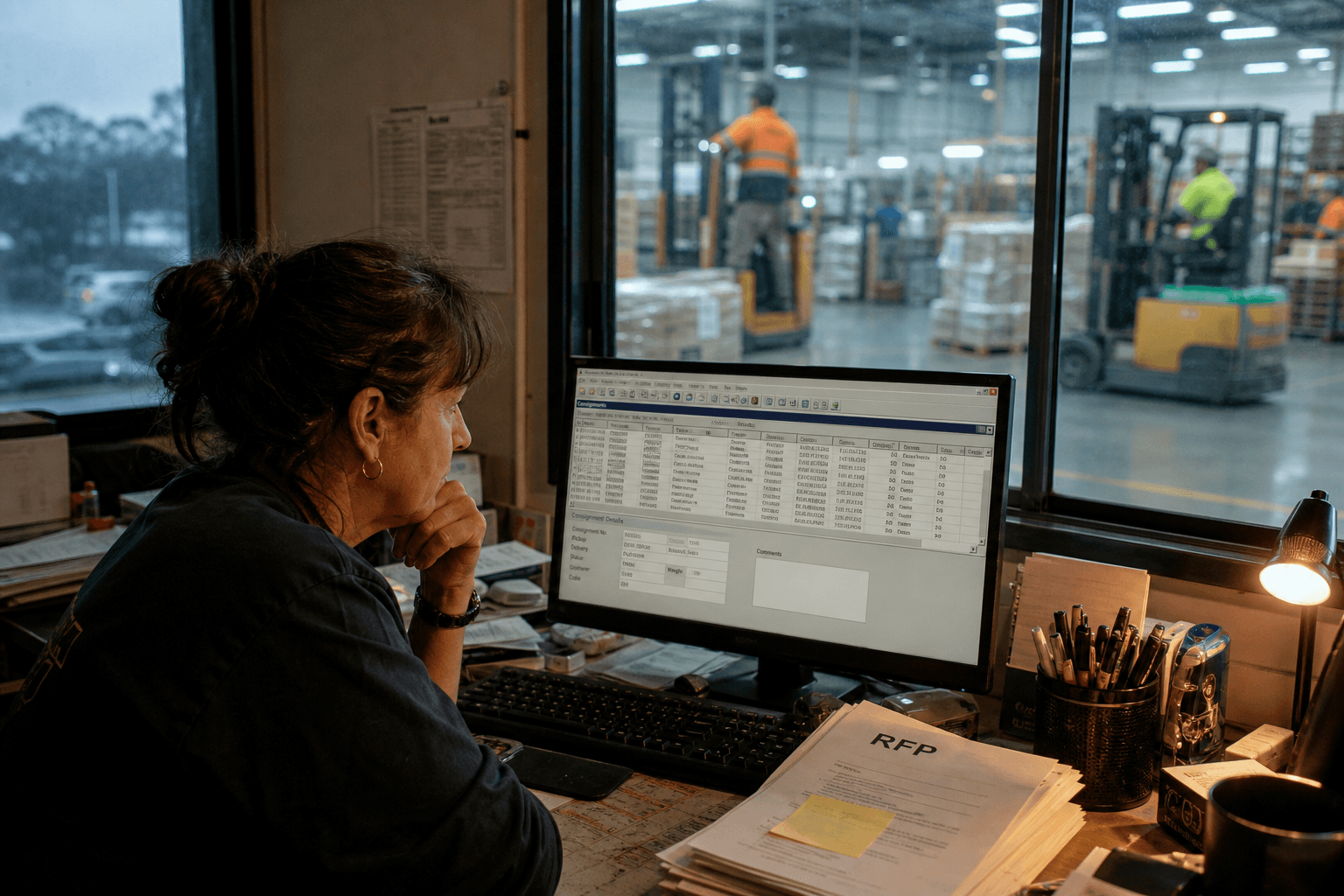
You're responding to an RFP from a major retailer. Everything looks good until page 14: "Please describe your real-time shipment tracking capability and per-consignment emissions reporting API."
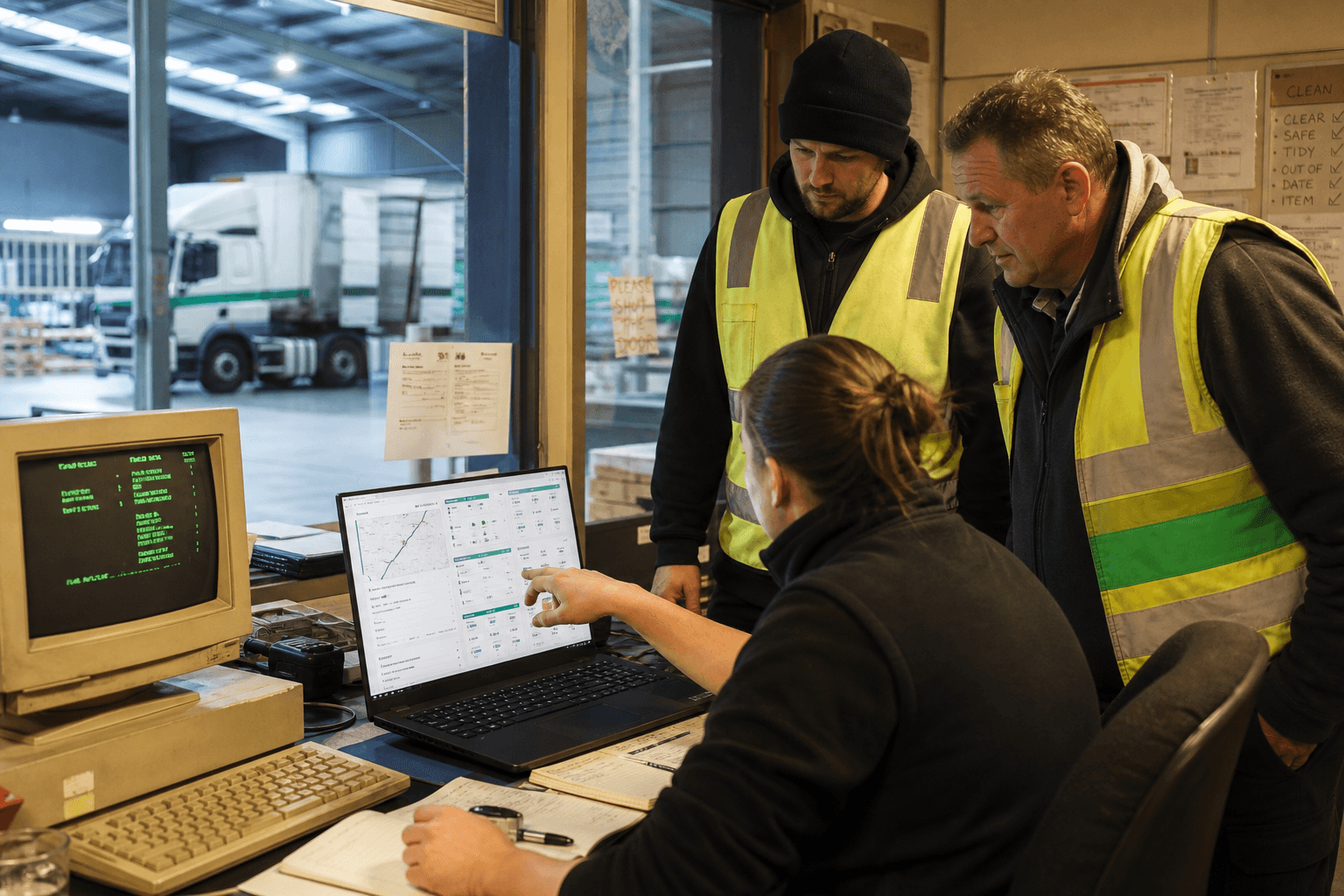
Your TMS was built in 2008. It tracks consignments, sure — but there's no API, no real-time visibility layer, and certainly no emissions data. Your team's answer is "we can provide weekly status reports via email."
You don't win the contract.
This is happening across Australian logistics right now. Enterprise customers are raising the technology bar in their procurement requirements, and operators running legacy systems are being filtered out at the RFP stage — before they even get to compete on price or service.
What Customers Now Expect
The requirements that legacy TMS platforms can't meet:
Real-Time Visibility
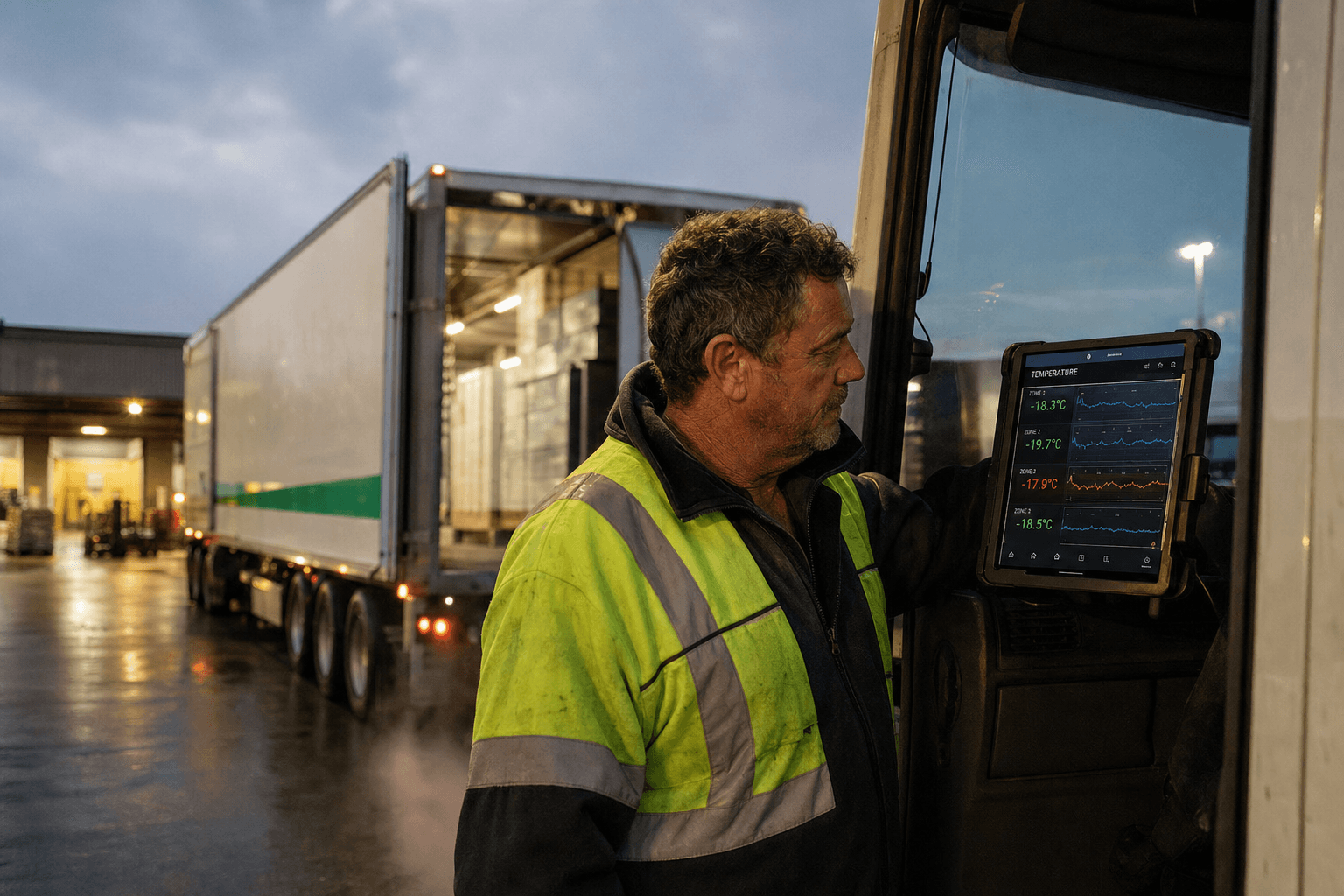
Customers want to see where their shipment is, right now. Not "it left the depot at 6am" — actual GPS-derived location, ETA, and status. The Amazon effect has reset expectations across B2B as well as B2C.
A legacy TMS that updates status via manual scan points (picked up, in transit, delivered) can't compete with operators offering live tracking.
API Integration
Enterprise customers don't want to log into your portal. They want your data flowing into their systems automatically. Order status, proof of delivery, billing data, emissions metrics — all via API.
If your TMS doesn't have an API (and most systems built before 2015 don't), your customer's integration team moves on to the next carrier.
Emissions Data
AASB S2 means your customers need per-shipment emissions data for their own Scope 3 reporting. This isn't a nice-to-have anymore — it's appearing as a mandatory field in logistics RFPs.
A legacy TMS has no concept of emissions. It was designed to track consignments and generate invoices, not calculate carbon.
Data and Analytics
Customers want performance dashboards: on-time delivery rates, damage rates, average transit times by lane, cost per tonne-kilometre. They expect this in real-time, not in a monthly PDF.
The Hidden Costs
Beyond lost contracts, a legacy TMS imposes daily costs:
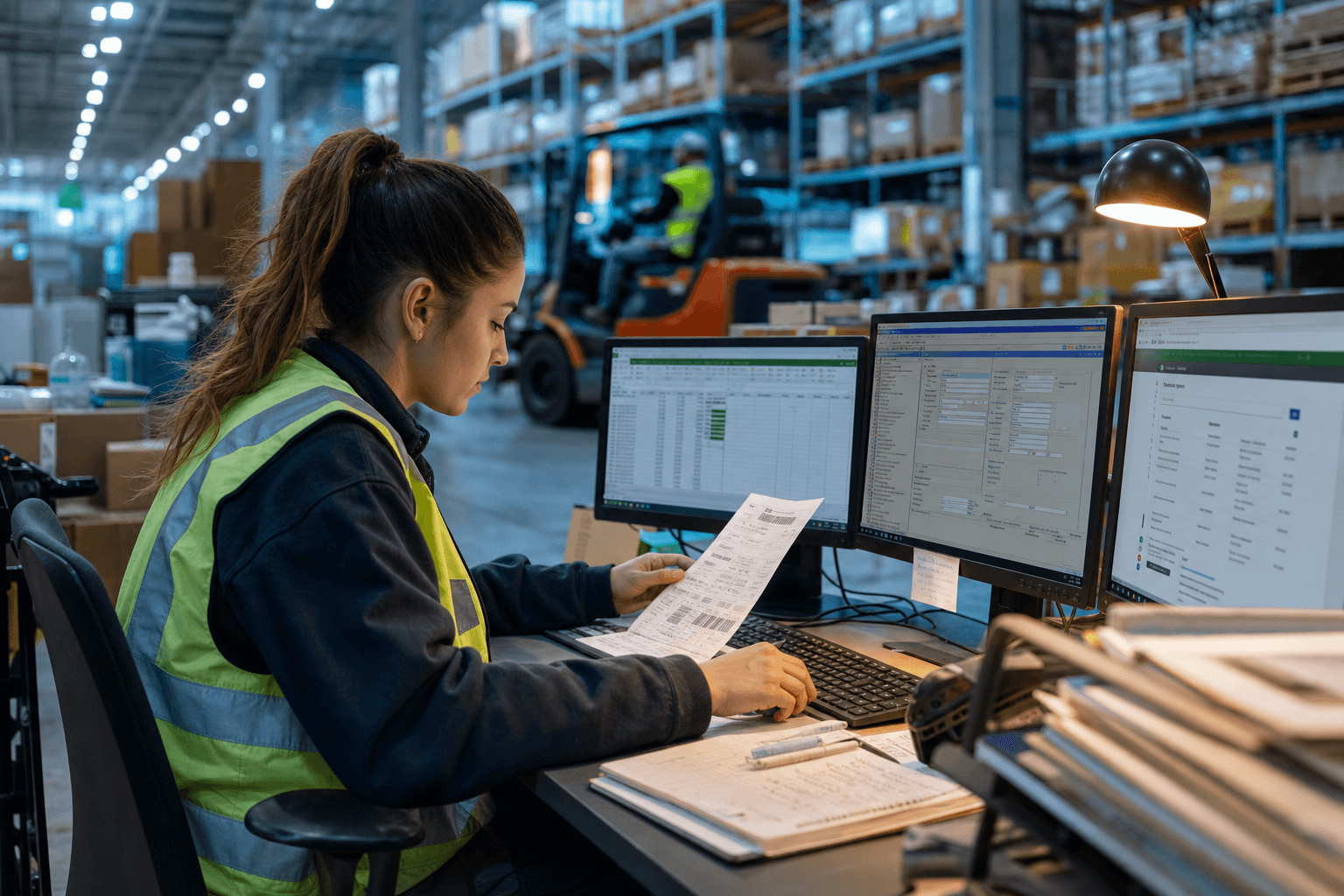
Manual data entry: Your team is keying the same information into multiple systems because nothing integrates. Consignment details go into the TMS, then into the accounting system, then into the customer's portal. Three times, three chances for errors.
Workarounds: Over the years, your team has built an ecosystem of spreadsheets, email workflows, and manual processes to compensate for what the TMS can't do. These workarounds are fragile, person-dependent, and invisible until someone leaves.
Slow decision-making: Without real-time data, operational decisions are based on yesterday's information. By the time you know a problem exists, it's already affected customers.
Integration tax: Every new tool, customer requirement, or regulatory change requires custom development against a system that was never designed to be extended. Each integration is expensive and brittle.
You Don't Have to Replace It
Here's what most operators get wrong: they think modernisation means ripping out the TMS and replacing it with something new. That's a $500K-$1M project with 12-18 months of risk. For most mid-market operators, it's not practical.
The alternative: build an integration layer on top of your existing TMS.
What an Integration Layer Does
- Exposes your TMS data via modern APIs — customer portals, partner integrations, and internal tools can all access real-time data without touching the TMS itself
- Adds real-time tracking — GPS data from your fleet overlaid on TMS consignment data, delivered through a customer-facing visibility portal
- Calculates emissions — consignment distance and mode from the TMS, fuel data from telematics, emission factors applied automatically
- Provides analytics — dashboards and reports built from TMS data combined with operational data sources
How It Works
The integration layer connects to your TMS through whatever interface it supports — database views, file exports, or screen scraping if necessary. It doesn't modify the TMS. Your team keeps using the system they know. But externally, your business presents modern capabilities.
Timeline and Investment
A typical integration layer project for a mid-market carrier:
| Phase | Duration | What You Get |
|---|---|---|
| API layer | 4-6 weeks | REST API exposing consignment data, status, and POD |
| Visibility portal | 2-4 weeks | Customer-facing real-time tracking |
| Emissions module | 4-6 weeks | Per-consignment carbon data via API |
| Analytics dashboard | 2-3 weeks | Operational KPIs and customer performance reports |
| Total | 12-16 weeks | Modern capabilities without TMS replacement |
Investment: $60,000-$120,000 depending on complexity. Compare that to $500K-$1M for a TMS replacement — and you're operational in months, not years.
Modernising legacy systems doesn't have to mean ripping everything out and starting fresh. Our legacy modernisation service helps transport companies bridge the gap between old systems and new requirements, while our emissions reporting solutions can integrate with existing TMS platforms to provide the sustainability data clients increasingly demand.
The Decision Framework
Replace your TMS if:
- It's completely unsupported (vendor gone, no one can maintain it)
- Your business model is changing fundamentally
- You have the budget and 18 months to execute
Build an integration layer if:
- The TMS works for day-to-day operations
- Your team knows it and is productive with it
- You need modern capabilities for customer-facing requirements
- You need to move in months, not years
For most mid-market logistics operators, the integration layer is the right answer. It lets you compete for modern contracts now while preserving your operational investment.
Discuss your modernisation options →
Don't let an outdated TMS cost you another contract. Get in touch to discuss how we can modernise your transport technology without the disruption of a complete system replacement — contact us for a practical assessment of your options.
Zero Footprint
The Zero Footprint team — AI modernisation for Australian logistics.