AI Classification of Dangerous Goods: ADG Code Compliance
AI-powered document intelligence automates dangerous goods classification for Australian freight operators, reducing manual processing time by 85% while ensuring ADG Code and IMDG compliance. Learn how AI extracts UN numbers, parses safety data sheets, and validates regulatory requirements automatically.
AI Classification of Dangerous Goods Documents: Automating ADG Code Compliance for Australian Logistics
Dangerous goods classification consumes hours of manual work for Australian freight operators. Safety data sheets, UN numbers, and ADG Code requirements demand precision — one classification error can trigger compliance violations, shipment delays, and safety incidents.
AI-powered document intelligence now automates dangerous goods classification, extracting critical data from safety sheets and validating compliance against Australian transport regulations. This technology reduces classification time by 85% while eliminating human error in regulatory compliance.
How AI Automates Dangerous Goods Classification
AI document intelligence uses natural language processing and computer vision to extract structured data from unstructured dangerous goods documents. The system reads safety data sheets, identifies UN numbers, and maps classifications against ADG Code requirements automatically.
The AI process works in four stages:
- Document ingestion: Scans PDFs, images, and digital files of safety data sheets
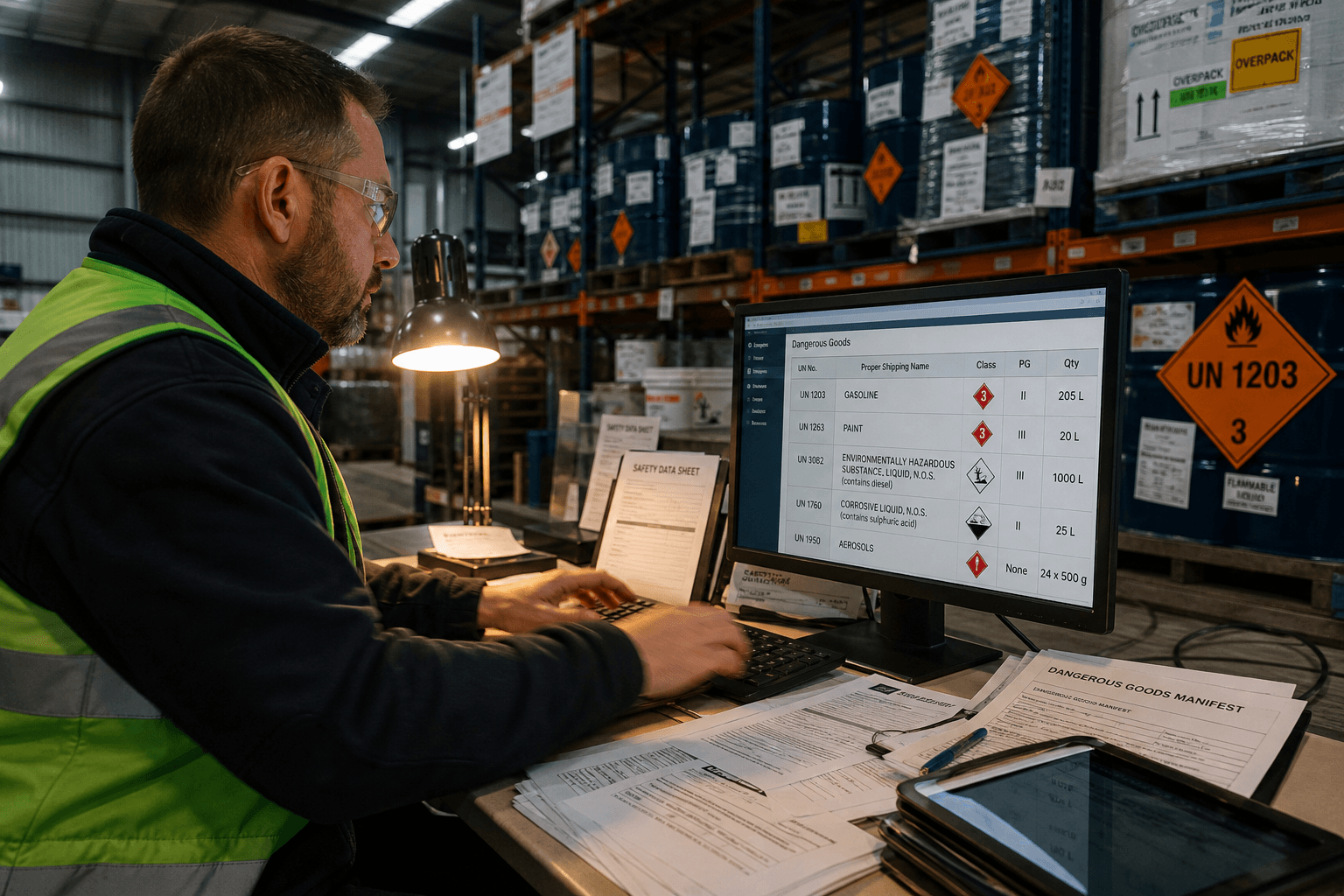
- Data extraction: Identifies UN numbers, proper shipping names, hazard classes, and packing groups
- Classification validation: Cross-references extracted data against ADG Code and IMDG requirements
- Compliance reporting: Generates transport documentation and flags regulatory exceptions
| Manual Process | AI-Powered Process |
|---|---|
| 15-30 minutes per document | 2-3 minutes per document |
| Human error rate: 8-12% | Error rate: <1% |
| Single operator bottleneck | Batch processing capability |
| Requires ADG expertise | Built-in regulatory knowledge |
ADG Code Requirements for Australian Transport
The Australian Dangerous Goods (ADG) Code governs land transport of hazardous materials across Australia. ADG Code compliance requires accurate classification across nine hazard classes, from explosives (Class 1) to miscellaneous dangerous goods (Class 9).
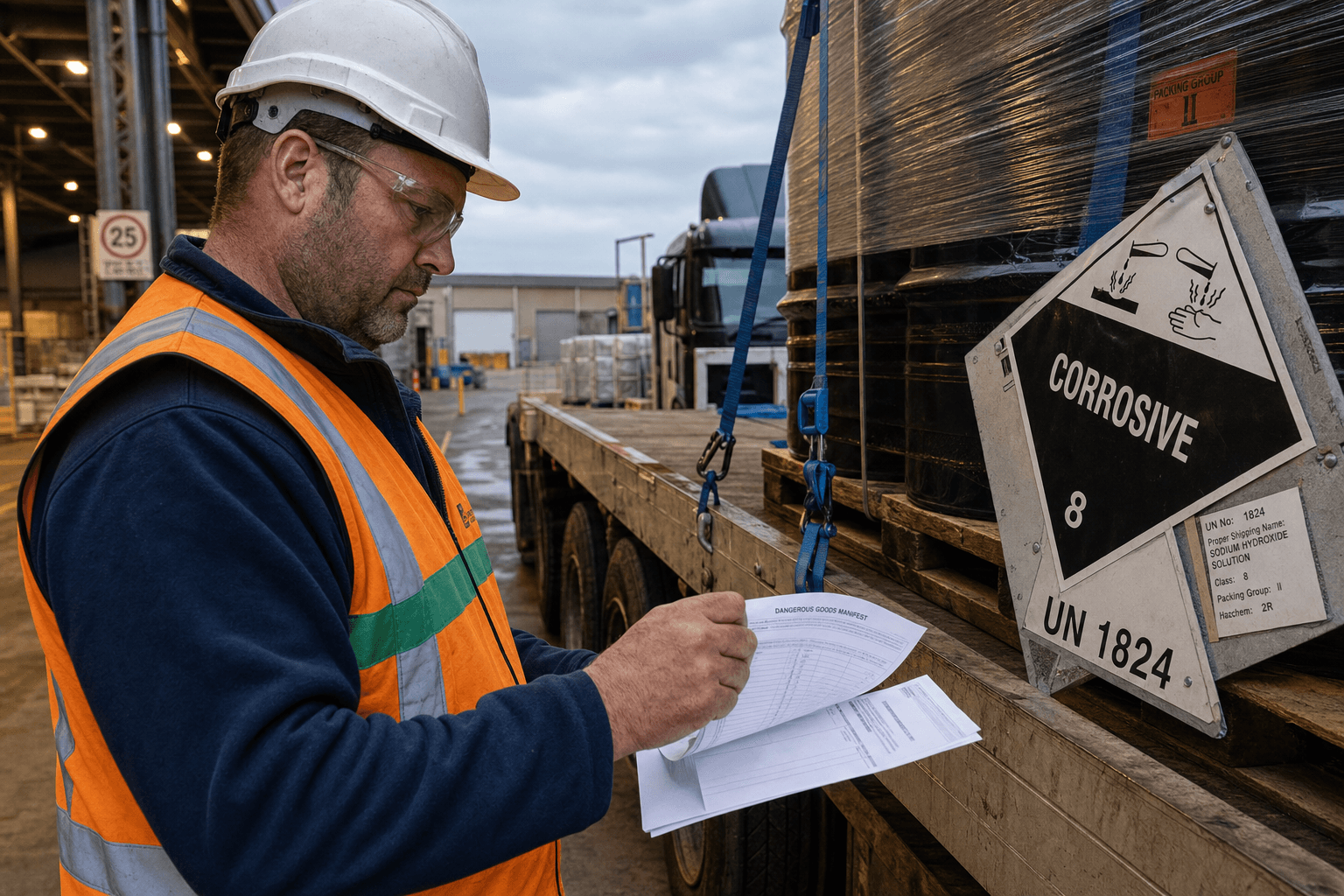
AI systems maintain current ADG Code requirements, including:
- UN number validation: Verifies four-digit UN identification numbers against the official UN Model Regulations
- Proper shipping name extraction: Identifies correct technical names as specified in ADG dangerous goods lists
- Hazard class determination: Maps chemical properties to appropriate ADG hazard classifications
- Packing group assignment: Determines packaging requirements based on danger degree (I, II, or III)
IMDG Code Compliance for Sea Freight
Sea freight dangerous goods must comply with International Maritime Dangerous Goods (IMDG) Code requirements alongside ADG regulations. AI classification systems process both frameworks simultaneously.
IMDG Code requirements include additional maritime-specific data:
- Stowage category: Determines vessel placement requirements (A, B, C, D, or E categories)
- Segregation requirements: Identifies incompatible cargo separation distances
- EmS numbers: Emergency response procedures for firefighting and spillage
- Marine pollutant identification: Flags environmentally hazardous substances
AI extracts IMDG-specific data from safety sheets and generates sea freight documentation automatically, ensuring dual compliance for multimodal shipments.
UN Number Extraction and Validation
UN numbers provide global identification for dangerous goods transport. AI systems extract UN numbers from safety data sheets using pattern recognition and validate against official UN dangerous goods lists.
The AI validation process includes:
- Pattern detection: Identifies UN number formats (UN0001-UN9999) in document text
- Context analysis: Confirms UN numbers match associated chemical names and properties
- Cross-referencing: Validates against current UN Model Regulations database
- Exception flagging: Highlights invalid or obsolete UN numbers for manual review
Safety Data Sheet Parsing
Safety data sheets contain critical classification information across 16 standardised sections. AI parsing extracts key data points required for transport documentation.
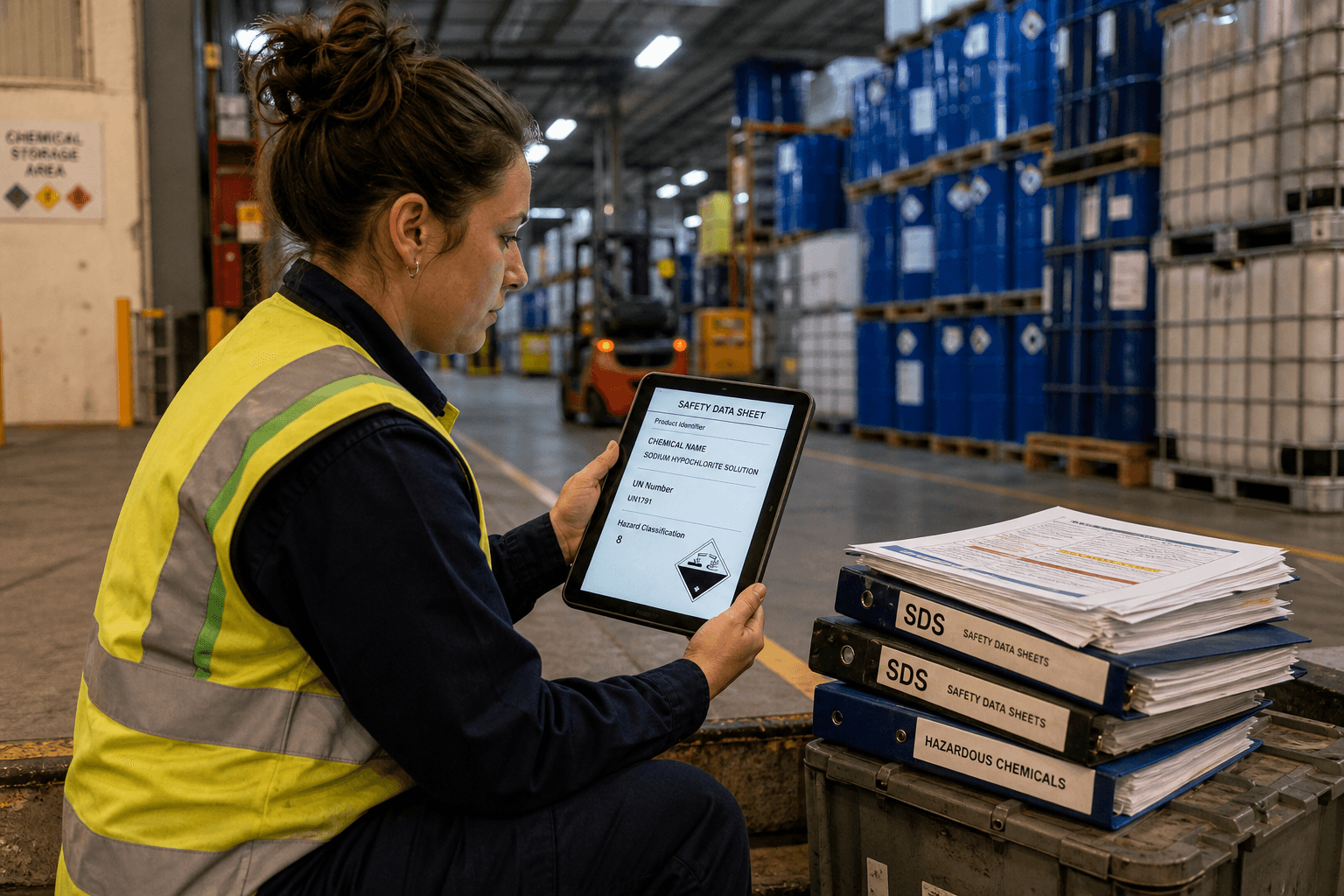
Critical sections for transport classification:
- Section 1: Product identifier and supplier details
- Section 3: Hazardous ingredients and concentration levels
- Section 9: Physical and chemical properties affecting transport
- Section 14: Transport information including UN numbers and hazard classes
- Section 15: Regulatory information and transport restrictions
AI systems read multi-page safety sheets in seconds, extracting transport-relevant data while ignoring non-transport sections like first aid measures or ecological information.
Compliance Validation for Australian Regulations
AI classification systems validate dangerous goods against multiple Australian regulatory frameworks simultaneously. This includes ADG Code requirements, state-specific transport regulations, and workplace health and safety obligations.
Validation capabilities include:
- Quantity threshold checking: Compares shipment quantities against ADG exemption limits
- Route restriction analysis: Identifies transport restrictions for specific Australian jurisdictions
- Documentation completeness: Ensures all required transport documents are generated
- Training requirement flagging: Identifies shipments requiring specialised driver training
Benefits for Australian Freight Operators
AI dangerous goods classification delivers measurable improvements for Australian logistics operations:
Compliance accuracy: Automated classification reduces regulatory non-compliance incidents by 90%, minimising enforcement penalties and shipment delays.
Processing speed: AI processes dangerous goods documentation 85% faster than manual classification, eliminating bottlenecks in freight scheduling.
Cost reduction: Reduced manual classification work and compliance incidents deliver 40-60% cost savings on dangerous goods administration.
Audit readiness: AI-generated audit trails provide complete documentation for regulatory inspections and customer compliance reviews.
Implementation Considerations
Successful AI dangerous goods classification requires integration with existing transport management systems and staff training on new workflows.
Key implementation factors:
- Data quality: Clean, digital safety data sheets improve AI accuracy significantly
- System integration: API connections to TMS platforms automate downstream processes
- Staff training: Operations teams need training on AI-generated classifications and exception handling
- Regulatory updates: AI systems require regular updates to maintain current regulatory compliance
Our document intelligence solutions specialise in automated dangerous goods classification, extracting UN numbers and validating ADG Code requirements from safety data sheets. For freight operators looking to integrate AI classification with existing systems, our AI readiness assessment identifies implementation pathways and compliance requirements. Custom AI development ensures your dangerous goods processing aligns with specific operational workflows and regulatory frameworks.
Getting Started with AI Classification
Australian freight operators can implement AI dangerous goods classification through pilot programs focusing on high-volume chemical shipments or complex multimodal freight.
Start with an AI readiness assessment to evaluate current dangerous goods processes, document quality, and integration requirements. This assessment identifies optimal implementation pathways while establishing baseline metrics for ROI measurement.
AI dangerous goods classification transforms regulatory compliance from manual bottleneck to automated competitive advantage, enabling Australian freight operators to handle complex hazardous materials efficiently and safely.
Ready to automate your dangerous goods classification and reduce compliance risks? Our document intelligence specialists work with Australian freight operators to implement AI-powered ADG Code compliance systems. Contact us to discuss how automated classification can streamline your dangerous goods processing while maintaining regulatory standards.
Zero Footprint
The Zero Footprint team — AI modernisation for Australian logistics.