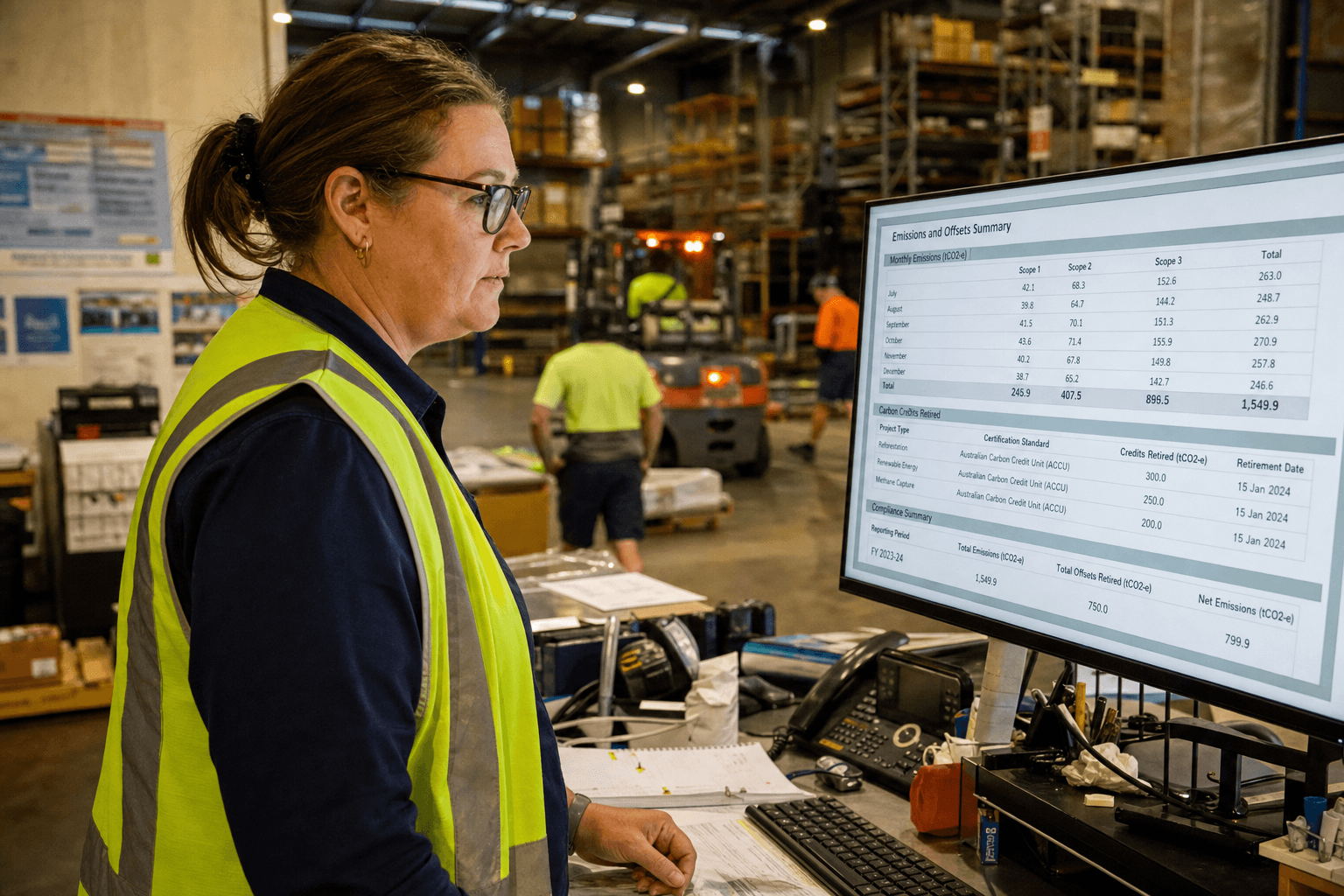
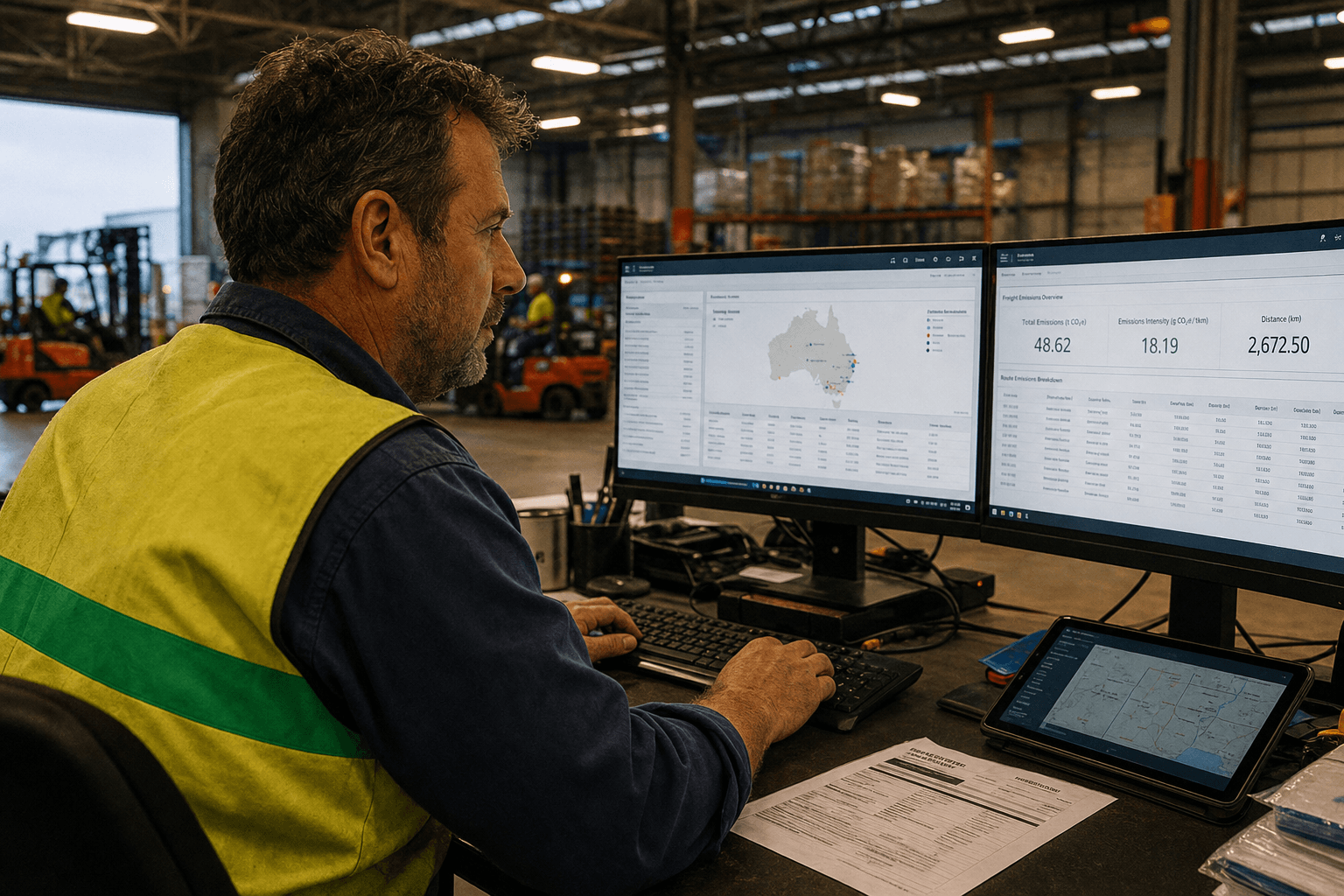
AASB S2 Scope 3 Reporting: A Practical Guide for Logistics Companies
Mandatory Scope 3 emissions reporting is here. This practical guide breaks down what Australian logistics companies need to know about AASB S2 compliance, timelines, and how to get started.

The Compliance Clock Is Ticking
AASB S2 is not a future problem. Entities with revenue above $500M must report on climate-related financial disclosures from FY26 — that's now. By FY28, the threshold drops to $200M. By FY29, it hits $50M, pulling in thousands of mid-market logistics operators.
For logistics companies, the critical piece is Scope 3 emissions — indirect emissions across your supply chain. This is where 70-90% of a logistics company's total carbon footprint sits: subcontractors, fuel suppliers, downstream transport.
What AASB S2 Actually Requires
AASB S2 aligns with the ISSB's IFRS S2 standard. For logistics operators, the key requirements are:
Climate-Related Risks and Opportunities
You need to identify and disclose how climate risks affect your business strategy, financial planning, and operations. For a carrier, that might mean the cost impact of carbon pricing on fuel, or the risk of losing contracts from customers who require emissions data you can't provide.
Greenhouse Gas Emissions
Scope 1 (your own fleet), Scope 2 (electricity for warehouses and depots), and Scope 3 (everything else — subcontractors, upstream fuel production, employee commuting, waste).
Metrics and Targets
Quantified emissions data, intensity metrics (e.g., kg CO2e per tonne-kilometre), and any reduction targets you've set.
Why Scope 3 Is the Hard Part
Scope 1 and 2 are relatively straightforward — you control the data sources. Scope 3 is where logistics companies get stuck:

- Subcontractor emissions: If you use 40 subcontractors for last-mile delivery, you need their emissions data. Most won't have it.
- Fuel well-to-tank: Upstream emissions from fuel production and distribution.
- Customer downstream transport: What happens to goods after you deliver them.
- Data quality: Fuel card data is inconsistent, GPS data has gaps, and subcontractors report in different formats (or not at all).
The practical reality: you can't manually collect and reconcile this data from spreadsheets. Not at scale, not accurately, and not every reporting period.
A Practical Approach to Getting Started
Step 1: Map Your Emissions Sources
Start with a materiality assessment. For most logistics operators, the top three Scope 3 categories by volume are:
- Purchased transport services (subcontractors)
- Fuel and energy-related activities (well-to-tank)
- Upstream transportation and distribution
Step 2: Establish Your Data Sources
Connect to the systems you already have:
- Fleet GPS/telematics → distance, fuel consumption per vehicle
- Fuel cards → litres purchased, fuel type
- TMS → consignment data, subcontractor assignments
- Supplier portals → subcontractor self-reported data (where available)
Step 3: Choose Your Calculation Methodology
For most logistics companies, the GHG Protocol provides the framework and NGER provides Australia-specific emission factors. You'll likely use a combination of:
- Fuel-based method: Litres consumed × emission factor (most accurate for own fleet)
- Distance-based method: Kilometres × mode-specific emission factor (useful for subcontractors where fuel data isn't available)
- Spend-based method: Dollars spent × industry emission factor (least accurate, but a starting point when nothing else is available)
Step 4: Automate the Pipeline
Manual reporting works for year one. It won't work for year two. Build automated data pipelines that pull from your existing systems, calculate emissions using standard factors, and produce audit-ready outputs.
The Upstream Effect
Even if your company isn't required to report yet, your customers might be. Large retailers, manufacturers, and FMCG companies reporting under AASB S2 will ask their logistics providers for per-shipment emissions data. If you can't provide it, you'll lose the contract to someone who can.
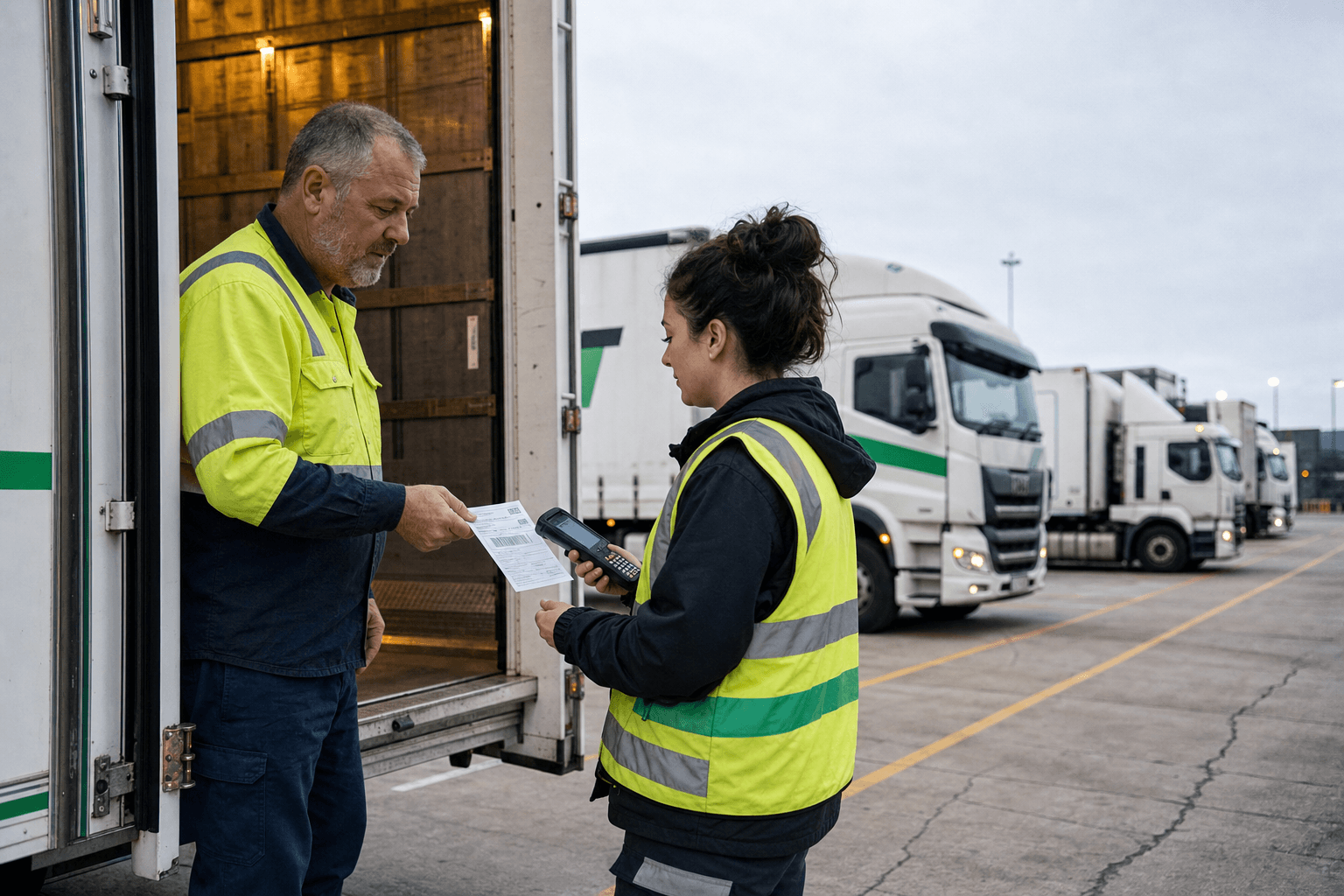
This is already happening. We're seeing RFPs from major retailers that include mandatory emissions data requirements as a pass/fail criterion.
What Good Looks Like
A well-implemented emissions reporting system for a logistics company:
- Pulls data automatically from fleet GPS, fuel cards, and TMS
- Calculates Scope 1, 2, and 3 emissions using NGER factors
- Produces per-consignment emissions data for customer reporting
- Generates audit-ready annual reports aligned with AASB S2
- Provides real-time dashboards for operational decision-making
- Updates automatically as new emission factors are published
Getting your logistics operations ready for AASB S2 compliance requires robust data collection and reporting systems. Our emissions reporting services help logistics companies establish accurate Scope 3 tracking across their supply chains, while our AI readiness assessment can identify opportunities to automate data collection and improve reporting accuracy.
Next Steps
If you're a logistics operator facing AASB S2 compliance, start with a gap assessment. Understand where your data is, what's missing, and what can be automated. The companies that move now will have clean data and proven processes when the wider thresholds kick in. The ones that wait will be scrambling with spreadsheets.
Zero Footprint
The Zero Footprint team — AI modernisation for Australian logistics.