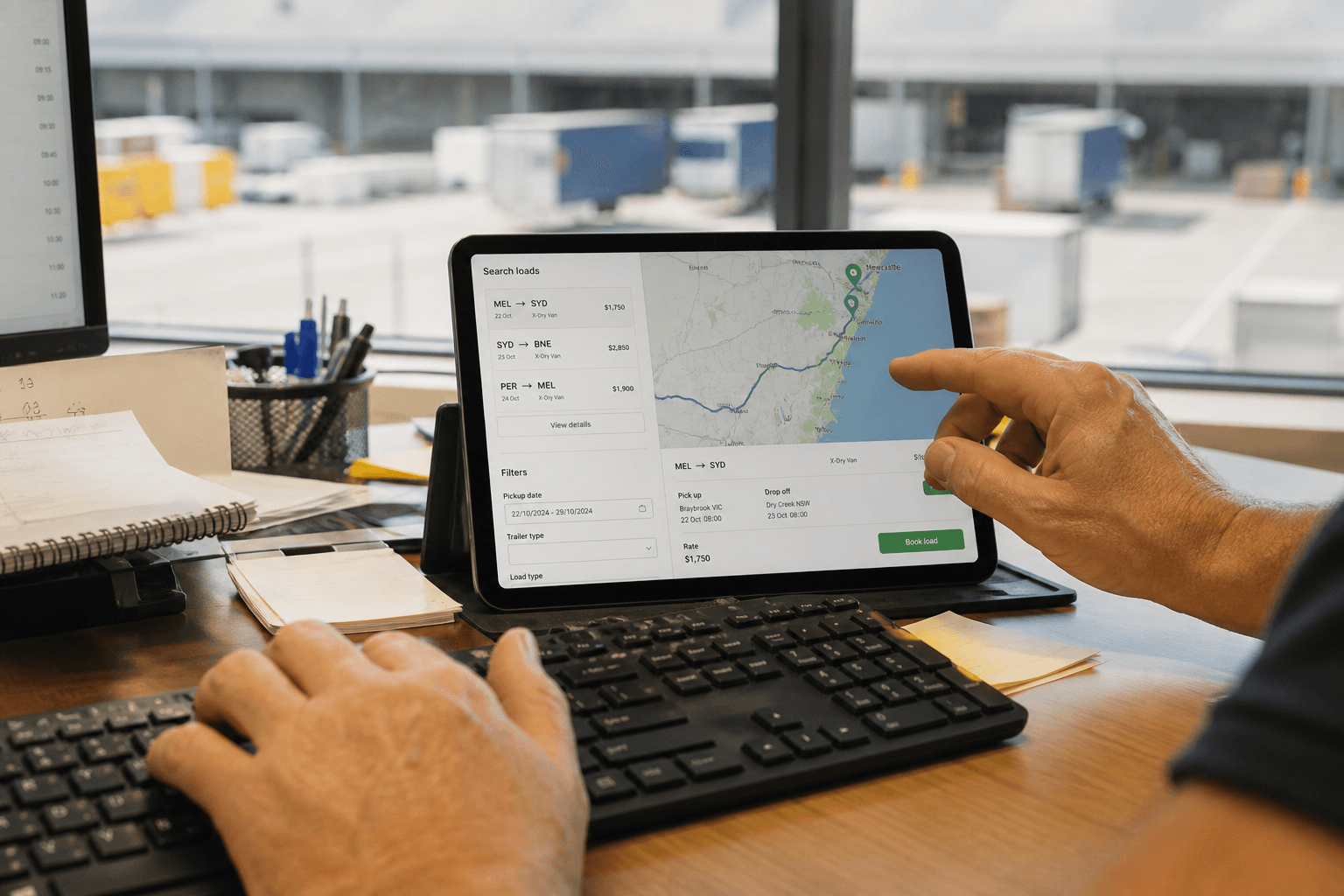
AI Communication Automation for Australian Logistics Operators
AI communication automation offers Australian logistics operators a practical path to reducing manual coordination effort — from customer shipment updates to document processing and exception alerts. This guide covers the real use cases, the constraints mid-market operators face, and how to approach implementation in a legacy system environment.
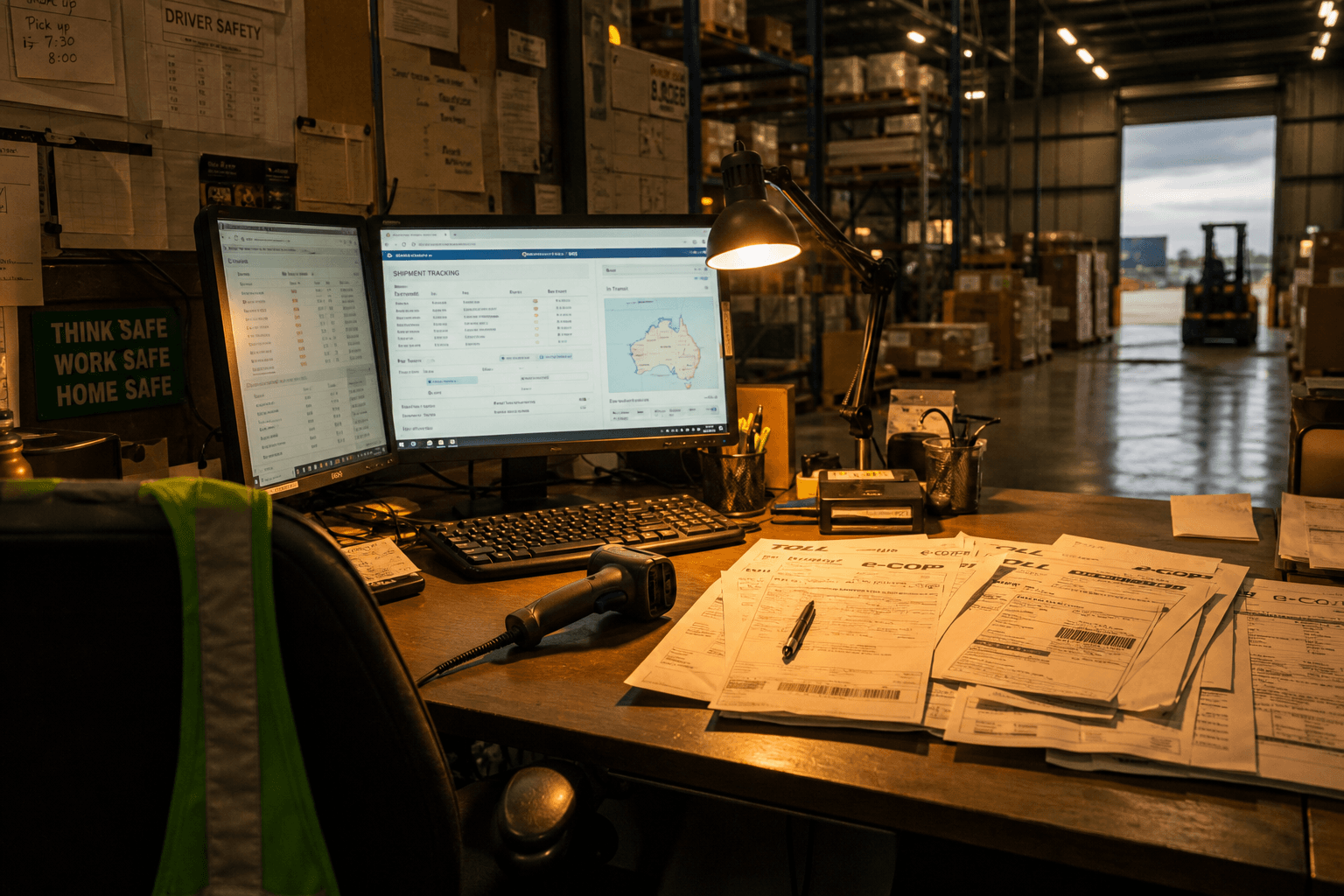
AI communication automation is reshaping how Australian logistics operators manage customer updates, carrier coordination, and supplier workflows. For mid-market operators running legacy systems and lean teams, automating communication touchpoints can reduce manual effort and improve the quality of information flowing through the business — without requiring a full technology overhaul.
This guide covers the practical use cases, the realistic constraints, and how to approach implementation if you're a carrier, 3PL, or warehouse operator looking to modernise.
What Is AI Communication Automation in Logistics?
AI communication automation in logistics is the use of machine learning, natural language processing, and intelligent document processing to handle routine information exchange between systems and stakeholders — including customers, carriers, suppliers, and internal teams. It replaces or augments manual email, phone, and data entry workflows with structured, automated processes that are faster, more consistent, and less prone to error.

For Australian logistics operators, the most mature and immediately applicable form of this technology is intelligent document processing. Broader communication automation — automated shipment notifications, exception alerts, carrier messaging workflows — is gaining traction but tends to require a cleaner data foundation than most legacy environments currently have.
Why Are Australian Operators Investing in Communication Automation Now?
Several converging pressures are making the status quo unsustainable for mid-market operators.

Labour cost increases and driver shortages mean that tasks previously absorbed by operations staff — chasing PODs, manually updating customers on ETA changes, reconciling carrier invoices — are becoming unaffordable to run manually at scale.
Customer expectations have shifted. Shippers and end customers increasingly expect real-time visibility, proactive exception alerts, and digital proof of delivery. Operators who rely on manual update processes are at a disadvantage when renewing contracts or bidding on new ones.
AASB S2 and Scope 3 emissions reporting obligations are also accelerating digital investment. Legacy TMS and WMS platforms were not built to capture the structured emissions data now required by regulators and major customers. That same data gap affects communication automation — poor data quality at the source limits what any automation layer can reliably do. You can read more about how this affects operators in our emissions reporting service.
The Australian Logistics Council frames its policy priorities around supply chain productivity, resilience, and sustainability — and those three pillars map directly to the business case for communication automation.
What Are the Practical Use Cases?
Intelligent Document Processing
Intelligent document processing is the extraction, classification, and routing of data from freight documents — invoices, bills of lading, proof of delivery records, customs declarations, and rate confirmations — using OCR and machine learning.
This is the most mature use case for AI in logistics communication. The operational benefit is straightforward: documents that previously required manual data entry can be processed automatically, feeding clean data into your TMS, WMS, or accounting system without human intervention.
For high-volume operators processing hundreds or thousands of documents per week, this translates to meaningful reductions in processing time and error rates. It also improves the data quality feeding into downstream workflows — which matters when you're trying to automate customer updates or supplier reconciliation. Explore how this works in practice via our document intelligence service.
Automated Customer Shipment Updates
Automated shipment notifications use event triggers from your TMS or tracking systems to send structured updates to customers — departure confirmations, ETA updates, exception alerts, and proof of delivery notifications — without dispatcher involvement.
The constraint here is data quality and system integration. Automated updates are only as reliable as the underlying event data. If your TMS has inconsistent scan events, or your drivers aren't completing digital PODs, the automation layer will amplify those gaps rather than fix them. The practical starting point is ensuring your core operational data is structured and reliable before layering in automated customer-facing communication.
Exception Management and Anomaly Alerts
AI-based anomaly detection can identify deviations from expected freight patterns — late departures, unplanned route changes, temperature excursions in cold chain, or invoice discrepancies — and trigger alerts to the relevant internal team or external party.
This shifts your operations team from reactive (chasing problems after the fact) to proactive (getting flagged when something is about to go wrong). For 3PLs managing multiple customer accounts, this kind of automated exception management can significantly reduce the supervisory load on operations staff.
Carrier and Supplier Coordination
For operators using multiple carriers or managing complex supplier networks, AI can help automate routine coordination tasks: rate confirmations, capacity requests, delivery window communications, and reconciliation of carrier invoices against contracted rates.
This typically requires well-structured carrier data and either EDI connectivity or API integration with your carriers. For operators still managing this over email and spreadsheets, the first step is usually formalising those workflows digitally before attempting to automate them.
Route Optimisation Notifications
Route optimisation systems generate structured dispatch instructions, driver briefings, and customer delivery windows as a by-product of the optimisation process. Rather than having a dispatcher manually communicate these, the system can push them directly to drivers, customers, and warehouse teams.
This is one area where communication automation and operational efficiency are tightly linked. Better routes mean fewer exceptions to communicate. Automated dispatch instructions mean less dispatcher time on the phone. See how route optimisation fits into this picture via our route optimisation service.
What Are the Realistic Constraints for Mid-Market Operators?
Most mid-market Australian logistics operators are running legacy TMS or WMS platforms with limited APIs, inconsistent data records, and little or no internal development capability. This creates a gap between what communication automation vendors advertise and what is actually achievable in a typical deployment.
The most common constraints are:
| Constraint | Impact on Automation |
|---|---|
| Legacy TMS with limited API access | Difficult to trigger automated events from core system |
| Inconsistent or incomplete operational data | Reduces reliability of automated customer updates |
| Paper-based or manual POD processes | Breaks the data chain before it can be automated |
| No internal IT or data team | Slows integration and ongoing maintenance |
| Multiple siloed systems | Requires data normalisation before automation is viable |
None of these constraints make communication automation impossible — but they do mean that a phased, contained approach is more likely to succeed than attempting broad transformation at once. The operators who see the best results start with a single high-value problem (most often document processing or a specific notification workflow), prove the value, and expand from there.
How Should You Approach Implementation?
Start with a Data Audit
Before investing in any automation layer, understand the quality and structure of your existing operational data. Where are the gaps? Which events are reliably captured in your TMS? What documents are you receiving in structured versus unstructured formats? This assessment shapes what's automatable now versus what requires groundwork first.
Pick a Contained, High-Value Problem
The most successful deployments start narrow. Automating POD processing for a single customer account, or setting up exception alerts for one freight lane, is far more likely to succeed than trying to automate all customer communications at once. A contained problem also lets you validate the approach before committing broader resources.
Build Integration Deliberately
Communication automation depends on integration — between your TMS, your carrier systems, your customer-facing channels, and whatever automation platform you're using. Building these integrations properly, with error handling and fallback logic, takes longer than vendors typically quote. Budget for it.
Measure Operational Outcomes, Not Activity Metrics
The right measure of communication automation success is not how many messages were sent — it's whether your operations team is spending less time on manual coordination, whether customers are escalating fewer queries, and whether your exception rate is declining. Define these outcomes before you build, so you can assess whether the investment is working.
Where Does AI Communication Automation Fit in a Broader Modernisation Roadmap?
Communication automation is one layer of a broader digital transformation — not a standalone fix. The foundation is having clean, structured operational data flowing through integrated systems. Once that foundation exists, automation becomes significantly easier to build and maintain.
For most mid-market operators, the sequence looks something like this: stabilise and integrate core systems, improve data quality at the source, automate document processing, then layer in customer and carrier communication workflows as the data foundation matures.
If you're unsure where your business sits on that continuum, an AI readiness assessment is a practical starting point. It maps your current systems, data maturity, and operational workflows against what's needed to make specific automation use cases viable — and gives you a sequenced roadmap rather than a vendor pitch.
For more on how Australian logistics operators are approaching AI adoption, browse our insights.
If you're exploring AI communication automation for your logistics business and want an honest assessment of what's viable for your current setup, get in touch. We work with carriers, 3PLs, and warehouse operators across Australia to identify the highest-value starting points and build from there.
Zero Footprint
The Zero Footprint team — AI modernisation for Australian logistics.