AI Driver Coaching for Fuel Efficiency and Safety in Fleets
Most Australian carriers already have the telematics data needed for driver coaching — it's just locked in a compliance mindset. Here's how to turn fuel, braking, and idling data into scorecards that drive behaviour change, not just monitoring.
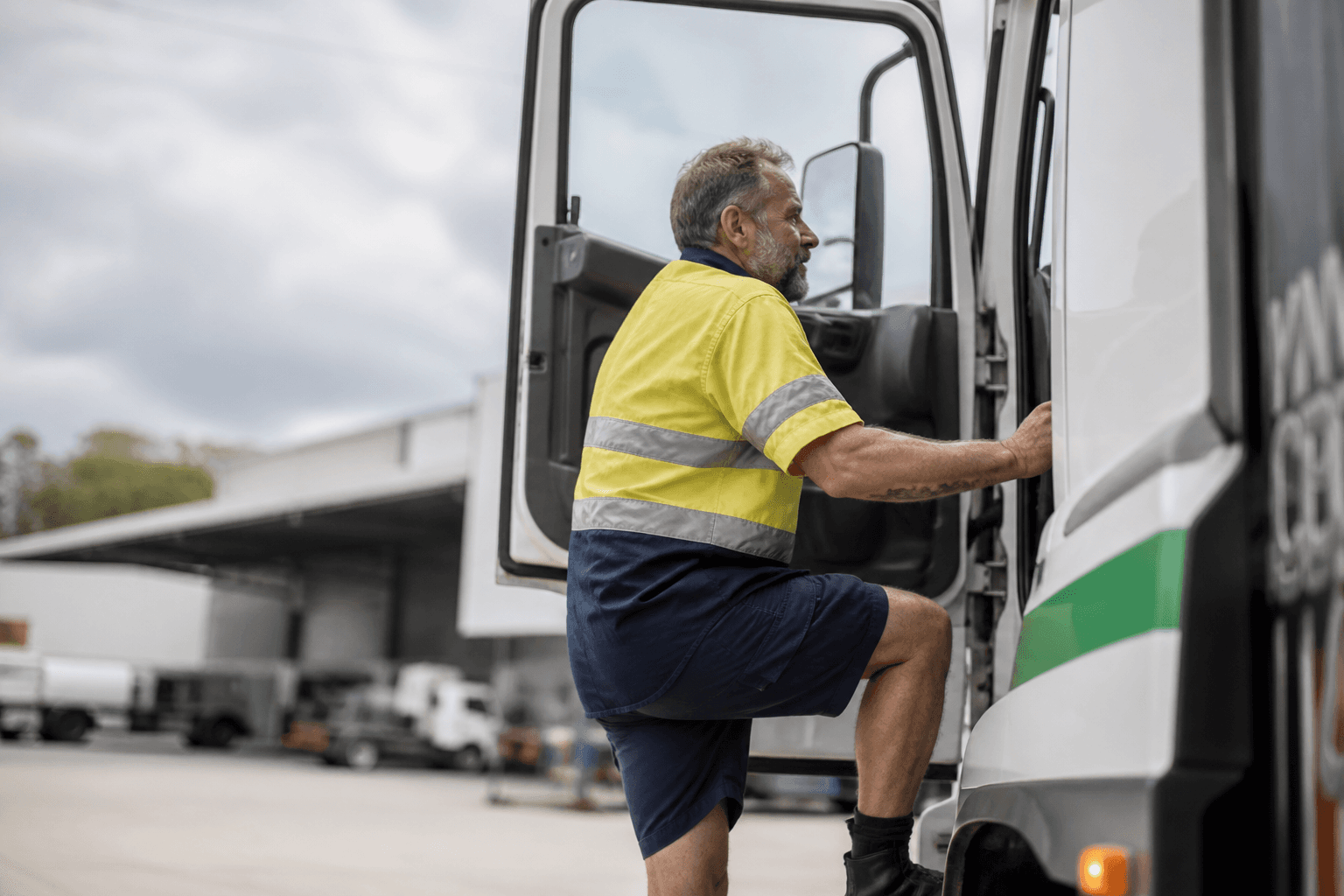
Most Australian carriers already collect the data needed to run an effective driver coaching program — it's sitting in the telematics system, mostly unused. AI driver coaching uses that same harsh-braking, idling, and fuel-burn data not to catch drivers out, but to build individual scorecards that support targeted, ongoing coaching. The shift from monitoring to coaching is where the fuel and safety gains actually show up.
What is an AI driver scorecard?
An AI driver scorecard is a per-driver summary of behavioural and performance metrics — typically fuel efficiency, harsh acceleration or braking events, idling time, speeding, and cornering — generated from telematics data and scored against a fleet or role-based benchmark. Unlike a raw telematics report, a scorecard is structured to be interpreted quickly by both the driver and their manager, often ranked or trended over time rather than presented as a one-off compliance snapshot.
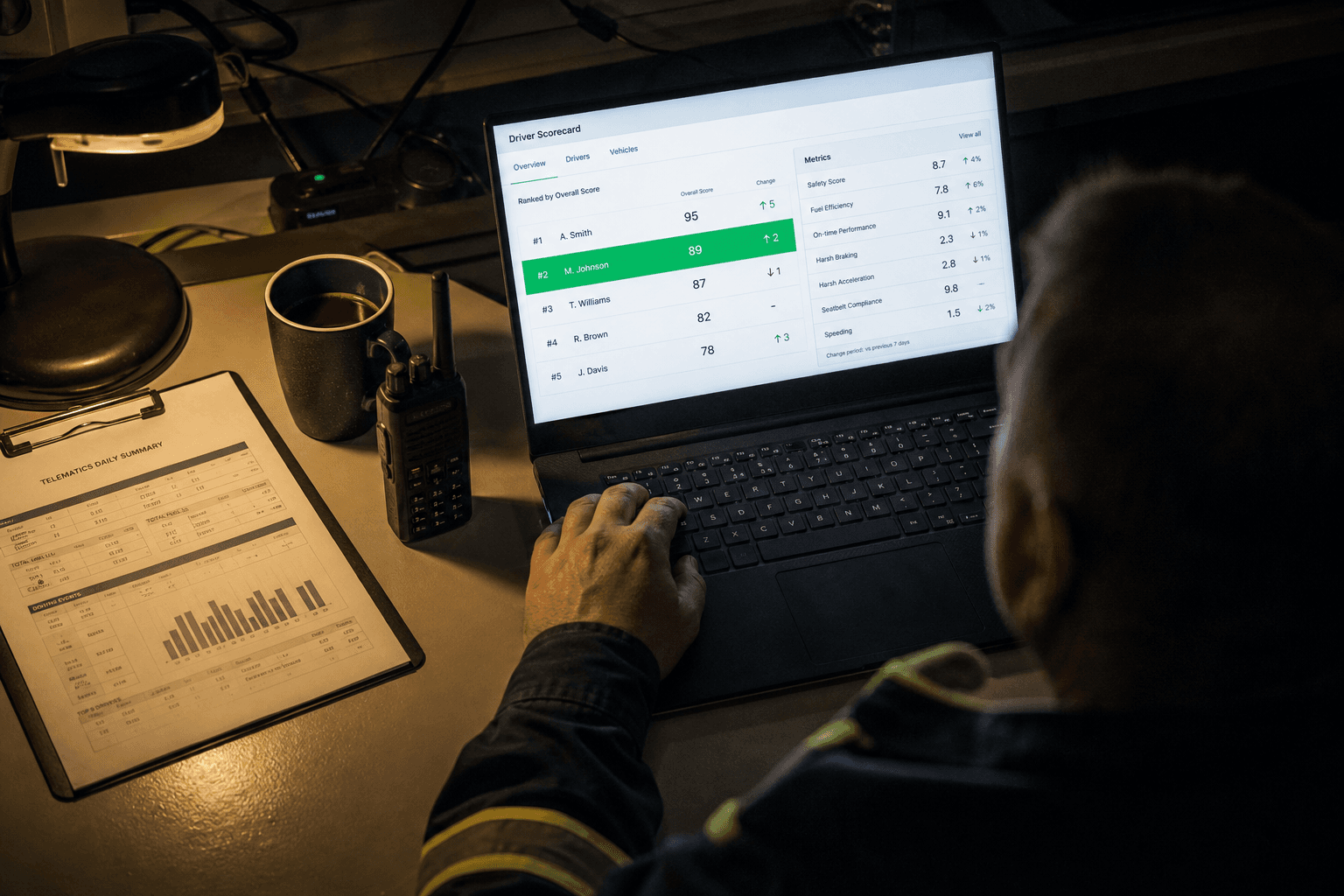
The "AI" layer typically does three things a standard telematics dashboard doesn't: it normalises scores for route type and load (so a driver on a hilly regional run isn't unfairly compared to a metro driver), it flags which specific behaviours are driving fuel cost, and it surfaces trends early enough for a coaching conversation to happen before a habit becomes costly or unsafe.
Why does fuel efficiency data matter beyond the fuel bill?
Fuel is one of the largest controllable operating costs for a road freight business, and driver behaviour is one of the few levers operators can pull without buying new vehicles. For most logistics businesses, fuel combustion from owned or leased vehicles is also the core component of Scope 1 emissions — the category carriers are increasingly being asked to report on by customers and, over time, under frameworks like AASB S2.
That means a fuel efficiency coaching program can serve two purposes at once: reducing direct fuel spend, and improving the quality of the activity data that feeds emissions reporting. If you're already building out emissions reporting capability, driver-level fuel data is a natural input rather than a separate project.
How is this different from fatigue and Chain of Responsibility compliance?
Fatigue management and Chain of Responsibility (CoR) obligations are about hours-of-service limits and rest periods under the National Heavy Vehicle Regulator's Heavy Vehicle National Law — a regulatory floor every operator must meet. Driver coaching scorecards sit in a different category: they're a voluntary, operationally-driven program aimed at improving cost and safety outcomes above and beyond what regulation requires.
It's a useful distinction to keep clear internally. CoR and fatigue compliance is about avoiding penalties and meeting a legal minimum. Fuel efficiency and safety coaching is about continuous improvement — and because it's not a compliance obligation, it only works if drivers see it as fair and useful rather than another layer of surveillance.
What telematics metrics actually matter?
The metrics worth scoring are the ones a driver can realistically influence and that have a demonstrable link to fuel cost or crash risk: harsh braking and acceleration events, excessive idling, over-revving, speed relative to posted limits, and following distance where telematics hardware supports it. Fewer, well-chosen metrics tend to produce better engagement than a dashboard with twenty indicators nobody acts on.
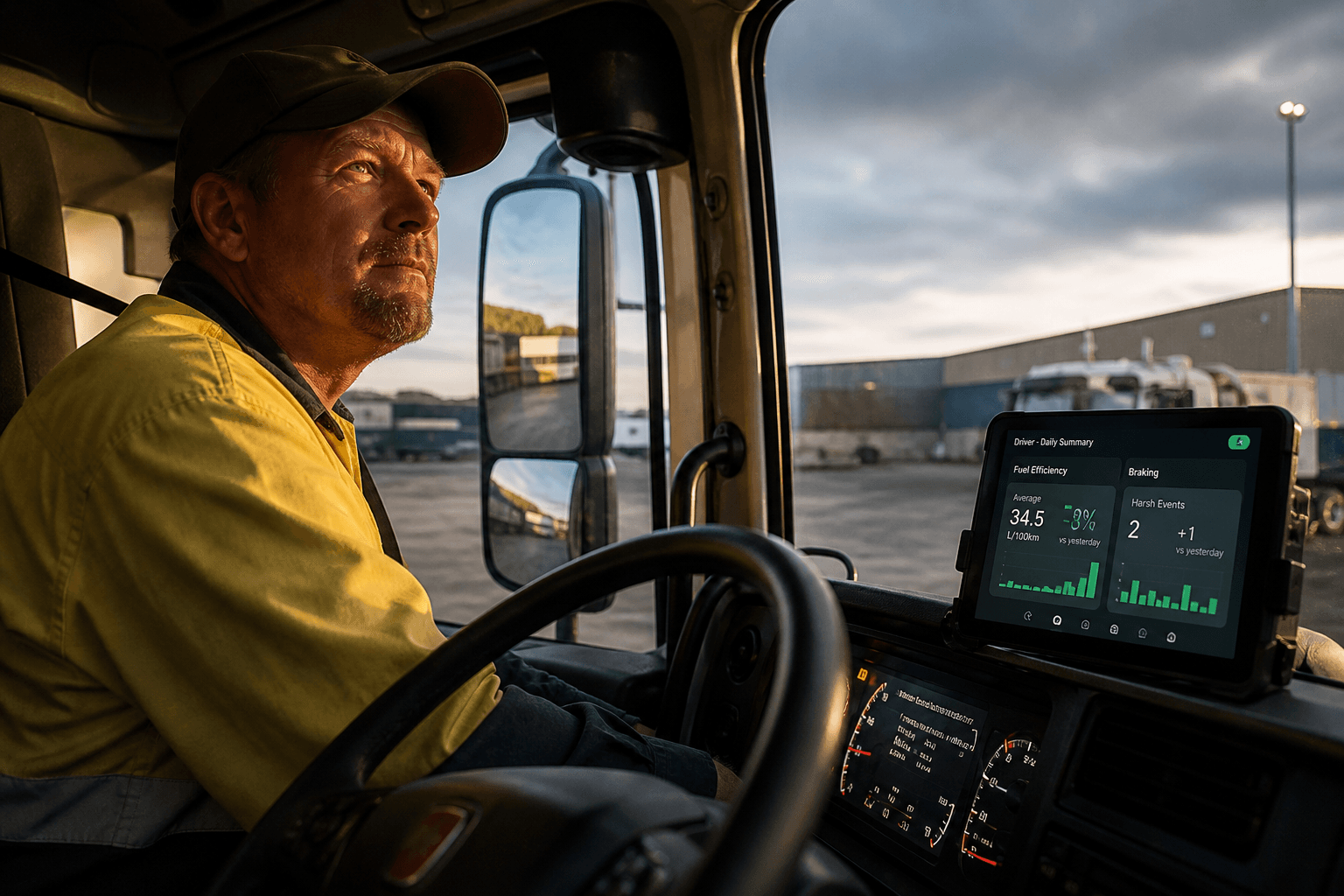
Most mid-market carriers already generate this raw data through existing telematics hardware — the gap is usually in turning it into something a driver and a dispatcher can act on weekly, not in collecting more data.
From monitoring to coaching: what actually changes behaviour?
A scorecard that's only ever used to flag poor performance to HR will get treated as surveillance, and drivers will disengage or find ways around it. A scorecard used as the basis for a short, regular coaching conversation — where the driver sees their own trend, understands which specific behaviour is costing fuel or raising risk, and gets a concrete suggestion — is far more likely to change behaviour over time.
| Approach | Compliance-only monitoring | Coaching-focused program |
|---|---|---|
| Primary use of data | Flagging incidents after the fact | Identifying trends before they become costly |
| Driver involvement | Low — data reviewed without driver input | Higher — driver sees own scorecard and trend |
| Manager role | Enforcement | Coach, supported by data |
| Typical cadence | Ad hoc, triggered by incidents | Regular (e.g. weekly or monthly) review |
| Driver perception | Surveillance | Development tool |
| Likely outcome | Short-term compliance | Sustained behaviour change |
This is a qualitative comparison based on how coaching programs are typically structured — actual results depend on fleet size, telematics data quality, and how consistently the coaching cadence is maintained.
How does this fit with your existing TMS or telematics setup?
Most carriers don't need to replace their TMS or telematics provider to run a coaching program — AI can be layered on top of existing systems to extract fuel, distance, and event data and turn it into the scorecards and trend reporting the raw platform doesn't produce natively. This is the same predictive-analytics approach increasingly used for maintenance scheduling and route optimisation: using historical operational data you already hold, rather than ripping out legacy infrastructure.
The practical question for most operations managers isn't whether the data exists — it's whether anyone has the time or tooling to turn it into something a dispatcher can use in a five-minute coaching conversation each week.
Where should a fleet start?
Start by auditing what your current telematics system already captures and how (or whether) that data reaches drivers and team leaders today. Many fleets find the data exists but sits unused in a vendor portal nobody logs into. From there, a short, structured assessment of your systems and data — rather than a large upfront technology purchase — is usually the lowest-risk way to work out whether a scorecard and coaching program is viable with what you already have, or whether gaps need addressing first.
This is the kind of question we work through in an AI Readiness Assessment: what data you've already got, what's missing, and what a realistic first module looks like. You can browse more on our insights for related reading on digital transformation and fleet data.
If you're exploring how to turn telematics data into a fuel efficiency and safety coaching program rather than another compliance report, we can help — get in touch and we'll talk through what's realistic for your fleet.
Zero Footprint
The Zero Footprint team — AI modernisation for Australian logistics.