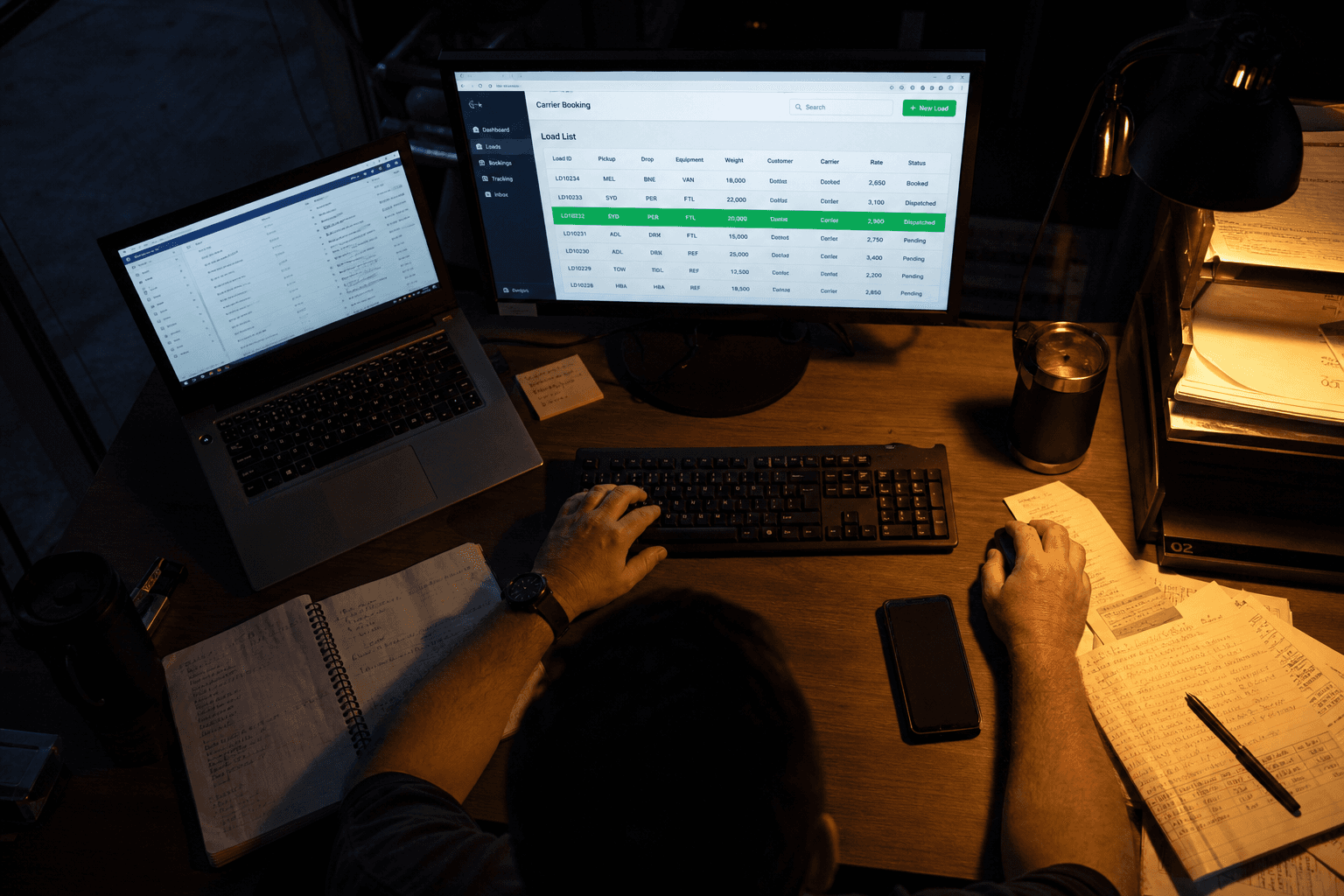
AI-Driven Logistics Optimisation for WA Mining Supply Chains
WA mining and resources supply chains — remote-site resupply, heavy haulage scheduling, and multi-modal rail/port freight — face logistics challenges that differ from general road freight. This article looks at where AI route and load optimisation genuinely applies, and how to start without a full system overhaul.
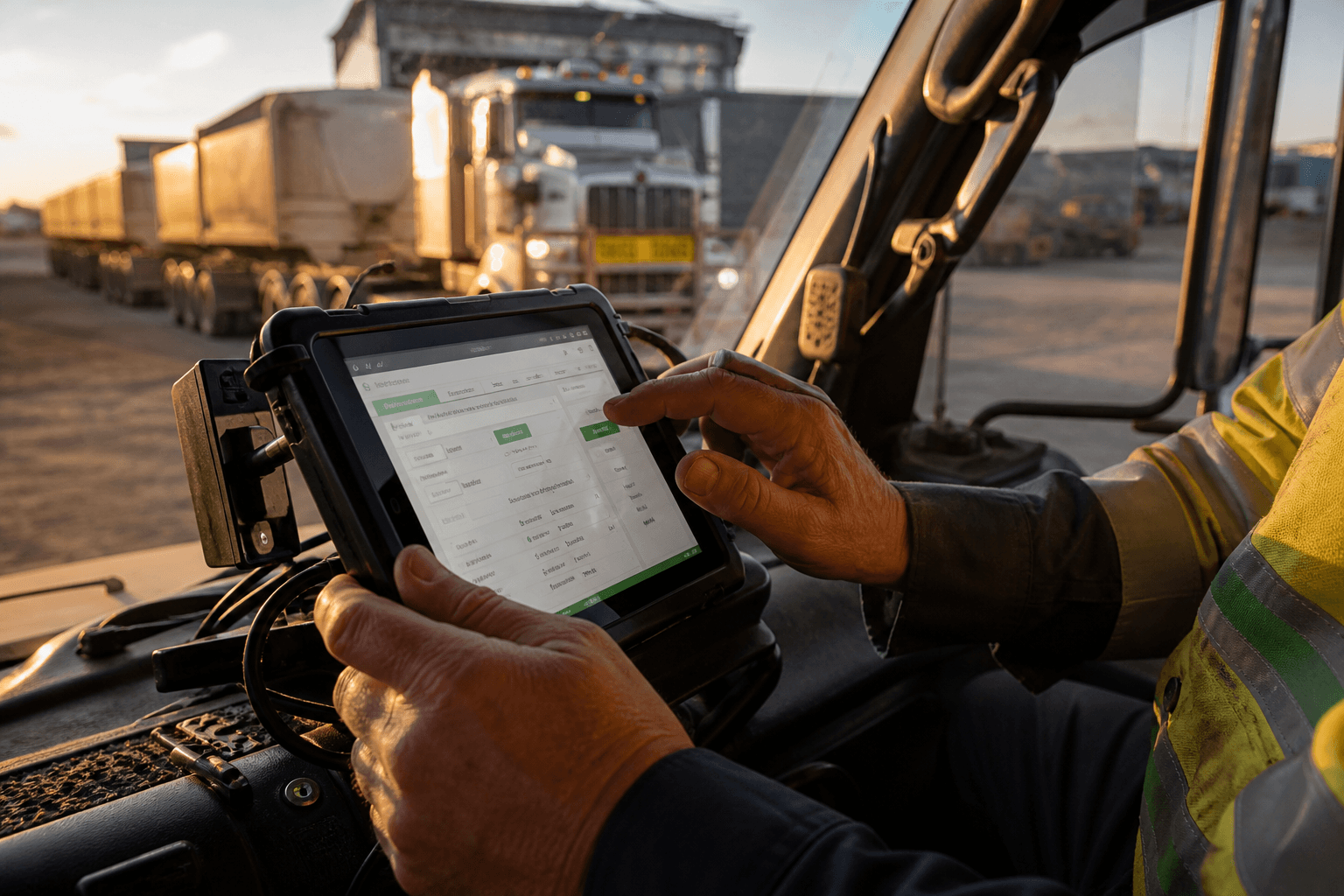
Western Australia's resources sector runs some of the most complex supply chains in the country — remote-site resupply across vast distances, heavy haulage scheduling with tight safety and load constraints, and multi-modal handoffs between road, rail and port. AI-driven route and load optimisation is increasingly relevant to these networks, not as a replacement for operational expertise, but as a way to extract more value from the data these operations already generate.
This article looks at where AI genuinely applies to mining and resources logistics in WA, and where the sensible starting point is — particularly for operators still running legacy systems and facing new emissions reporting obligations.
What makes WA mining and resources logistics different?
Mining and resources supply chains differ from general freight in three ways: extreme distances to remote sites, high-tonnage heavy haulage with strict scheduling and safety windows, and multi-modal handoffs between road, rail and port infrastructure. These characteristics mean small inefficiencies — an underutilised backload, a missed maintenance window, a delayed rail slot — carry outsized cost at scale.
FIFO workforce logistics, remote camp resupply, and bulk commodity haulage to port all depend on scheduling systems that can handle variability: weather closures, road train configurations, and rail or port congestion. Most of this scheduling is still done manually or in spreadsheets layered on top of legacy transport management systems, which limits how quickly operators can respond to disruption.
Where does AI route and load optimisation apply in mining supply chains?
Route optimisation is the use of algorithms that analyse historical delivery data, vehicle capacity, time windows and real-world constraints to determine the most efficient sequencing and routing of freight. In a mining logistics context, this extends beyond simple point-to-point routing to cover load consolidation for remote-site resupply runs, backload planning for heavy vehicles returning empty, and sequencing for multi-drop deliveries to camps and pits.
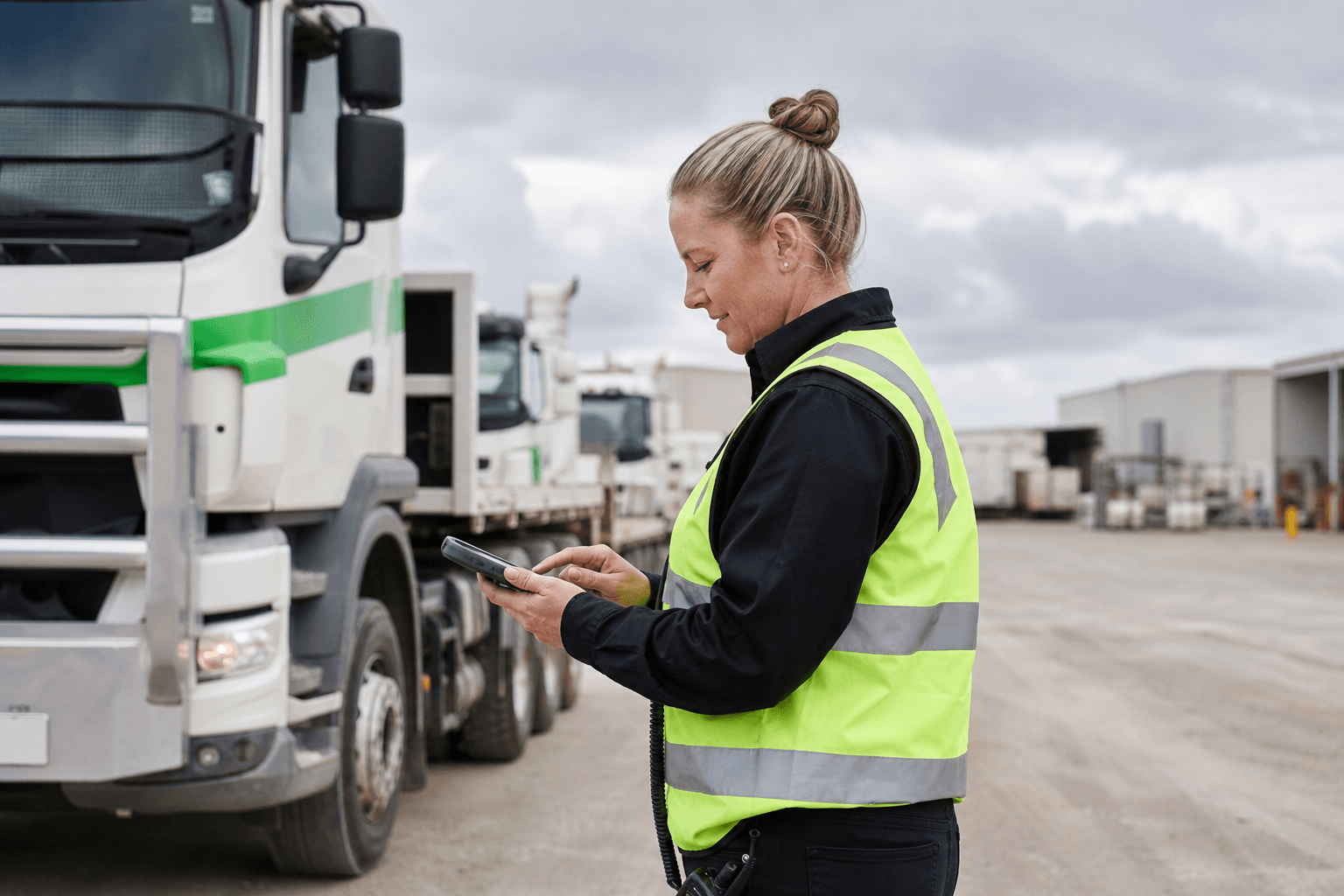
For heavy haulage scheduling specifically, AI models can incorporate vehicle configuration constraints, driver hours-of-service limits, and road access windows to produce schedules that reduce dead-running and improve fleet utilisation. For multi-modal networks — road-to-rail or road-to-port — the same data-driven approach can help align truck arrivals with rail loading windows or vessel schedules, reducing demurrage and waiting time. Our route-optimisation work applies these principles to freight networks with these kinds of constraints.
Can AI work with legacy TMS/WMS systems common in WA resources logistics?
Yes — AI can typically be layered on top of existing legacy transport and warehouse management systems rather than requiring a full platform replacement. Most mid-market logistics operators, including resources-sector carriers, are running TMS or WMS platforms implemented more than five years ago, which creates integration friction and limits the data structure AI tools need to work effectively.
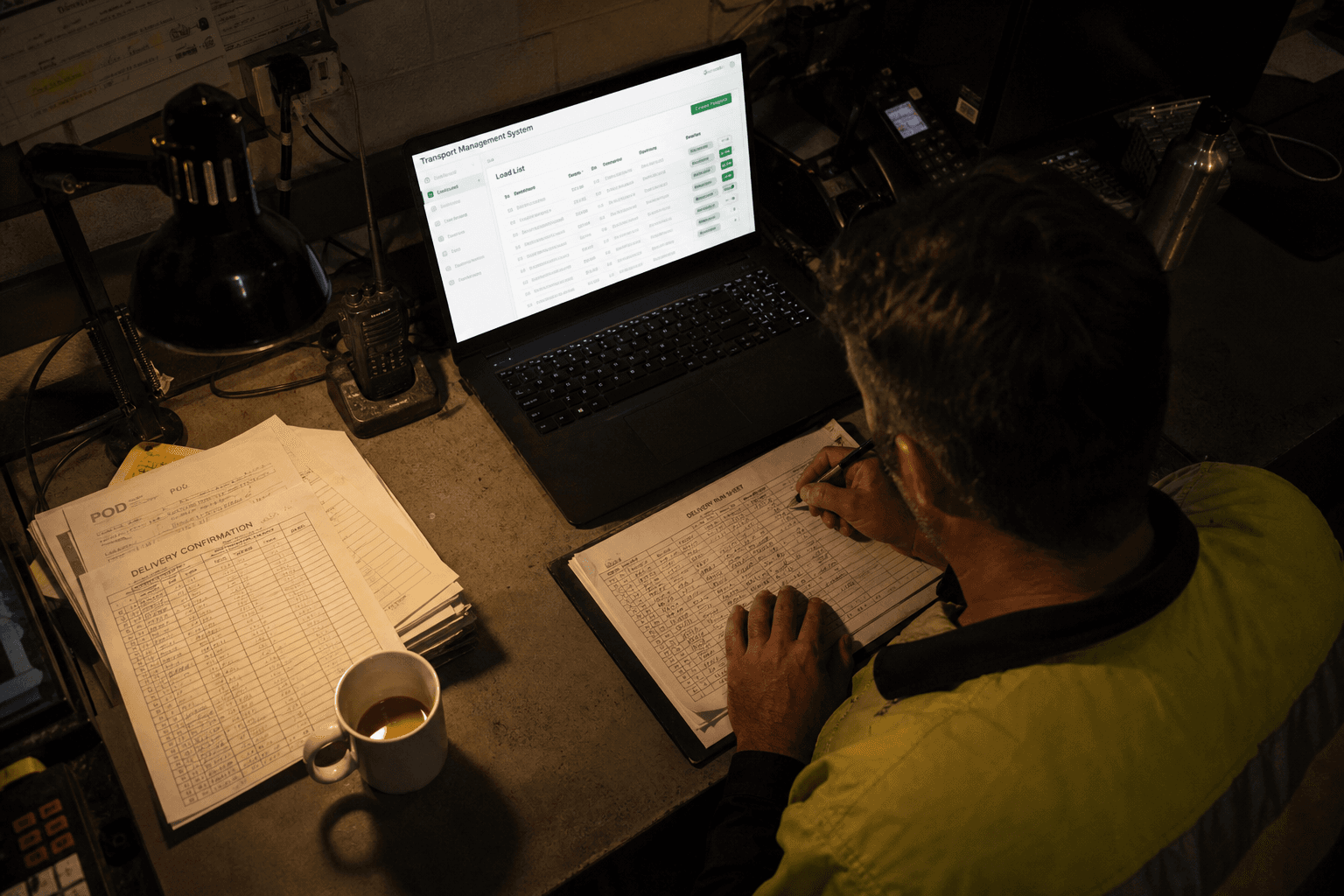
Rather than treating this as a blocker, the practical path is to extract usable data from these legacy systems — delivery records, fuel and distance logs, maintenance histories — and apply predictive analytics and workflow automation on top. This is a faster, lower-risk route to value than a system migration, and it means operators don't need to wait for a broader digital transformation project before seeing results from AI. A structured ai-readiness-assessment is typically the first step in identifying what data is usable and where the highest-value use case sits.
How does AI support predictive maintenance for mining fleets?
Predictive maintenance is the use of sensor and telematics data to identify likely equipment or vehicle failures before they occur, rather than relying on fixed-interval servicing. For resources-sector fleets — which tend to run high-utilisation, high-cost plant such as road trains, heavy haulage vehicles and loading equipment — unplanned downtime on a remote route can be far more costly than in metro freight, simply because of the distance and lead time involved in getting a replacement vehicle or part to site.
Where telematics data already exists, it can often be used to flag early warning signs of component wear or failure patterns, supporting maintenance scheduling that reduces the risk of a breakdown mid-route. This is one of the core AI use cases that applies to any heavy-logistics operator, and it's particularly relevant to long-haul resources networks.
What about AASB S2 and Scope 3 emissions reporting for mining logistics providers?
AASB S2 climate-related disclosure requirements, overseen by the Australian Accounting Standards Board (aasb.gov.au), are becoming a material obligation for larger operators and for any business facing customer-driven reporting requests from larger enterprise clients further up the supply chain. Scope 3 emissions — those generated by transport and logistics activities outside an organisation's direct operations — are typically the hardest category to measure accurately, particularly for heavy haulage and multi-modal freight where fuel and distance data sits across multiple systems.
The same data extraction techniques used for route and maintenance optimisation can support this reporting obligation: pulling fuel consumption, distance and load data out of legacy TMS/WMS platforms to build a defensible emissions baseline aligned with National Greenhouse and Energy Reporting (NGER) requirements administered by the Clean Energy Regulator (cleanenergyregulator.gov.au). Our emissions-reporting service is built around this extraction-and-reporting workflow, and document-intelligence tools can help where fuel, freight and maintenance records sit in unstructured paper or PDF formats — a common issue in remote-site operations.
Legacy approach vs AI-augmented approach
| Function | Legacy / manual approach | AI-augmented approach |
|---|---|---|
| Remote-site resupply scheduling | Manual planning in spreadsheets, limited visibility of backload opportunities | Data-driven load consolidation and route sequencing |
| Heavy haulage scheduling | Fixed schedules adjusted reactively to disruption | Dynamic scheduling incorporating constraints and real-time conditions |
| Multi-modal handoffs | Manual coordination between road, rail and port teams | Data-aligned scheduling to reduce waiting and demurrage |
| Fleet maintenance | Fixed-interval servicing | Telematics-informed predictive maintenance |
| Emissions data | Manual collation from multiple systems | Automated extraction supporting AASB S2 / NGER reporting |
This comparison is qualitative rather than a guarantee of specific savings — the right approach depends on each operator's existing systems, data quality and network complexity.
How should WA mining logistics operators start with AI adoption?
The sensible starting point is an assessment of what data already exists, how clean it is, and which use case offers the clearest return before committing to a larger build. This avoids the common failure mode of starting with an ambitious AI project before confirming the underlying data can actually support it.
For most resources-sector operators, this means beginning with a focused readiness assessment that maps existing TMS/WMS data, identifies the highest-value use case — whether that's route optimisation, predictive maintenance or emissions reporting — and sets out a staged path to build on top of what's already in place. You can read more on this approach across our insights.
If you're exploring how AI-driven route and load optimisation could apply to a WA mining or resources supply chain, we can help — starting with a straightforward assessment of where your data and operations currently stand.
Zero Footprint
The Zero Footprint team — AI modernisation for Australian logistics.