AI-Powered Registration & Compliance Renewal Tracking for Fleets
Manual tracking of vehicle registration, roadworthiness, and permit renewals is a common blind spot for Australian freight fleets running legacy systems. Here's how AI-based document extraction and alerting can close that gap without replacing your existing TMS.

What is AI-powered compliance renewal tracking for freight fleets?
AI-powered compliance renewal tracking is the use of AI tools — document extraction, data normalisation, and automated alerting — layered on top of existing fleet and compliance systems to flag upcoming vehicle registration, licensing, and permit deadlines before they lapse. It is not a replacement for your TMS or compliance platform. It is a way to make the data you already hold work harder, catching dates that currently live in spreadsheets, inboxes, or someone's head.
This article focuses specifically on registration, roadworthiness, and permit renewal tracking — not Chain of Responsibility obligations or fleet capital/replacement planning, which are separate problems with their own processes.
Why do freight fleets struggle to track registration and renewal deadlines?
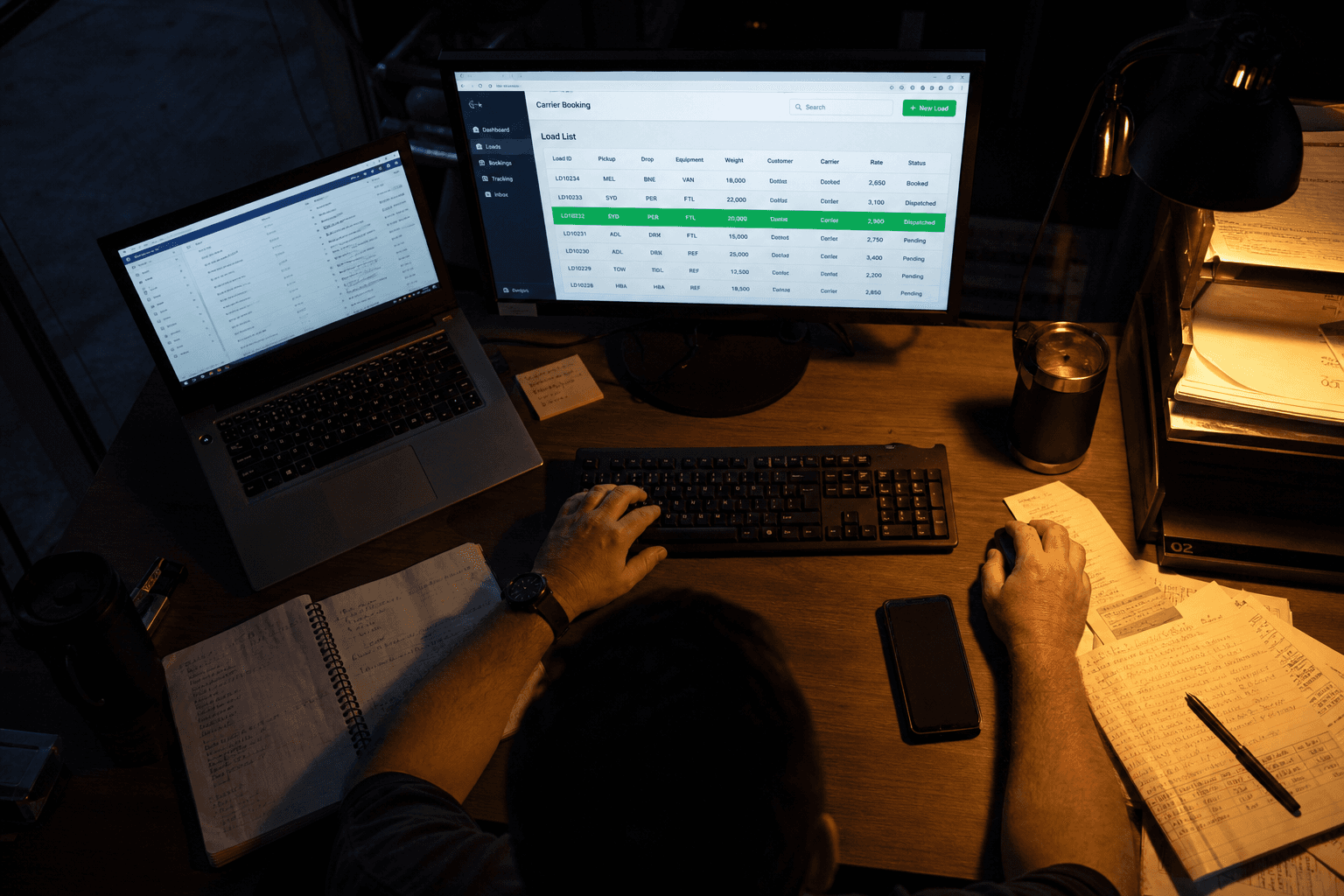
Most mid-market fleets run legacy TMS or WMS platforms that were never built with real-time compliance visibility in mind. Registration dates, roadworthiness certificates, and state or NHVR permits often sit in separate systems, paper files, or individual managers' calendars — with no single view of what's due and when.
This is a known pattern across the industry. Off-the-shelf global platforms frequently lack localisation for Australian heavy vehicle requirements, including NHVR and Heavy Vehicle National Law (HVNL) compliance fields, leaving operators to track these manually outside the system. The result is a patchwork of workarounds: a spreadsheet here, a reminder in someone's inbox there, and renewal dates that depend on one person remembering to check.
For fleets of 50+ vehicles operating across multiple states, this manual approach doesn't scale. A missed registration or expired permit can mean a vehicle off the road, a failed audit finding, or — in the worst case — a vehicle pulled over mid-delivery.
How can AI help without replacing your existing systems?
AI can be layered on top of legacy fleet and compliance systems to automate the manual steps around registration and renewal tracking — without a costly system replacement. This mirrors a broader pattern already proven in freight operations: using AI for data extraction, normalisation, and workflow automation on top of outdated TMS/WMS platforms, rather than ripping and replacing them.

Applied to compliance tracking, this looks like:
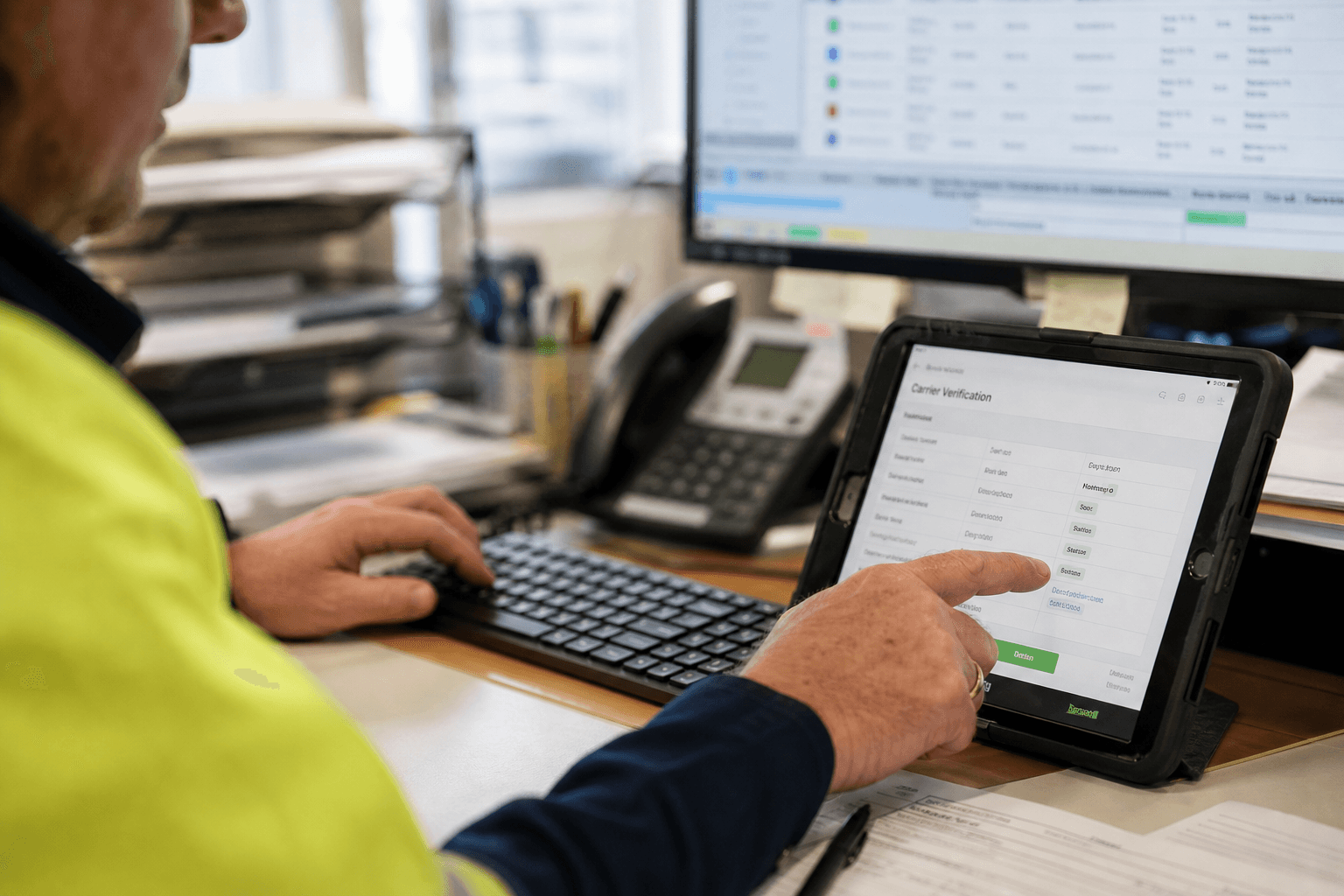
- Document extraction: Pulling registration expiry dates, roadworthiness certificate details, and permit terms from scanned certificates, emails, or PDFs that currently require manual entry.
- Data normalisation: Consolidating registration and permit data that's scattered across state transport authority portals, spreadsheets, and legacy fleet records into a single, consistent view.
- Automated alerting: Flagging upcoming renewals to the right person — a fleet administrator, compliance manager, or depot supervisor — with enough lead time to act, rather than relying on manual calendar checks.
This is the same underlying approach our document-intelligence work applies to proof-of-delivery and freight documentation — extracting structured data from unstructured paperwork so people aren't manually re-keying information.
Manual tracking vs AI-assisted tracking: what's the practical difference?
| Aspect | Manual tracking | AI-assisted tracking |
|---|---|---|
| Source of truth | Spreadsheets, inboxes, individual memory | Centralised, extracted from source documents |
| Visibility across fleet | Limited, fragmented by depot or manager | Consolidated view across vehicles and locations |
| Lead time on renewals | Often reactive, depends on who remembers | Earlier, consistent alerting |
| Scalability | Breaks down as fleet size grows | Scales with document volume |
| Audit trail | Inconsistent, hard to reconstruct | Clearer record of what was flagged and when |

This table reflects qualitative differences based on how legacy systems and manual workflows typically behave — not a specific product benchmark. The right approach for your fleet depends on your current systems, document volume, and how your compliance team is structured.
Is this the same as emissions or AASB S2 compliance tracking?
No — registration and roadworthiness compliance is a distinct obligation from climate-related financial disclosure under AASB S2. Vehicle registration tracking concerns keeping vehicles legally on the road; AASB S2 and Scope 3 emissions reporting concerns disclosing a company's climate-related risks and supply chain emissions to regulators and investors.
Both share a common root cause, though: legacy systems that weren't designed to capture structured, vehicle-level data. The same gap that makes registration tracking hard — fragmented data, no automated extraction, no single source of truth — also makes it difficult to capture the fuel, distance, and load data needed for Scope 3 reporting. If your business is also facing AASB S2 deadlines, our emissions-reporting work addresses that separately, but it's a different compliance domain with different data requirements and should be scoped on its own terms.
Where should an operator start?
Start by mapping where your registration, licensing, and permit data currently lives, and how renewal dates are tracked today — before introducing any new tooling. Most operators find the gap isn't a lack of data; it's that the data is scattered across systems that don't talk to each other.
An ai-readiness-assessment is a practical first step for fleets wanting to understand where manual compliance tracking is creating risk, and whether AI-based document extraction and alerting could be layered onto their existing systems without a full platform replacement. This kind of assessment typically takes a few weeks and produces a clear picture of what's feasible given your current TMS, document formats, and team structure — rather than a generic AI pitch.
For broader context on modernising legacy fleet systems without a disruptive rebuild, see our insights on legacy system modernisation in logistics.
The bottom line
AI-powered compliance renewal tracking isn't about replacing your TMS or compliance software — it's about using AI to extract, consolidate, and surface the registration and permit data that's currently scattered across your fleet. For mid-market operators running legacy systems with little in-house data capability, this is often a faster and lower-risk path to reducing compliance lapses than a full system overhaul.
If you're exploring how AI could reduce manual compliance tracking across your fleet, we can help — starting with an honest assessment of what's feasible given your current systems.
Zero Footprint
The Zero Footprint team — AI modernisation for Australian logistics.