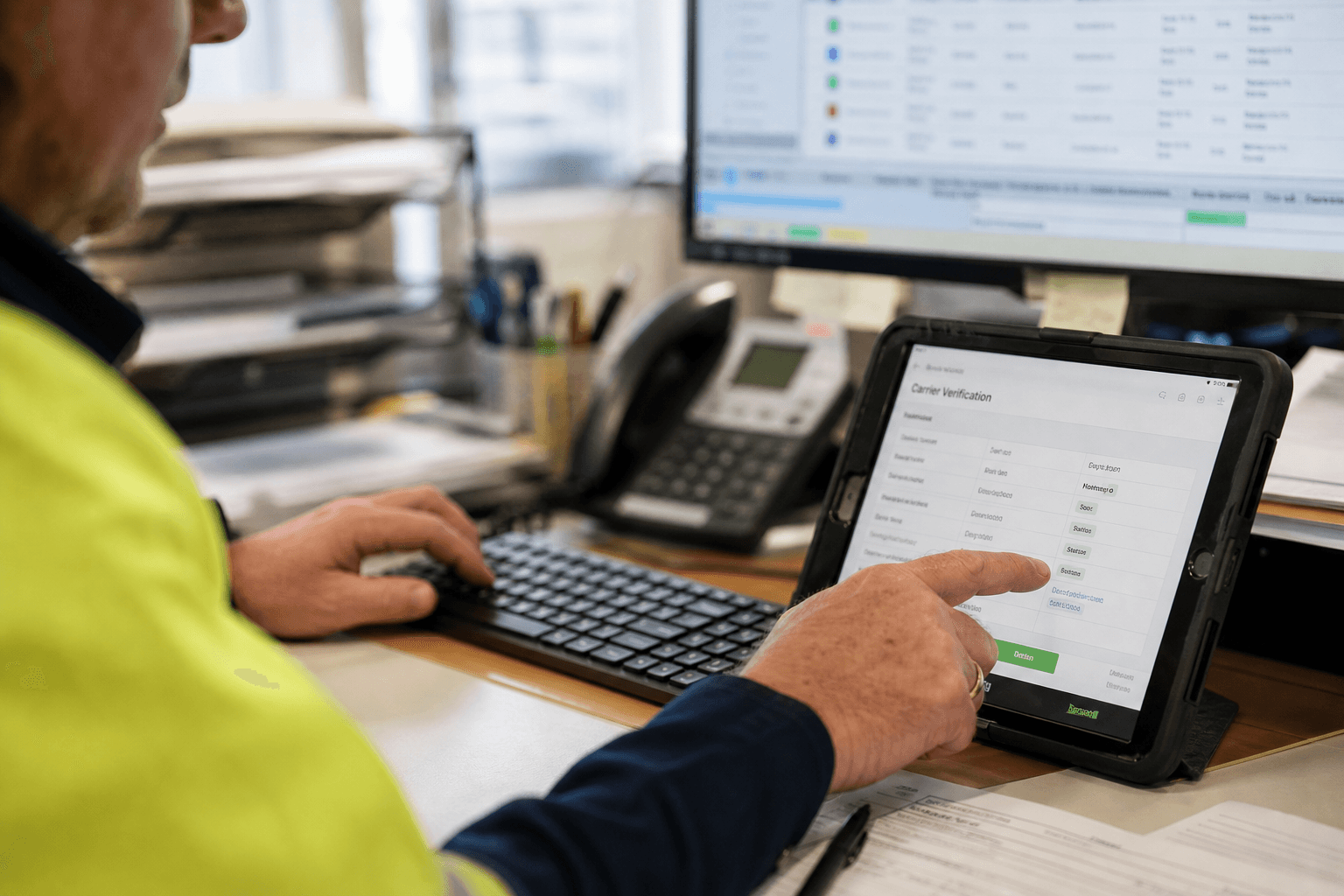
AI-Powered Carrier Booking Fraud Detection for 3PLs
Carrier booking fraud — identity theft on load boards, double brokering, and payment redirection scams — is a growing risk for Australian freight brokers and 3PLs. Here's how AI-assisted document verification and anomaly detection can help close the gaps manual processes miss.
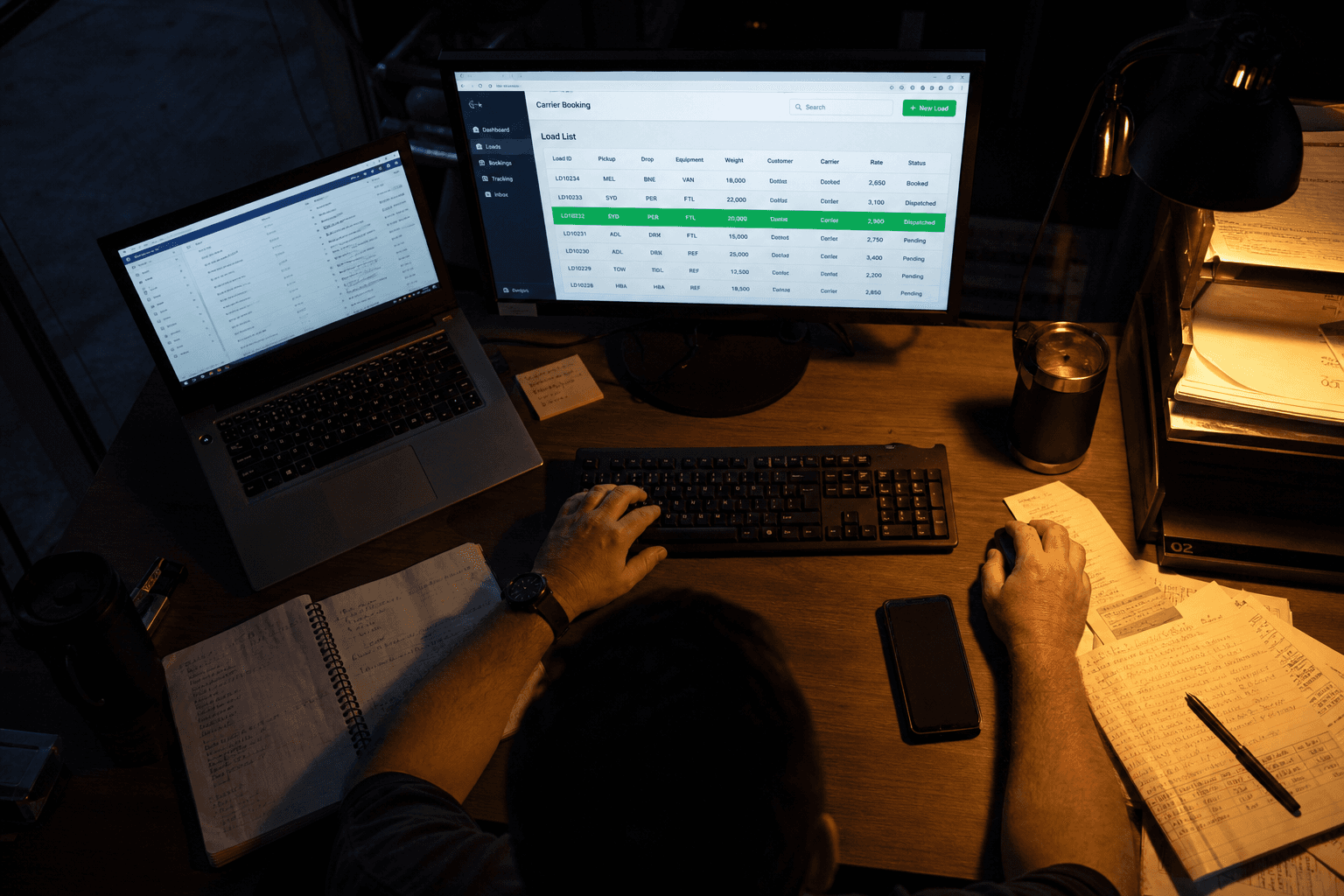
Freight brokers and 3PLs are increasingly exposed to a category of loss that sits outside traditional cybersecurity or vendor risk programs: booking fraud. This includes fraudulent carrier identities on load boards, double brokering, and payment redirection scams that divert freight charges to criminals instead of the carrier who actually moved the load. These schemes exploit gaps in manual carrier onboarding and booking processes — gaps that AI-assisted verification and anomaly detection are increasingly used to close.
What Is Carrier Booking Fraud?
Carrier booking fraud is the use of false, stolen, or manipulated carrier credentials to secure freight, collect payment, or redirect funds without legitimate authority to move the goods. It typically takes one of three forms: identity theft on load boards, double brokering, and payment redirection (business email compromise). Each exploits a different weak point in the booking-to-payment chain, and each has a distinct detection signature.
How Does Identity Theft Happen on Load Boards?
Identity theft on a load board occurs when a fraudster poses as a legitimate, accredited carrier — often using a stolen Australian Business Number (ABN), insurance certificate, or NHVR accreditation detail — to win a booking they have no intention of fulfilling safely or at all. Load boards and freight-matching platforms generally verify documents at registration, but few re-check credentials at the point of each individual booking, which is where fraudulent re-use of stolen identities typically surfaces.
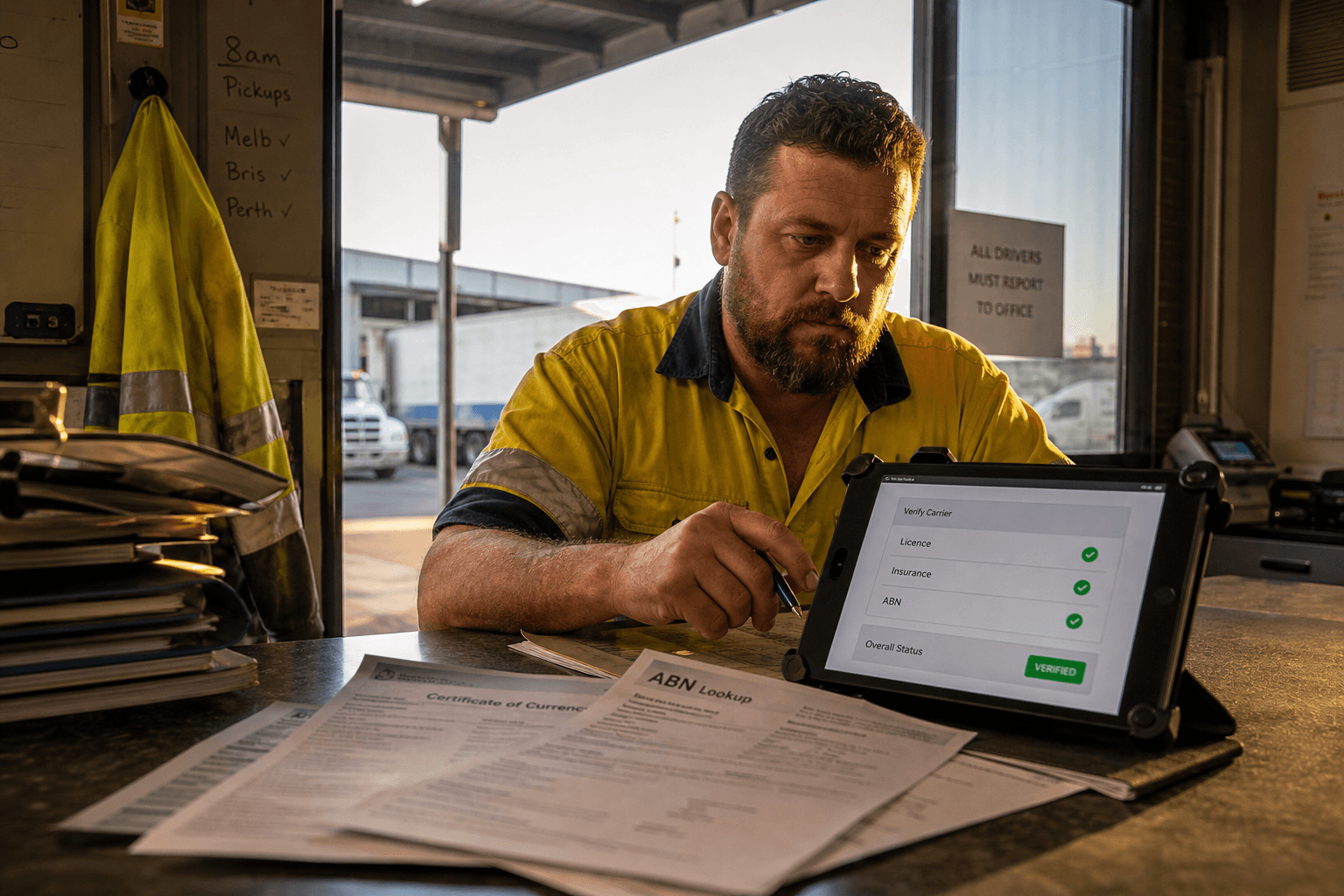
Because the fraudulent party often has copies of genuine documents (scanned, forwarded, or purchased), manual visual review frequently fails to catch the impersonation. The documents look correct. What's wrong is the entity presenting them.
What Is Double Brokering and Why Is It Hard to Catch?
Double brokering is when a carrier or broker accepts a load, then re-brokers it to a second, unauthorised carrier without the original broker's knowledge or consent — often collecting payment from both ends or disappearing before the freight is delivered. It is hard to catch because the paperwork at each handoff can look procedurally normal: a rate confirmation, a bill of lading, a proof of delivery. The fraud is in the chain of custody, not in any single document.
For brokers managing high booking volumes with legacy TMS platforms and manual dispatch processes, double brokering is difficult to spot without cross-referencing carrier identity, equipment, driver, and payment details across multiple bookings — a task that doesn't scale well with spreadsheets or email-based coordination.
How Do Payment Redirection Scams Work?
Payment redirection scams — a form of business email compromise (BEC) — involve a fraudster intercepting or spoofing broker-carrier correspondence to change bank account details on an invoice, so freight charges are paid to the fraudster's account instead of the legitimate carrier's. The ACCC's Scamwatch service (scamwatch.gov.au) tracks business email compromise as one of the persistent scam categories affecting Australian businesses, and freight payment chains — with their high transaction volumes and multiple intermediaries — are a known target pattern for this type of fraud.
These scams typically don't involve hacking the broker's systems at all. They exploit trust in email threads and the absence of a secondary verification step before a bank detail change is actioned.
Where Does AI Fit Into Fraud Detection?
AI-assisted fraud detection works by applying pattern recognition and document verification models to carrier onboarding and booking data, flagging anomalies that fall outside a carrier's established behaviour — rather than relying solely on manual, one-time document checks. This includes cross-referencing ABN and insurance details against authoritative registers, detecting inconsistencies in document metadata, and flagging booking or payment patterns that deviate from a carrier's historical profile (unusual routes, mismatched equipment, last-minute bank detail changes).

Document intelligence — AI models trained to read, extract, and cross-check structured and unstructured freight documents — is particularly relevant here, since much of the fraud surface sits in rate confirmations, proof-of-delivery paperwork, and accreditation certificates. Our document-intelligence work focuses on exactly this kind of structured extraction and validation across freight paperwork, which is a necessary foundation before any fraud-specific model can be layered on top.
Manual vetting versus AI-assisted monitoring
| Factor | Manual vetting | AI-assisted monitoring |
|---|---|---|
| Document review | One-time, at onboarding | Ongoing, re-checked per booking |
| Cross-referencing carrier history | Limited, relies on staff memory | Systematic, across all bookings |
| Detecting bank detail changes | Relies on staff noticing anomalies | Flags deviations automatically |
| Scalability with booking volume | Degrades as volume grows | Consistent regardless of volume |
| Dependence on data quality | N/A | High — poor data undermines detection |
AI-assisted monitoring doesn't replace human judgement in fraud cases — it narrows the pool of bookings that need a closer look, which matters when a brokerage is processing hundreds of bookings a week with a small operations team.
Why Is This Different From General Cybersecurity or Vendor Risk Scoring?
Booking fraud is a transactional and identity problem, not a network intrusion problem. Cybersecurity tools protect systems from unauthorised access; vendor risk scoring assesses a supplier's financial and compliance standing over time. Carrier booking fraud instead happens inside legitimate-looking, individual transactions — a real booking, with real-seeming documents, executed by the wrong party. That distinction matters because the controls that stop a data breach or flag a financially unstable vendor won't necessarily catch a fraudulent booking slipped into an otherwise normal day's dispatch volume.
Why Does Data Foundation Matter First?
AI fraud detection is only as good as the carrier and booking data feeding it, which means brokers running on legacy TMS platforms, spreadsheets, and email-based dispatch typically need to address data structure and system integration before fraud-specific models can run reliably. This is consistent with the broader pattern we see across digital transformation in Australian logistics: AI use cases like route optimisation, demand forecasting, and exception management all depend on clean, structured, integrated data — and fraud detection is no exception.
For brokers and 3PLs still running manual or semi-manual booking processes, the practical starting point is usually an assessment of where carrier and booking data lives, how it's structured, and what's missing — before deciding what fraud-specific capability to build. That's the kind of groundwork covered in an ai-readiness-assessment.
What Should Freight Brokers Do Next?
Start by mapping where fraud risk actually sits in your booking-to-payment chain — onboarding, individual bookings, or payment processing — rather than assuming a single tool will cover all three. Each requires a different control: identity re-verification at booking, chain-of-custody tracking across multi-party loads, and secondary verification before bank detail changes are actioned.
If you're exploring how AI in logistics could help your brokerage manage carrier risk, document verification, or broader digital transformation, we can help assess where the gaps are and what's realistic to build first.
Zero Footprint
The Zero Footprint team — AI modernisation for Australian logistics.