Award Compliance and Payroll Automation for Transport Workforces
Award compliance and payroll automation are increasingly front of mind for Australian transport operators under labour cost pressure. This piece looks at how digital scheduling tools and AI can enforce Fair Work award rules, manage multi-state payroll complexity, and reduce manual reconciliation risk.
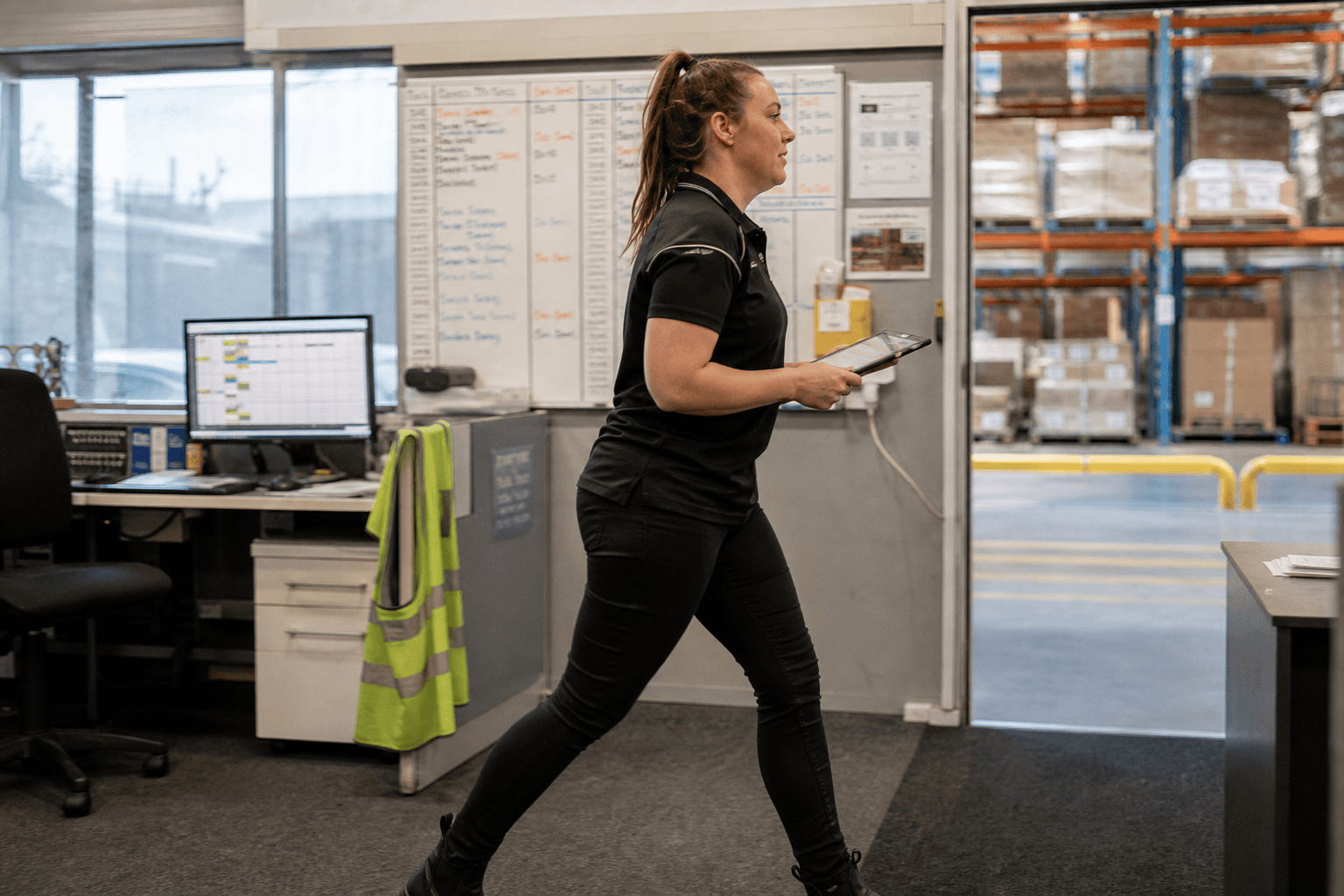
Labour cost pressure is one of the most common reasons mid-market carriers and 3PLs start looking at AI. Award compliance and payroll automation sit right at the centre of that pressure — not because the rules are new, but because most operators are still trying to manage complex, multi-state workforce obligations with spreadsheets, paper timesheets, and manual payroll reconciliation.
What does award compliance actually involve for transport operators?
Award compliance means correctly applying the Fair Work Act 2009 and the relevant Modern Award — typically the Road Transport and Distribution Award or the Storage Services and Wholesale Award — to every shift, overtime hour, and allowance a driver or warehouse worker is owed. For heavy vehicle operators, this sits alongside separate NHVR Heavy Vehicle National Law work-and-rest-hour rules, which carry their own strict record-keeping requirements. A Modern Award is a legally binding document that sets minimum pay rates, penalty rates, overtime rules, and conditions for a specific industry or occupation. Getting any of this wrong — even unintentionally — creates underpayment exposure, Fair Work Ombudsman scrutiny, and in the case of heavy vehicle operators, potential Chain of Responsibility liability.
Why do spreadsheets and paper rosters create compliance risk?
Spreadsheet and paper-based rostering creates compliance risk because there's no automated check against award rules, rest-hour thresholds, or overtime triggers before a shift is approved. A dispatcher manually building next week's roster in Excel has no real-time visibility into who's approaching an overtime threshold, who hasn't had a compliant rest break, or how multi-state award differences apply to a driver working interstate routes. These gaps don't usually show up until an audit, a Fair Work complaint, or a payroll reconciliation turns up a discrepancy — by which point the exposure has already accumulated across months of rosters.

How can AI and digital scheduling tools help with award compliance?
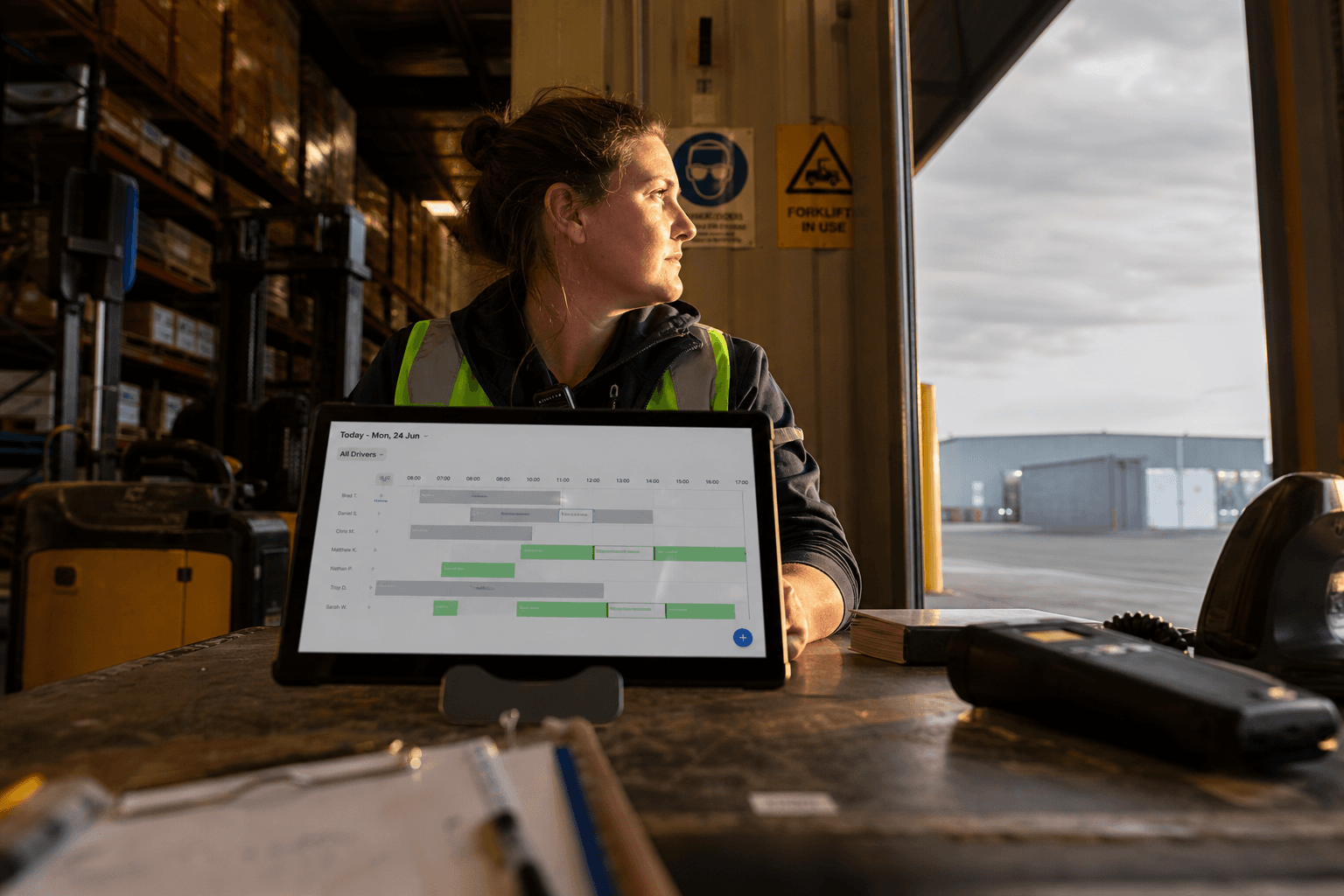
Modern workforce scheduling platforms automate the parts of award compliance that are currently manual: enforcing minimum rest periods and overtime thresholds at the point a roster is built, flagging breaches before they happen rather than after, and managing shift swaps and availability without breaking compliance rules. Platforms in this category (such as Shyft) also support demand-based scheduling and multi-site management, which matters for operators running depots across Victoria, NSW, and Queensland with different award interpretations in play. AI-assisted scheduling — using demand forecasting and historical availability data to recommend shift allocations — is an emerging capability here, though it's currently narrower in scope than AI applied to areas like route optimisation or predictive maintenance.
What does payroll integration solve that manual reconciliation doesn't?
Payroll integration solves the double-handling problem: instead of a payroll officer manually re-keying timesheet data from a scheduling spreadsheet into a payroll system, approved timesheet data flows through automatically. This cuts the manual reconciliation step that's typically the slowest and most error-prone part of weekly or fortnightly payroll runs for transport and warehouse workforces. For an operator running drivers across multiple states with different award conditions, this also reduces the risk of transcription errors that compound into underpayment issues over time.
Can AI reliably interpret awards and calculate penalty rates?
Award interpretation — automatically calculating the correct penalty rate, allowance, or overtime multiplier for a given shift under a specific Modern Award — is a narrower and more specialised capability than general rostering automation. It requires the underlying system to encode the specific rules of the Road Transport and Distribution Award, the Storage Services and Wholesale Award, or whichever award applies, and keep that logic current as awards are varied. This is genuinely harder than scheduling automation, and operators should treat vendor claims in this space with the same scrutiny they'd apply to any system handling statutory pay obligations.
Will offshore workforce management tools work for Australian transport operators?
Not without significant localisation. Many workforce scheduling and payroll platforms are built for European or North American labour law — a tool designed around German works council requirements, for example, doesn't natively understand Fair Work Act obligations or NHVR work-and-rest-hour rules. This is a real barrier for operators evaluating offshore SaaS products: the platform may look capable in a demo, but the compliance logic underneath needs to be rebuilt for the Australian regulatory environment before it can be trusted with real payroll decisions.
Manual rostering versus digital compliance tools
| Factor | Manual (spreadsheet/paper) | Digital scheduling platform |
|---|---|---|
| Overtime threshold visibility | After the fact, during payroll | Real-time, before shift approval |
| Rest-hour compliance (NHVR) | Manually tracked, audit risk | Automatically enforced |
| Multi-state award handling | Relies on individual knowledge | Configurable per site/award |
| Payroll reconciliation | Manual re-keying | Automated data export |
| Audit trail | Incomplete or paper-based | System-logged |
Where does this fit into a broader modernisation program?
Award compliance and payroll automation rarely justify a standalone technology project on their own — they're usually one module in a wider digital transformation program alongside dispatch, warehouse, and document workflows. For operators running legacy TMS or WMS platforms, this kind of workforce automation can often be layered on top of existing systems rather than requiring a full replacement, similar to how document intelligence tools can sit alongside legacy platforms to automate order entry and paperwork. The sequencing matters: understanding where your current rostering and payroll processes create the most risk is a useful starting point before committing budget to a specific platform.
If labour cost pressure, driver shortages, or an upcoming audit are pushing award compliance and payroll automation up your priority list, it's worth getting a clear-eyed view of where the real risk and opportunity sit before choosing a tool. Read more on our insights page, or if you'd like to talk through your current rostering and payroll setup, get in touch — we can also help assess fit through an AI Readiness Assessment.
Zero Footprint
The Zero Footprint team — AI modernisation for Australian logistics.