AI Phone Automation for Freight and 3PL Operations in Australia
AI phone and chat agents can absorb after-hours calls, booking confirmations, and POD requests for Australian freight and 3PL operators — but only if they're connected to real operational data. Here's how logistics-specific implementations differ from generic answering services, and where they fit against your existing TMS and WMS.
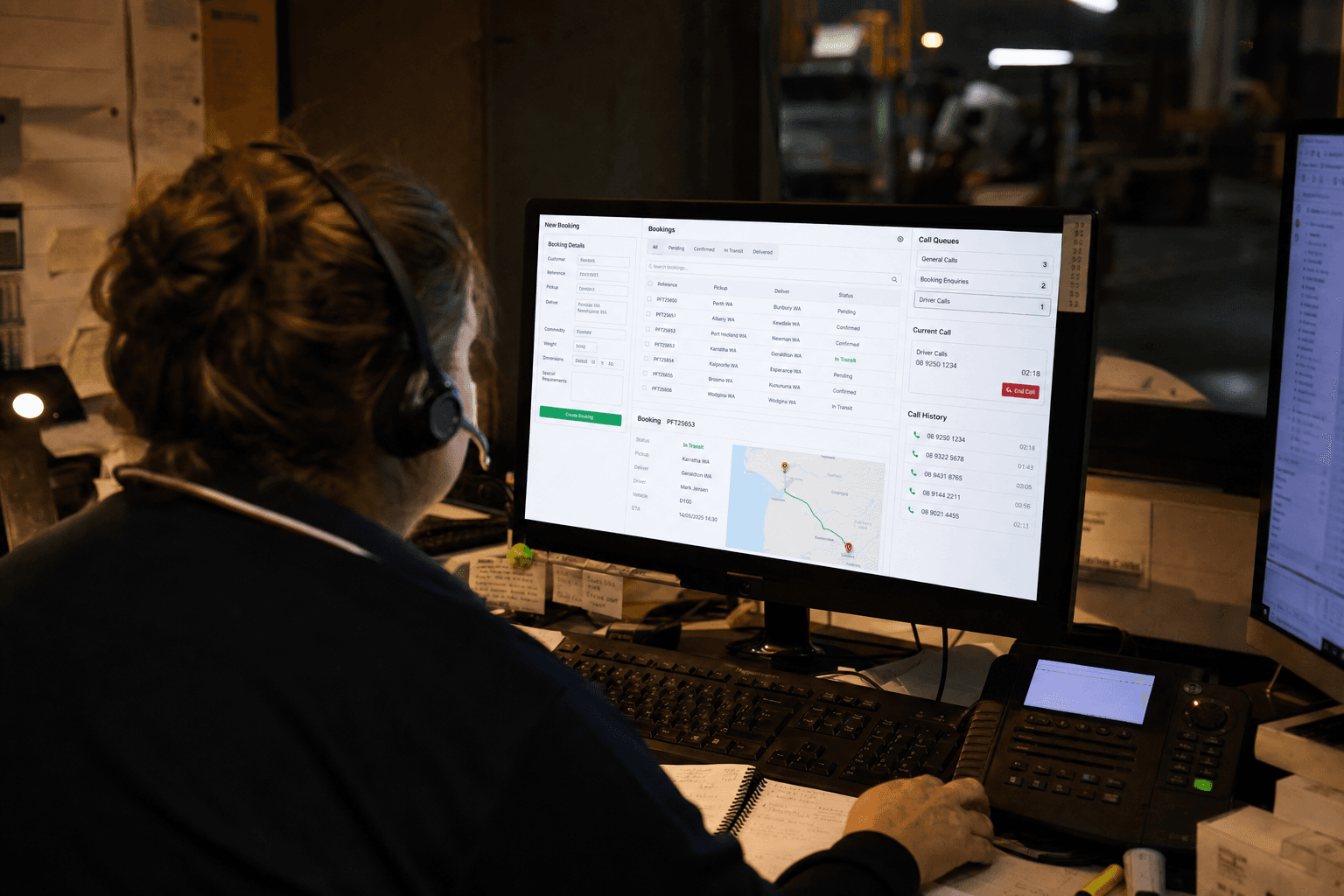
AI phone and front-desk automation uses voice and chat agents to handle inbound freight enquiries — booking confirmations, proof-of-delivery (POD) requests, ETA questions, and after-hours calls — without a dispatcher or customer service rep picking up every call manually. For Australian carriers and 3PLs juggling extended hours, driver shortages, and seasonal volume spikes, this is increasingly framed as a practical extension of broader AI in logistics adoption, not a standalone gimmick.
This guide covers what these systems actually do, where they fit against your existing TMS and WMS, and how logistics-specific implementations differ from generic answering services.
What Is AI Front-Desk Automation for Logistics Businesses?
AI front-desk automation is software that answers, triages, and partially resolves customer and driver enquiries — by phone, SMS, or web chat — using natural language processing tied to your operational systems. Rather than replacing your front desk, it's designed to absorb the repetitive, high-volume enquiries (where's my shipment, can I get a POD, what's the cutoff for tomorrow's run) so your team can focus on exceptions and relationship-critical calls.
This fits the pattern already emerging in Australian logistics IT strategy: layering AI automation on top of legacy systems rather than ripping and replacing them. As we've discussed in the context of legacy system modernisation, AI can automate manual steps — order entry, dispatch allocation, POD processing — without touching the underlying TMS or WMS. Phone and chat automation is the customer-facing extension of that same principle.
Why Do After-Hours Calls and Peak Season Spikes Hurt Australian Carriers?
Australian freight operations run on schedules that don't respect a 9-to-5 front desk — interstate linehaul, cold chain deliveries, and port cutoffs regularly generate calls well outside business hours, and peak periods (pre-Christmas retail freight, harvest season in agricultural corridors, EOFY stock movements) can multiply call volume in short, predictable windows.
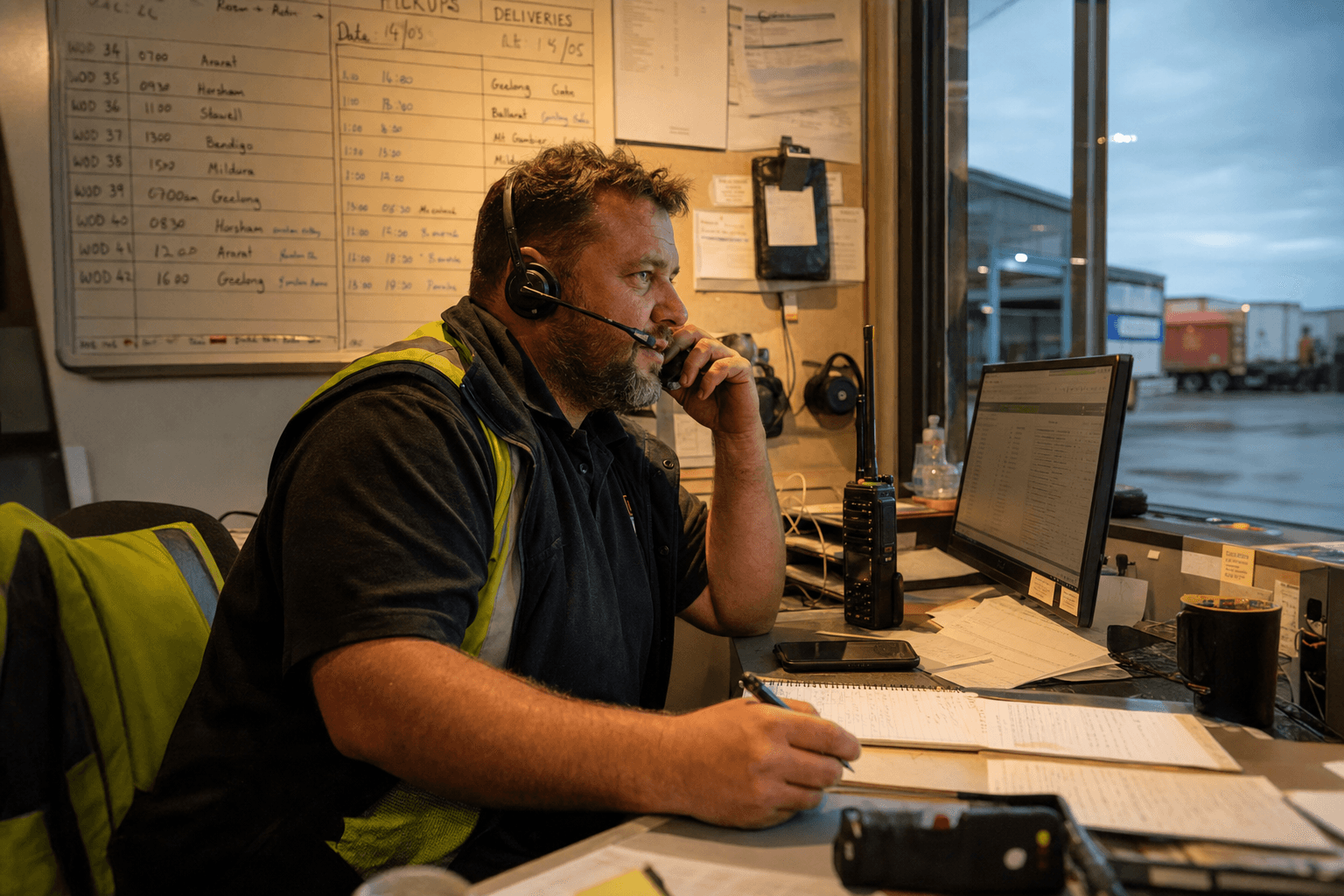
Most mid-market carriers and 3PLs don't staff a 24/7 call centre. The result is missed calls, voicemail backlogs, and customers escalating via email or, worse, switching providers because they couldn't get a status update when it mattered. This is an operational admin burden problem — similar in nature to the roster and shift-swap admin load described in workforce scheduling contexts — except it's customer-facing rather than internal, which raises the stakes.
Generic AI Answering Services vs Logistics-Specific Implementations
A generic AI answering service can take a message, book an appointment, or answer FAQs from a static script — but it has no visibility into your consignment numbers, dock schedules, or driver locations. A logistics-specific implementation is connected to your operational data, so it can actually resolve enquiries rather than just log them.
The practical difference shows up in what the system can do without human intervention:
| Capability | Generic AI Answering Service | Logistics-Specific Implementation |
|---|---|---|
| Answers basic FAQs (hours, locations) | Yes | Yes |
| Looks up live shipment/consignment status | No — takes a message | Yes, via TMS integration |
| Emails or texts a POD on request | No | Yes, via document intelligence integration |
| Understands freight terminology (BOL, ETA, dock slot) | Limited | Built for it |
| Escalates correctly to dispatch vs customer service vs accounts | Generic routing rules | Role-aware routing based on enquiry type |
| Handles peak-season volume spikes without added headcount | Partially | Yes — designed for variable call volume |
| Works after-hours without losing context for the morning team | Rarely — messages often lost in translation | Logged and structured for handover |
The key distinction is integration depth. A system that can query your TMS for a live ETA or pull a POD from your document intelligence layer is solving the actual problem — the caller wanting an answer — rather than just deferring it to a human later.
How Does This Integrate with TMS and WMS Platforms?
AI phone and chat agents typically connect to your TMS or WMS through existing APIs or middleware, pulling structured data (consignment status, dock bookings, POD documents) in real time rather than requiring a parallel data entry process. This is the same integration philosophy underpinning most digital transformation in logistics: AI is layered on top of what you already run, once there's a reasonably clean data foundation to work from.
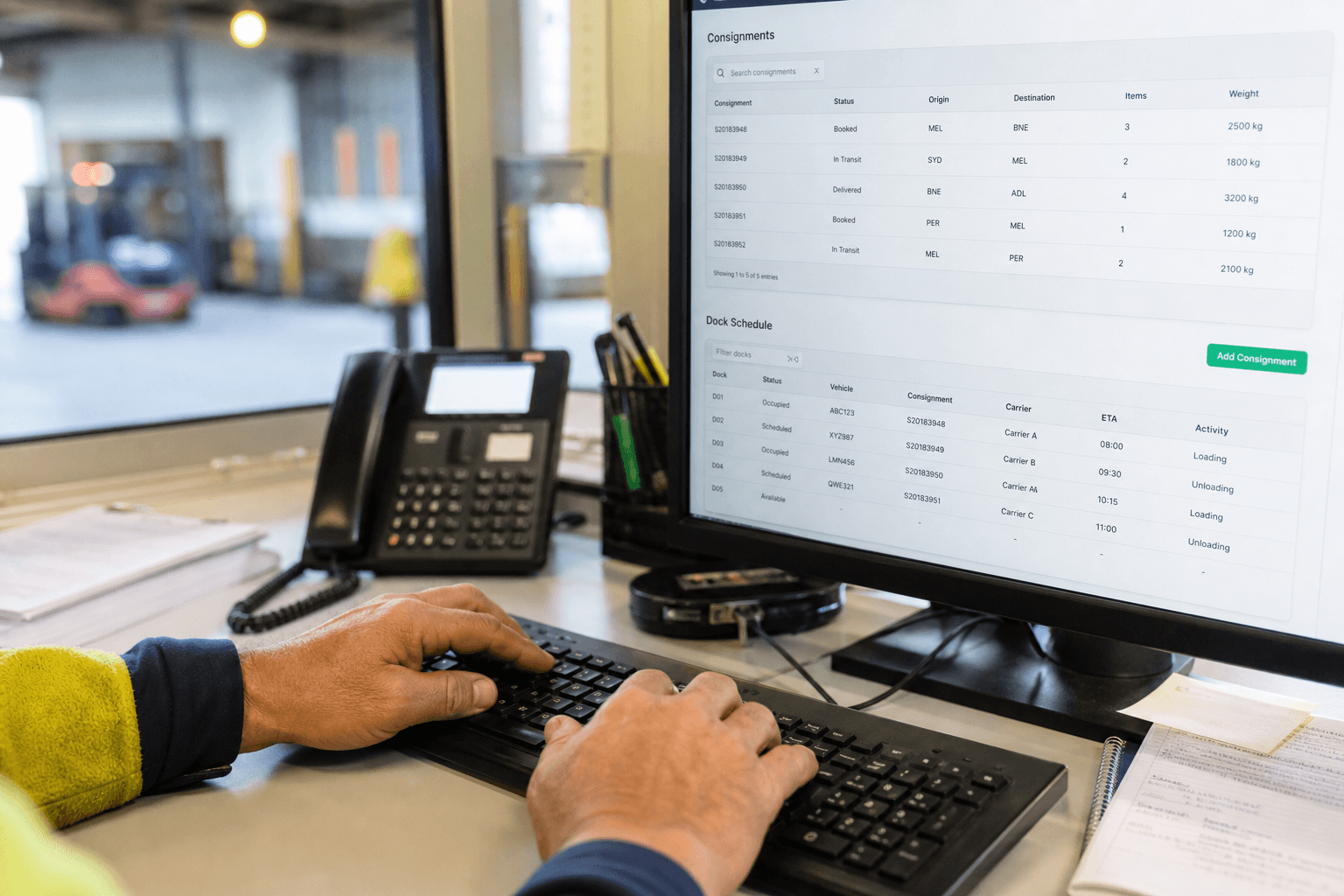
If your TMS or WMS is older or has inconsistent data quality, that's not necessarily a blocker — but it does change what's realistic in a first phase. Many operators start with a narrower scope (e.g. POD requests and booking confirmations, which tend to have cleaner underlying data) before expanding into more complex enquiry types. An AI readiness assessment is a practical way to establish what's achievable given your current systems before committing to a build.
What Tasks Can AI Voice and Chat Agents Actually Handle?
In practice, the enquiry types best suited to automation are high-volume, low-ambiguity, and tied to structured data your systems already hold. These typically include:
- Booking confirmations — confirming a pickup or delivery slot against your scheduling system.
- POD requests — retrieving and sending proof-of-delivery documents, often paired with document intelligence to extract and match the right paperwork.
- ETA and status enquiries — pulling live consignment status rather than a static promise.
- After-hours triage — capturing urgent vs non-urgent calls and routing accordingly, so the morning shift isn't starting the day with an undifferentiated voicemail queue.
- Simple dispatch queries — driver check-ins, dock availability, or slot changes that don't require a judgement call.
What these agents generally shouldn't handle without escalation: rate negotiations, claims and disputes, and anything requiring commercial judgement. The goal is deflection of routine volume, not replacement of relationship management.
Q&A: Common Questions About AI Phone Automation in Freight and 3PL
Does AI phone automation replace our customer service team? No. In most implementations it absorbs routine, repetitive enquiries so staff can focus on complex calls, exceptions, and account relationships — not eliminate the role.
Will it work with our older TMS or WMS? Often, yes, provided there's an accessible integration point (API or similar). Data quality matters more than system age — an assessment can clarify what's realistic before you commit.
What happens during a call the AI can't resolve? A properly scoped implementation escalates to a human with context already captured — caller details, enquiry type, and any relevant reference numbers — rather than starting the conversation from scratch.
Is this only useful for after-hours coverage? After-hours is a common starting point because the ROI case is clearest, but the same infrastructure typically handles peak-season overflow and routine business-hours volume too.
How long does an implementation take? It depends heavily on integration complexity and how clean your underlying data is — which is exactly what a readiness assessment is designed to establish upfront.
Where to Start
There's no universal playbook for AI phone and front-desk automation in freight — the right scope depends on your call volume, systems, and where your team is losing the most time. If you're exploring this for your operation, we can help assess fit against your current TMS/WMS setup and identify where automation would actually move the needle, starting with an AI readiness assessment.
Zero Footprint
The Zero Footprint team — AI modernisation for Australian logistics.