How AI Cuts Time-to-Ship for 3PL Onboarding
AI shortens 3PL time-to-ship by automating the manual SKU setup, EDI mapping, and SLA configuration that typically stalls new contract onboarding for weeks. Here's where AI actually helps, and where a packaged integration tool isn't enough.
How does AI cut time-to-ship for 3PL onboarding?
AI shortens time-to-ship by removing the manual data re-entry that slows down new contract onboarding — specifically, extracting SKU lists, rate cards, and EDI specifications straight from whatever format a customer sends them in, validating SLA rules against the signed contract, and forecasting staffing needs for ramp-up. For a mid-market 3PL, that typically means collapsing weeks of manual keying and back-and-forth file exchanges into a process where your team reviews flagged exceptions instead of starting from a blank spreadsheet. The result: new accounts can reach steady-state shipping faster, with fewer SLA mismatches showing up after the first breach report.
This isn't a theoretical efficiency gain. It's a direct response to a problem most mid-market 3PLs recognise immediately: SKU setup, EDI mapping, rate cards, and SLA configuration are still being manually keyed into the TMS and WMS, one field at a time, long after the contract is signed.
What is time-to-ship, and why does it matter commercially?
Time-to-ship is the period between a new customer contract being signed and the first shipment going out the door under the new account. For most mid-market 3PLs, this window stretches across several weeks — not because the warehouse can't handle the volume, but because the systems side of onboarding hasn't caught up with the commercial side.
That gap matters commercially. A new customer judging your business in the first 30 days is judging your onboarding process as much as your shipping performance. Every week spent reconciling spreadsheets or chasing a customer for a clean SKU file is a week they're forming an opinion about whether they made the right choice — and whether a competitor with tighter systems could have done it faster.
Why does onboarding a new 3PL contract take so long?
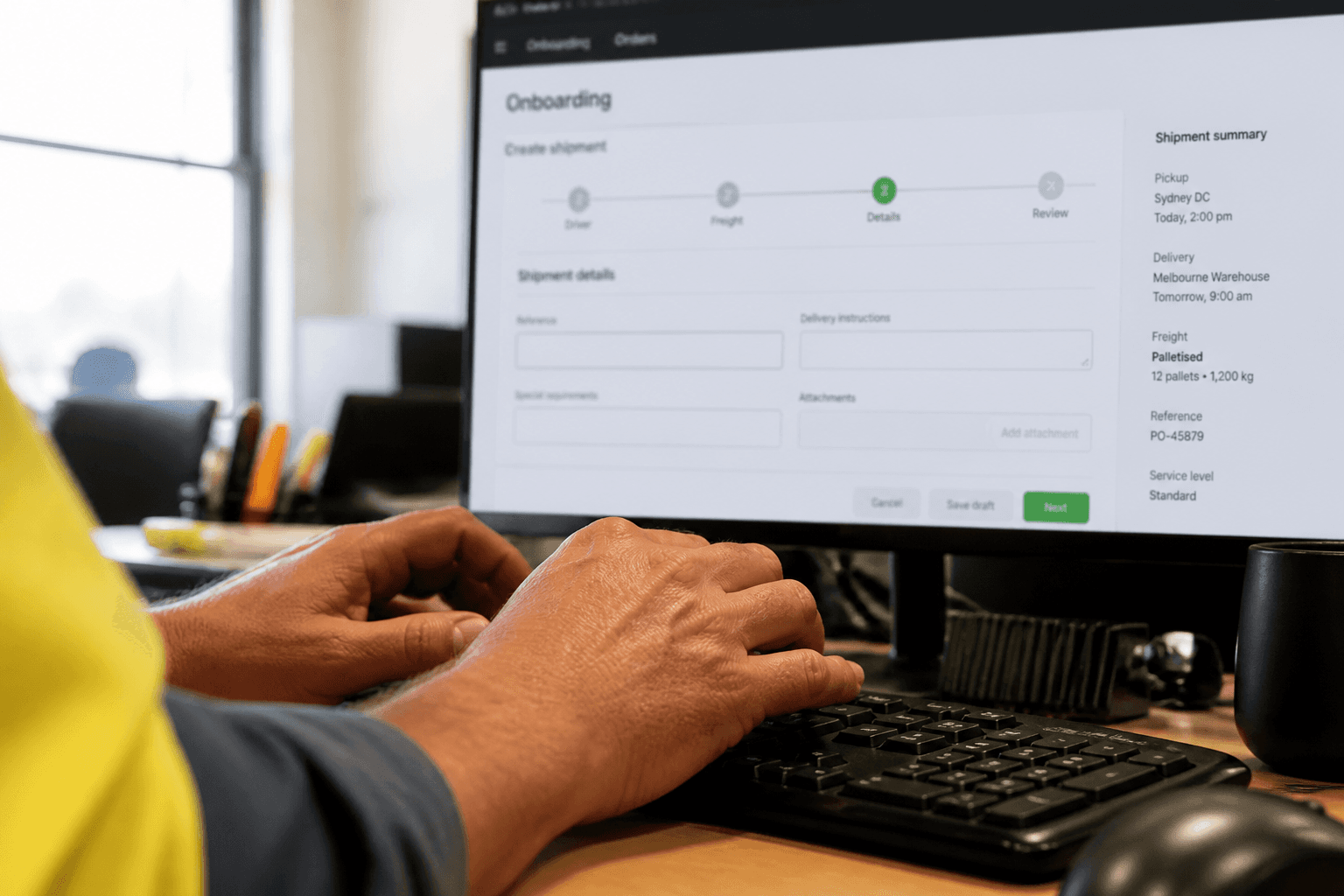
Onboarding is slow because it involves several manual, error-prone data handoffs happening in sequence rather than in parallel. EDI integration with the new customer's order and inventory systems, SKU master data entry into the WMS, rate card configuration, and SLA setup in the TMS all typically depend on someone manually re-keying data from the customer's spreadsheets, PDFs, or legacy system exports.
This is a known pattern in digital transformation logistics Australia work generally: connecting a customer's order and inventory data into a 3PL's TMS/WMS, and digitising paper-based workflows like inbound receiving and proof of delivery, are core components of modernising how a 3PL operates — not unique to onboarding, but central to it. Where system integration between TMS, WMS, ERP, and customer-facing systems hasn't been done properly, every new contract re-opens the same manual data-entry problem.
Where exactly does AI help, in practical terms?
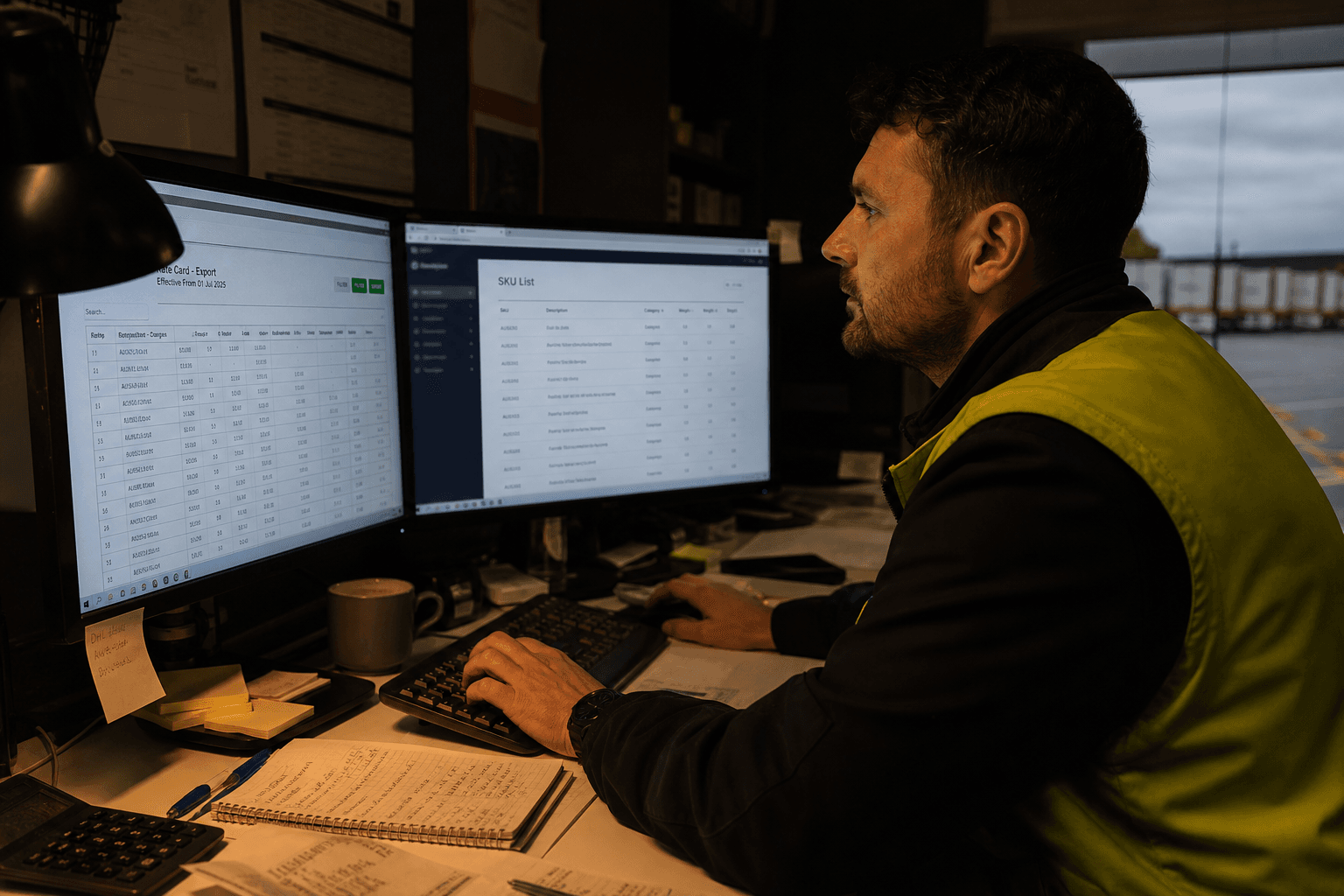
AI helps most where onboarding currently depends on manual document handling and data entry — extracting structured information from a new customer's SKU lists, rate sheets, and EDI specifications, and mapping it into your systems without a person retyping every field. This is the same category of problem as the manual paperwork that slows down inbound receiving and POD processing more broadly, and it's where a targeted ai readiness assessment usually starts — identifying which parts of your onboarding workflow are genuinely manual bottlenecks versus which are already working fine.
Practically, this looks like:
- Document intelligence for SKU and rate card setup. Customers rarely hand over clean, structured data. AI-based document extraction can read customer SKU files, product catalogues, and rate sheets in whatever format they arrive in — Excel, PDF, scanned paper — and populate WMS and TMS fields directly, flagging exceptions for human review rather than requiring full manual entry.
- EDI mapping support. New customer EDI specifications (850, 856, 810 and variants) still need to be mapped to your internal formats. AI-assisted mapping tools can suggest field matches based on prior mappings you've built for similar customers, cutting the trial-and-error cycle that typically involves back-and-forth test files with the customer's IT team.
- SLA configuration checks. Once SLA terms are agreed contractually, someone has to translate them into system rules — delivery windows, exception thresholds, reporting cadence. AI can help validate that configured rules in the TMS actually match the contract language, reducing the risk of a mismatch surfacing only after the first SLA breach report.
- Demand-based staffing for ramp-up. Standing up new shifts and dock labour for a new contract is a scheduling problem, not just a systems problem. Workforce scheduling platforms that use historical volume data or forecasts to suggest staffing levels by shift — some with AI-assisted scheduling suggestions — help new accounts hit steady-state shipping capacity faster, without over- or under-staffing during the first few weeks.
The same underlying logic applies to route optimisation: once a new account's freight is flowing, matching delivery patterns to existing network capacity is a related problem AI can support, rather than a separate project.
How does AI-assisted onboarding compare to a fully manual process?
The comparison below is qualitative — every 3PL's onboarding timeline depends on contract complexity, customer data quality, and existing system integration maturity. Treat it as a directional guide, not a benchmark.
| Onboarding task | Manual process | AI-assisted process |
|---|---|---|
| SKU/catalogue setup | Manual re-entry from customer files, high error rate | Automated extraction with exception flagging for review |
| EDI mapping | Iterative test-file exchange with customer IT | Suggested field mapping based on prior customer templates |
| Rate card entry | Manual keying from contract/quote documents | Structured extraction into TMS rate tables |
| SLA configuration | Manually interpreted from contract, prone to mismatch | Rule validation against contract terms |
| Staffing ramp-up | Gut-feel shift planning | Demand-forecast-based shift suggestions |
The common thread is that AI doesn't replace the onboarding team — it removes the re-keying and reconciliation work so your team can focus on the judgement calls: negotiating exceptions, confirming the customer's real operational constraints, and catching the things a document scanner can't.
Is a packaged integration platform enough, or do you need a custom build?
Off-the-shelf TMS/WMS integration tools can handle standard EDI connections and common document formats well, and for straightforward contracts that may be all you need. Where these platforms typically fall short is in handling the messy, non-standard data that mid-market 3PLs actually receive from new customers — bespoke rate structures, inconsistent SKU naming, and SLA terms that don't map cleanly to a template.
That's the gap a tailored AI build addresses: a system trained on how your business and your specific customer base actually operate, rather than a generic integration layer. It's also why onboarding automation is rarely a standalone project for 3PLs we work with — it usually sits alongside broader modernisation priorities, including emissions reporting obligations under AASB S2 that new customers are increasingly asking about as part of their own Scope 3 supply chain reporting.
If you're trying to work out whether your onboarding bottleneck is a quick fix or a sign of deeper system integration gaps, that's exactly what an AI readiness assessment is designed to answer before you commit to a larger build.
For more on how AI applies across logistics operations beyond onboarding, see more insights on our blog.
If time-to-ship is costing you new accounts in the first 30 days, get in touch — we'll walk through where the bottleneck actually sits before recommending anything.
Zero Footprint
The Zero Footprint team — AI modernisation for Australian logistics.