AI-Powered Vendor Managed Inventory for 3PL-Retailer Deals
AI-powered vendor managed inventory lets 3PLs forecast retail demand and automate replenishment instead of relying on manual reorder cycles. This piece looks at what's needed to build it — and why most 3PL tech vendors in Australia haven't gotten there yet.
What Is AI-Powered Vendor Managed Inventory?
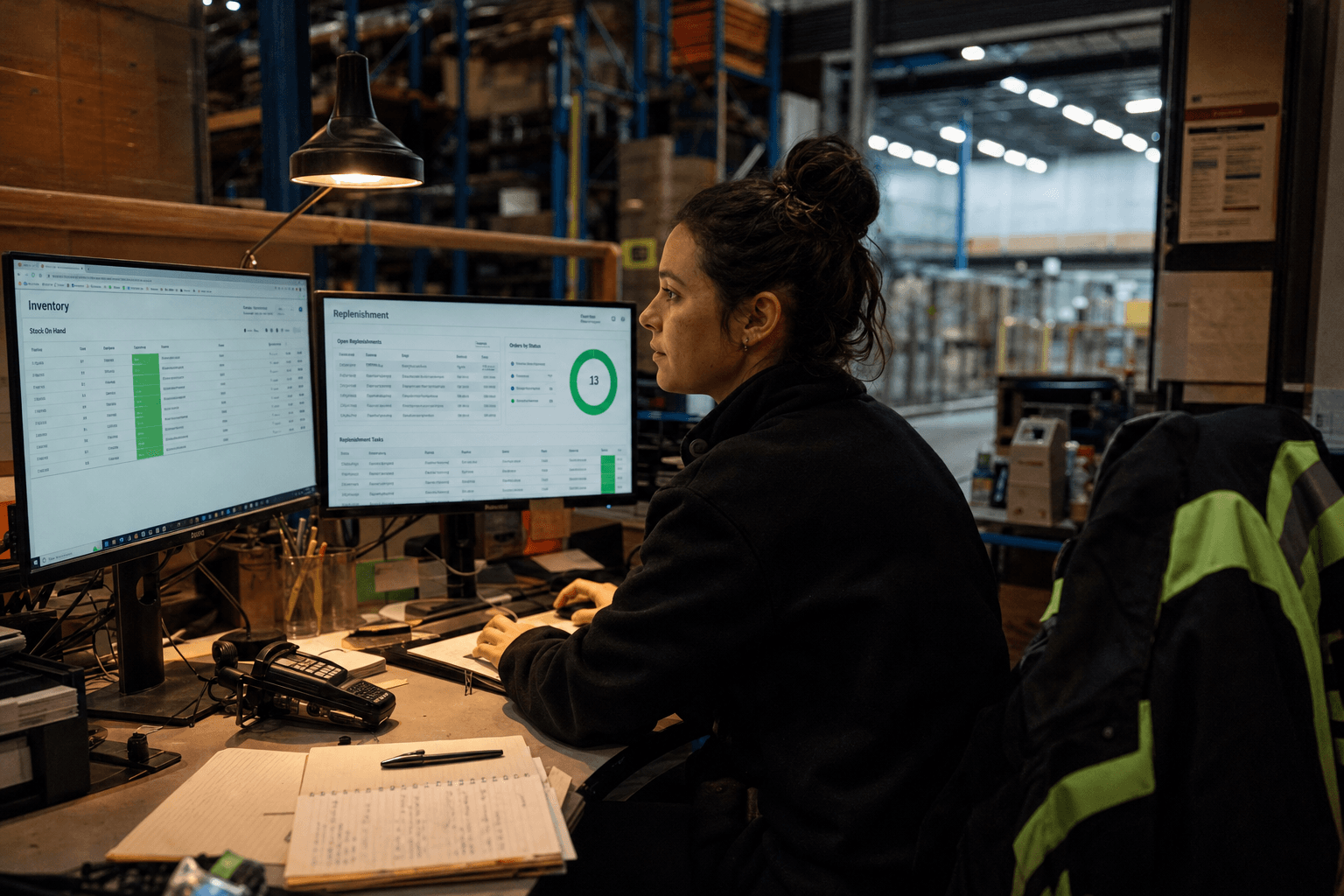
Vendor Managed Inventory (VMI) is an arrangement where the supplier or 3PL — rather than the retailer — takes responsibility for monitoring stock levels and triggering replenishment. AI-powered VMI extends this model by using demand forecasting and automated exception management to decide what to replenish, when, and how much, instead of relying on fixed reorder points or manual review cycles.
For 3PLs, this is more than a warehouse efficiency play. It's a distinct commercial offering: a service you can sell to retail customers who want fewer stockouts, less manual order chasing, and a partner who manages inventory risk on their behalf. That's a different proposition to internal warehouse slotting or pick optimisation — it moves the 3PL further up the value chain, into the retailer's demand planning function.
Why Are 3PLs Looking at This Now?
Retailers are under pressure to keep shelves stocked without carrying excess inventory, and many don't have the internal forecasting capability to manage this well across hundreds of SKUs and locations. 3PLs that already hold the stock and run the warehouse are a logical party to take on this responsibility — provided they have the data and systems to do it reliably.
This mirrors a pattern we're seeing elsewhere in logistics: AI-assisted forecasting is already being applied to things like demand-based workforce scheduling, where predicted volumes drive shift planning rather than fixed rosters. The same forecasting logic — predict demand, then automate a decision that was previously manual — applies to inventory replenishment. The difference with VMI is that the automated decision touches a customer's stock, which raises the stakes on accuracy and auditability.
What Foundations Does AI-VMI Actually Require?
AI-powered VMI only works once the underlying data infrastructure is in place — the AI itself is the easy part compared to getting clean, connected data flowing between systems. Before a 3PL can forecast a retail customer's demand and trigger automated replenishment, three things need to exist: EDI integration, system integration, and data consolidation.
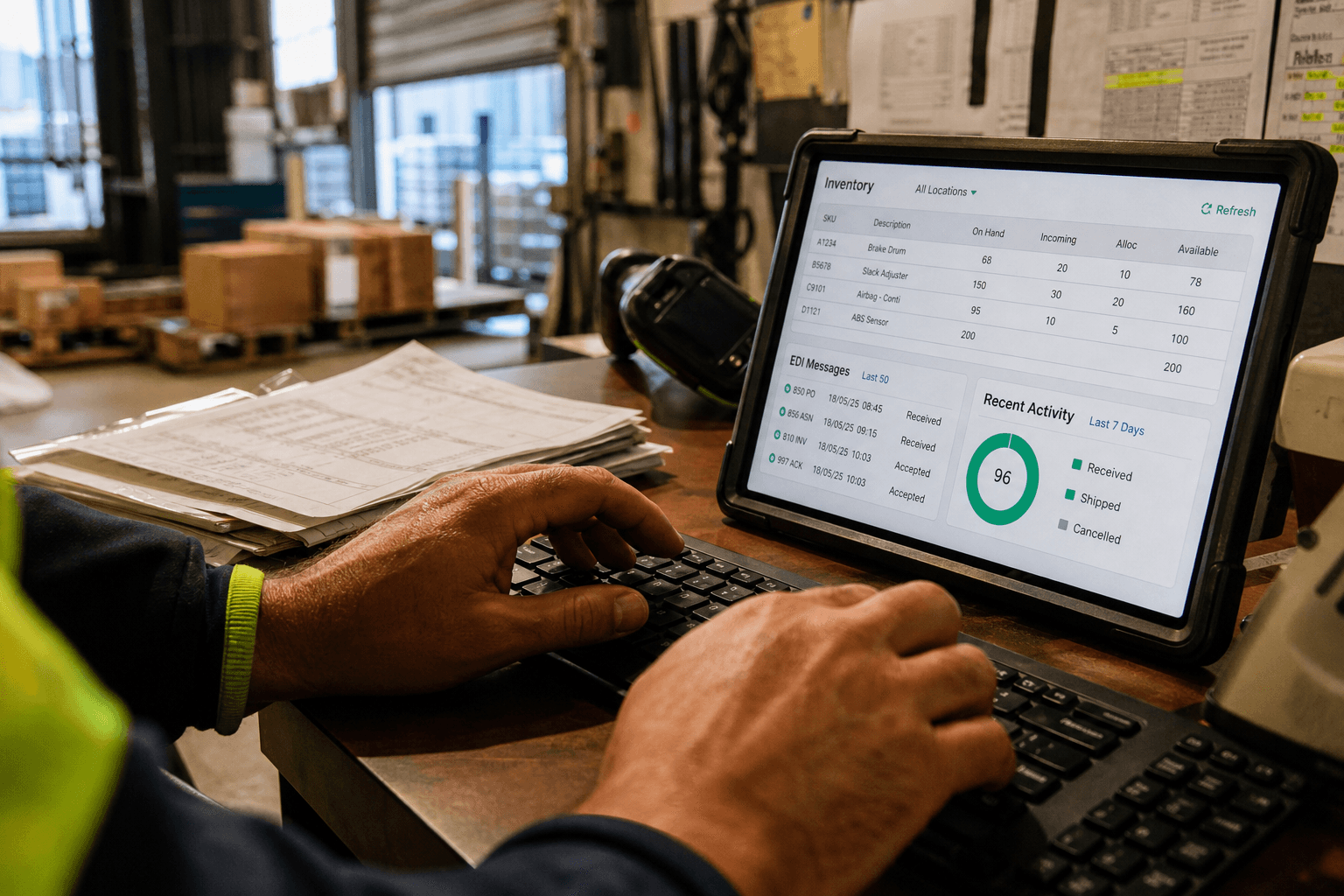
EDI integration automates the exchange of purchase orders, inventory positions, and sales data between the 3PL and the retailer, removing the manual re-keying that makes real-time VMI impossible. System integration means the 3PL's warehouse management system, transport management system, and the retailer's inventory or ERP platform share data without manual intervention. Data consolidation brings this information into a single source of truth — because a forecasting model fed by three disconnected spreadsheets will produce decisions nobody trusts.
This is the same groundwork required for broader digital transformation in logistics generally, and it's why we typically start engagements with an AI readiness assessment — to establish whether the data and system foundations can actually support an AI-driven commercial offering like VMI, rather than jumping straight to a forecasting model that has nothing reliable to work from.
Traditional VMI vs AI-Enabled VMI
The table below compares the two approaches qualitatively. We haven't included invented percentages or dollar figures here — the relative differences are directional, based on how each model is structured, not on a specific benchmark study.
| Dimension | Traditional VMI | AI-Enabled VMI |
|---|---|---|
| Replenishment trigger | Fixed reorder points, manual review | Demand forecast with automated exception flags |
| Data exchange | Often email/spreadsheet or basic EDI | Integrated EDI with system-to-system sync |
| Responsiveness to demand shifts | Slower — relies on scheduled reviews | Faster — model updates as new sales data arrives |
| Staff effort | Higher — manual monitoring and order placement | Lower — staff manage exceptions, not routine orders |
| Scalability across SKUs/customers | Limited by headcount | Limited mainly by data quality and integration depth |
| Audit trail | Often informal | Can be systematised, useful for customer reporting |
Is There a Mature AI-VMI Market in Australia Today?
Not yet, in any standardised sense — most 3PL technology vendors serving the Australian market focus on EDI, WMS and TMS integration rather than bespoke AI-driven demand forecasting or inventory decision-making. That's a reasonable starting point, but it's not the same thing as an AI-powered VMI product.

From what we've seen across the sector, the common pattern is vendors offering packaged integrations — connecting systems so data flows — without layering genuine forecasting or exception-management intelligence on top. That leaves a gap for 3PLs who want to offer retail customers something more than "we'll hold your stock and reorder when it hits a threshold." If your competitors are still running manual replenishment cycles, an AI-forecasting-backed VMI offering is a genuine point of differentiation in a tender — not just an internal efficiency gain.
How Should a 3PL Approach Building This?
Start with the data and integration layer, not the forecasting model. A 3PL considering AI-powered VMI as a commercial offering should treat it the same way as any AI-in-logistics initiative: assess what data exists, where it lives, and whether it's clean enough to trust before building anything predictive on top of it.
In practice that usually means:
- Auditing existing EDI and system connections with the retail customers you'd want to run VMI for
- Identifying where purchase order, sales, and inventory data currently breaks down into manual steps
- Establishing a single data pipeline between your WMS and the retailer's systems before introducing any forecasting logic
- Piloting with one customer and a limited SKU range, with clear exception-handling rules, before scaling
Document-heavy steps — purchase orders, invoices, delivery confirmations — are often where manual effort hides inside a VMI process. Where that's the case, document intelligence tooling can extract and structure that data automatically, feeding cleaner inputs into whatever forecasting or exception-management layer you build. For more on the broader integration and automation patterns that underpin AI initiatives like this, see our insights.
The Bottom Line
AI-powered VMI is a credible commercial offering for 3PLs with the right data foundations, but it's not a packaged product you can buy off the shelf today — most 3PL tech vendors in Australia haven't built this depth, and the wiki of documented case studies in this exact space is thin. That's as much an opportunity as a limitation: 3PLs willing to invest in the EDI, integration, and data work can differentiate on a capability competitors aren't yet offering.
If you're exploring whether your business has the data and systems in place to run an AI-powered VMI program for retail customers, get in touch — we can help assess where the gaps are before you commit to building anything.
Zero Footprint
The Zero Footprint team — AI modernisation for Australian logistics.