ISO 28000 Supply Chain Security & AI Risk Monitoring
ISO 28000 is the international security management standard increasingly required in freight tenders, and AI-assisted monitoring can strengthen — but never replace — the governance it demands. Here's what mid-market carriers and 3PLs need to know before investing.
ISO 28000 is the international standard for supply chain security management, and AI-assisted risk monitoring adds continuous, automated anomaly detection that strengthens the evidence base operators use to meet it — without replacing the governance work the standard actually requires. That distinction matters because more freight tenders now ask a question that didn't appear five years ago: are you ISO 28000 certified? For mid-market carriers and 3PLs, that single line in a tender document can be the difference between winning and losing a contract with a major retailer, miner, or government-adjacent shipper. This article sets out what the standard covers, why it's showing up in more RFQs, and where AI monitoring genuinely helps — without overselling what AI can or can't do for compliance.
What Is ISO 28000?
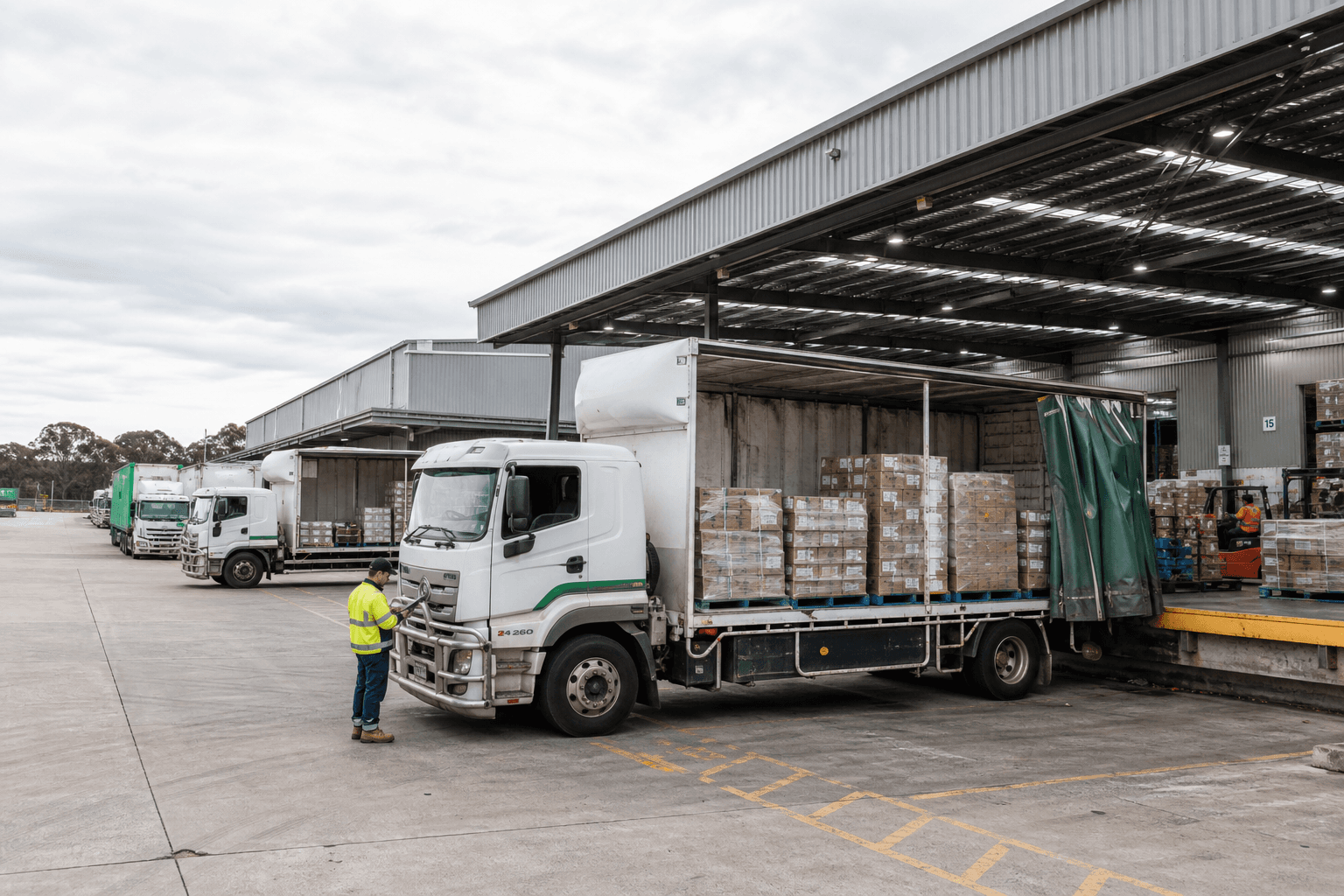
ISO 28000 is an international standard published by the International Organization for Standardization that specifies requirements for a security management system covering the supply chain. It was developed in response to rising concerns about cargo theft, tampering, smuggling, and physical security risk across global freight networks, and it applies to any organisation — carrier, 3PL, port operator, or manufacturer — involved in the production or movement of goods.
In Australia, the standard is adopted locally as AS ISO 28000 through Standards Australia, which mirrors the international text. It sits alongside sector-specific security frameworks such as TAPA (Transported Asset Protection Association) standards, which some shippers also reference in freight contracts, particularly for high-value or temperature-controlled cargo.
Why Are Shippers Asking Freight Operators for Security Certification?
Large shippers and government-adjacent buyers increasingly require security accreditation because they carry contractual and reputational exposure for what happens to goods in transit. A certified security management system gives them documented assurance that a carrier has identified its security risks, has controls in place, and reviews them systematically rather than reactively.
This is particularly common in retail, mining, pharmaceuticals, cold chain, and defence-adjacent freight, where cargo value, regulatory sensitivity, or chain-of-custody requirements are high. For mid-market operators competing against larger, more digitally mature rivals, lacking formal accreditation can mean being excluded from a tender shortlist before price or service quality is even considered. It's the same dynamic we see with emissions reporting under AASB S2 — buyers are pushing compliance expectations down the supply chain, and operators without the systems to evidence them lose ground before negotiations even start.
What Does AI-Assisted Risk Monitoring Actually Add?
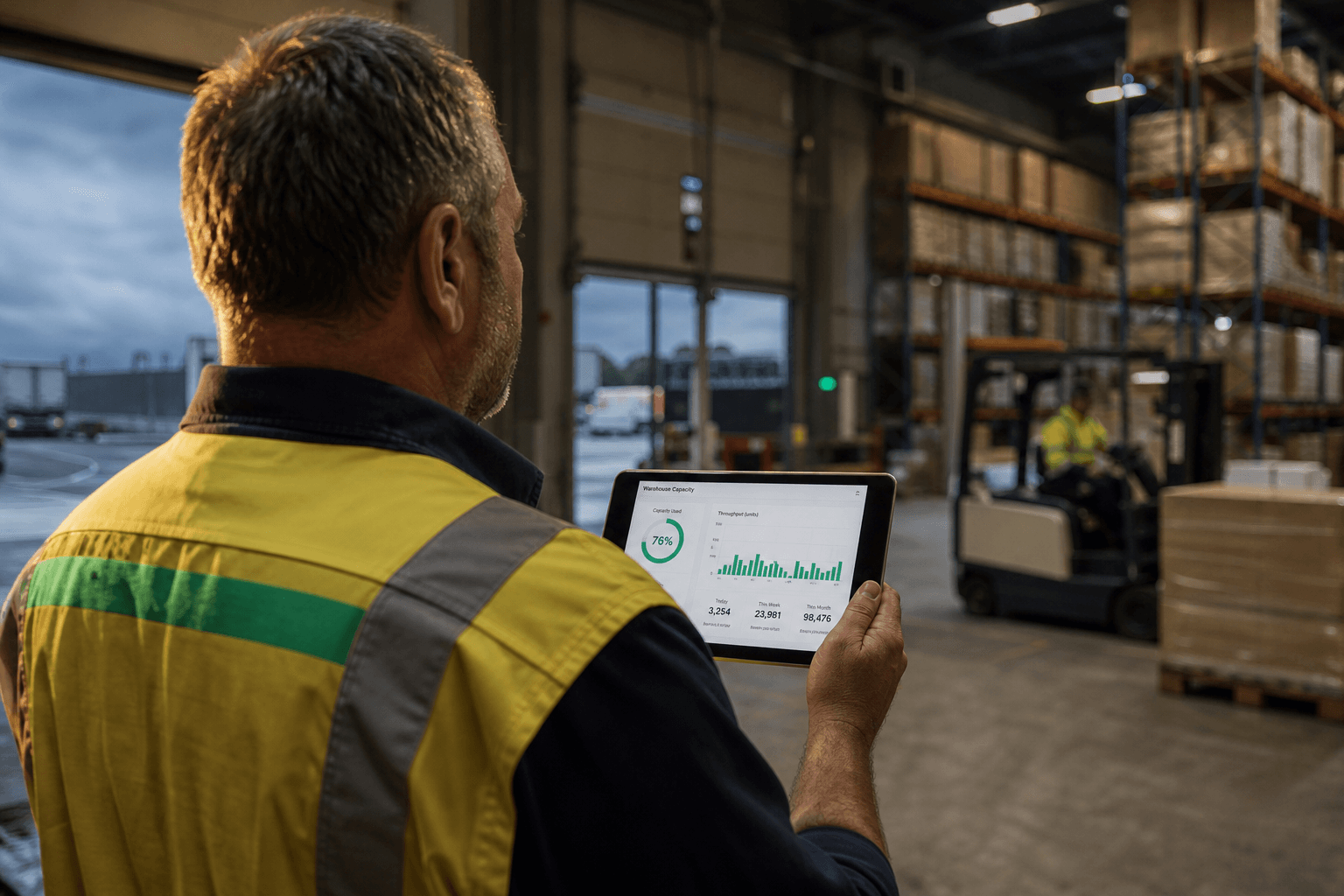
AI-assisted risk monitoring is the use of automated systems — drawing on telematics, geofencing, document data, and operational records — to continuously flag anomalies that may indicate a security risk, rather than relying solely on periodic manual review. It doesn't replace the governance and documentation that ISO 28000 requires; it strengthens the evidence base an operator uses to demonstrate ongoing risk monitoring, which is a core clause of the standard.
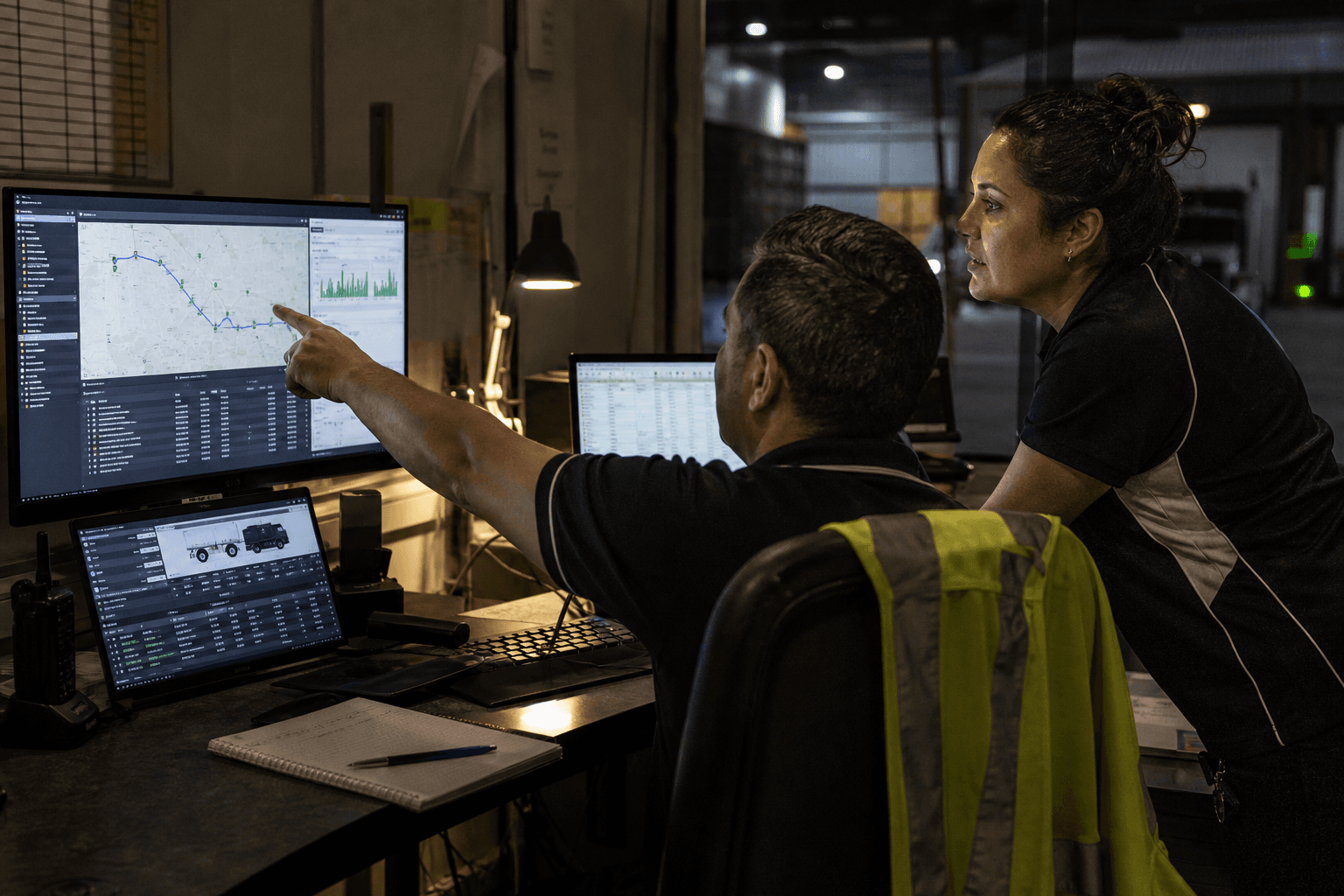
In practical terms, this can include anomaly detection on vehicle routes (unexpected stops, route deviation, out-of-hours movement), automated cross-checking of consignment documentation against expected cargo, and alerting when telematics data falls outside normal operating patterns. The same telematics and route data that feed route optimisation work can often be reused for security anomaly detection — it's one of the reasons a broader AI readiness review tends to surface more value than a narrow, single-purpose tool. Industry bodies such as TAPA and freight insurers have increasingly pointed to telematics-based monitoring as a practical control for cargo theft risk, though the specific detection methods and thresholds vary by operator and cargo type.
We'd caution against treating AI monitoring as a certification shortcut. ISO 28000 is a management system standard — it's as much about documented risk assessment, incident response procedures, and continual improvement as it is about technology. AI tools support the monitoring and evidence-gathering function; they don't substitute for the governance work.
Manual vs AI-Assisted Security Monitoring: A Practical Comparison
| Capability | Manual / Periodic Review | AI-Assisted Monitoring |
|---|---|---|
| Frequency of risk review | Scheduled audits, often quarterly or annual | Continuous, near real-time |
| Anomaly detection | Relies on staff noticing irregularities | Automated flagging against defined patterns |
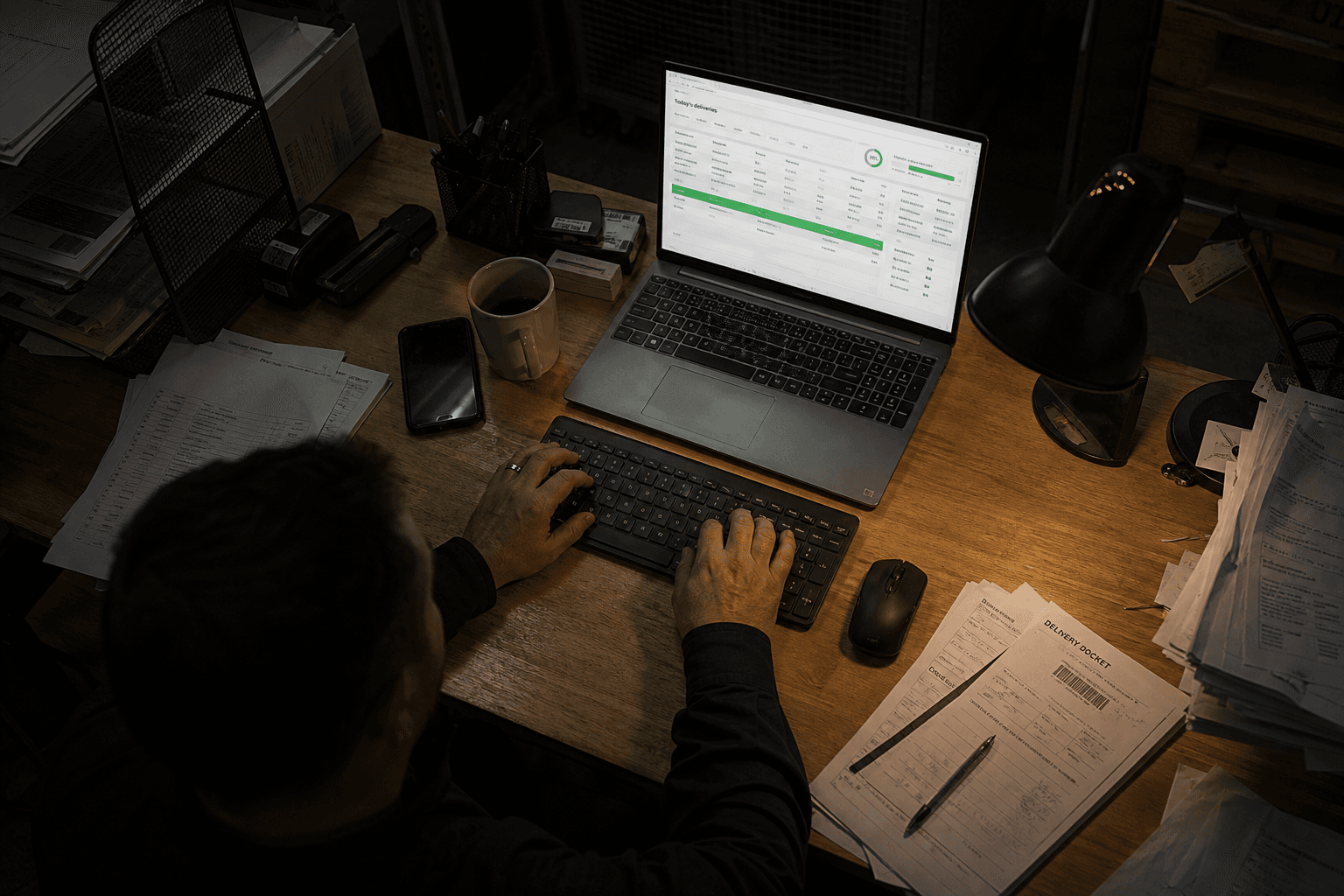
| Documentation for audits | Manually compiled, time-intensive | Can be generated from system logs |
| Scalability across fleet/warehouse | Limited by staff capacity | Scales with data integration, not headcount |
| Dependency on data quality | Lower — relies on human judgement | Higher — requires clean, integrated data feeds |
The trade-off in the final row matters. AI-assisted monitoring is only as good as the data feeding it, which is where many mid-market operators hit a wall before they even start.
Why Legacy Systems Make Security Monitoring Harder
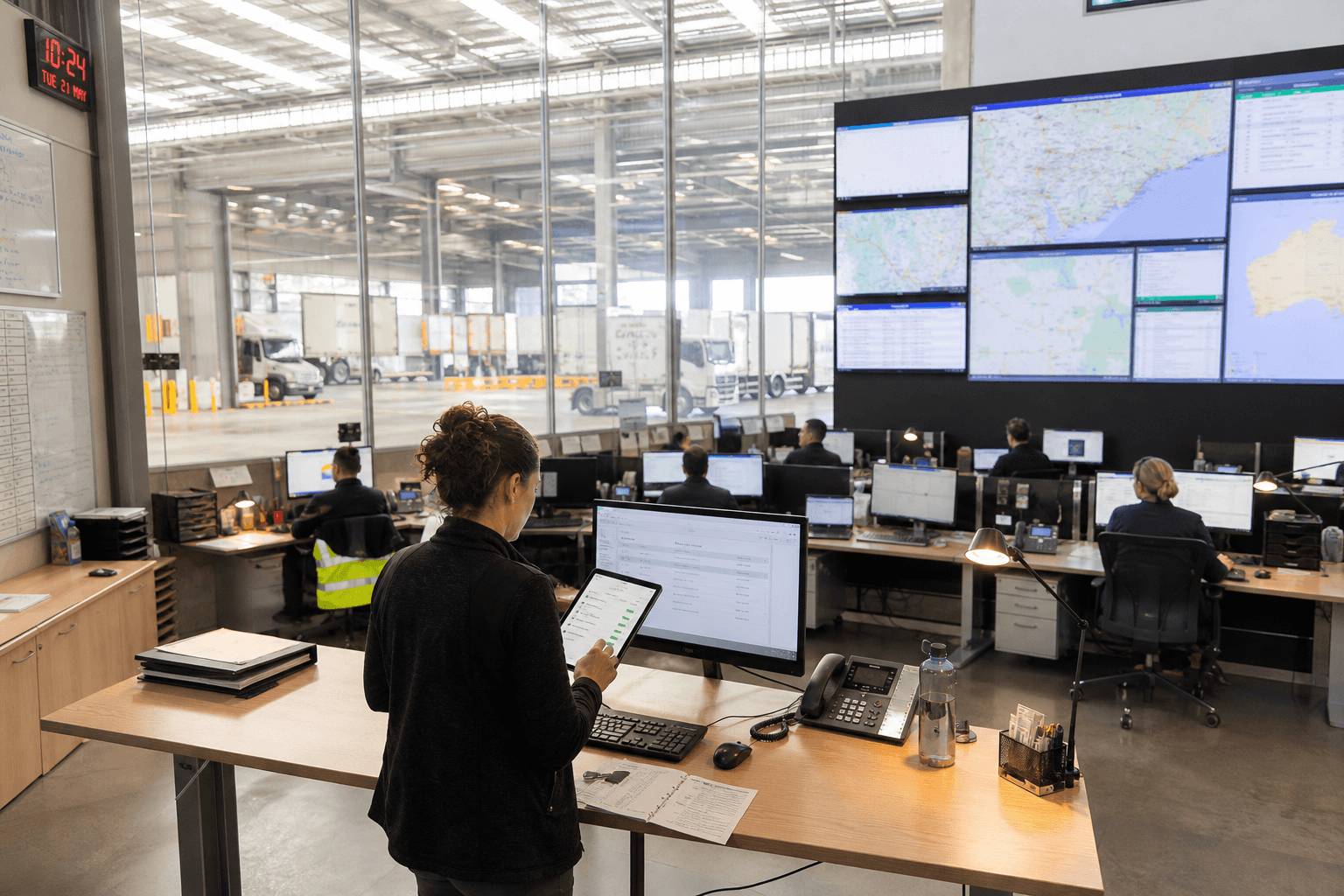
Operators running TMS and WMS platforms that are five or more years old often lack the real-time data visibility and system integration needed to support any kind of automated monitoring, security included. If vehicle location data, consignment records, and warehouse movements sit in disconnected systems or get reconciled manually via spreadsheet, there's no reliable data pipeline for an AI monitoring layer to draw on.
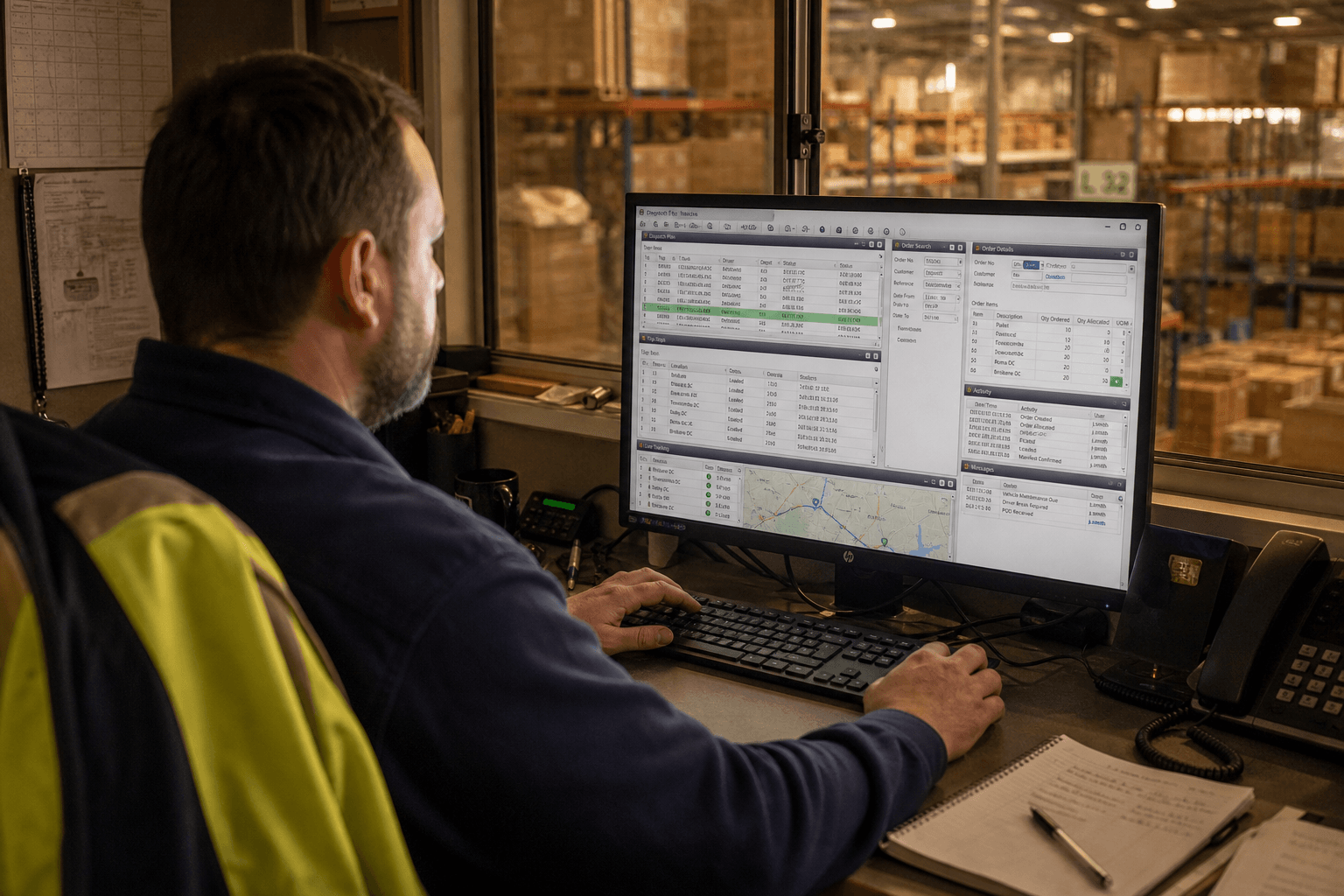
This is a genuine and common gap. Before investing in security-specific AI tooling, most mid-market freight and 3PL operators need to understand the state of their underlying data infrastructure — what's captured, where it lives, and whether it can be integrated. That's foundational work regardless of whether the end goal is security accreditation, emissions reporting, or route efficiency gains.
Where to Start
For operators weighing up ISO 28000 certification alongside other digital transformation pressures — ageing TMS/WMS platforms, customer demands for real-time tracking, or a looming AASB S2 deadline — the sensible starting point isn't buying a monitoring tool. It's an honest assessment of what data exists, what's missing, and what a security management system would need to draw on to actually work.
That's the gap our ai readiness assessment is built to close. It gives operators a clear, independent view of their data and systems before they commit budget to any specific module — security monitoring, route optimisation, or emissions tracking. For more on how legacy system constraints show up across logistics operations, see more insights on our blog.
If your business is navigating a tender requiring ISO 28000 certification, or simply trying to work out whether your current systems can support any form of automated risk monitoring, get in touch. We can talk through where your data stands today and what a realistic path forward looks like.
Zero Footprint
The Zero Footprint team — AI modernisation for Australian logistics.