AI in Logistics: Cutting Dwell Time at Rail-to-Road Handoffs
AI reduces dwell time at rail-to-road handoffs by matching truck capacity to rail arrivals and terminal slots in real time. Here's what has to be true of your data before it works for Australian terminal operators.
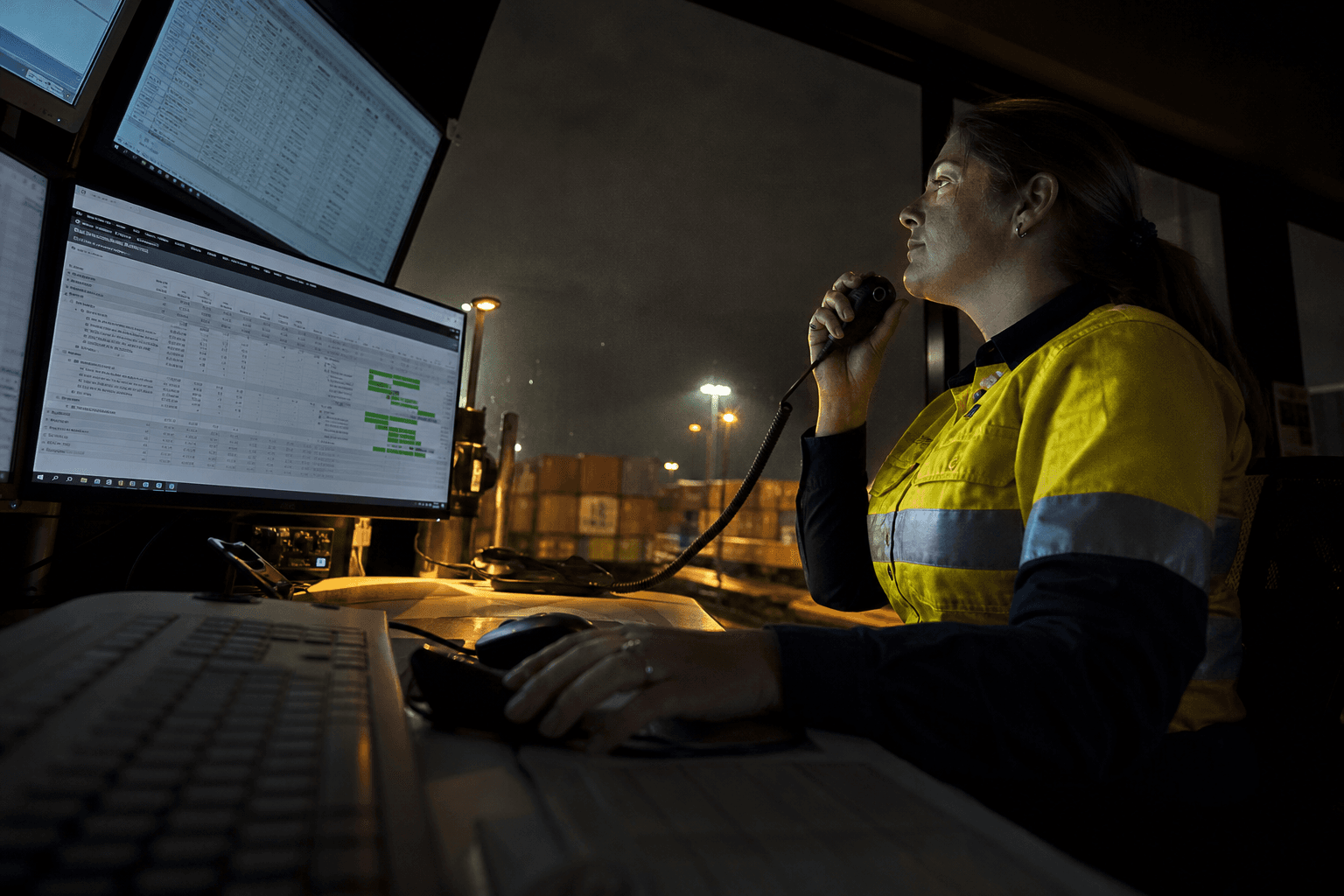
AI reduces dwell time at rail-to-road handoffs by continuously matching available truck capacity against rail arrival forecasts and terminal slot constraints, flagging mismatches before they turn into missed pickups. Instead of a fixed daily schedule drawn up the night before, the system re-evaluates as conditions change — a late train, a cancelled booking, a slot freeing up early — and surfaces the next-best truck-to-container allocation in real time. That's the core mechanism behind AI in logistics applied to intermodal scheduling, and it's the focus of this article: what it takes to make it work, and what has to be true of your systems first.
Intermodal terminals sit at one of the most congested pressure points in the Australian freight network: the handoff between rail and road. A container that arrives late on a rail service, or a truck slot that goes unfilled because nobody flagged a delay in time, creates dwell time that ripples through the rest of the supply chain.
What Is Intermodal Rail-to-Road Scheduling?
Intermodal rail-to-road scheduling is the process of coordinating when containers arrive by rail, when they're available for pickup, and when road transport is booked to collect or deliver them at a terminal. It sits at the intersection of two different modes with different operators, different data systems, and different definitions of "on time" — which is exactly why it's prone to delay.
In practice, this means matching rail arrival windows (often set days in advance) against road fleet availability, which changes hour to hour, while accounting for terminal slot capacity, crane or forklift throughput, and customs or quarantine holds. Any mismatch in that chain shows up as dwell time — containers sitting at the terminal longer than necessary, tying up yard space and truck capacity.
Why Do Rail-to-Road Handoffs Create Delays at Australian Terminals?
Handoff delays typically happen because rail and road scheduling are managed as separate problems by separate teams, often on separate systems, with information passed between them manually or on a lag. A rail delay of a few hours can cascade into a missed truck slot, and that missed slot can sit unfilled for the rest of the day if nobody rebooks it.

Most mid-market terminal operators and their trucking partners are still working from a mix of spreadsheets, phone calls, and legacy transport management systems that were never designed to talk to rail scheduling data. This is a familiar pattern across Australian logistics more broadly. In our work on legacy system modernisation with mid-market operators, legacy TMS/WMS platforms, EDI gaps, and disconnected data consistently come up as the first barrier to any kind of AI-assisted scheduling — rail-to-road handoffs included.
How Can AI Reduce Dwell Time at Intermodal Terminals?
AI scheduling tools reduce dwell time by continuously matching available road capacity against rail arrival forecasts and terminal slot constraints, flagging mismatches before they become missed pickups. Rather than a static daily schedule, the system re-evaluates as conditions change and surfaces the next-best allocation.
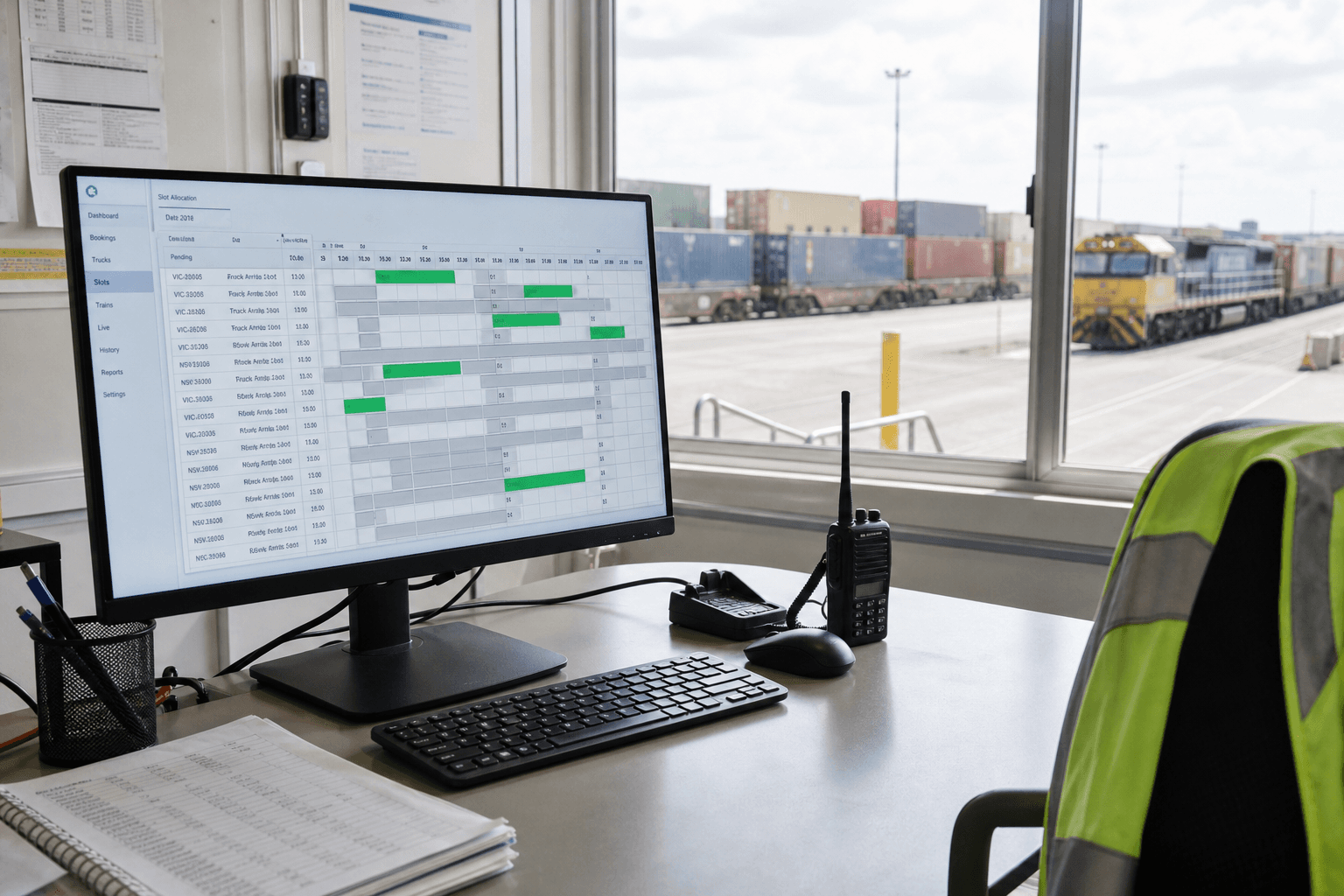
The underlying logic is similar to demand-based scheduling used elsewhere in logistics: forecasting demand, understanding resource constraints, and allocating capacity against both. Our work in route optimisation for Australian fleets applies the same constraint logic — driver and vehicle availability constrains which jobs can be serviced and when. At a terminal, truck slot availability constrains which rail arrivals can be cleared on time. Applied to rail-to-road handoffs, this means the system can recommend which truck should take which container, and when, based on live terminal and fleet data rather than a schedule drawn up the day before.
What Does AI-Assisted Scheduling Actually Look Like in Practice?
In practical terms, AI-assisted intermodal scheduling pulls together rail ETAs, terminal slot bookings, and road fleet position and availability into a single view, then generates or adjusts truck allocations as conditions change. It's less a single piece of software and more an integration layer sitting across systems that currently don't talk to each other.
For an operator, this typically involves three things working together: a forecasting component that predicts rail arrival times and terminal congestion, a constraint-based allocation engine that matches trucks to containers within slot and compliance limits, and a feedback loop that updates the schedule as real-world events — delays, early arrivals, cancellations — come in. None of this replaces the dispatcher; it gives them a live recommendation instead of a static plan.
| Approach | Manual / spreadsheet-based scheduling | AI-assisted scheduling |
|---|---|---|
| Rail delay visibility | Reactive — noticed after the fact | Proactive — flagged as forecasts update |
| Truck slot rebooking | Manual phone calls, email | Automated recommendation, dispatcher confirms |
| Data sources used | Siloed per system/team | Combined rail, terminal, and fleet data |
| Response to disruption | Slower, dependent on individual staff | Faster, more consistent regardless of who's on shift |
| Dwell time trend | Variable, dependent on manual follow-up | More consistent, continuously re-evaluated |
This table reflects general operational trade-offs rather than measured figures from a specific deployment — every terminal's starting point and data quality will shape actual outcomes differently.
What Needs to Be in Place Before AI Scheduling Will Work?
AI scheduling tools are only as good as the data feeding them, which means most operators need to address a few things before switching on anything AI-assisted. First, rail arrival data needs to be accessible in a form a system can ingest — not just a PDF timetable or a phone call from the rail operator. Second, truck and driver availability needs to be visible in close to real time, which usually means moving off manual rosters and into a system that reflects actual fleet status. Third, terminal slot booking needs a digital record rather than a paper or email-based process, so the scheduling system has something to allocate against.
This is exactly the kind of groundwork an ai readiness assessment is designed to uncover — where your data actually lives, how clean it is, and what's missing before any AI-assisted scheduling tool can be built on top of it. For operators who are also facing AASB S2 reporting obligations, the same data discipline that supports scheduling also supports emissions reporting, since accurate fuel and trip data underpins both.
Getting this foundation right matters more than the choice of AI tool itself. A sophisticated allocation engine fed by stale or incomplete data will produce worse recommendations than a simple rules-based system fed by accurate, timely data. That's why we start every engagement by assessing data readiness before recommending any specific scheduling approach.
If dwell time at your terminal is eating into margin and customer SLAs, the first step isn't buying software — it's understanding where your current scheduling data breaks down. For more on how AI is being applied across Australian freight and logistics, see our more insights on the blog. To talk through what this would look like for your terminal and fleet, get in touch.
Zero Footprint
The Zero Footprint team — AI modernisation for Australian logistics.