Automated Driver Communication for Australian Logistics Operations
Automated driver communication is becoming a core operational capability for Australian transport operators — covering roster alerts, real-time route updates, digital proof of delivery, and NHVR compliance prompts. This article explains what it actually covers, what it depends on, and how to stage the rollout without over-investing in tools your systems can't yet support.
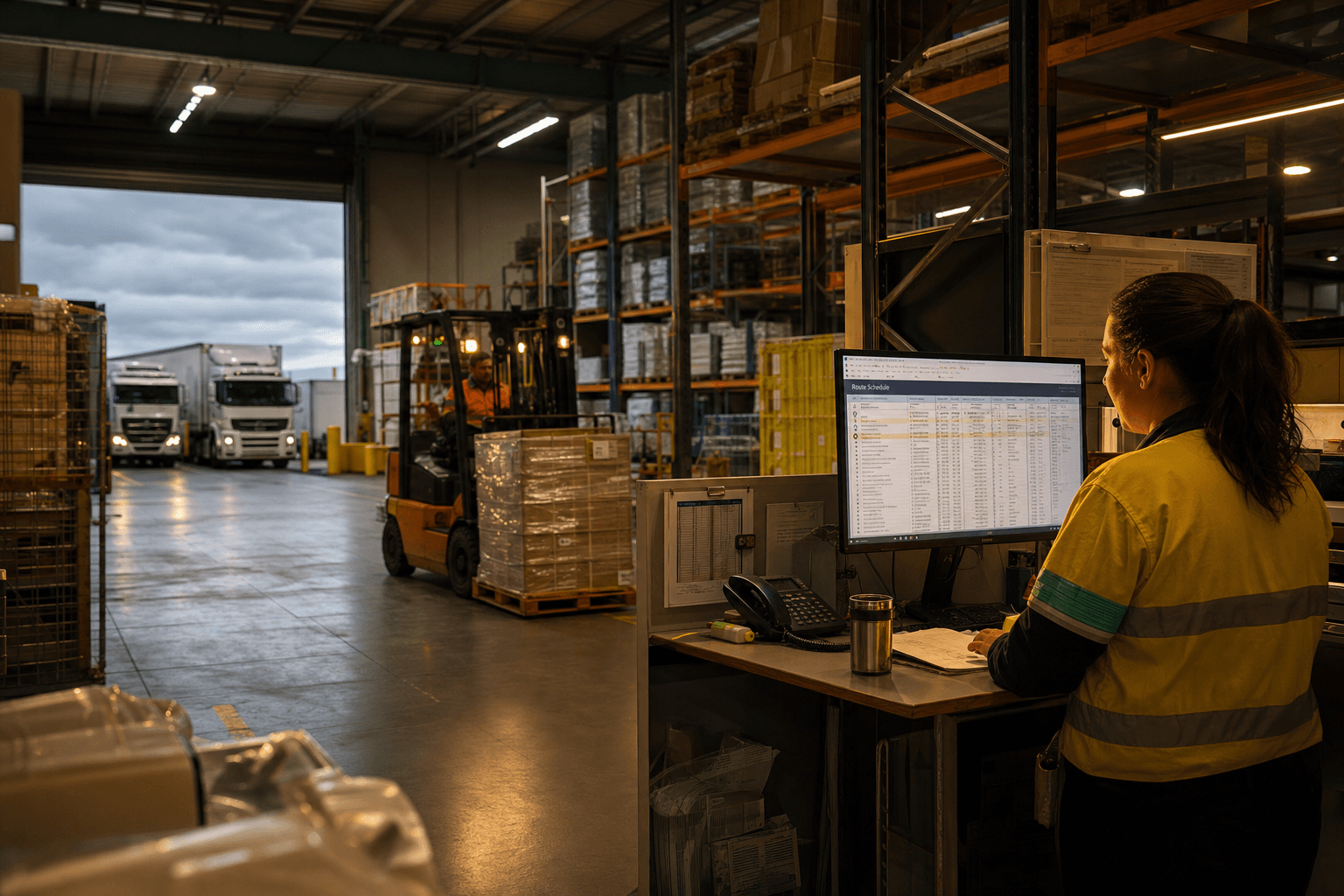
Automated driver communication is the practice of using software to push scheduling updates, route changes, delivery instructions, and compliance alerts directly to drivers — without a dispatcher manually making calls or sending messages. For Australian transport and logistics operators managing complex fleets and tight SLA windows, it is increasingly a core operational capability rather than a nice-to-have.
Why Manual Driver Communication Creates Operational Risk
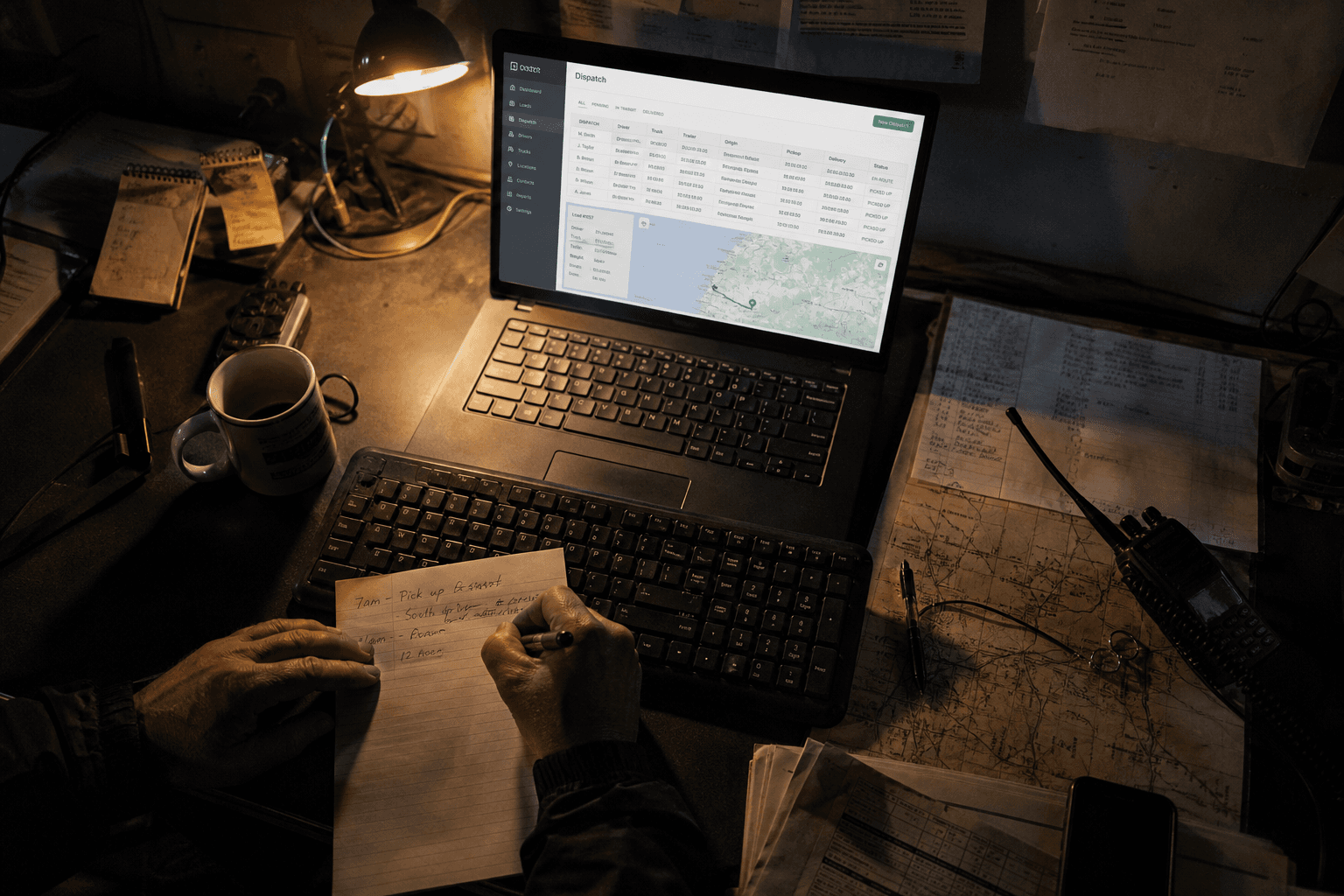
Manual dispatcher-to-driver communication — phone calls, WhatsApp messages, paper run sheets — works until it doesn't. When a route changes at 6am, a delivery window shifts, or a driver calls in sick, the cost of slow communication cascades: late deliveries, missed SLAs, frustrated customers, and compliance exposure.

Many mid-market Australian operators are still running driver communication through spreadsheets and ad hoc calls. This creates several compounding problems:
- Scheduling gaps: Last-minute roster changes don't reach drivers reliably, creating no-show risk and overtime spend.
- Compliance exposure: Under the National Heavy Vehicle Regulator (NHVR) Heavy Vehicle National Law, operators must maintain accurate records of driver work and rest hours. Manual processes make this harder to audit.
- Route inefficiency: When route optimisation systems generate updated runs, those changes need to reach drivers in real time. Without automated communication, that optimisation value is lost at the last mile.
- Proof of delivery gaps: Paper-based POD processes slow down invoicing and create disputes. Automating driver communication around digital POD capture closes this loop.
What Automated Driver Communication Actually Covers
Automated driver communication is not a single product — it is a capability that spans several interconnected systems. Understanding what it covers helps operators decide where to start.
| Capability | What It Does | Depends On |
|---|---|---|
| Roster and shift alerts | Pushes schedule changes, availability requests, and confirmations to drivers via mobile app | Scheduling platform with driver app integration |
| Route update notifications | Notifies drivers of real-time route changes, diversions, or resequenced stops | Route optimisation engine with live data feeds |
| Delivery window alerts | Sends updated ETAs or time-window changes to drivers and customers | TMS with dynamic scheduling capability |
| Digital POD prompts | Guides drivers through proof-of-delivery capture steps at each stop | Document intelligence layer or TMS integration |
| Compliance reminders | Alerts drivers to approaching rest break requirements or shift-end thresholds | NHVR-aware scheduling or telematics system |
| Exception handling | Flags failed deliveries, access issues, or vehicle faults and routes them to the right person | Connected telematics and workflow automation |
How AI Improves Driver Communication
AI-powered driver communication goes beyond simple push notifications. Machine learning applied to delivery data, traffic patterns, and historical run performance allows systems to anticipate issues rather than just react to them.
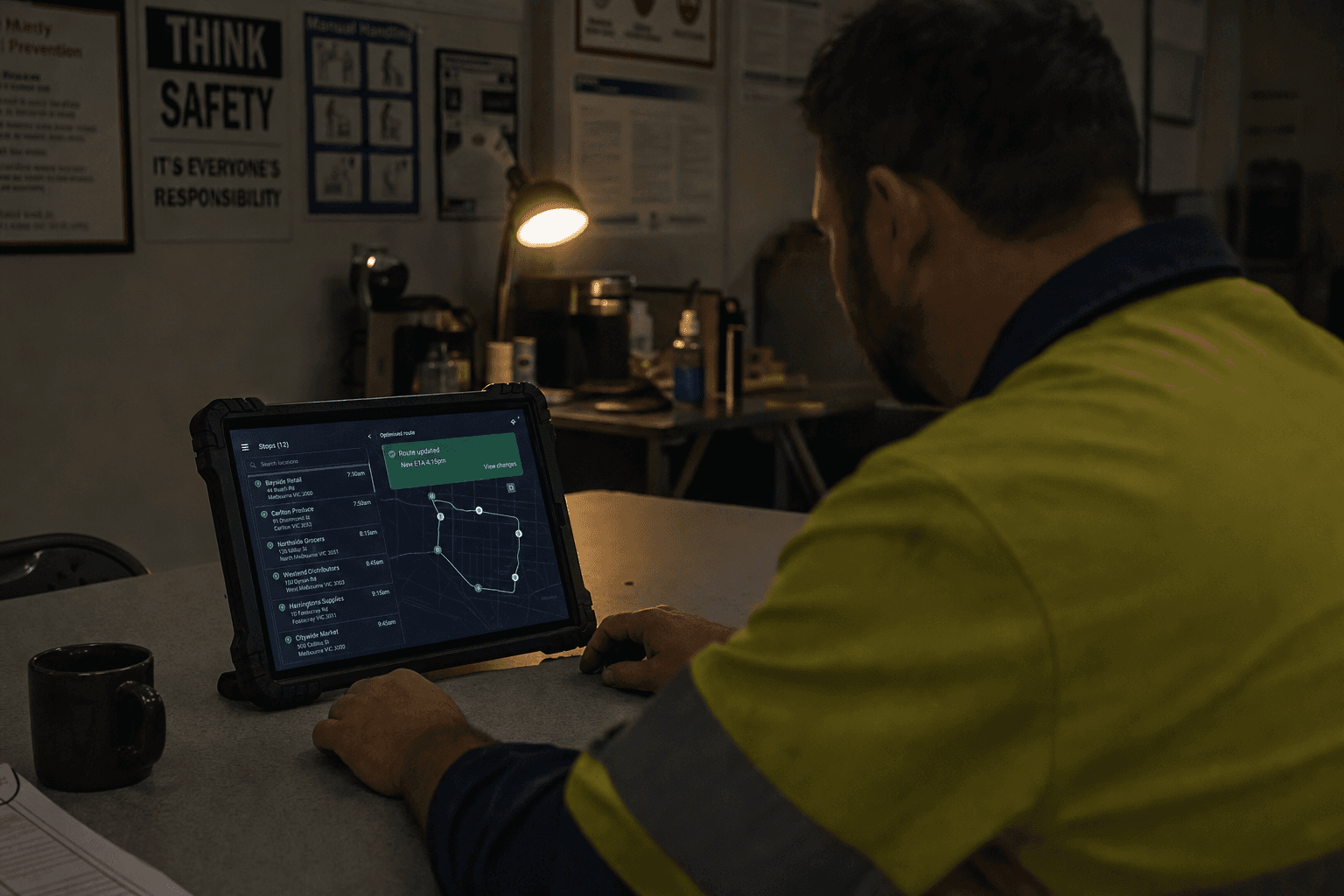
For example, a route optimisation engine that identifies a likely delivery delay based on live traffic can automatically notify the driver of a resequenced stop order, alert the customer of a revised ETA, and flag the exception to a supervisor — all without dispatcher intervention. This is the practical meaning of AI in logistics: removing manual decision points from high-frequency, low-complexity tasks so that dispatchers focus on genuine exceptions.
Intelligent document processing also directly affects driver workflows. When drivers are prompted to capture structured data at the point of delivery — scanning freight documents, recording signatures, photographing damage — that data flows into back-office systems without re-entry. This reduces errors, accelerates invoicing, and creates an auditable record. Learn more about how document intelligence works in practice.
The Integration Dependency Problem
Automated driver communication delivers limited value when bolted onto broken or siloed systems. This is the most common reason these projects underdeliver.
If your TMS doesn't share data with your scheduling platform, route changes won't trigger driver notifications. If your proof-of-delivery system is separate from your invoicing system, digital POD capture won't accelerate billing. If your telematics provider doesn't integrate with your operations platform, compliance alerts won't fire at the right time.
Before investing in driver communication automation, operators need to understand their current integration landscape:
- What systems hold driver and schedule data? Are they connected, or siloed?
- Where does route data live, and how does it get to drivers today? Is it manual, partially automated, or fully connected?
- What is the current POD process? Paper, mobile app, or TMS-integrated?
- How are NHVR work and rest requirements tracked? Spreadsheet, telematics, or scheduling system?
Answering these questions honestly is the starting point for any meaningful automation project. Our AI Readiness Assessment is designed to map exactly this — understanding your current data flows and identifying where automation will have the most impact.
Where Australian Operators Should Start
For most mid-market Australian operators, the most practical path to automated driver communication runs through three stages.
Stage 1 — Digital foundations: Replace paper run sheets and paper POD with a mobile driver app connected to your TMS. This alone closes the most common communication gap and creates the data foundation everything else depends on.
Stage 2 — Scheduling integration: Connect your driver scheduling platform to your TMS so that roster changes, shift confirmations, and availability requests move automatically. This is where Fair Work Act compliance and NHVR record-keeping requirements start to get easier to manage.
Stage 3 — AI-powered optimisation: Introduce route optimisation and real-time exception management so that route changes, ETA updates, and delivery exceptions are communicated to drivers automatically, without dispatcher intervention. This is where route optimisation capability becomes the engine behind the communication layer.
Each stage builds on the previous one. Operators who jump straight to AI-powered communication without the digital foundations in place typically see poor adoption and limited ROI.
Common Questions About Automated Driver Communication
Will drivers actually use it?
Driver adoption is the most common implementation risk. Older drivers in particular may resist moving from phone calls to app-based communication. The practical answer is to involve drivers in the rollout, keep the interface simple, and phase the transition rather than switching everything at once. Systems that feel like extra admin will be abandoned. Systems that make drivers' days easier — fewer phone calls, clearer instructions, simpler POD capture — get used.
What about drivers who are contractors, not employees?
Many Australian transport operators use a mix of employee drivers and owner-operators. Automated communication systems need to accommodate both. Most modern platforms support contractor access through the same driver app, with appropriate data boundaries. The scheduling and compliance logic may differ, but the communication layer can be unified.
How does this interact with NHVR compliance?
The NHVR Heavy Vehicle National Law sets strict requirements for work and rest hour records. Automated communication systems that are integrated with telematics and scheduling can support compliance by surfacing rest break reminders and flagging approaching hour limits. They don't replace a formal fatigue management system, but they reduce the risk of manual process failures.
Is this only relevant for large fleets?
No. Operators running 20 or more vehicles typically see the most immediate return, but the fundamental problem — route changes not reaching drivers, POD not flowing to back-office systems, roster gaps — exists at any fleet size where manual processes are the norm.
Getting the Scope Right Before You Buy
Driver communication automation is a crowded market, with telematics vendors, TMS providers, scheduling platforms, and standalone communication tools all claiming to solve the problem. The risk for operators is buying a tool that solves one part of the problem while creating new integration headaches.
The right approach is to define the problem you're actually solving — whether that's NHVR compliance, dispatcher workload, POD accuracy, or route adherence — and then assess which systems need to be connected to deliver that outcome. Explore our insights for more on how Australian logistics operators are approaching digital transformation.
If you're working through where automated driver communication fits in your operations, we can help you map the landscape and identify where to start. No commitment — just a practical conversation about your current setup and what's realistic.
Zero Footprint
The Zero Footprint team — AI modernisation for Australian logistics.