AASB S2 Compliance: How Logistics AI Delivers Measurable ROI
Australian logistics companies need AI solutions to meet AASB S2 compliance requirements while improving operational efficiency. Learn how route optimisation, emissions tracking, and warehouse automation deliver measurable ROI.
AASB S2 Compliance: How Logistics AI Delivers Measurable ROI
Australian logistics companies face mounting pressure to meet AASB S2 emissions reporting requirements while managing operational costs and improving service delivery. AI solutions designed specifically for logistics operations are proving essential for mid-market carriers, 3PLs, and warehouse operators who need to modernise their data capabilities while maintaining operational focus.
The business case for logistics AI centres on four key areas: automated emissions data collection for Scope 3 supply chain reporting, route optimisation to reduce fuel costs, warehouse automation to improve throughput, and document intelligence to eliminate manual processes. Organisations typically see operational improvements within months of implementation while building the data foundation required for AASB S2 compliance.
Current State of Data Management in Australian Logistics
Most Australian logistics companies rely on legacy systems and manual processes that create compliance risks and operational inefficiencies. The typical mid-market 3PL or freight forwarder manages data across multiple disconnected systems — often including spreadsheets for dispatch, paper-based bills of lading, and email-based customer communications.
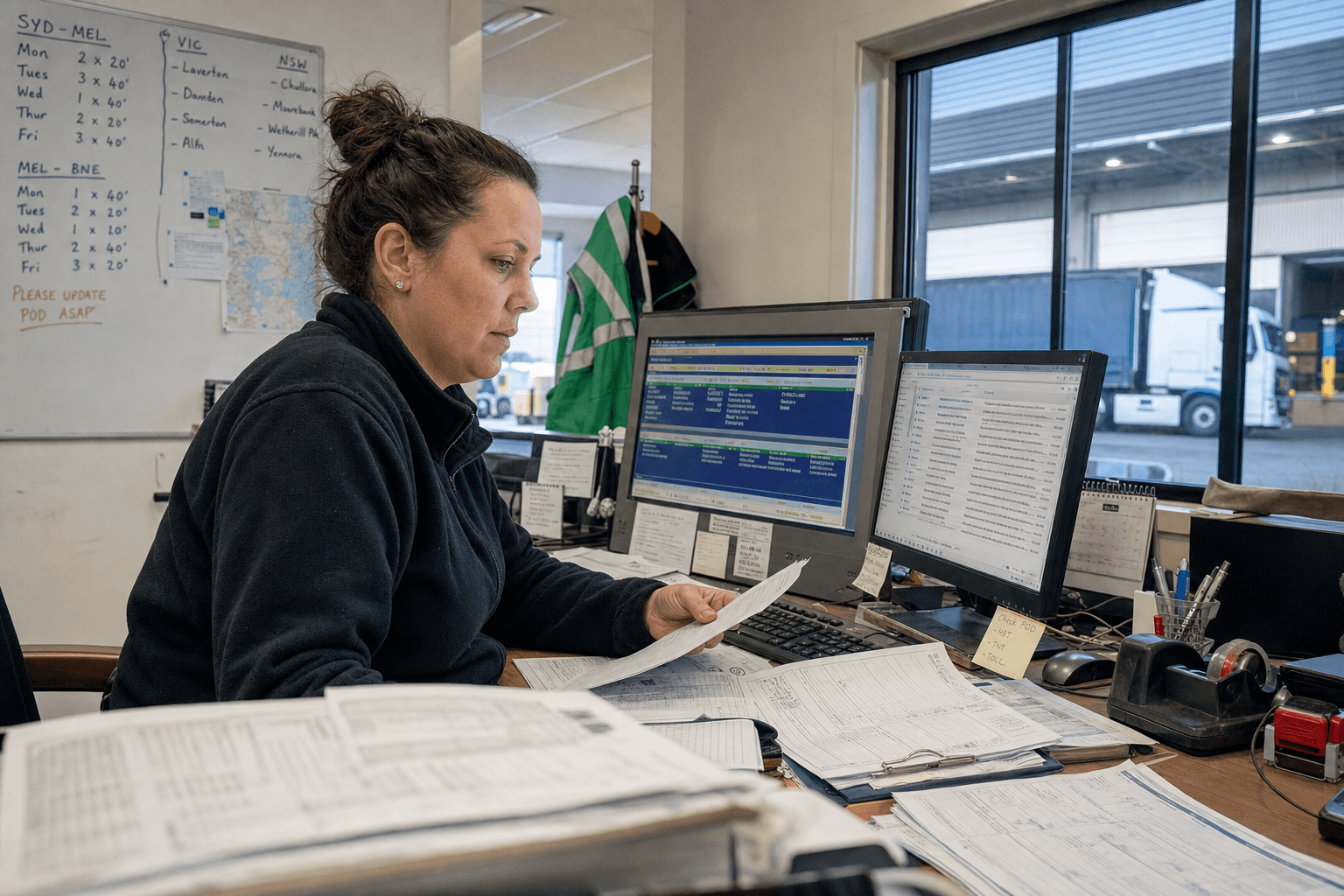
Traditional approaches to data management create significant challenges when AASB S2 reporting requirements come into effect. Companies need automated systems to capture, validate, and report emissions data across their supply chain operations.
Common operational challenges include:
- Manual route planning limiting fleet utilisation
- No automated emissions tracking for NGER reporting logistics
- Legacy TMS/WMS systems with limited integration capabilities
- Paper-based documentation creating processing delays
- Lack of real-time visibility across operations
- Difficulty capturing accurate Scope 3 emissions data from suppliers
AI Solutions for Logistics Operations
Route Optimisation Australia: Fuel Cost Reduction
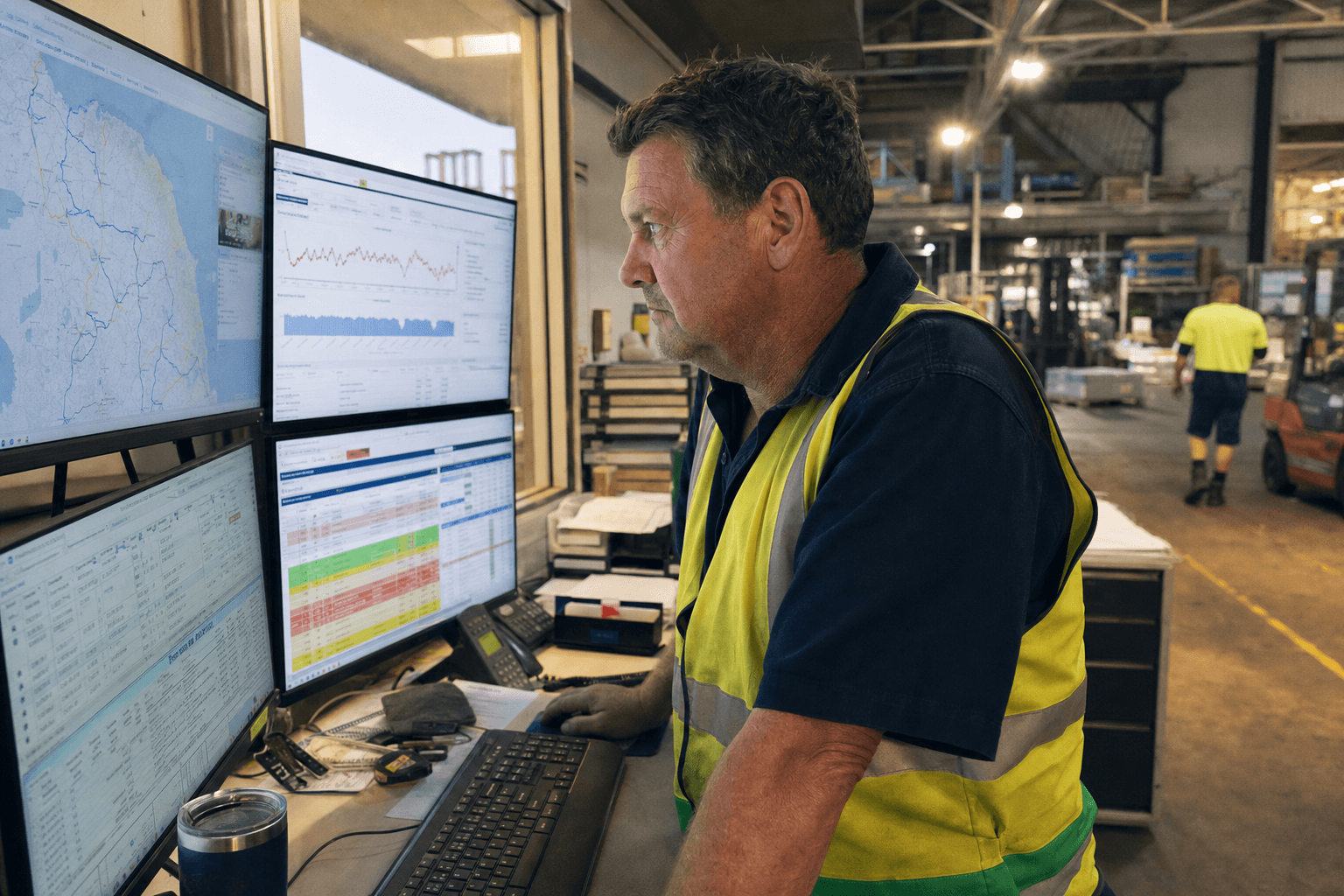
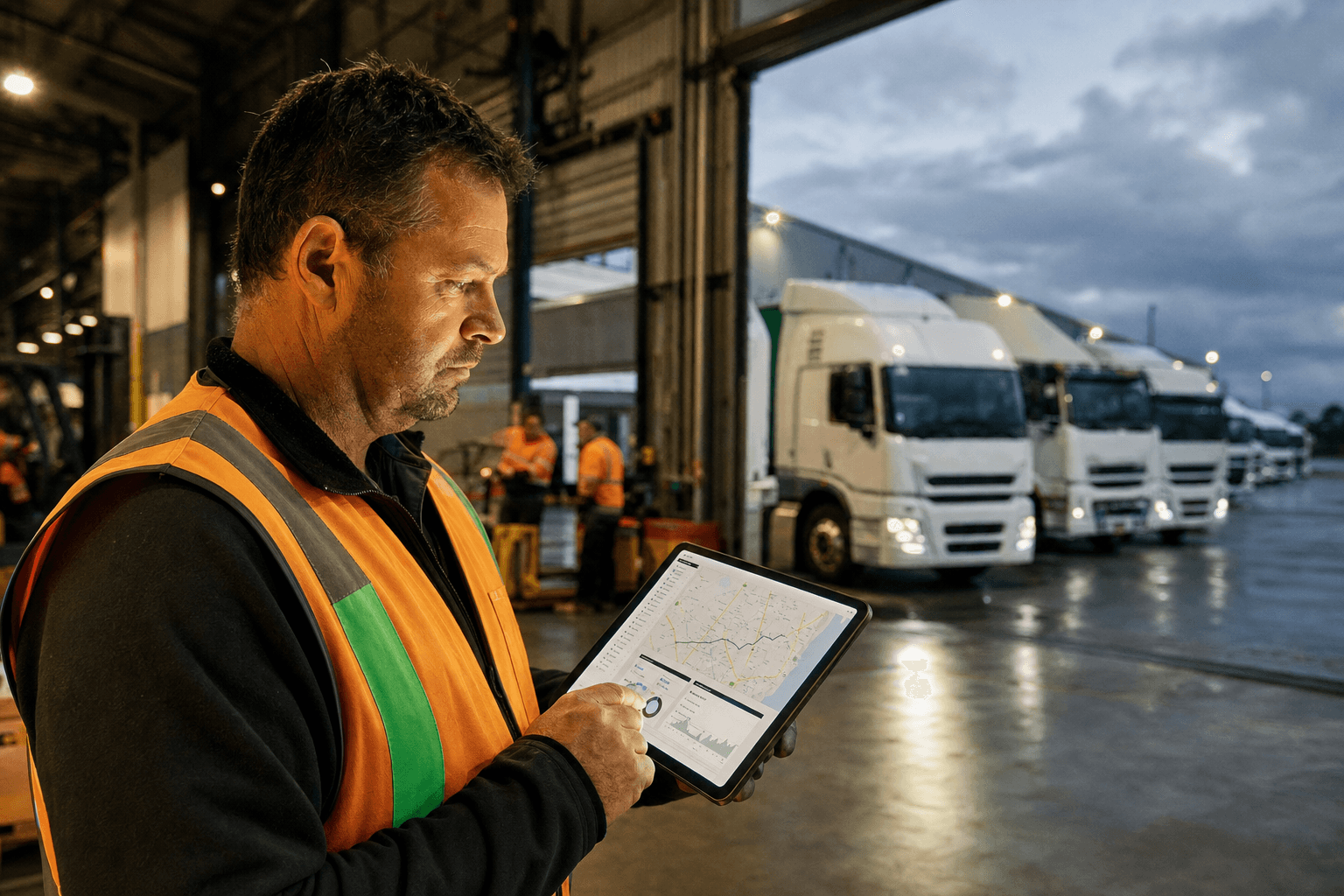
Route optimisation AI addresses one of the highest-impact areas for Australian logistics operations. Modern route planning algorithms consider real-time traffic, vehicle constraints, delivery windows, and driver hours to create optimal schedules.
Industry benchmarks suggest properly implemented route optimisation can reduce total distance travelled and improve vehicle utilisation. The technology integrates with existing TMS platforms while providing the data granularity needed for accurate emissions reporting.
Key capabilities:
- Multi-constraint optimisation for vehicle routing
- Real-time traffic and road condition integration
- Driver hours and compliance monitoring
- Fuel consumption tracking for emissions calculations
- Customer delivery window management
Emissions Intelligence for AASB S2 Compliance
Australian companies subject to AASB S2 requirements need automated systems to collect, validate, and report emissions data. This is particularly challenging for logistics operations where Scope 3 emissions from transportation activities represent a significant portion of total emissions.
AI-powered emissions tracking integrates with existing logistics systems to automatically capture fuel consumption, route data, and vehicle utilisation metrics. The technology provides the audit trail and data accuracy required for compliance reporting.
Compliance capabilities:
- Automated Scope 3 supply chain reporting
- Integration with fuel cards and telematics systems
- Real-time emissions calculation and validation
- Audit-ready reporting for NGER reporting logistics
- Supplier emissions data aggregation and verification
Warehouse Automation Australia: Throughput Optimisation
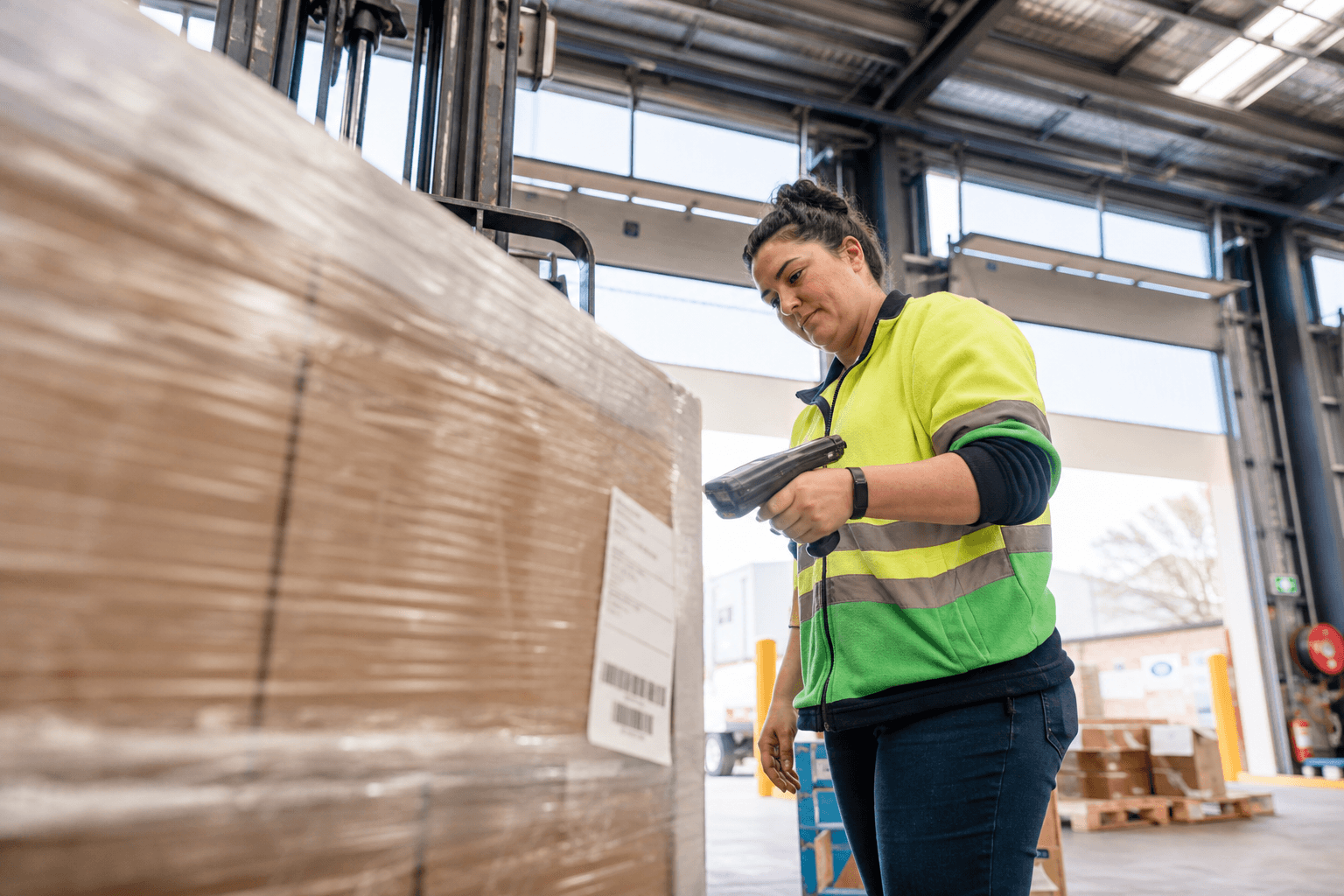
Warehouse operations represent a significant opportunity for AI-driven improvements. Mid-market operators often struggle with throughput plateaus as manual processes limit scaling capacity.
AI solutions for warehouse automation focus on inventory management, picking optimisation, and labour allocation. These systems integrate with existing WMS platforms while providing enhanced analytics and predictive capabilities.
Operational improvements:
- Predictive inventory management
- Optimised picking routes and batching
- Labour demand forecasting
- Equipment utilisation monitoring
- Quality control automation
Document Intelligence for Manual Process Elimination
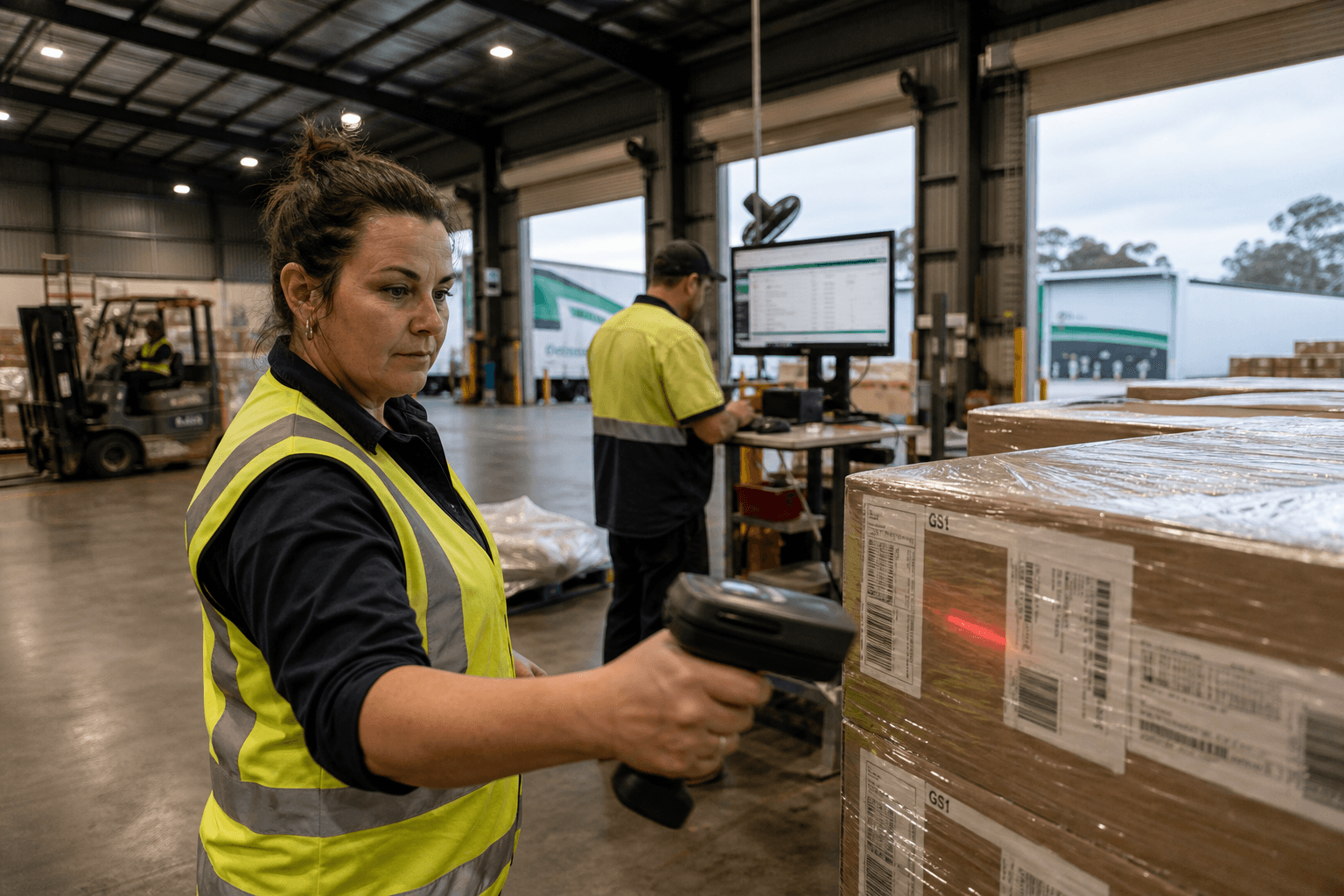
Document processing represents a significant operational burden for logistics companies. Bills of lading, customs documentation, and customer communications often require manual data entry and validation.
Document intelligence AI automates the extraction, validation, and routing of information from logistics documents. This reduces processing time while improving data accuracy for both operational and compliance purposes.
Process automation:
- Automated BOL processing and validation
- Customs documentation extraction
- Invoice matching and exception handling
- Customer communication routing
- Compliance document management
Implementation Approach for Mid-Market Logistics
AI Readiness Assessment: Understanding Current State
Successful AI implementation begins with understanding current systems, data quality, and operational processes. An AI readiness assessment evaluates existing technology infrastructure and identifies the highest-impact opportunities for automation.
The assessment process typically reveals data integration challenges, system limitations, and workflow inefficiencies that need addressing before AI implementation. This foundation work ensures successful deployment and measurable returns.
Assessment components:
- Current system architecture review
- Data quality and availability analysis
- Process workflow mapping
- Integration requirements identification
- ROI opportunity quantification
Phased Implementation Strategy
Logistics AI projects succeed when implemented in focused phases that deliver measurable value while minimising operational disruption. The phased approach allows companies to build internal capabilities while demonstrating clear business benefits.
Phase 1: Foundation Building (4-6 weeks)
- Data integration and quality improvement
- Core system connections established
- Initial workflow automation
- Staff training and change management
Phase 2: Operational Enhancement (6-8 weeks)
- Advanced analytics deployment
- Process optimisation implementation
- Performance monitoring systems
- Compliance reporting capabilities
Phase 3: Advanced Capabilities (8-12 weeks)
- Predictive analytics and forecasting
- Advanced optimisation algorithms
- Enhanced integration capabilities
- Continuous improvement processes
Building Competitive Advantage Through AI
Tender Differentiation and Customer Requirements
Australian logistics companies increasingly face customer requirements for digital capabilities, real-time tracking, and emissions reporting. AI solutions provide the technological foundation needed to meet these requirements while maintaining operational efficiency.
Companies with modern AI-powered systems can offer capabilities that differentiate their proposals in competitive tender processes. This includes real-time shipment visibility, accurate delivery predictions, and comprehensive emissions reporting.
Operational Resilience and Scalability
AI systems provide operational resilience by reducing dependence on manual processes and improving system reliability. Automated route optimisation continues working during staff shortages, while document intelligence maintains processing speeds during peak periods.
The scalability provided by AI solutions allows companies to handle growth without proportional increases in administrative overhead. This capability becomes particularly valuable during expansion phases or when integrating acquired operations.
Future-Proofing Technology Infrastructure
Investment in logistics AI creates a foundation for ongoing technological advancement. Modern AI platforms can incorporate new algorithms, integrate with emerging technologies, and adapt to changing regulatory requirements without requiring complete system replacement.
This future-proofing capability provides insurance against technological obsolescence while ensuring continued competitive positioning in an increasingly digital logistics market.
Getting Started with Logistics AI
Successful AI implementation requires understanding your current operational challenges and identifying the highest-impact opportunities for automation. The process begins with a comprehensive assessment of existing systems, data quality, and operational workflows.
Most organisations benefit from starting with a focused pilot project that addresses a specific operational challenge while building internal AI capabilities. This approach demonstrates tangible value while establishing the foundation for broader AI adoption across the business.
Zero Footprint specialises in helping Australian logistics companies navigate this transformation through practical AI solutions designed around real operational requirements. Our approach focuses on measurable business outcomes rather than technology for its own sake.
Whether you're facing AASB S2 compliance deadlines, looking to improve operational efficiency, or need to modernise legacy systems, we can help you understand how AI can address your specific challenges.
Get in touch to discuss how logistics AI can deliver measurable ROI for your operations while building the compliance capabilities you need for the future.
Zero Footprint
The Zero Footprint team — AI modernisation for Australian logistics.