Data Lake Architecture Guide for Legacy Logistics Systems
Australian logistics operators struggle with data trapped in siloed legacy systems. A well-designed data lake consolidates TMS, WMS, and operational data to enable AI and advanced analytics across your entire operation.

Building a Data Lake for Legacy Logistics Systems: Complete Architecture Guide
Most Australian logistics operators run on systems that weren't designed to talk to each other. Your TMS, WMS, fleet management, and financial systems create valuable data every day — but it's trapped in silos, making AI and advanced analytics impossible.
A data lake solves this by creating a central repository where all your operational data can live together. Unlike traditional databases, data lakes store information in its raw form, making it easier to extract insights across your entire operation.
What is a Data Lake for Logistics Operations?
A logistics data lake is a centralised storage system that ingests data from all your operational systems — TMS, WMS, telematics, ERP, and even spreadsheets — without requiring you to restructure or clean the data first. This creates a single source of truth for analytics and AI applications.
The key advantage is flexibility. Traditional data warehouses require you to define exactly how data will be used before you store it. Data lakes let you store everything first, then decide how to use it later — perfect for logistics where operational needs change frequently.
Challenges with Legacy Logistics System Data
Legacy logistics systems create several data challenges that make traditional integration approaches expensive and fragile:

Different data formats: Your TMS exports CSV files, your WMS uses XML, and your telematics provider sends JSON via API. Each system structures the same information differently.
Inconsistent update frequencies: Route data updates every few minutes, inventory moves hourly, but financial reconciliation happens daily. Synchronising these different cadences is complex.
Limited API access: Many older logistics systems weren't built for real-time integration. You might only have batch exports or, worse, manual data extracts.
Data quality issues: Legacy systems often contain duplicate records, missing fields, and inconsistent naming conventions that accumulate over years of operation.
Data Lake Architecture for Logistics Systems
A well-designed logistics data lake follows a layered architecture that handles the messy reality of operational data:
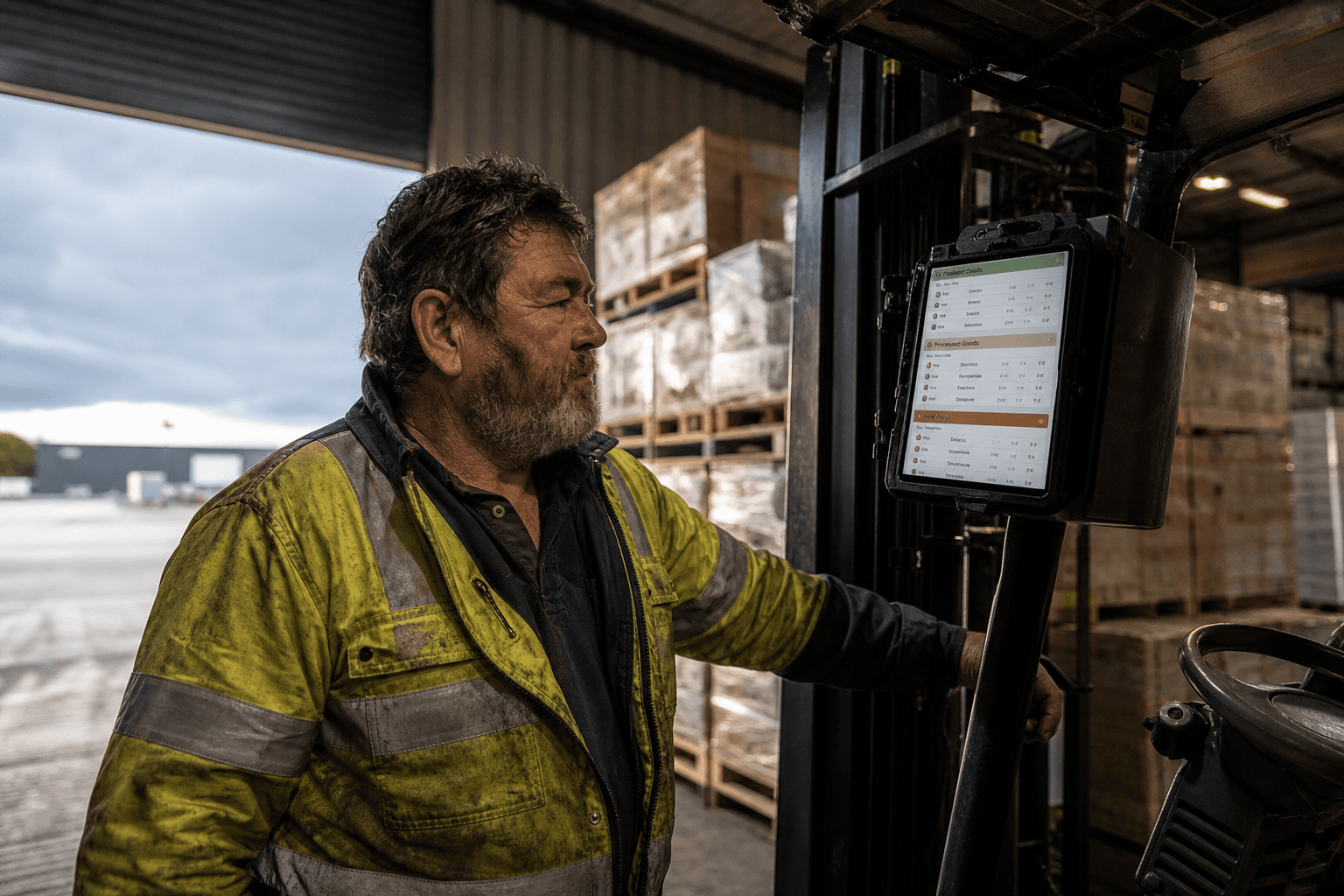
Raw Data Layer (Bronze)
This is where all your source system data lands, exactly as it comes from each system. No transformation, no cleaning — just a complete historical record of everything.
- TMS dispatch records and route completions
- WMS pick/pack/ship transactions
- Telematics GPS traces and vehicle diagnostics
- Financial invoicing and payment data
- Customer communications and service requests
Processed Data Layer (Silver)
Here, raw data gets cleaned and standardised while maintaining its detailed granularity. This layer handles:
- Duplicate removal and data validation
- Standardised date/time formats across systems
- Consistent naming conventions (customer names, product codes)
- Data type conversions and formatting
Analytics Layer (Gold)
This top layer contains business-ready datasets optimised for reporting and AI applications:
- Daily operational KPIs and performance metrics
- Customer and route profitability analysis
- Predictive models for demand forecasting
- Emissions calculations and sustainability reporting
Change Data Capture (CDC) Pipeline Implementation
Change Data Capture ensures your data lake stays current with operational systems without overwhelming them with constant full data dumps.
Database CDC for Modern Systems
If your TMS or WMS runs on SQL Server, Oracle, or PostgreSQL, you can implement transaction log-based CDC. This captures every insert, update, and delete as it happens, providing near real-time data synchronisation.
The CDC process monitors database transaction logs, identifies changed records, and streams only the changes to your data lake. This minimises impact on production systems while ensuring data freshness.
File-Based CDC for Older Systems
Legacy systems that only export files require a different approach:
- Monitor file timestamps and sizes to detect new exports
- Compare file hashes to identify changed content
- Process incremental files where available
- Handle full file replacements with delta detection
API Polling for Real-Time Systems
Systems with modern APIs can be polled at appropriate intervals:
- Telematics data every 5-15 minutes for route tracking
- Inventory levels every 30-60 minutes for demand planning
- Financial data daily for cost analysis
Handling Schema Evolution in Logistics Data
Logistics systems evolve constantly. New fields get added, data structures change, and business requirements shift. Your data lake architecture must handle these changes without breaking existing processes.
Schema Registry Approach
Maintain a central registry of all data schemas with versioning. When a source system changes its data structure:
- Register the new schema version
- Update ingestion pipelines to handle both old and new formats
- Gradually migrate historical data where necessary
- Maintain backward compatibility for existing analytics
Flexible Data Storage
Use storage formats that handle schema evolution gracefully. Parquet files with column-based storage adapt well to new fields, while JSON-based storage handles nested and variable structures common in API responses.
Graceful Degradation
Build pipelines that continue working even when source systems change unexpectedly. Missing fields shouldn't stop data ingestion — they should be flagged for investigation while processing continues.
Data Quality Rules for Logistics Operations
Poor data quality undermines every downstream application. Implement automated quality checks specific to logistics operations:
Operational Validation Rules
- GPS coordinates must fall within reasonable geographic bounds
- Delivery timestamps cannot be in the future
- Vehicle capacity cannot exceed physical limits
- Route distances should align with GPS traces
Business Logic Validation
- Customer references must exist in the master data
- Product codes should validate against current catalogues
- Delivery addresses should have valid postal codes
- Invoice amounts should reconcile with service records
Data Freshness Monitoring
- Alert when expected data feeds are delayed
- Track ingestion volumes for unusual patterns
- Monitor source system connectivity and availability
- Identify systems that have stopped sending updates
Enabling AI and ML on Previously Siloed Data
Once your logistics data is consolidated and quality-assured, it becomes the foundation for AI applications that weren't possible with siloed systems.
Route Optimisation Models
Combine historical route data, traffic patterns, customer preferences, and vehicle characteristics to build optimisation models that consider factors no single system could handle alone.
Demand Forecasting
Merge customer order history, seasonal patterns, economic indicators, and inventory levels to predict demand more accurately than any individual system could achieve.
Predictive Maintenance
Correlate vehicle telematics data with maintenance records, route characteristics, and environmental conditions to predict component failures before they happen.
Emissions Calculation
Aggregate fuel consumption, route distances, vehicle specifications, and load weights to calculate accurate Scope 1 and Scope 3 emissions for compliance reporting.
Implementation Roadmap for Australian Logistics Operators
Phase 1: Assessment and Foundation (4-6 weeks)
- Audit existing systems and data sources
- Map current data flows and integration points
- Design the target data lake architecture
- Set up core infrastructure and storage layers
Phase 2: Priority System Integration (8-12 weeks)
- Implement CDC pipelines for your most critical systems
- Establish data quality monitoring and validation
- Build initial bronze and silver layer processing
- Create basic operational dashboards
Phase 3: Advanced Analytics Enablement (12-16 weeks)
- Develop gold layer datasets for specific use cases
- Implement your first AI/ML applications
- Expand integration to remaining systems
- Train your team on data lake operations
Our AI readiness assessment helps Australian logistics operators understand exactly what's involved in building their data foundation and which systems should be prioritised for integration.
Getting Started with Your Logistics Data Lake
Building a data lake for legacy logistics systems requires balancing technical complexity with operational reality. The key is starting with your most valuable data sources and expanding systematically.
If you're dealing with siloed logistics data and want to explore how a data lake could enable AI applications in your operation, we can help you assess what's possible with your current systems and design an implementation roadmap that fits your business priorities.
Zero Footprint
The Zero Footprint team — AI modernisation for Australian logistics.