Freight Visibility Standards: GS1 and the Push for Interoperability
GS1 standards like EPCIS 2.0 and Digital Link promise a common language for freight visibility across supply chains — but for most Australian logistics operators, legacy TMS/WMS systems are the real barrier to interoperability, not the absence of a standard.

What is GS1 and why does it matter for freight visibility?
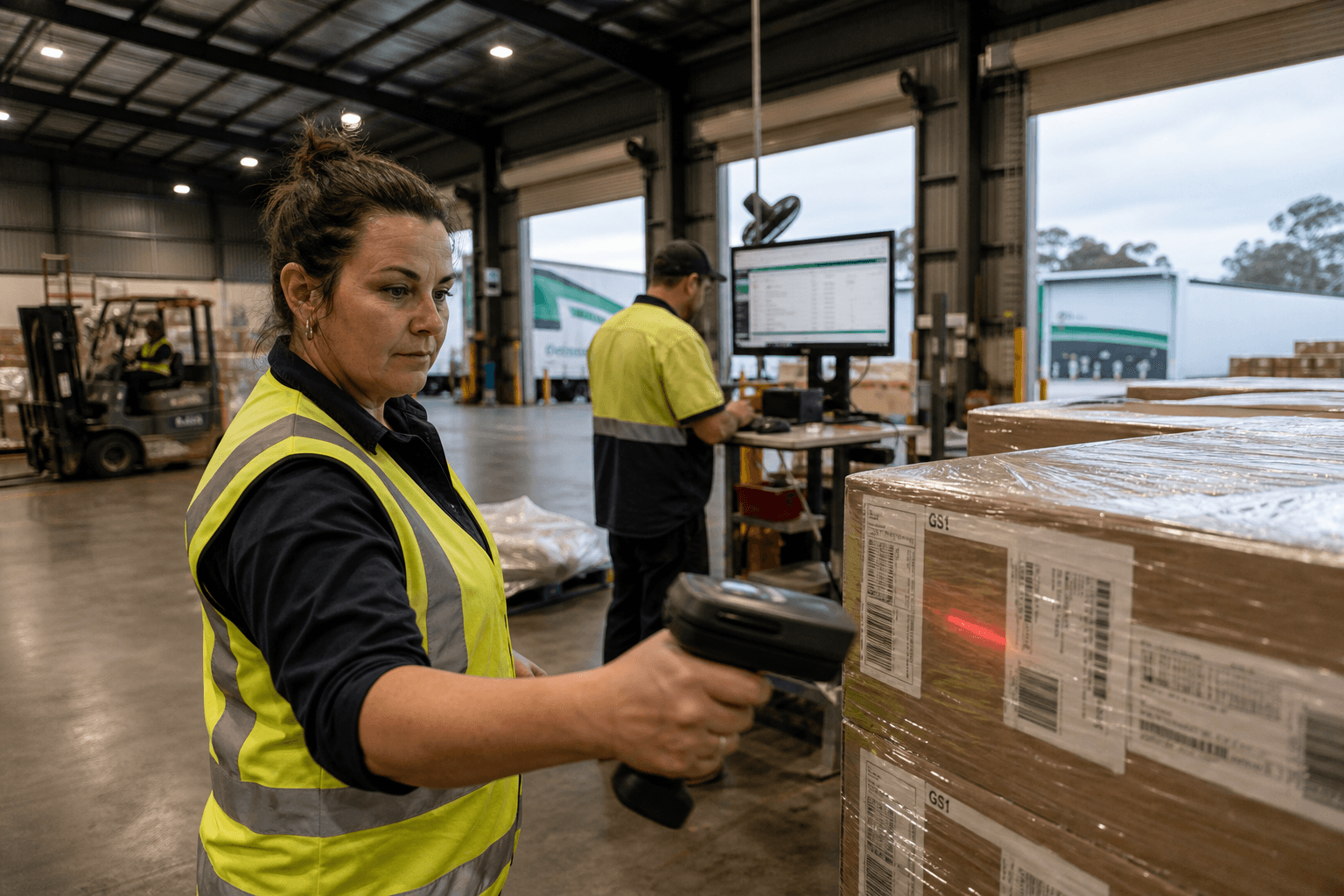
GS1 is the global not-for-profit organisation behind barcoding and identification standards used across retail, healthcare, and logistics — including the barcode on nearly every product you've ever scanned. In freight, GS1 standards provide a common language for identifying shipments, locations, and assets, so that different systems (yours, your carrier's, your customer's) can talk about the same physical thing without manual reconciliation.
The appeal for logistics operators is obvious: if every pallet, container, and consignment carries a globally unique, machine-readable identifier, visibility across a multi-party supply chain becomes a data problem rather than a phone-calls-and-spreadsheets problem. That's the theory. The practice, for most Australian mid-market operators, is more complicated.
What is EPCIS 2.0 and how does it support supply chain visibility?
EPCIS (Electronic Product Code Information Services) is a GS1 standard that defines how supply chain events — an item being shipped, received, picked, or transformed — are captured and shared between trading partners in a consistent format. Version 2.0 extended the standard to better support web-based data sharing and integration with modern APIs.
In principle, EPCIS gives every party in a chain — shipper, carrier, warehouse, receiver — a shared event vocabulary. A pallet scanned as "departed" at one node and "arrived" at the next can be tracked end-to-end, even across organisational boundaries. That's a genuine interoperability mechanism, distinct from point-to-point EDI links that only connect two parties at a time.
The catch is adoption. EPCIS only delivers value when trading partners on both ends implement it, and most Australian freight and 3PL operators are still running legacy TMS and WMS platforms that were never built with this kind of event-sharing in mind.
What is GS1 Digital Link and how does it differ from a standard barcode?
GS1 Digital Link is a standard that embeds GS1 identifiers into a web-friendly URL format, typically encoded in a QR code, so that scanning a code can resolve to a live web page with product or shipment information — rather than just a static number. It's designed to bridge traditional barcoding with modern, internet-connected supply chain data.
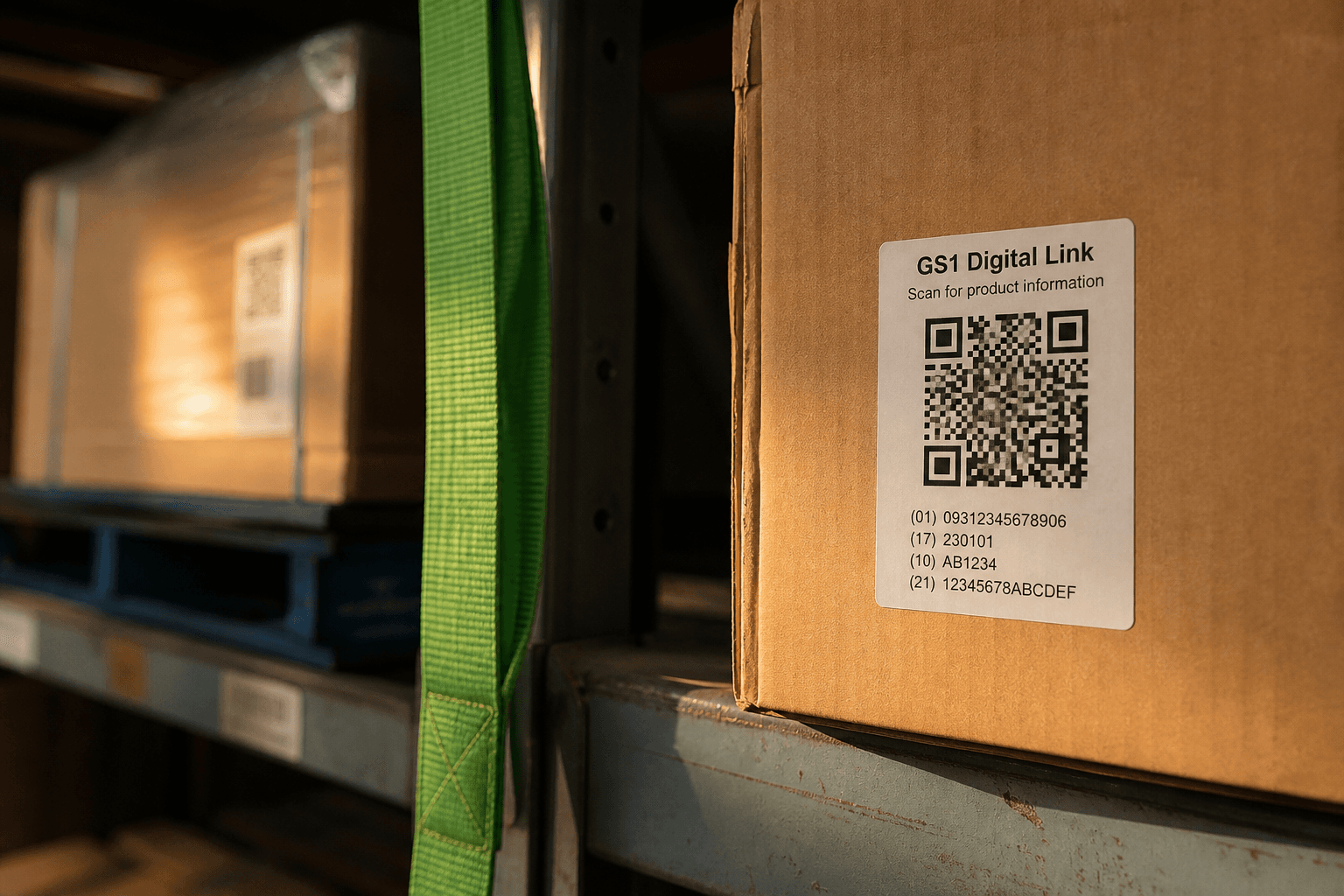
For freight visibility specifically, Digital Link matters because it opens the door to consumers, auditors, or downstream customers verifying shipment provenance or compliance data by scanning a code, without needing direct system access. It's a promising direction, but as with EPCIS, the value depends on upstream data actually being captured and current.
What are serialisation requirements in freight and logistics?
Serialisation is the practice of assigning a unique identifier to individual units, cases, or pallets so each one can be tracked discretely rather than as an undifferentiated batch. In sectors like pharmaceuticals and food, serialisation is often a regulatory requirement; in general freight, it's typically a customer or contractual requirement tied to track-and-trace capability.
Serialisation sounds straightforward on paper. In practice, it requires consistent labelling equipment, scanning infrastructure at every handover point, and a system of record that can absorb and reconcile the resulting data volume. For operators still running manual dispatch or paper-based bills of lading, serialisation is a significant operational lift before it becomes a visibility win.
How far has GS1 adoption progressed in Australia?
Adoption of GS1 standards is well established in Australian retail and healthcare, where GTIN barcoding is close to universal. Adoption specifically within freight, transport, and 3PL operations is less mature and more uneven — some larger carriers and their retail customers have integrated EPCIS-style event sharing, but for most mid-market logistics operators, GS1-based visibility remains an aspiration rather than an operating reality.
This isn't a criticism of the standard. It reflects the same underlying constraint that shows up everywhere in Australian logistics technology: legacy systems that weren't designed for modern data sharing, and limited internal capacity to build and maintain the integrations a standard like GS1 assumes.
What's the real barrier to freight visibility — standards or systems?
For most Australian logistics operators, the barrier to freight visibility isn't the absence of a standard — it's that legacy TMS and WMS platforms, typically implemented more than five years ago, cannot easily integrate with modern APIs, cloud platforms, or data pipelines, and often lack real-time visibility or reporting capability in the first place.
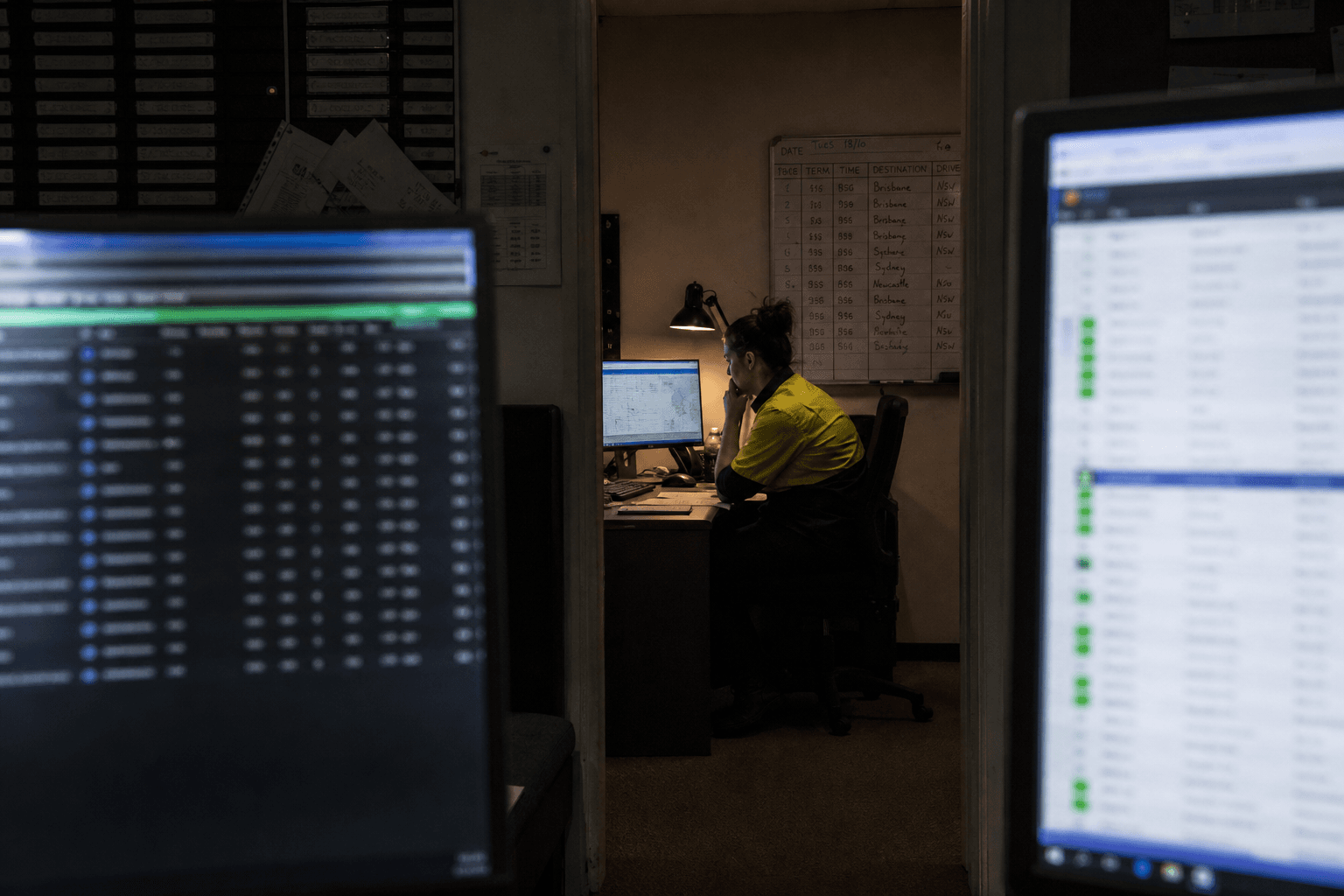
That's true whether the interoperability goal is GS1-based event sharing, EDI integration with a major customer, or internal reporting for compliance purposes. You can adopt every GS1 standard available, but if your dispatch data lives in a spreadsheet and your WMS was implemented before smartphones were common, standards adoption alone won't close the gap.
This is why, in our work with logistics operators, we typically focus first on document intelligence — extracting and normalising the data trapped in existing systems, PDFs, and manual processes — before layering on any broader interoperability initiative. It's a more pragmatic entry point than a ground-up standards migration, particularly for businesses under 500 employees without a dedicated data team.
Why does freight visibility matter for Scope 3 emissions reporting?
Freight visibility and emissions reporting are more connected than most operators realise, because AASB S2's Scope 3 reporting requirements demand vehicle-level fuel consumption data by job or lane, load factor and utilisation data, and subcontractor and carrier emissions data — much of which depends on the same underlying visibility gap that GS1 and EPCIS are trying to solve.
Scope 3 emissions reporting more broadly requires data sharing across subcontractors, suppliers, and customers who may not have their own tracking systems in place. Whether you approach this through GS1-style standardisation, EDI, or an AI-driven data layer, the core challenge is identical: getting consistent, trustworthy data out of parties who don't report the same way you do. For operators facing NGER reporting obligations or an approaching AASB S2 deadline, this is often the more urgent driver than freight tracking alone — see our emissions reporting work for how we approach it.
What's the business case for standards-based visibility?
The business case for pursuing better freight visibility — whether via GS1 standards, EDI, or an AI-based integration layer — rests on a few recurring commercial pressures: customers increasingly requiring real-time tracking or API connectivity as a condition of doing business, tenders being lost to competitors with more mature digital capability, and warehouse throughput plateauing because staff can't see what's happening across the network.
GS1 standards are one legitimate path toward solving this, particularly for operators trading heavily with retail customers who already run GS1-compliant systems. But for many Australian mid-market logistics businesses, a full standards migration is a multi-year, resource-intensive undertaking. An AI-layered approach — extracting and normalising data from existing TMS/WMS systems, building visibility on top of what you already run — is often the faster, lower-risk route to the same commercial outcome.
| Approach | Speed to value | Dependency on trading partners | Typical fit |
|---|---|---|---|
| GS1 standards (EPCIS/Digital Link) | Slower — requires partner adoption | High | Retail-heavy supply chains, large enterprise partners |
| Point-to-point EDI | Moderate | Moderate — per-relationship | Established customer relationships with defined data exchange needs |
| AI-driven data extraction and normalisation | Faster — works on existing systems | Low — internal-first | Mid-market operators with legacy TMS/WMS and limited IT resource |
Where should Australian logistics operators start?
The practical starting point for most operators isn't choosing a standard — it's understanding what data your current systems can and can't produce, and where the gaps sit relative to your customers' or regulators' requirements. That diagnostic work is what an AI readiness assessment is designed to do: a structured review of your existing TMS/WMS, data flows, and manual processes, before committing to any larger integration or standards initiative.
From there, some operators do move toward GS1 adoption, particularly if major retail customers require it. Others find that AI-based data extraction and route or warehouse optimisation delivers the visibility they need without a multi-year standards project. Either way, the decision should follow an honest assessment of your current systems — not a vendor's preferred roadmap. For more on how legacy systems shape this decision, see our insights.
If you're exploring how to improve freight visibility across your operation — whether that means evaluating GS1 standards, closing gaps in Scope 3 emissions data, or simply getting more out of the systems you already run — we can help.
Zero Footprint
The Zero Footprint team — AI modernisation for Australian logistics.