Freight Market Intelligence Automation with AI for Logistics
AI-powered freight market intelligence automation helps Australian logistics operators make better pricing, capacity, and route decisions by continuously monitoring market data in real-time. Learn how to transform reactive operations into proactive market intelligence.
Freight Market Intelligence Automation with AI for Australian Logistics
Freight market intelligence automation with AI continuously collects, processes, and analyses market data that helps logistics operators make better pricing, capacity, and route decisions. Instead of relying on outdated spreadsheets or gut instinct, AI systems monitor freight rates, carrier performance, and market conditions in real-time across Australian transport corridors.
For mid-market Australian carriers and 3PLs, this intelligence becomes the foundation for competitive advantage — knowing when rates are trending up on the Melbourne-Sydney corridor before your competitors, or identifying which carriers consistently deliver on time versus those that don't.
How AI Aggregates Freight Market Data
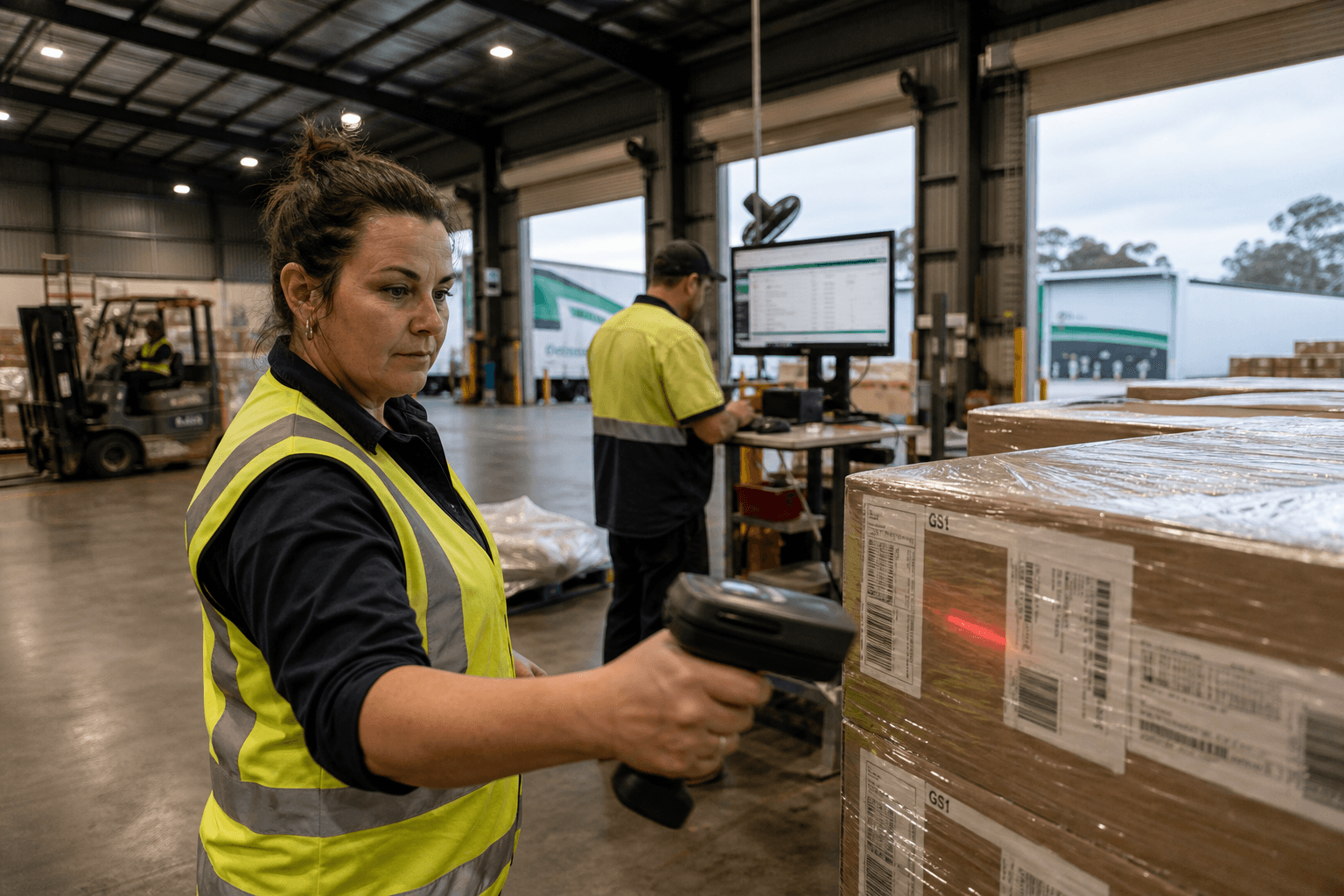
AI systems aggregate freight market data by connecting to multiple information sources and standardising the incoming data streams. The system pulls rate information from load boards, carrier networks, customer tenders, and public freight indices, then normalises this data into consistent formats for analysis.
Traditional market intelligence relies on manual data collection — operations staff checking load boards, calling brokers, or reviewing last month's invoices. AI automation runs these checks continuously, capturing rate changes within hours rather than weeks.
The data sources typically include:
- Digital freight marketplaces (load boards, tender platforms)
- Carrier rate sheets and contract renewals
- Customer RFQ responses and historical pricing
- Fuel price indexes and regulatory cost changes
- Port congestion reports and infrastructure delays
For Australian freight operators, this means capturing rate intelligence across key corridors like Melbourne-Sydney, Brisbane-Gold Coast, and Perth-mining regions before market shifts impact your bottom line.
Rate Trend Detection and Forecasting
Rate trend detection identifies patterns in freight pricing across different lanes, timeframes, and market conditions. AI analyses historical rate data alongside external factors like fuel costs, seasonal demand, and infrastructure constraints to predict where rates are heading.
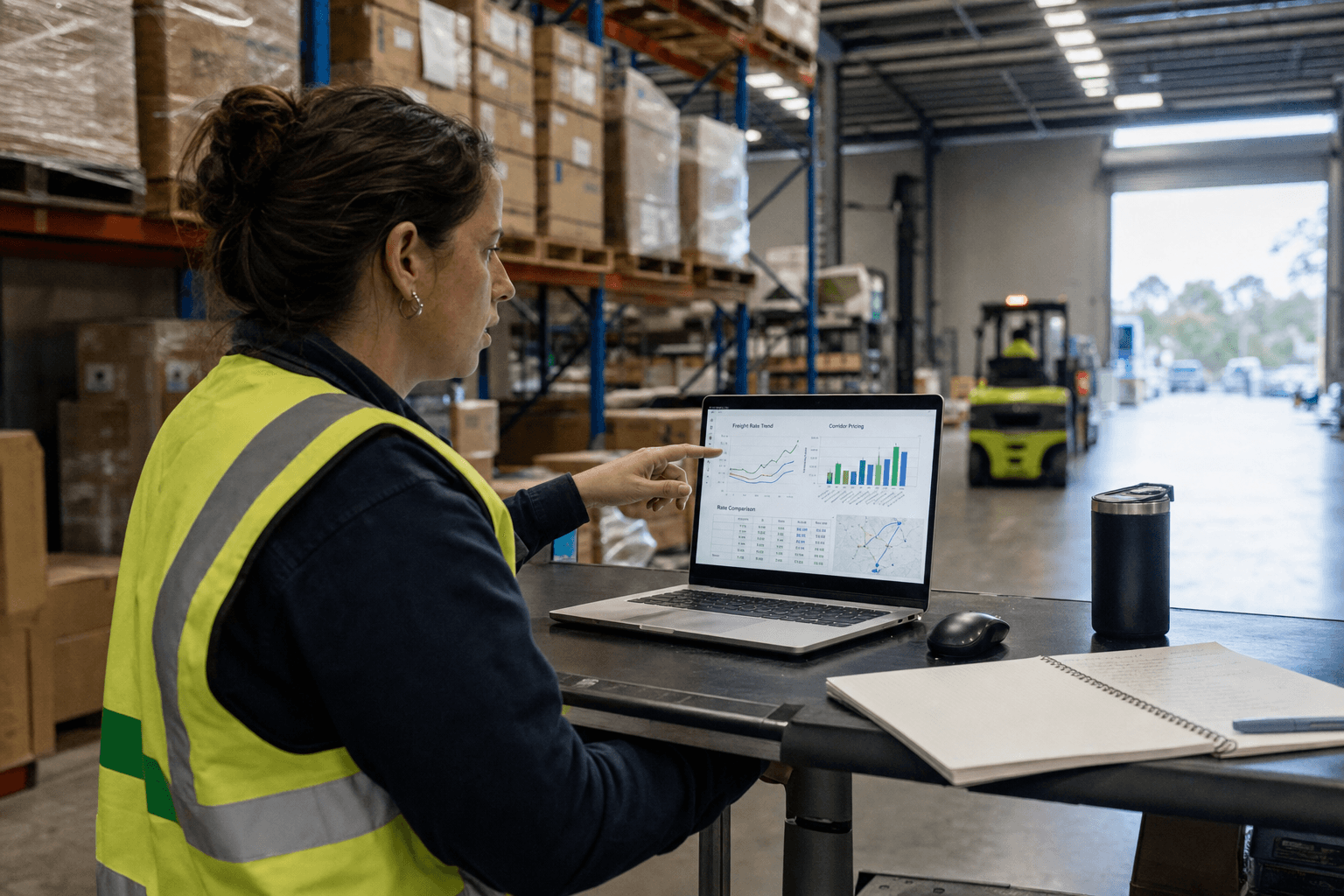
The system flags rate movements before they become obvious to the broader market. When fuel prices spike or port congestion builds, AI models predict the lag time before these costs flow through to freight rates on specific corridors.
Key trend indicators include:
- Seasonal patterns: Higher rates during peak agricultural seasons or pre-Christmas volumes
- Fuel correlation: How quickly diesel price changes translate to rate adjustments
- Capacity constraints: Rate spikes when available trucks drop below demand thresholds
- Infrastructure impacts: How road closures or port delays affect corridor pricing
Australian freight markets show distinct seasonal patterns — grain harvest periods drive rate premiums on rural corridors, while mining commodity cycles affect long-haul rates to ports. AI systems learn these patterns and alert operators when current rates deviate from historical norms.
Capacity Forecasting and Market Positioning
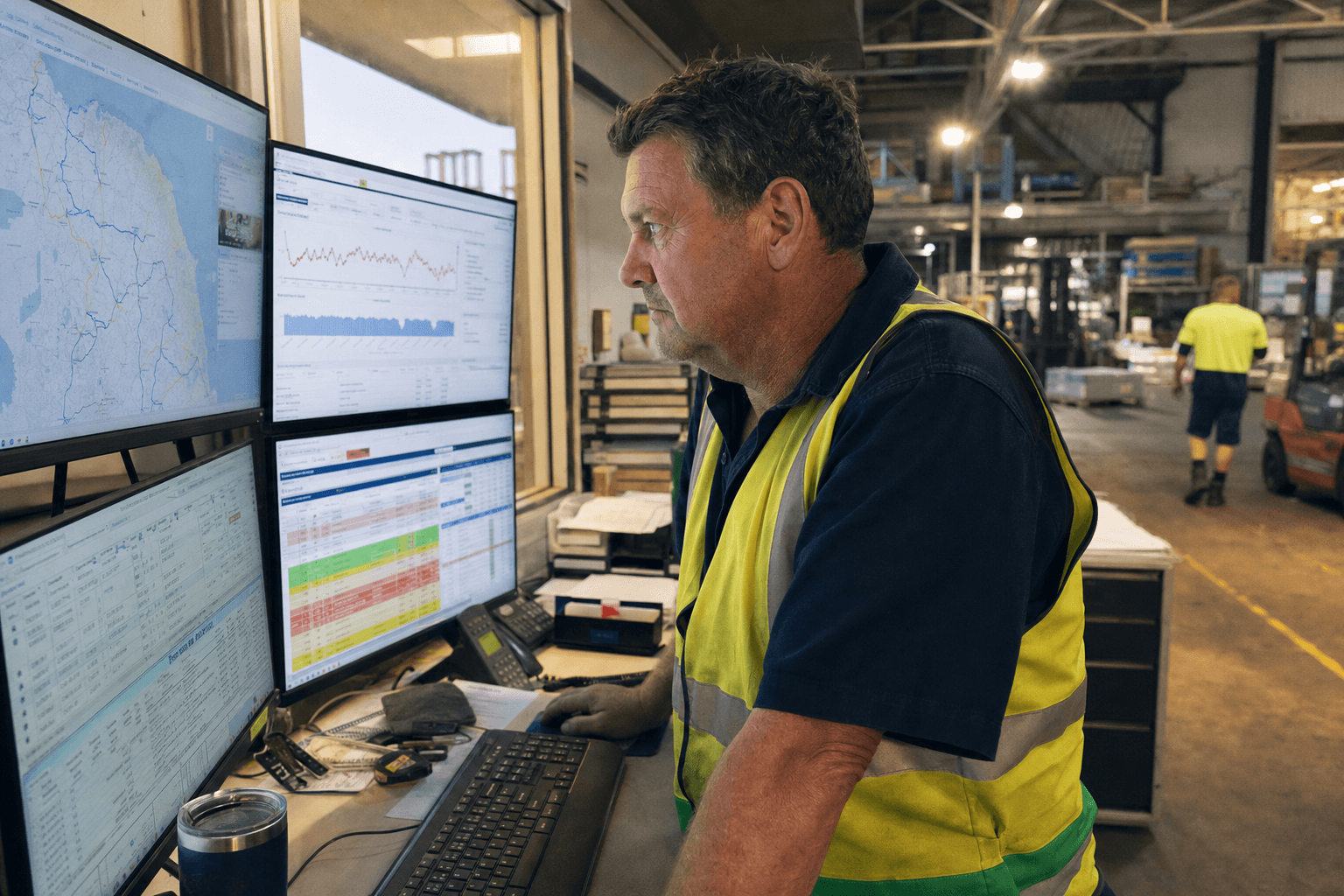
Capacity forecasting predicts truck availability, warehouse space, and carrier capacity across different markets and timeframes. AI analyses booking patterns, fleet utilisation rates, and driver availability to forecast when capacity will tighten or loosen.
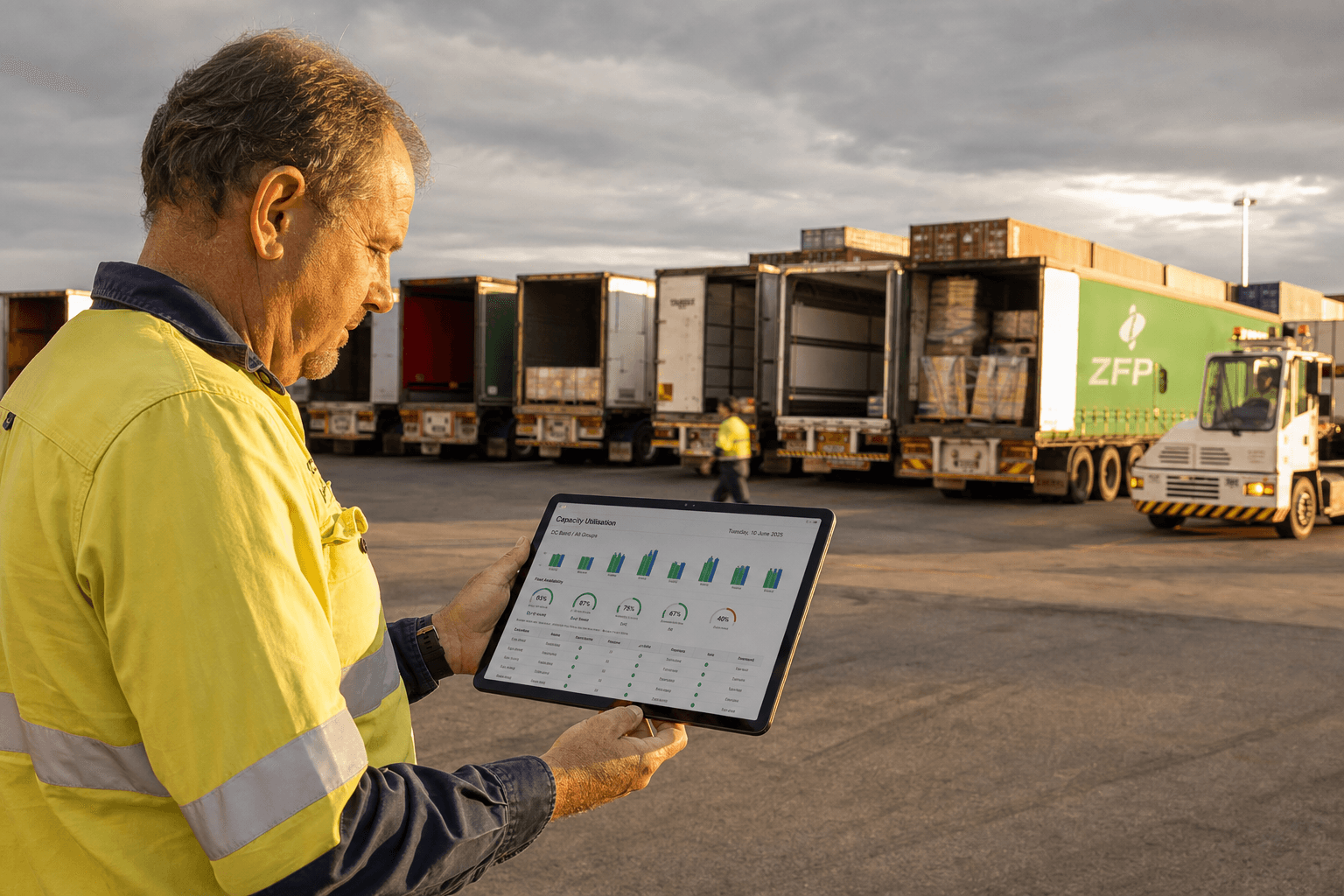
The forecasting considers multiple variables affecting capacity supply. During school holidays, family-owned transport operators often reduce available trucks. Mining shutdowns release capacity back to general freight markets. Port strikes create capacity bottlenecks that ripple through inland corridors.
Industry benchmarks suggest that organisations typically see improved capacity planning accuracy when AI systems account for:
- Seasonal demand variations across agricultural and retail cycles
- Infrastructure delays from road closures and port congestion
- Driver availability fluctuations during peak holiday periods
- Fleet maintenance cycles that temporarily reduce capacity
For 3PLs managing customer contracts, capacity forecasting prevents over-committing during tight markets or missing opportunities when capacity becomes available. The system recommends when to lock in carrier agreements versus when to wait for better rates.
Carrier Reliability Scoring and Performance Analytics
Carrier reliability scoring uses AI to evaluate transport providers based on on-time performance, damage rates, communication quality, and service consistency. Rather than relying on anecdotal feedback, the system quantifies carrier performance across multiple metrics.
The scoring algorithm weighs different performance factors based on their impact on your operations. A carrier who delivers consistently on-time but has poor communication might score differently than one with variable delivery times but proactive updates about delays.
Performance metrics typically include:
- On-time delivery rates across different corridors and weather conditions
- Damage and claims frequency compared to industry standards
- Communication responsiveness for booking confirmations and delay notifications
- Documentation accuracy for PODs, invoicing, and compliance paperwork
- Rate consistency — carriers who stick to quoted prices versus those with unexpected fees
Australian transport markets include many small owner-operators alongside larger fleet operators. AI reliability scoring helps identify which smaller carriers deliver enterprise-quality service versus those who might let you down during peak periods.
Lane Analysis for Route Optimisation
Lane analysis examines freight corridors to identify cost, service, and efficiency opportunities across different routes and carrier combinations. AI evaluates factors like distance, transit time, fuel efficiency, tolls, and carrier performance to recommend optimal lane strategies.
The analysis goes beyond simple distance calculations to consider real-world factors affecting Australian freight corridors. The Pacific Highway offers faster transit times than inland alternatives but carries higher toll costs. Mining region routes might show better rates during commodity downturns but become expensive during production peaks.
Route optimisation systems analyse historical performance data to identify the most reliable corridors for time-sensitive freight versus the most cost-effective options for standard deliveries.
Integration with Legacy Transport Management Systems
Freight market intelligence AI integrates with existing Transport Management Systems (TMS) and Warehouse Management Systems (WMS) through API connections and data feeds. The integration allows market intelligence to inform pricing decisions, carrier selection, and route planning within familiar operational workflows.
Most mid-market Australian logistics operators run TMS platforms that are five to ten years old. Rather than requiring system replacement, AI market intelligence layers on top of existing systems, feeding rate recommendations and carrier scores into current booking processes.
The integration typically includes:
- Rate alerts that populate into tender response templates
- Carrier performance scores that inform booking decisions
- Capacity forecasts that trigger early booking recommendations
- Lane analysis that suggests alternative routing options
This approach allows operations teams to benefit from AI insights without disrupting established workflows or requiring extensive retraining.
Real-Time Market Monitoring and Alerts
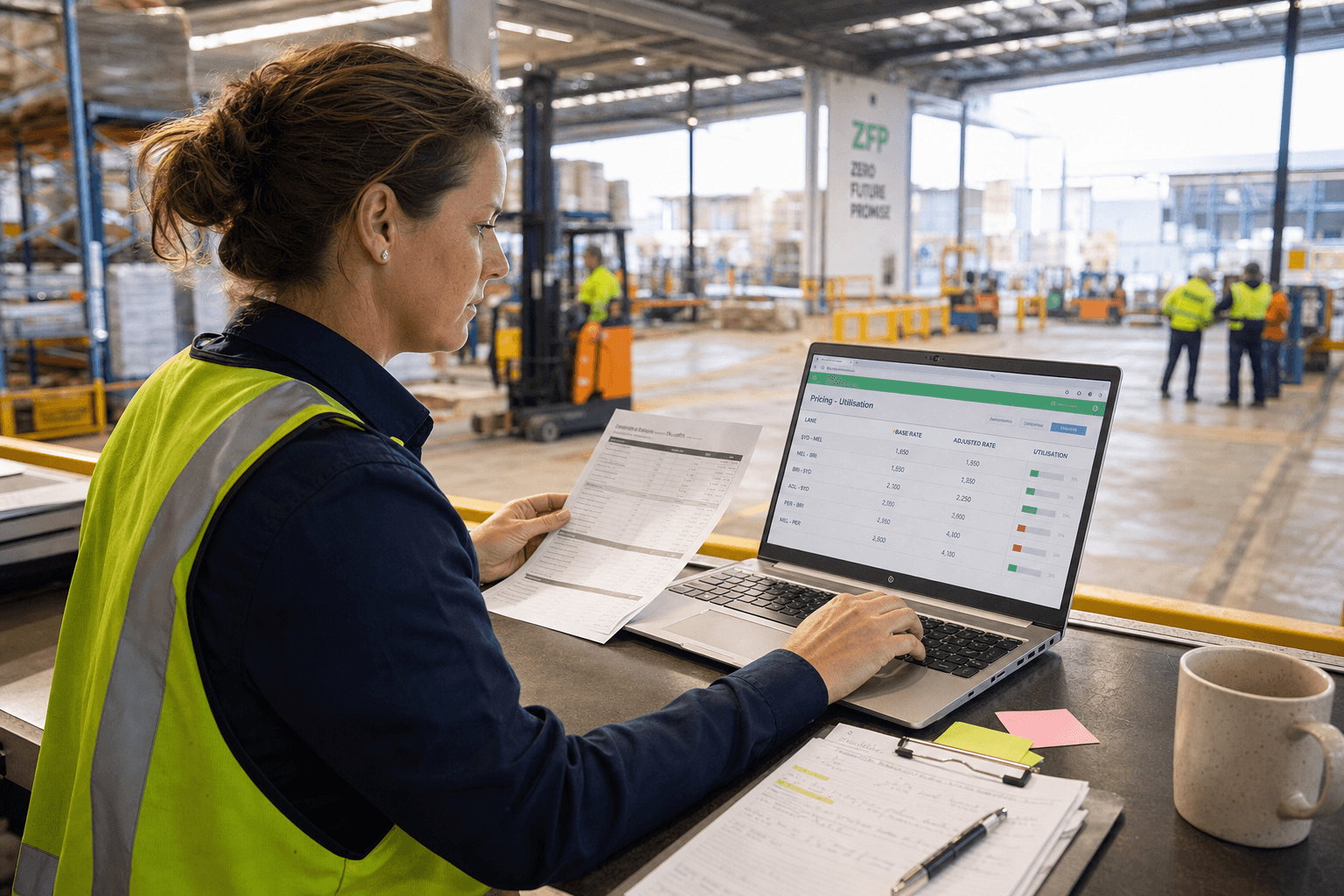
Real-time market monitoring tracks freight market conditions continuously and sends alerts when significant changes occur. The system monitors rate movements, capacity shifts, and service disruptions across Australian freight corridors, filtering out minor fluctuations to focus on changes that impact your operations.
Alert triggers include:
- Rate increases above preset thresholds on key corridors
- Capacity constraints that might affect committed deliveries
- Carrier performance changes that warrant booking review
- Infrastructure disruptions affecting preferred routes
- Fuel price movements that predict rate adjustments
For logistics operators managing multiple customer contracts, these alerts prevent margin erosion from unexpected rate increases and identify opportunities when market conditions improve.
Implementing AI Market Intelligence Systems
Implementing AI market intelligence requires connecting data sources, configuring analysis parameters, and training teams on new decision-making processes. The implementation typically begins with an AI readiness assessment to evaluate existing data quality and system integration requirements.
Most Australian freight operators have market intelligence data scattered across multiple systems — rate sheets in spreadsheets, carrier contacts in email, and performance feedback in informal notes. AI implementation standardises this information into actionable intelligence.
The implementation process includes:
- Data source integration and quality assessment
- Algorithm training on historical performance patterns
- Alert threshold configuration based on operational priorities
- Team training on interpreting AI recommendations
- Performance monitoring and system refinement
Successful implementations focus on solving specific operational problems rather than implementing technology for its own sake. The AI system should make existing decision-making faster and more accurate, not replace operational expertise.
Freight market intelligence automation transforms reactive logistics operations into proactive market participants. Instead of discovering rate increases after they impact your margins, AI systems provide the intelligence needed to stay ahead of market movements.
For more insights on implementing AI in Australian logistics operations, explore our blog or get in touch to discuss how market intelligence automation can improve your freight operations.
Zero Footprint
The Zero Footprint team — AI modernisation for Australian logistics.