AI Rate Benchmarking Tools for Freight Procurement
AI rate benchmarking tools help Australian freight procurement teams compare carrier pricing across lanes and validate contract rates using real-time market data. These systems aggregate data from multiple sources to provide actionable insights for procurement decisions.
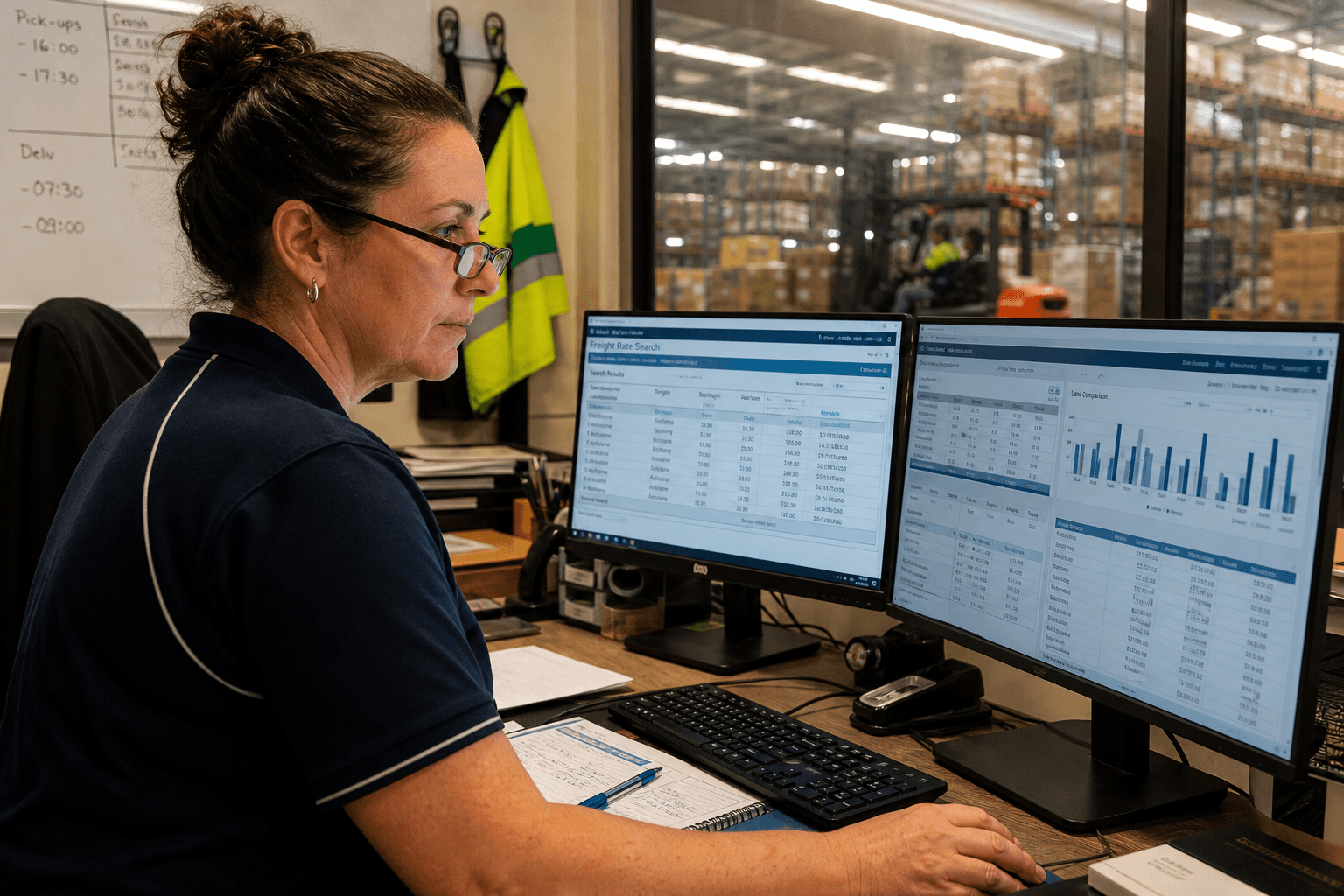
AI Rate Benchmarking Tools for Freight Procurement
Freight procurement teams across Australia are increasingly turning to AI rate benchmarking tools to compare carrier pricing across lanes, validate contract rates, and identify market opportunities. These systems aggregate data from multiple sources to provide real-time visibility into market pricing dynamics, helping logistics operations managers make informed decisions about their transportation spend.
What Are AI Rate Benchmarking Tools?
AI rate benchmarking tools are platforms that collect, normalise, and analyse freight rate data across multiple carriers, lanes, and transport modes. They use machine learning algorithms to identify pricing patterns, detect anomalies, and provide market intelligence for procurement decisions.
These tools transform fragmented rate data into actionable insights, helping freight buyers understand whether they're paying competitive rates and where opportunities exist for cost reduction. For Australian logistics operators dealing with complex pricing structures across multiple carriers, this technology addresses a real operational challenge.
How AI Tools Aggregate Rate Data Sources
AI benchmarking systems pull data from multiple sources to build comprehensive rate databases:
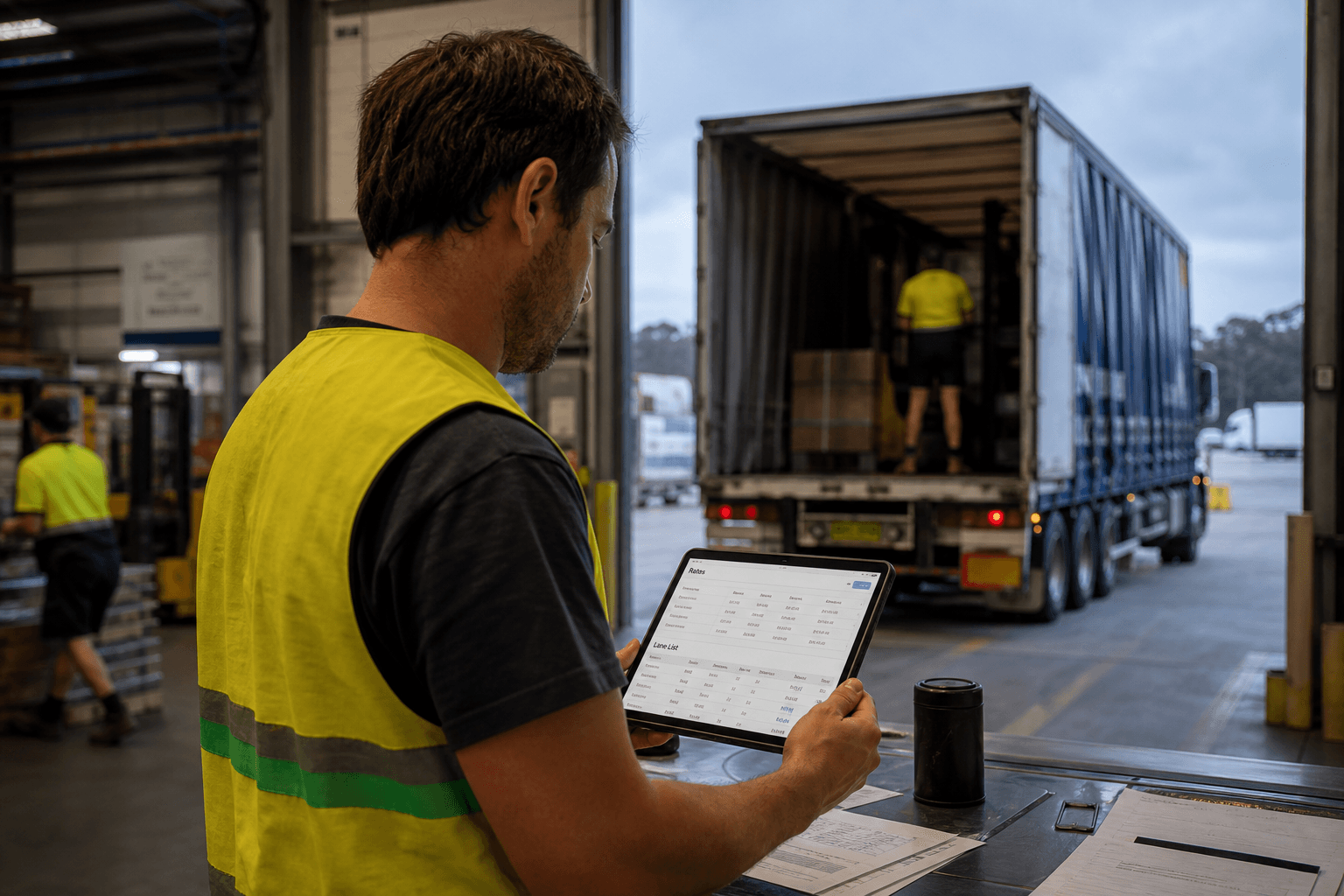
Carrier Rate Files: Direct integration with carrier pricing systems through APIs or EDI connections. Major Australian carriers like Toll, StarTrack, and TNT provide structured rate data that AI systems can process automatically. This eliminates the manual effort typically required to consolidate pricing across different carrier formats.
Spot Market Platforms: Real-time pricing from digital freight platforms and load boards. This includes both truckload and less-than-truckload spot rates across different service levels, providing visibility into current market conditions.
Historical Contract Data: Analysis of past contract performance, including negotiated rates, fuel surcharges, and accessorial charges. This historical context helps identify seasonal patterns and market trends that affect pricing decisions.
Industry Rate Indices: Integration with published rate indices and market reports from industry bodies like the Australian Logistics Council and freight market research providers. These external benchmarks provide additional validation for internal rate analysis.
Data Normalisation Techniques
Raw freight rate data comes in inconsistent formats that require standardisation before meaningful analysis can occur:

Service Level Mapping: AI systems map different carrier service descriptions to standardised categories (express, standard, economy) to enable like-for-like comparisons. This addresses the reality that carriers often use different terminology for similar service levels.
Geographic Standardisation: Converting various address formats, postcodes, and regional descriptions into consistent lane definitions. Australian systems must handle state boundaries, metro vs regional classifications, and remote area surcharges that vary significantly between carriers.
Fuel Adjustment Reconciliation: Normalising different fuel surcharge methodologies to create comparable base rates. Some carriers use percentage-based fuel adjustments while others use fixed dollar amounts, making direct rate comparisons difficult without proper normalisation.
Accessorial Charge Harmonisation: Standardising additional service charges like residential delivery, liftgate service, and appointment delivery across different carrier pricing structures. These charges can significantly impact total shipping costs but are often buried in complex rate schedules.
Market Index Construction Methods
AI systems construct market indices through several sophisticated approaches that go beyond simple rate averaging:
Volume Weighting: Adjusting rate averages based on actual shipment volumes to reflect market reality rather than simple arithmetic means. This ensures that high-volume lanes have appropriate influence on benchmark calculations.
Quality Adjustments: Incorporating service performance metrics (on-time delivery, damage rates, claims resolution) into rate comparisons to account for service quality differences. The lowest rate doesn't always represent the best value when service quality is considered.
Temporal Smoothing: Using moving averages and seasonal adjustments to reduce noise and identify underlying market trends. This helps separate temporary market fluctuations from genuine structural changes in pricing.
These methodologies typically update at different frequencies based on data availability and market dynamics. Lane-specific indices often refresh daily, while broader market comparisons may update weekly or monthly depending on the complexity of analysis required.
Contract Negotiation Support Features
AI benchmarking tools provide specific capabilities that directly support contract negotiations:
Rate Validation: Comparing proposed contract rates against current market benchmarks to identify above-market pricing or exceptional value opportunities. This gives procurement teams objective data to support their negotiating position.
Lane Analysis: Identifying specific origin-destination pairs where alternative carriers offer competitive advantages or where current rates appear inflated compared to market conditions.
Volume Leverage Assessment: Analysing how shipment volume changes could impact negotiated rates and identifying consolidation opportunities. This helps quantify the value of committing higher volumes to preferred carriers.
Performance Trade-offs: Quantifying the cost difference between service levels to support decisions about speed vs cost optimisation. Understanding these trade-offs enables more informed service level commitments.
Scenario Modelling: Testing different contract structures (distance-based vs zone-based pricing, fuel surcharge methodologies, minimum charges) to identify optimal arrangements for specific shipping profiles.
Australian Freight Rate Trends and Patterns
Australian freight markets show distinct patterns that AI systems can identify and leverage:
Interstate vs Intrastate Pricing: Rates for interstate lanes (particularly Melbourne-Sydney and Melbourne-Brisbane corridors) show different volatility patterns compared to metropolitan and regional intrastate movements. Understanding these patterns helps with budget forecasting and contract timing.
Seasonal Variations: Peak periods around Christmas and back-to-school seasons create predictable rate increases, particularly for consumer goods lanes from major distribution centres. AI systems can quantify these seasonal impacts and help with capacity planning.
Fuel Price Correlation: Australian freight rates show strong correlation with diesel fuel prices, but with varying lag times depending on carrier fuel adjustment methodologies. This relationship varies by carrier and service type, creating opportunities for strategic timing of contract negotiations.
Regional Access Premiums: Remote and regional delivery rates incorporate significant access premiums that AI systems can quantify and benchmark against geographic complexity indices. This helps validate regional surcharges and identify opportunities for network optimisation.
Mode Shift Opportunities: Analysis can reveal lanes where road freight pricing creates opportunities for rail or intermodal alternatives, particularly for Melbourne-Perth and Sydney-Brisbane corridors where rail options provide viable alternatives.
Implementation Considerations for Australian Operations
Successful AI rate benchmarking implementation requires several key considerations specific to Australian logistics operations:
Data Quality Management: Establishing processes to validate incoming rate data, identify outliers, and maintain data accuracy over time. Australian rate structures often include complex regional and fuel adjustments that require careful validation.
Integration Requirements: Connecting benchmarking tools with existing transport management systems (TMS) and enterprise resource planning (ERP) systems. Many Australian logistics operators use legacy systems that may require custom integration work.
Carrier Participation: Encouraging carrier participation in data sharing arrangements while maintaining competitive dynamics. The relatively concentrated Australian freight market requires careful management of data sharing relationships.
Regulatory Considerations: Ensuring compliance with Australian competition law when sharing rate information and participating in industry benchmarking initiatives. The Australian Competition and Consumer Act sets specific boundaries for information sharing.
Getting Started with AI Rate Benchmarking
For Australian logistics operators considering AI rate benchmarking tools, the key is starting with a clear understanding of your current procurement challenges and data availability. Many organisations begin with an ai readiness assessment to understand their data maturity and integration requirements.
The most successful implementations focus on specific use cases first – such as validating rates for high-volume lanes or identifying consolidation opportunities – before expanding to comprehensive market analysis.
Whether you're looking to improve procurement efficiency, validate carrier performance, or identify cost reduction opportunities, AI rate benchmarking tools can provide the data-driven insights needed for modern freight procurement. The key is choosing an approach that fits your operational reality and data environment.
Ready to explore how AI can transform your freight procurement process? Get in touch to discuss your specific requirements and learn how we help Australian logistics operators modernise their procurement capabilities.
Zero Footprint
The Zero Footprint team — AI modernisation for Australian logistics.