Port Automation Trends Reshaping Australia's Logistics Networks
Port automation across Australia is transforming cargo operations and creating new requirements for inland logistics operators. Australian logistics companies need to prepare for digital integration with automated terminals while building AI capabilities that optimise operations.
Port Automation Trends Reshaping Australia's Logistics Networks
Port automation across Australia and the Asia-Pacific region is transforming how cargo moves from ship to shore, creating significant implications for inland logistics networks. While regional leaders demonstrate advanced automation capabilities, Australian ports are taking a measured approach that focuses on proven technologies and workforce integration.
Current State of Asia-Pacific Port Automation
The Asia-Pacific region handles the majority of global container traffic, making automation investments critical for maintaining competitive advantage. According to the Australian Association of Ports and Harbours, major terminals across the region are implementing various levels of automation to improve efficiency and reduce operational costs.
Major automation initiatives typically include:
- Automated stacking cranes (ASCs): Reduce labour requirements and improve yard utilisation
- Autonomous guided vehicles (AGVs): Transport containers between quay cranes and storage areas
- Remote-controlled ship-to-shore cranes: Enable operators to work from centralised control rooms
- Optical character recognition (OCR): Automate container identification and damage assessment
Australian Port Automation Projects
Australian ports are taking a measured approach to automation, balancing efficiency gains with workforce considerations. This approach reflects the Australian market's preference for proven technologies over experimental systems that may disrupt operations.
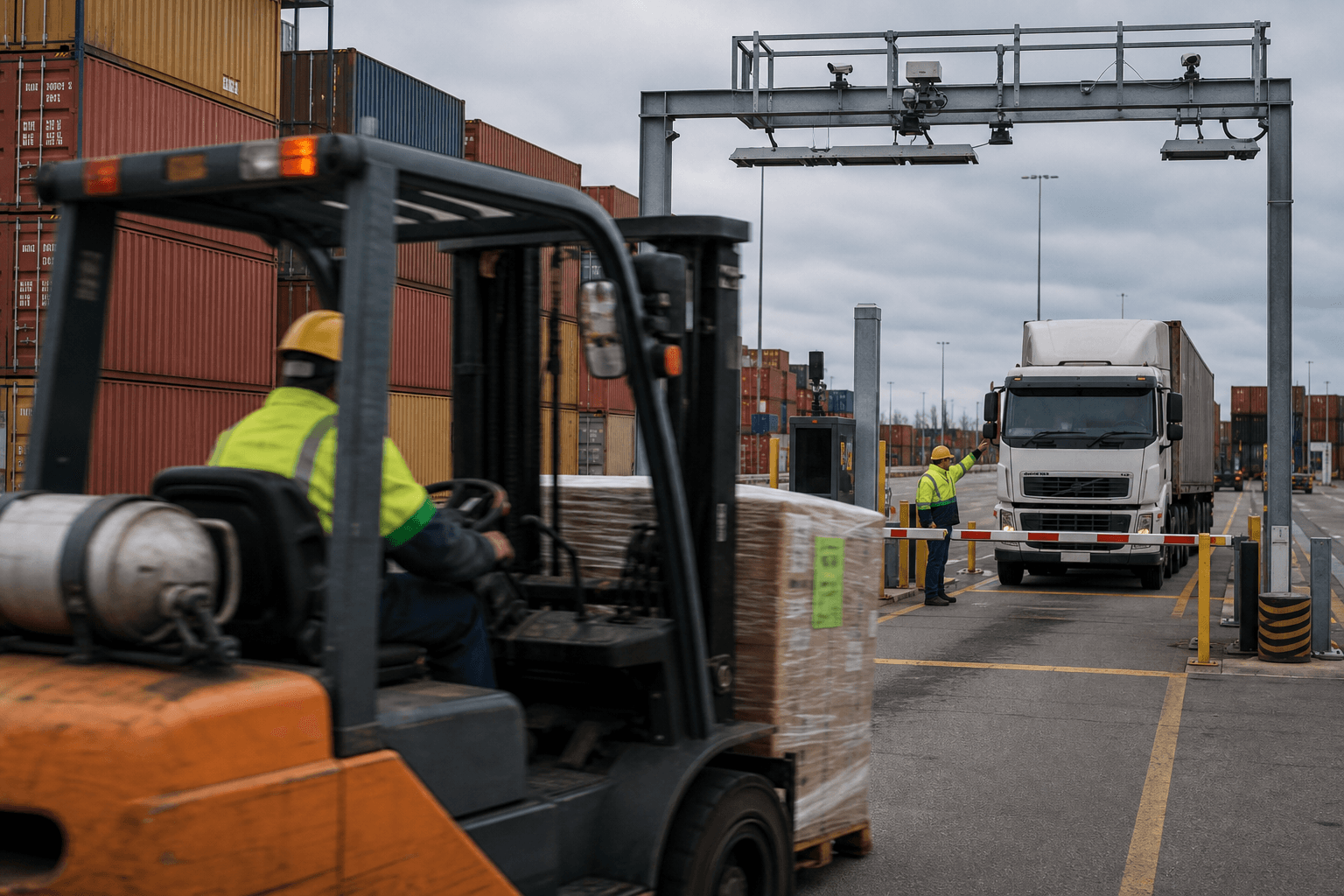
Patrick Terminals at Port Botany operates automated stacking cranes across container yards, while DP World's Brisbane facility has invested in semi-automated gate systems. The Port of Melbourne's Webb Dock expansion incorporates automation-ready infrastructure, allowing terminal operators to implement automated systems as volumes justify the investment.
Key Australian automation trends include:
- Automated stacking cranes at major terminals
- Semi-automated gate systems for faster truck processing
- Remote crane operation pilot projects
- Predictive maintenance systems for critical equipment
Container Terminal AI and Smart Operations
Artificial intelligence is transforming container terminal operations beyond physical automation. AI systems optimise berth allocation, predict equipment maintenance needs, and coordinate complex logistics flows across multiple terminals.
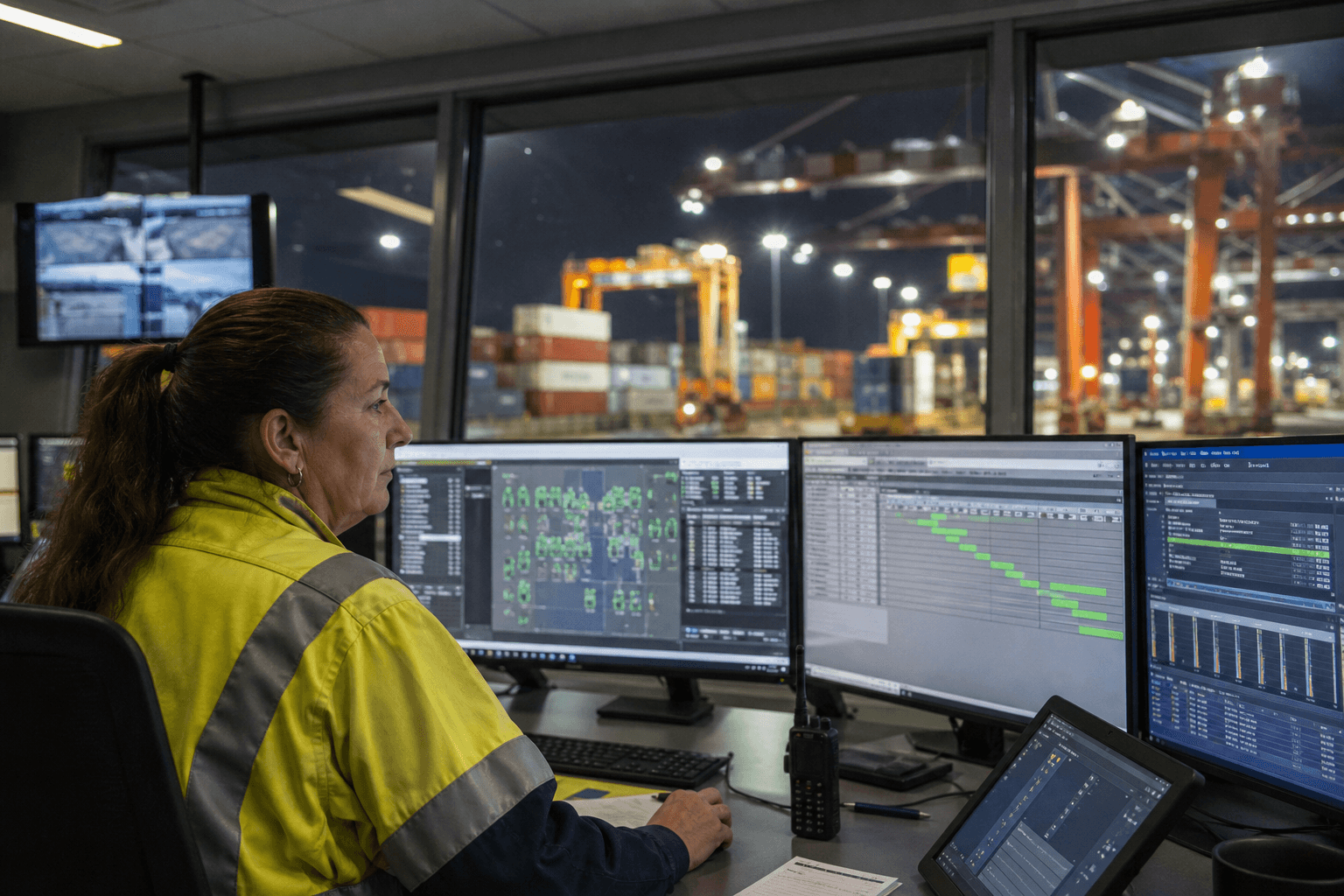
Australian terminals are implementing AI for specific operational challenges:
- Container positioning algorithms: Minimise reshuffling in storage yards
- Equipment scheduling systems: Optimise crane and vehicle utilisation
- Predictive analytics: Forecast peak periods and staffing requirements
- Computer vision: Automate container damage inspection and cargo verification
These AI applications align with the capabilities we develop through our AI readiness assessment for logistics operators looking to modernise their operations.
Vessel Scheduling Optimisation Through Technology
Vessel scheduling optimisation uses AI and machine learning to coordinate ship arrivals, berth assignments, and cargo operations. These systems consider factors including vessel size, cargo type, terminal capacity, and weather conditions to minimise port congestion.
Australian ports are developing scheduling capabilities that include:
- Dynamic berth allocation: Adjusts schedules based on real-time conditions
- Integrated planning systems: Coordinate vessel, terminal, and inland transport operations
- Weather-responsive scheduling: Automatically adjust operations during adverse conditions
- Collaborative planning platforms: Share information between shipping lines, terminals, and logistics providers
Implications for Inland Logistics Chains
Port automation creates both opportunities and challenges for inland logistics operators. Automated terminals can process cargo more quickly and predictably, but they also require inland operators to integrate with sophisticated digital systems.
Enhanced Predictability and Planning
Automated ports provide more accurate cargo release times, enabling better planning for inland transport. Container pickup windows become more precise, reducing truck waiting times and improving fleet utilisation.
Logistics operators benefit from:
- Real-time cargo visibility: Track containers from vessel discharge to gate release
- Predictable pickup windows: Schedule drivers more efficiently
- Automated documentation: Reduce manual paperwork and processing delays
- Integration capabilities: Connect port systems with transport management platforms
Digital Integration Requirements
Automated ports require inland operators to adopt digital systems for booking, tracking, and compliance. Traditional paper-based processes become incompatible with automated terminal operations.
Key integration requirements include:
- Electronic data interchange (EDI): Automated booking and status updates
- API connectivity: Real-time integration with port operating systems
- Digital documentation: Electronic bills of lading and customs clearance
- Compliance systems: Automated dangerous goods declarations and vehicle registrations
Technology Investment Priorities for Australian Logistics
Australian logistics operators should prioritise investments that align with port automation trends while delivering immediate operational benefits. The key is building capabilities that integrate with automated port systems while solving current business problems.
Document Intelligence and Automation
Port automation requires seamless document processing between terminals and inland operators. Document intelligence systems can automate the extraction and processing of shipping documentation, reducing manual data entry and errors.
Our document intelligence solutions help logistics operators:
- Automatically extract data from bills of lading and shipping documents
- Integrate with port operating systems for real-time updates
- Maintain audit trails for compliance requirements
- Reduce processing time from hours to minutes
Route Optimisation Integration
Automated ports provide more predictable cargo release times, creating opportunities for sophisticated route optimisation that considers real-time port conditions. This integration helps operators:
- Schedule pickups based on actual cargo release times
- Optimise multi-port routes considering terminal operating windows
- Reduce truck waiting times through better coordination
- Improve fleet utilisation across port and inland operations
Emissions Tracking and Reporting
Port automation systems generate detailed operational data that supports accurate emissions reporting for Scope 3 supply chain activities. This becomes increasingly important as AASB S2 compliance requirements approach.
Key capabilities include:
- Tracking actual dwell times and cargo handling emissions
- Integrating port operational data with inland transport emissions
- Automated calculation of port-related carbon footprints
- Audit-ready reporting for supply chain emissions
Preparing for Automated Port Integration
Logistics operators should assess their current technology capabilities against the requirements of automated port integration. This assessment helps identify gaps and prioritise investments that support both current operations and future port automation requirements.
A structured approach to port automation readiness includes:
System Integration Capability
Evaluating your current systems' ability to integrate with automated port platforms through APIs and EDI connections. This includes assessing your transport management system's compatibility with port operating systems.
Data Quality and Management
Automated ports require high-quality, standardised data. Operators should review their current data management practices and invest in systems that maintain clean, consistent operational data.
Workforce Digital Skills
Port automation changes how logistics staff interact with terminal systems. Investing in digital skills training ensures your team can effectively use automated port interfaces and systems.
Operational Process Redesign
Automated ports often require different operational processes compared to traditional terminals. Reviewing and redesigning workflows ensures smooth integration with automated systems.
Building AI Readiness for Port Integration
The most successful integration with automated ports requires logistics operators to develop their own AI capabilities. This includes systems that can optimise operations based on real-time port data and integrate seamlessly with automated terminal systems.
Our experience helping Australian logistics operators prepare for technological change shows that the most effective approach combines:
- Assessment of current technology maturity and gaps
- Focused investment in systems that solve immediate problems while building future capability
- Integration planning that considers both current operations and future port automation
- Workforce development that builds digital skills alongside operational expertise
Port automation represents both an opportunity and a requirement for Australian logistics operators. Those who prepare effectively will benefit from more predictable operations and improved efficiency, while those who delay risk being unable to integrate with increasingly automated port systems.
To understand how your operations can benefit from port automation integration, get in touch to discuss your specific requirements and develop a technology roadmap that aligns with your business goals.
Zero Footprint
The Zero Footprint team — AI modernisation for Australian logistics.