Dynamic Pricing for 3PLs: AI-Driven Rate Optimisation
AI-driven dynamic pricing helps Australian 3PLs maximise revenue by adjusting rates in real-time based on capacity, demand patterns, and market conditions. Learn how to implement systematic pricing strategies that balance profitability with competitive positioning.
Dynamic Pricing for 3PLs: AI-Driven Rate Optimisation
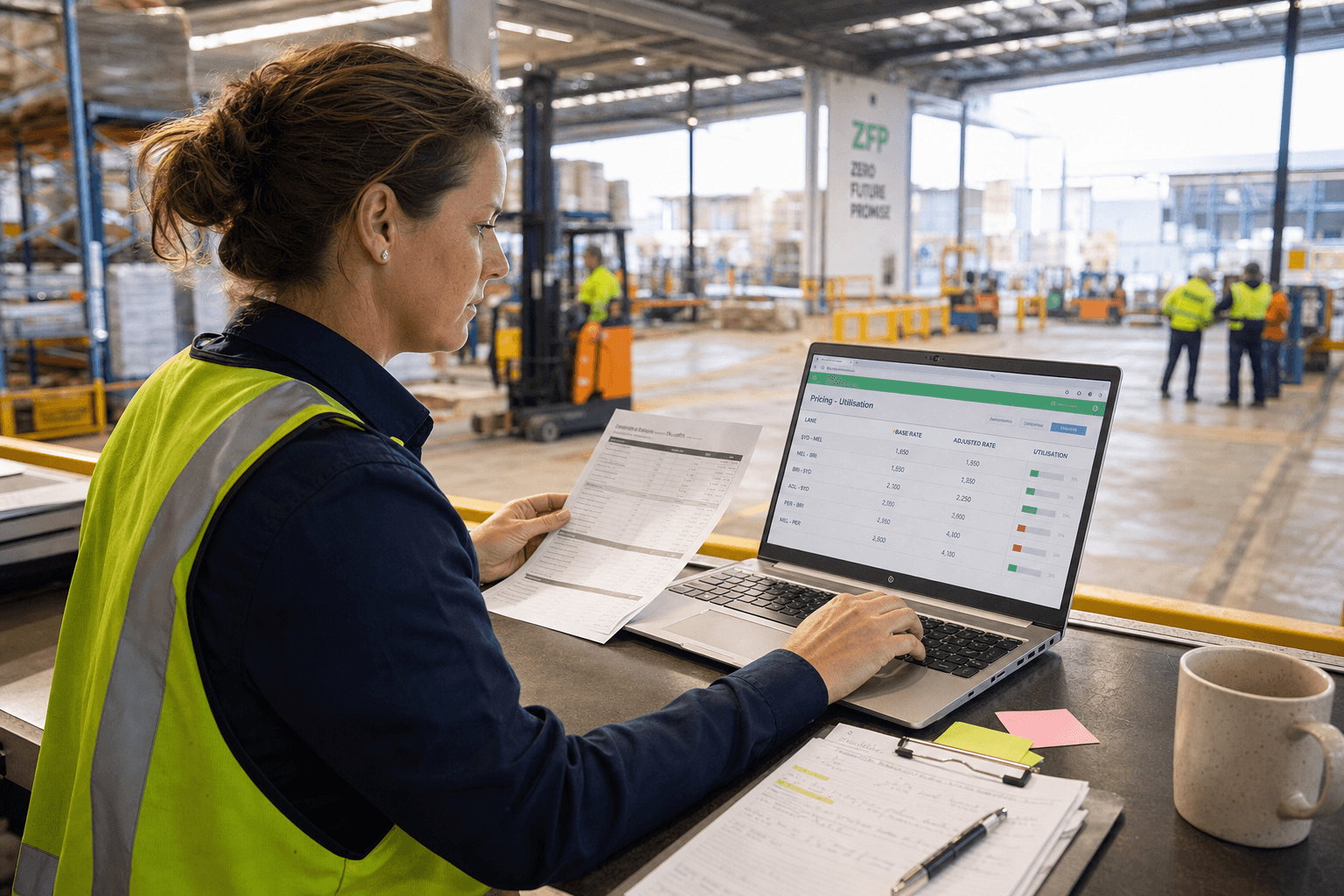
Dynamic pricing for third-party logistics (3PLs) uses AI algorithms to adjust rates in real-time based on capacity utilisation, demand patterns, lane density, and market conditions. Unlike static rate cards, AI-driven pricing responds to operational realities, helping 3PLs maximise revenue while maintaining competitive positioning.
Australian 3PLs face increasing pressure from customers demanding transparency while needing to protect margins in volatile markets. Manual pricing often leaves money on the table or prices work out of reach. AI in logistics offers a systematic approach to balance these competing demands.
How AI Dynamic Pricing Works for 3PLs
AI dynamic pricing combines multiple data streams to calculate optimal rates for each shipment or contract. The system considers current warehouse capacity, truck availability, historical demand patterns, fuel costs, and competitor pricing to suggest rates that maximise profitability while winning business.
The core algorithm weighs operational constraints against revenue opportunity. When warehouse capacity is tight, rates typically increase to manage demand. During quiet periods, strategic discounting can attract volume to improve asset utilisation.
Key Data Inputs for Pricing Models
Organisations typically consider these factors when implementing AI-driven pricing:
- Warehouse Utilisation: Higher rates when capacity approaches full capacity, based on WMS and booking system data
- Fleet Availability: Premium rates when trucks are scarce, sourced from TMS and driver schedules
- Lane Density: Competitive rates on dense routes using historical shipment data
- Seasonal Patterns: Adjustments for peak periods based on multi-year booking history
- Fuel Costs: Real-time surcharge adjustment using market feeds and fuel card data
Pricing Model Architectures
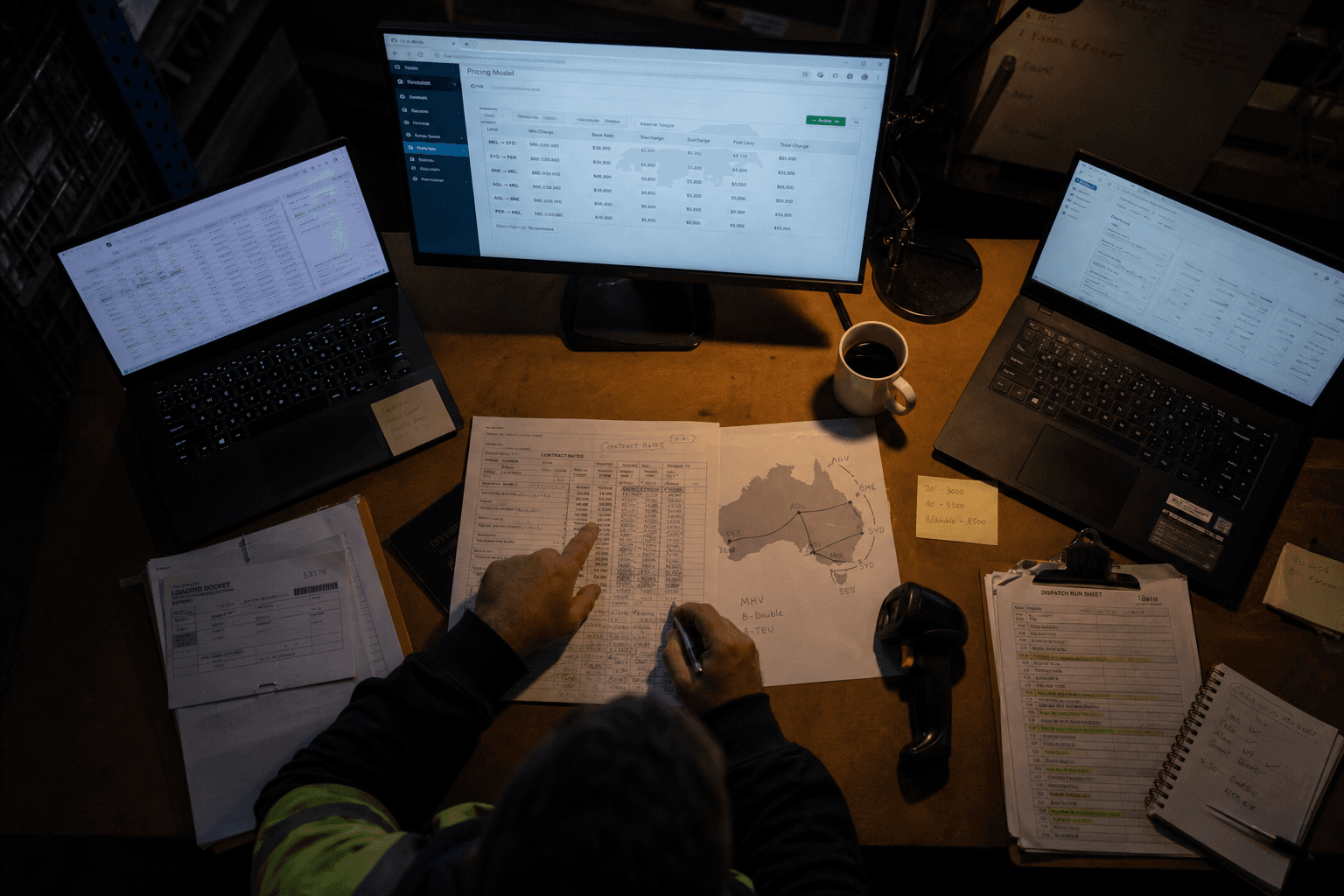
Most 3PL pricing models follow one of three architectural approaches, each suited to different business models and customer types.
Cost-Plus Dynamic Models
Cost-plus models start with actual operational costs and add a target margin. AI calculates the true cost of each shipment considering current capacity, routing efficiency, and resource allocation. The system then applies dynamic margin adjustments based on market conditions.
This approach works well for contract logistics where customers expect cost transparency. The AI ensures margins remain consistent even as operational costs fluctuate.
Market-Based Pricing Models
Market-based models use competitor intelligence and demand signals to set rates independent of internal costs. AI monitors market rates, customer behaviour, and win/loss patterns to position pricing competitively.
These models suit spot market businesses where customers shop around frequently. The system learns which customers are price-sensitive versus service-focused.
Hybrid Optimisation Models
Hybrid models combine cost-plus floors with market-based ceilings. AI ensures rates never fall below profitable levels while capturing maximum value when market conditions allow premium pricing.
This architecture provides margin protection while remaining competitive. Industry benchmarks suggest most sophisticated 3PLs eventually migrate to hybrid models as their operations mature.
Customer Segmentation for Pricing
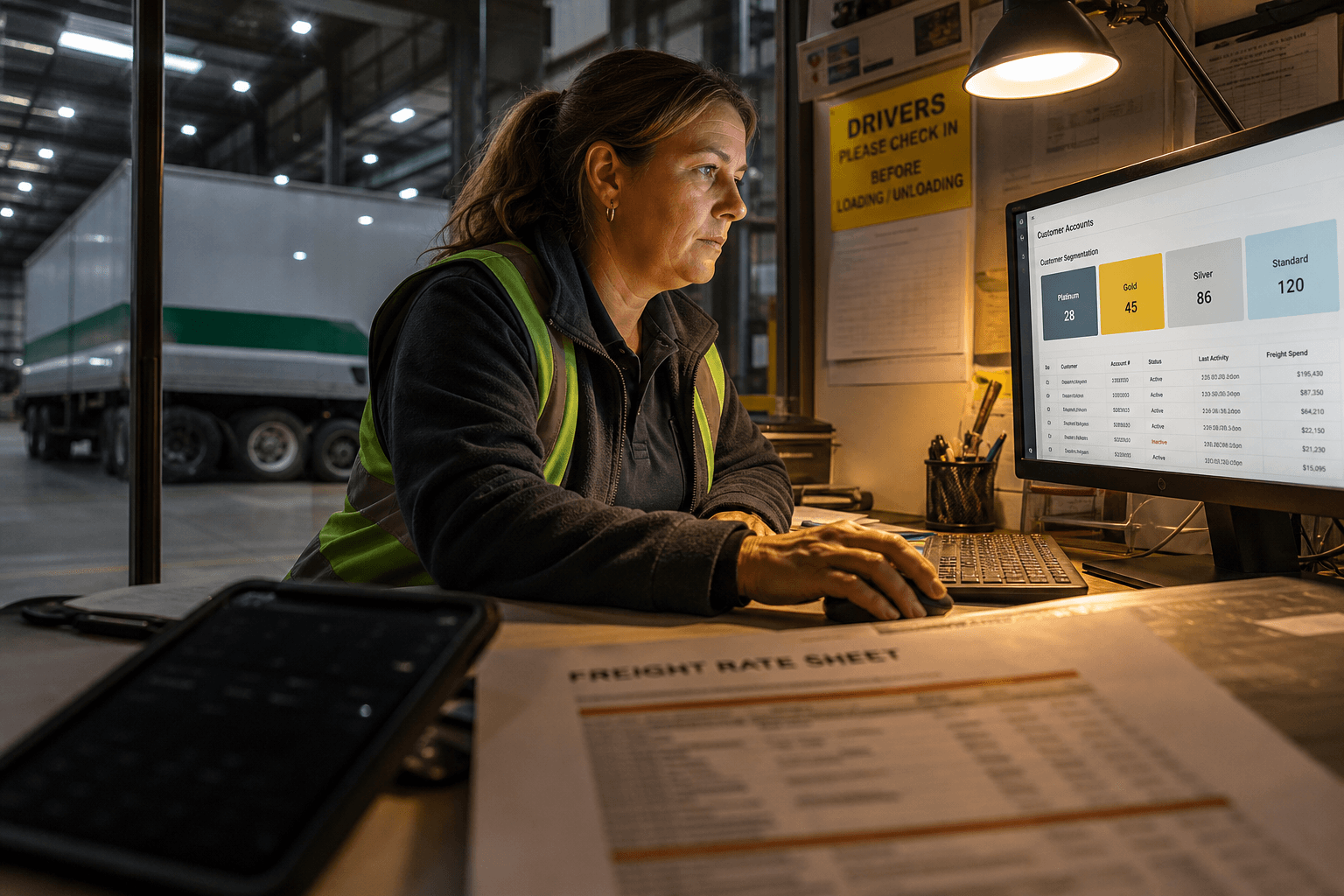
Effective dynamic pricing requires understanding customer behaviour and value. AI identifies distinct customer segments based on booking patterns, price sensitivity, service requirements, and payment terms.
Value-Based Customer Tiers
High-value customers receive preferential pricing during peak periods because they provide consistent volume and pay promptly. Price-sensitive customers face higher rates when capacity is constrained but get access to discounted rates during quiet periods.
The AI learns each customer's booking patterns and adjusts pricing accordingly. A customer who books regularly six weeks in advance gets different rates than one who needs same-day service.
Service Level Differentiation
Premium service tiers command higher rates, especially when capacity is tight. Standard service pricing remains competitive to maintain volume. The AI ensures premium customers get priority during peak periods while standard customers aren't priced out entirely.
Margin Protection Strategies
Dynamic pricing must protect profitability while remaining competitive. AI implements several margin protection mechanisms to prevent destructive pricing decisions.
Floor Pricing Controls
Every shipment has a calculated floor price below which the system won't quote. This floor includes direct costs plus a minimum margin buffer. The AI adjusts floors based on capacity utilisation—when warehouses approach full capacity, floor prices rise to prioritise profitable work.
Utilisation-Based Pricing
When capacity utilisation exceeds company-specific thresholds, the system automatically increases rates to manage demand. Conversely, when utilisation is low, strategic discounting attracts volume to improve asset efficiency.
Customer Lifetime Value Protection
The AI considers customer lifetime value when making pricing decisions. High-value customers might receive preferential rates even during peak periods to maintain long-term relationships.
Implementation Considerations
Successful dynamic pricing implementation requires careful attention to data quality, system integration, and change management.
Data Requirements
Accurate dynamic pricing needs clean, real-time data from multiple systems. Historical booking data, capacity utilisation, fleet schedules, and customer payment history all feed the pricing engine. Poor data quality leads to suboptimal pricing decisions.
Most Australian 3PLs need to invest in data cleansing before implementing dynamic pricing. Our AI readiness assessment helps identify data gaps and integration requirements.
Integration with Existing Systems
Dynamic pricing systems integrate with TMS, WMS, and CRM platforms to access real-time operational data. API connections enable the pricing engine to pull current capacity levels, fleet availability, and customer information automatically.
Legacy system modernisation often precedes dynamic pricing implementation. Many Australian carriers operate TMS and WMS platforms that lack the API capabilities needed for real-time pricing integration.
Change Management and Training
Staff need training on how dynamic pricing works and when to override system recommendations. Sales teams must understand the logic behind rate changes to explain pricing to customers effectively.
Clear escalation procedures help staff handle customer questions about rate variations. Transparency builds trust while protecting competitive advantages.
Measuring Dynamic Pricing Success
Successful dynamic pricing implementation shows measurable improvements across several operational and financial metrics.
Revenue Optimisation Metrics
Organisations typically track revenue per shipment, capacity utilisation rates, and margin consistency across customer segments. The AI system should demonstrate improved revenue capture during peak periods while maintaining competitive positioning during slower times.
Operational Efficiency Indicators
Capacity utilisation becomes more predictable with effective dynamic pricing. Warehouses operate closer to optimal levels, and fleet utilisation improves through strategic rate management.
Customer Satisfaction Measures
Dynamic pricing should maintain or improve customer relationships. Win rates on competitive bids provide insight into market positioning. Customer retention rates indicate whether pricing strategies support long-term relationships.
Australian Market Considerations
Australian 3PLs face unique challenges that influence dynamic pricing strategies.
Seasonal Demand Patterns
Australian retail peaks around Christmas and back-to-school periods create predictable capacity constraints. Mining exports and agricultural seasons add complexity to demand forecasting in regional markets.
Dynamic pricing systems must account for these local patterns when calculating optimal rates. Historical Australian data improves pricing accuracy compared to international benchmarks.
Regulatory Environment
Australian Consumer Law requires transparent pricing practices. Dynamic pricing implementations must maintain clear audit trails and provide customers with reasonable explanations for rate variations.
Emissions reporting requirements also influence pricing models as carbon costs become part of operational expenses.
Competitive Landscape
The Australian 3PL market includes large international players alongside regional specialists. Dynamic pricing helps mid-market operators compete on service while protecting margins.
Local market knowledge remains crucial for effective pricing strategies. AI systems learn from Australian-specific data to improve decision-making.
Getting Started with Dynamic Pricing
Implementing AI-driven dynamic pricing requires systematic preparation and careful execution.
Assessment and Planning
Most successful implementations begin with comprehensive data audits and system assessments. Understanding current pricing processes, data quality, and integration requirements prevents costly implementation delays.
Route optimisation often provides a logical starting point for AI implementation before moving to more complex pricing algorithms.
Pilot Implementation
Starting with specific customer segments or service lanes reduces risk while demonstrating value. Pilot programs allow staff to learn the system while refining algorithms based on real operational data.
Successful pilots typically focus on high-volume, predictable lanes where pricing improvements have measurable impact.
Scaling and Optimisation
Once pilot programs demonstrate value, expansion across customer segments and service types follows. Continuous algorithm refinement improves pricing accuracy over time.
Regular performance reviews ensure the system adapts to changing market conditions and business requirements.
Dynamic pricing represents a significant competitive advantage for Australian 3PLs willing to invest in proper implementation. The combination of improved revenue capture and operational efficiency creates sustainable margin improvements while maintaining customer relationships.
Ready to explore how AI-driven pricing could transform your 3PL operations? Get in touch to discuss your specific requirements and implementation timeline.
Zero Footprint
The Zero Footprint team — AI modernisation for Australian logistics.