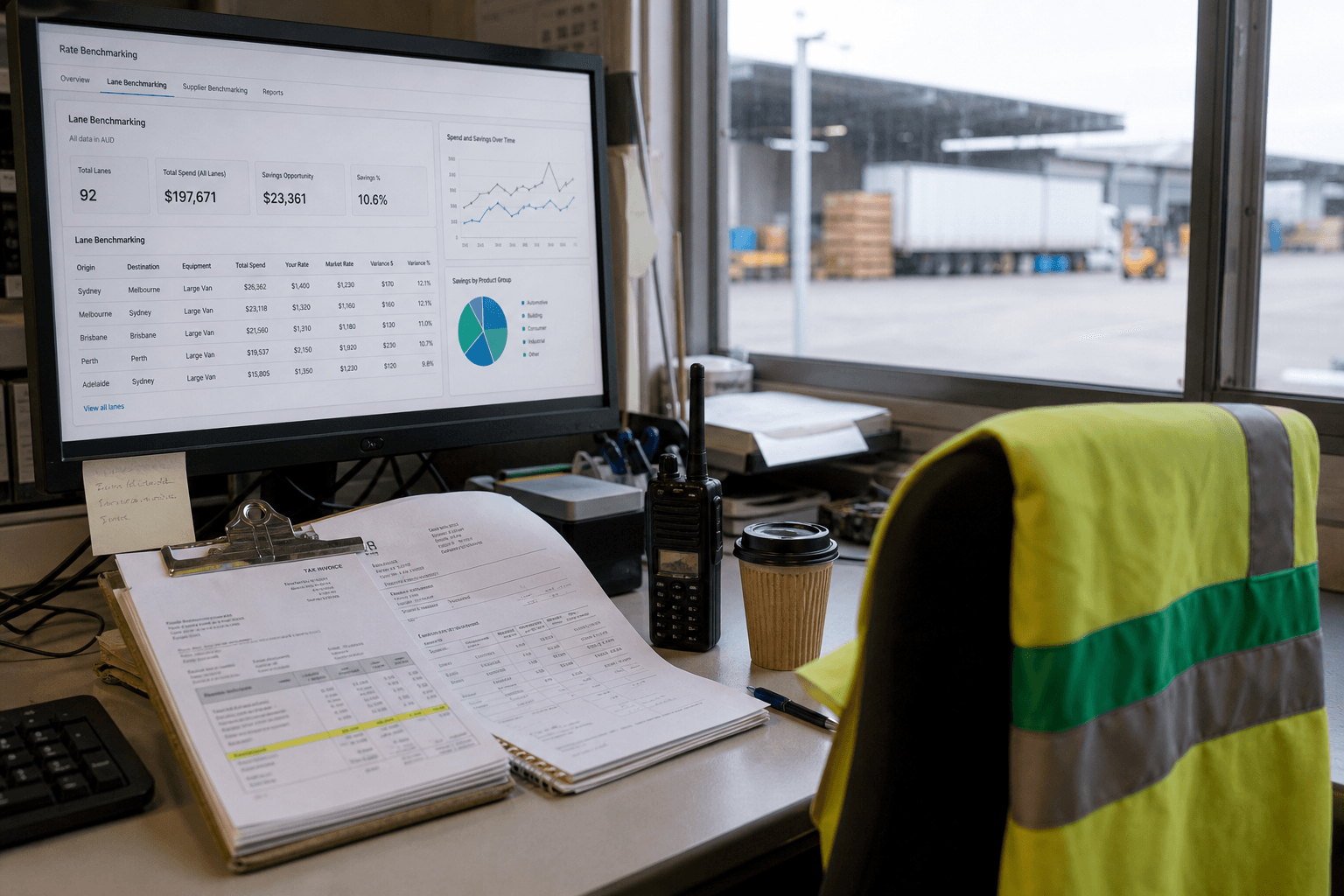
Legacy TMS Modernisation: Why Australian Operators Need to Act Now
Legacy Transport Management Systems are costing Australian logistics operators 12-18% in unnecessary fuel consumption and operational inefficiencies. Here's your practical guide to modernising without disrupting operations.

Legacy TMS Modernisation: Why Australian Logistics Operators Need to Act Now
Legacy Transport Management Systems (TMS) are holding back Australian logistics operators from competing effectively in today's market. These outdated systems, often built 10-15 years ago, lack the real-time data integration and automated decision-making capabilities that modern supply chains demand.
For logistics operations managers dealing with rising fuel costs, driver shortages, and customer demands for real-time visibility, modernising your TMS isn't just an IT upgrade—it's a business survival strategy.
What makes a TMS "legacy" in 2024?
A legacy TMS is any transport management system that cannot adapt to current operational demands and technological standards. These systems typically feature on-premise architecture, limited API connectivity, manual data entry processes, and restricted real-time reporting capabilities.
Most legacy systems in Australian logistics were implemented between 2008-2015, built around batch processing rather than real-time operations. They struggle with mobile integration, cloud connectivity, and the data volumes that modern route optimisation requires.
| Legacy TMS Characteristics | Modern TMS Requirements |
|---|---|
| On-premise only | Cloud-first architecture |
| Batch processing | Real-time data streams |
| Manual route planning | AI-powered optimisation |
| Limited API integration | Open API ecosystem |
| Desktop-only access | Mobile-first design |
| Static reporting | Dynamic dashboards |
The real cost of delaying TMS modernisation
Australian logistics operators using legacy TMS face measurable operational inefficiencies that compound over time. Route optimisation gaps alone cost carriers an average of 12-18% in unnecessary fuel consumption, according to Australian Trucking Association data.

The hidden costs include:
- Manual processes: Staff spending 2-4 hours daily on tasks that modern systems automate
- Poor visibility: Customers switching providers due to lack of real-time tracking (cited in 67% of customer churn cases)
- Compliance risks: Difficulty meeting NHVR Chain of Responsibility requirements with outdated reporting
- Integration failures: Unable to connect with customer EDI systems, losing business opportunities
Driver productivity impacts
Legacy systems particularly impact driver productivity through inefficient job allocation and poor mobile functionality. Drivers using modern TMS applications complete 15-20% more deliveries per shift compared to those using legacy systems with paper-based or basic mobile interfaces.
How to approach TMS modernisation strategically
Successful TMS modernisation requires a phased approach that maintains operational continuity while upgrading core capabilities. The key is identifying which business processes need immediate improvement versus those that can migrate gradually.
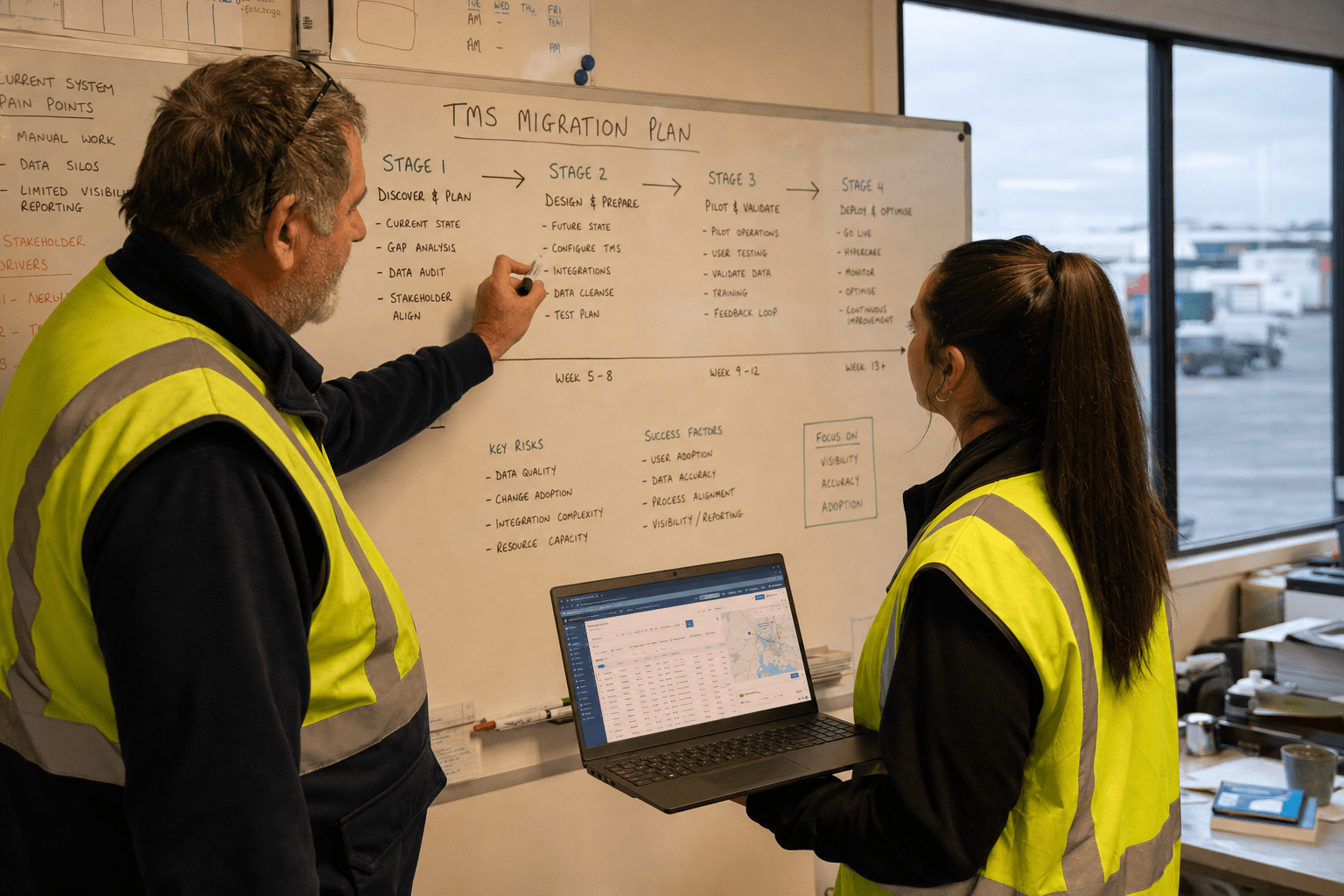
Start with a comprehensive audit of your current system's data quality, integration points, and user workflows. Document every manual workaround your team uses—these represent priority automation opportunities.
Phase 1: Data foundation (Months 1-3)
Clean and standardise your customer, vehicle, and route data. Poor data quality is the primary cause of TMS implementation failures. Establish data governance processes that will support your new system.
Phase 2: Core functionality migration (Months 4-8)
Implement core TMS functions: order management, route planning, and dispatch. Run parallel systems during this phase to ensure business continuity. Focus on user adoption through comprehensive training.
Phase 3: Advanced capabilities (Months 9-12)
Add AI-powered route optimisation, predictive maintenance scheduling, and advanced analytics. This phase leverages the clean data foundation to deliver measurable efficiency gains.
Key features your modernised TMS must include
Modern TMS platforms must support real-time operations, mobile workforce management, and seamless integration with existing business systems. Without these capabilities, you're simply replacing one limitation with another.
Essential features include:
- Real-time GPS tracking with geofencing and automated status updates
- Dynamic route optimisation that adjusts for traffic, weather, and new orders
- Mobile driver applications with proof of delivery and exception reporting
- Customer portal access for order tracking and delivery scheduling
- API-first architecture for integration with WMS, ERP, and customer systems
- Compliance reporting aligned with Australian transport regulations
Integration capabilities that matter
Your new TMS must integrate seamlessly with existing warehouse management systems, accounting software, and customer EDI platforms. API-first architecture ensures you can adapt to future integration requirements without major system changes.
Cloud vs on-premise: What's right for Australian logistics?
Cloud-based TMS platforms offer significant advantages for Australian logistics operators, particularly around scalability, mobile access, and automatic updates. However, on-premise solutions may be necessary for operators with specific data sovereignty requirements.
Cloud TMS benefits include:
- Lower upfront costs: No hardware investment or IT infrastructure requirements
- Automatic updates: Always current with latest features and security patches
- Mobile accessibility: Drivers and customers can access the system from anywhere
- Scalability: Easily accommodate seasonal volume fluctuations
Data sovereignty considerations
Under Australian Privacy Principles, logistics operators must ensure customer data remains within Australian jurisdiction or approved overseas locations. Verify your cloud TMS provider's data centre locations and compliance certifications.
ROI expectations for TMS modernisation
Australian logistics operators typically achieve 15-25% operational cost reductions within 12-18 months of implementing modern TMS platforms. The primary ROI drivers are fuel savings through optimised routing and labour cost reductions through process automation.
Measurable benefits include:
- Fuel cost reduction: 10-18% through optimised routes and reduced empty kilometres
- Driver productivity: 15-25% improvement in deliveries per shift
- Customer retention: 30-40% reduction in service-related complaints
- Administrative efficiency: 40-60% reduction in manual planning and reporting time
Implementation timeline and costs
Typical TMS modernisation projects for mid-size Australian operators (50-200 vehicles) require 6-12 months and cost $150,000-$400,000 including software, implementation, and training. The investment typically pays for itself within 18-24 months through operational efficiencies.
Choosing the right implementation partner
Successful TMS modernisation depends heavily on implementation expertise specific to Australian logistics operations. Your implementation partner should understand NHVR requirements, local customer expectations, and the operational challenges of Australian distances and infrastructure.
Key selection criteria:
- Australian logistics experience: Demonstrated success with similar operators
- Change management expertise: Proven approach to user adoption and training
- Integration capabilities: Experience connecting TMS with Australian ERP and WMS systems
- Ongoing support: Local support team and response time commitments
Common modernisation pitfalls to avoid
TMS modernisation projects fail most often due to poor data preparation, inadequate user training, and unrealistic timeline expectations. Avoid these common mistakes that can derail your implementation.
Data quality issues: Migrating poor quality data creates ongoing operational problems. Invest time in data cleaning before implementation begins.
Insufficient user training: Driver and dispatcher adoption determines project success. Plan for comprehensive training and ongoing support.
Over-customisation: Excessive customisation increases costs and complicates future upgrades. Use standard functionality where possible.
Inadequate testing: Insufficient testing leads to operational disruptions during go-live. Plan for comprehensive user acceptance testing.
Modern TMS solutions require a structured approach to implementation, starting with a comprehensive AI readiness assessment to evaluate your current systems and data quality. For operators managing large fleets, integrating route optimisation capabilities can immediately address fuel consumption issues while your broader legacy modernisation project takes shape.
Next steps: Building your modernisation roadmap
Start your TMS modernisation journey with a comprehensive assessment of your current system's limitations and your operational requirements. Document specific pain points, quantify current inefficiencies, and establish clear success metrics.
The most successful modernisation projects begin with executive buy-in and a dedicated project team including operations, IT, and finance representatives. This cross-functional approach ensures all business requirements are addressed.
Modern TMS platforms can transform your logistics operations, but only with proper planning, quality data, and committed user adoption. The question isn't whether to modernise—it's how quickly you can implement the changes needed to remain competitive.
Ready to modernise your TMS? Book a consultation to discuss your specific requirements and develop a customised modernisation roadmap for your operation.