Last-Mile Delivery AI: Solving Australia's Urban Logistics Challenge
Last-mile delivery AI transforms urban logistics efficiency through route density optimisation, dynamic time-window management, and predictive analytics. Australian cities face unique challenges from sprawling suburban layouts to strict urban consolidation zones, where traditional delivery methods struggle with rising costs and customer expectations.
Last-Mile Delivery AI: Solving Australia's Urban Logistics Challenge
Last-mile delivery AI transforms urban logistics efficiency through route density optimisation, dynamic time-window management, and predictive analytics. Australian cities face unique challenges from sprawling suburban layouts to strict urban consolidation zones, where traditional delivery methods struggle with rising costs and customer expectations.
The last-mile delivery segment accounts for 53% of total shipping costs and generates 28% more emissions per package than long-haul transport. For Australian logistics operators, AI offers a path to tackle these urban delivery challenges systematically.
Route Density Optimisation for Australian Cities
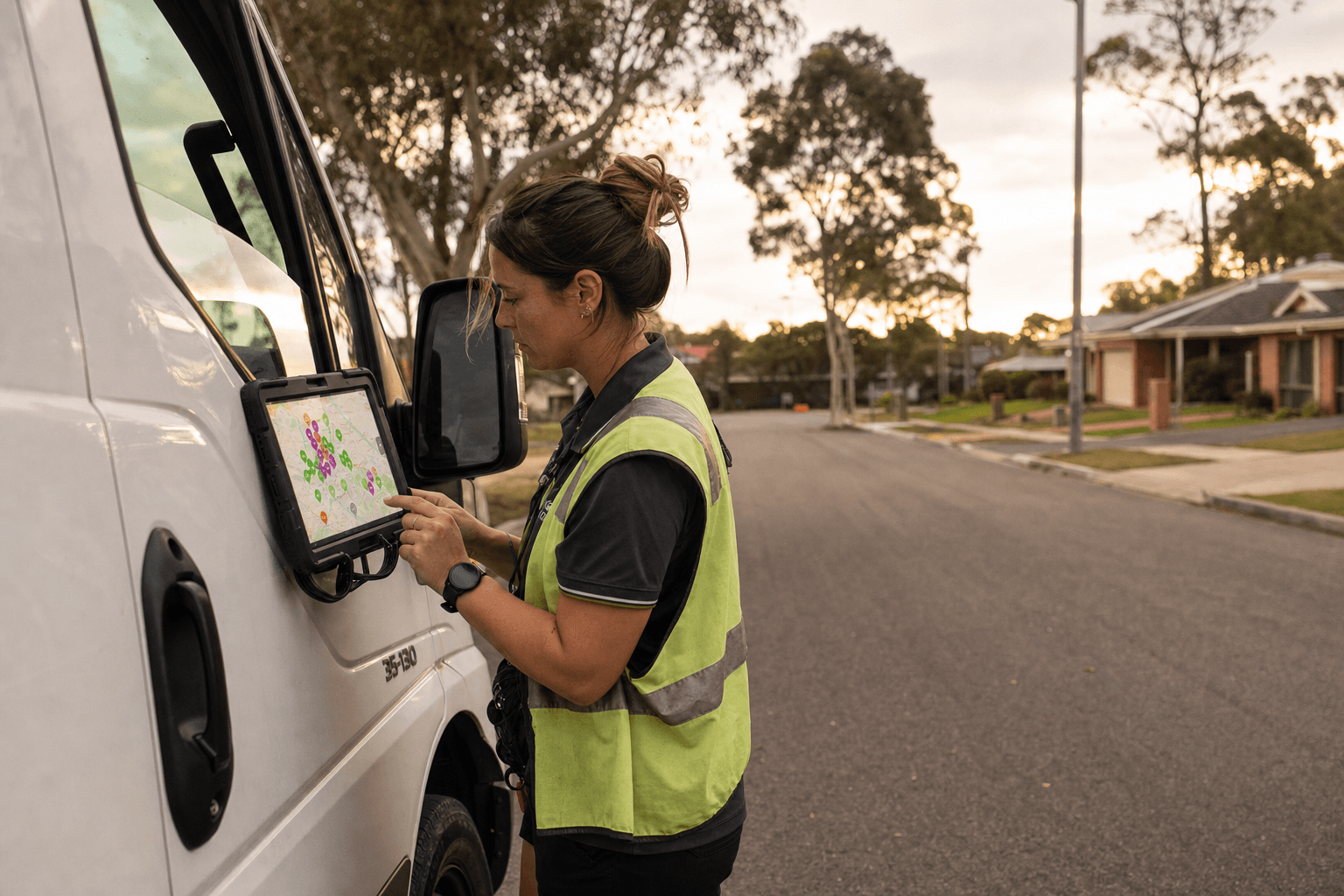
Route density optimisation uses AI algorithms to maximise delivery stops per route while minimising travel distance and time. Unlike traditional static routing, AI systems continuously learn from traffic patterns, delivery success rates, and seasonal variations across Australian metropolitan areas.

Melbourne's sprawling suburbs present different challenges to Sydney's harbour geography or Brisbane's river crossings. AI systems analyse historical delivery data to identify optimal route clusters, considering factors like:
- Traffic congestion patterns during peak hours
- Residential delivery success rates by suburb
- Commercial zone accessibility restrictions
- School zone timing constraints
Traditional vs AI Route Planning Comparison:
| Factor | Traditional Planning | AI-Powered Planning |
|---|---|---|
| Route updates | Weekly/monthly | Real-time |
| Traffic consideration | Basic time estimates | Live traffic data |
| Delivery success prediction | Historical averages | Individual address patterns |
| Driver workload balancing | Manual adjustment | Automated optimisation |
| Cost per delivery | $8-12 (metropolitan) | $5.50-8.50 (metropolitan) |
Dynamic Time-Window Management
Dynamic time-window management enables delivery companies to offer flexible delivery slots while maintaining operational efficiency. AI systems predict optimal time windows based on recipient behaviour patterns, traffic conditions, and driver availability.
Australian consumers increasingly expect delivery precision. Research shows 67% of online shoppers abandon purchases if delivery options don't meet their needs. AI addresses this by:
Real-time window adjustments: Systems monitor traffic, weather, and delivery delays to automatically adjust promised delivery windows.
Recipient preference learning: AI tracks individual customer patterns — Mrs. Johnson is never home before 3 PM, Mr. Chen prefers morning deliveries.
Capacity-based pricing: Dynamic pricing for premium time slots (next-day, specific hour) based on route density and available capacity.
Failed Delivery Prediction and Prevention
Failed delivery prediction uses machine learning to identify deliveries likely to fail before the driver leaves the depot. This proactive approach reduces redelivery costs and improves customer satisfaction.

Failed deliveries cost Australian logistics operators an average of $18 per attempt, including fuel, driver time, and storage fees. AI systems analyse:
- Address-specific patterns: Apartment buildings with access issues, businesses closed on specific days
- Recipient behaviour: Historical availability patterns, response to delivery notifications
- External factors: Public holidays, school holidays, weather conditions affecting accessibility
Common Failed Delivery Scenarios AI Prevents:
- Apartment access issues: Predicts buildings requiring access codes or concierge contact
- Business closures: Identifies non-standard business hours or temporary closures
- Weather-related access: Anticipates flood-prone areas during heavy rain periods
- Recipient unavailability: Predicts low-probability delivery windows based on historical data
Successful implementation reduces failed delivery rates from 15-20% to 6-8% for metropolitan deliveries.
Micro-Fulfilment Centres and AI Integration
Micro-fulfilment centres are automated warehouses positioned within urban areas to enable same-day and rapid delivery. AI optimises inventory placement, demand forecasting, and order routing between these facilities.
Australia's major cities are seeing micro-fulfilment centre adoption accelerate. These facilities, typically 1,000-5,000 square metres, use AI for:
Inventory positioning: AI determines which products to stock at each location based on local demand patterns, seasonality, and delivery speed requirements.
Dynamic stock allocation: Real-time inventory redistribution between micro-centres based on demand fluctuations and stock levels.
Order routing: Intelligent order splitting and routing to minimise delivery time and cost — high-priority items from the nearest micro-centre, bulk items from regional distribution centres.
Benefits for Australian Operations:
- Delivery speed: Same-day delivery within 10km radius
- Cost reduction: 40-60% reduction in last-mile delivery costs
- Urban efficiency: Reduced delivery vehicle movements in CBD areas
- Customer satisfaction: 95%+ on-time delivery rates
Urban Consolidation Zones and AI Coordination
Urban consolidation zones are designated areas where multiple carriers consolidate deliveries to reduce city centre traffic. AI coordinates between different logistics providers to optimise shared delivery routes and vehicle utilisation.
Australian cities like Melbourne and Sydney are implementing urban consolidation zones to address traffic congestion and emissions. The Melbourne CBD's proposed consolidation zone aims to reduce delivery vehicles by 35% during peak hours.
AI Coordination Functions:
Multi-carrier route optimisation: AI systems coordinate between different logistics companies to share delivery routes and vehicles efficiently.
Capacity sharing: Real-time vehicle capacity sharing between carriers to maximise load efficiency.
Time slot allocation: Automated booking and management of delivery time slots within consolidation zones.
Performance monitoring: Tracking delivery efficiency, emissions reduction, and cost savings across all participating carriers.
Implementation Challenges and Solutions
Deploying last-mile delivery AI in Australian cities requires addressing specific operational and regulatory challenges:
Data integration complexity: Most Australian logistics operators use multiple legacy systems (TMS, WMS, telematics). AI solutions must integrate with existing infrastructure without disrupting operations.
Driver adoption: Successful AI implementation requires driver buy-in. Systems must enhance rather than replace driver expertise and local knowledge.
Regulatory compliance: Australian logistics operators must comply with NHVR regulations, local council restrictions, and chain of responsibility requirements.
Seasonal variation: Australian delivery patterns change significantly between summer holidays, back-to-school periods, and major shopping events like Click Frenzy.
Real-World Performance Metrics
Australian logistics operators implementing last-mile delivery AI typically see:
- Route efficiency: 15-25% reduction in kilometres per delivery
- Failed delivery rates: 40-60% reduction in redelivery attempts
- Customer satisfaction: 20-30% improvement in delivery time accuracy
- Operational costs: 12-20% reduction in cost per delivery
- Driver productivity: 18-28% increase in deliveries per day
ROI Timeline:
- Implementation: 3-6 months
- Break-even: 8-14 months
- Full ROI realisation: 18-24 months
AI-powered route optimisation represents a fundamental shift from traditional logistics approaches, requiring comprehensive evaluation of existing systems and processes. Our AI readiness assessment helps logistics companies understand their current capabilities and identify integration opportunities. For businesses ready to implement, our custom AI solutions and route optimisation services deliver measurable improvements in delivery efficiency and cost reduction.
Getting Started with Last-Mile Delivery AI
For Australian logistics operators considering last-mile delivery AI implementation:
Assessment phase: Evaluate current delivery performance, data quality, and system integration requirements. Most operators benefit from starting with route optimisation before expanding to predictive analytics.
Pilot program: Begin with a specific geographic area or customer segment to test AI performance and driver adoption.
Gradual expansion: Scale successful AI modules across the entire delivery network while maintaining operational stability.
Last-mile delivery AI represents a significant opportunity for Australian logistics operators to improve efficiency, reduce costs, and meet rising customer expectations. Success requires focusing on practical implementation that enhances existing operations rather than replacing them entirely.
Ready to transform your last-mile delivery operations with AI? Our logistics specialists can assess your current challenges and design a tailored solution that addresses Australia's unique urban delivery requirements. Contact us to discuss how AI-powered route optimisation can reduce your delivery costs and improve customer satisfaction.
Zero Footprint
The Zero Footprint team — AI modernisation for Australian logistics.