Automating Accounts Receivable Communication in Logistics with AI
AI-powered accounts receivable automation reduces manual invoice follow-up by up to 70% while improving collection rates by 25-40% for logistics companies. Learn how personalised communication sequences and accounting system integration streamline cash flow management.
Automating Accounts Receivable Communication in Logistics with AI
Accounts receivable automation uses AI to manage overdue invoice follow-up through personalised voice calls, SMS reminders, and email sequences. For Australian logistics companies, this technology reduces manual collection work by up to 70% while improving cash flow predictability.
Logistics companies typically carry 45-60 days of revenue in outstanding invoices. Manual follow-up consumes 15-20 hours per week for mid-market operators, while inconsistent communication damages customer relationships and extends payment cycles.
How AI Transforms Invoice Collection for Logistics Companies
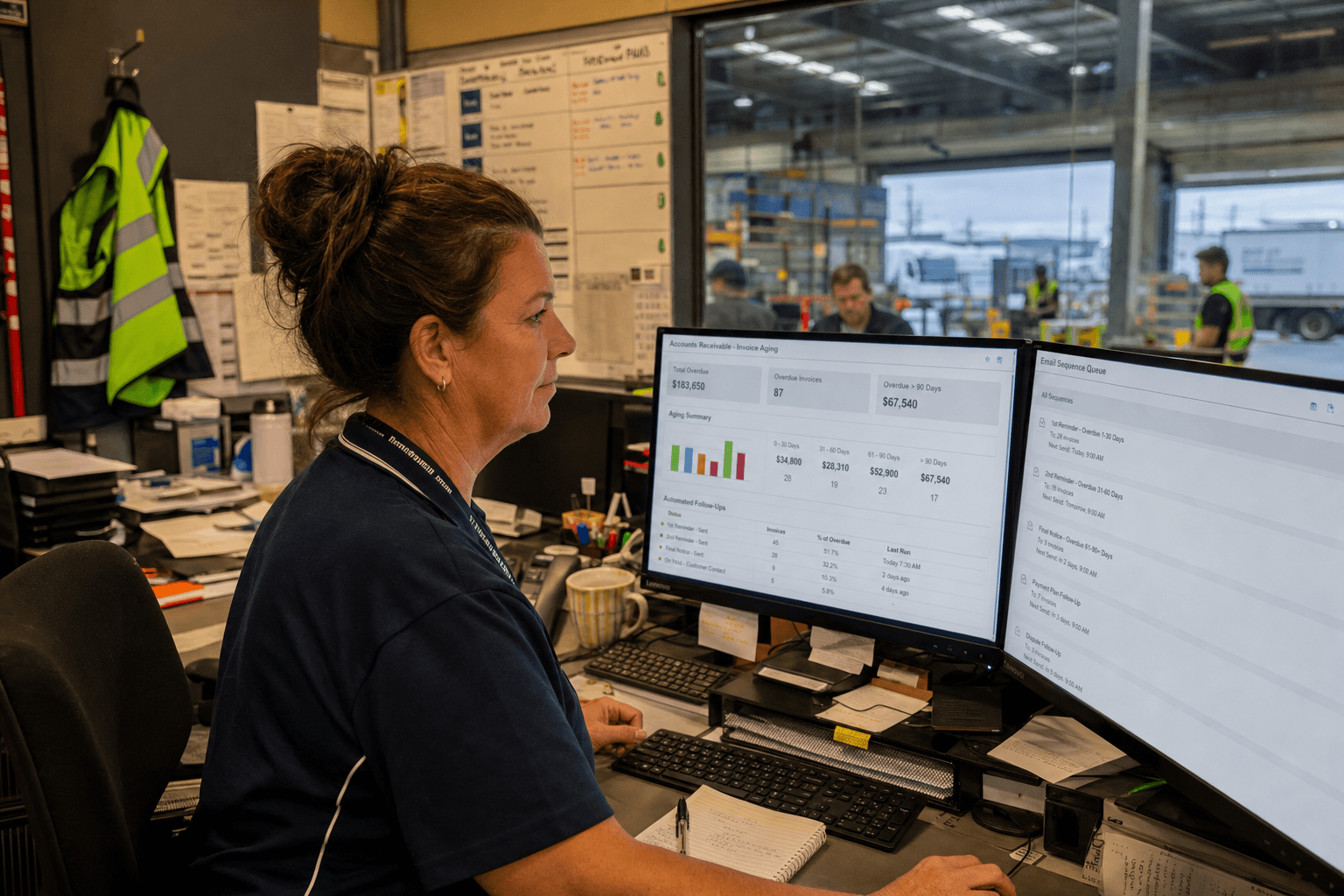
AI-powered accounts receivable systems automatically identify overdue accounts, analyse payment patterns, and execute personalised communication sequences. The technology integrates with existing accounting systems to trigger follow-up actions based on invoice age, customer history, and relationship value.
Traditional manual processes involve staff checking aging reports, making phone calls, and sending generic reminder emails. AI automation monitors all outstanding invoices continuously, personalises communication tone based on customer relationships, and escalates appropriately without human intervention.
Automated Communication Channels
| Channel | Timing | Effectiveness | Best Use Case |
|---|---|---|---|
| Days 1-30 | 35% response | Initial gentle reminders | |
| SMS | Days 15-45 | 55% response | Mid-cycle urgency |
| Voice calls | Days 30+ | 75% response | Relationship preservation |
| Letters | Days 60+ | 40% response | Final formal notice |
Payment Reminder Timing and Escalation Workflows
Optimal payment reminder timing follows a graduated approach that balances persistence with relationship preservation. AI systems analyse historical payment behaviour to customise timing for each customer relationship.
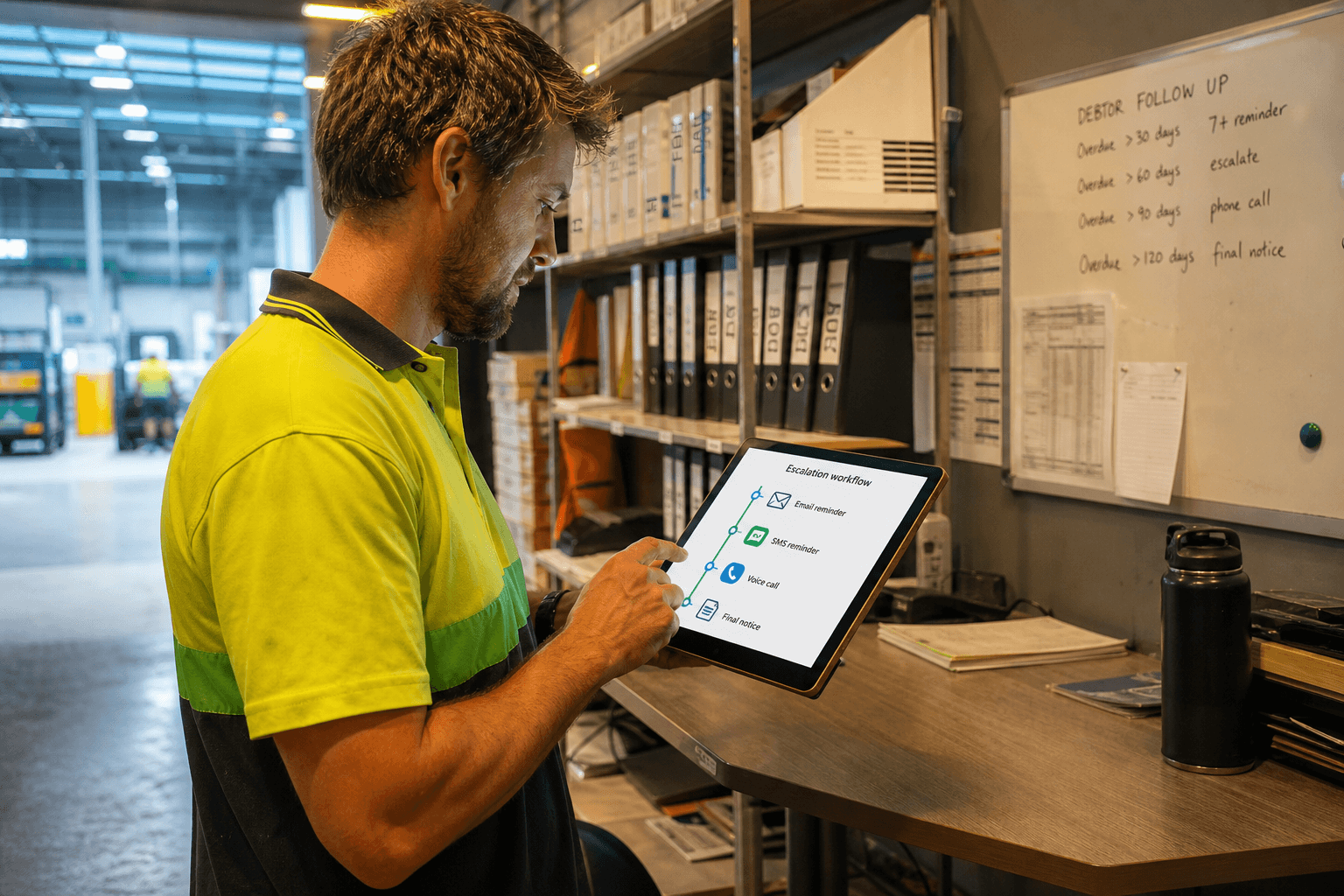
Standard escalation sequence:
- Day 1 overdue: Automated email reminder with invoice attached
- Day 7: Personalised email referencing specific delivery details
- Day 15: SMS notification with payment portal link
- Day 30: AI-generated voice call with human handoff option
- Day 45: Formal email with account hold warning
- Day 60: Final notice with collection agency referral
The system adjusts timing based on customer segments. Key accounts receive more diplomatic initial contact, while smaller accounts follow standard protocols. Seasonal businesses get modified schedules accounting for cash flow cycles.
Tone Calibration and Relationship Management
AI systems calibrate communication tone based on customer relationship value, payment history, and account status. The technology maintains professional relationships while achieving collection objectives through contextual messaging.
Tone variations by customer segment:
Premium accounts (>$50K annual revenue):
- Collaborative language: "We wanted to ensure you received our recent invoice..."
- Relationship-first approach with account manager involvement
- Extended payment terms offered proactively
Standard commercial accounts:
- Professional but direct: "Invoice #12345 is now 15 days overdue..."
- Standard payment terms enforcement
- Automated escalation with human oversight
Small accounts (<$10K annual):
- Firm but respectful: "Payment is required within 7 days to avoid account restrictions"
- Streamlined process with minimal manual intervention
- Quick escalation to external collection
The AI analyses previous communication responses to refine tone effectiveness. Customers who respond better to formal communications receive structured messaging, while relationship-focused accounts get personalised approaches.
Integration with Accounting Systems
Seamless integration with existing accounting platforms ensures real-time data synchronisation and prevents duplicate communications. The AI connects with MYOB, Xero, QuickBooks, and enterprise ERPs to access invoice data, payment status, and customer information.
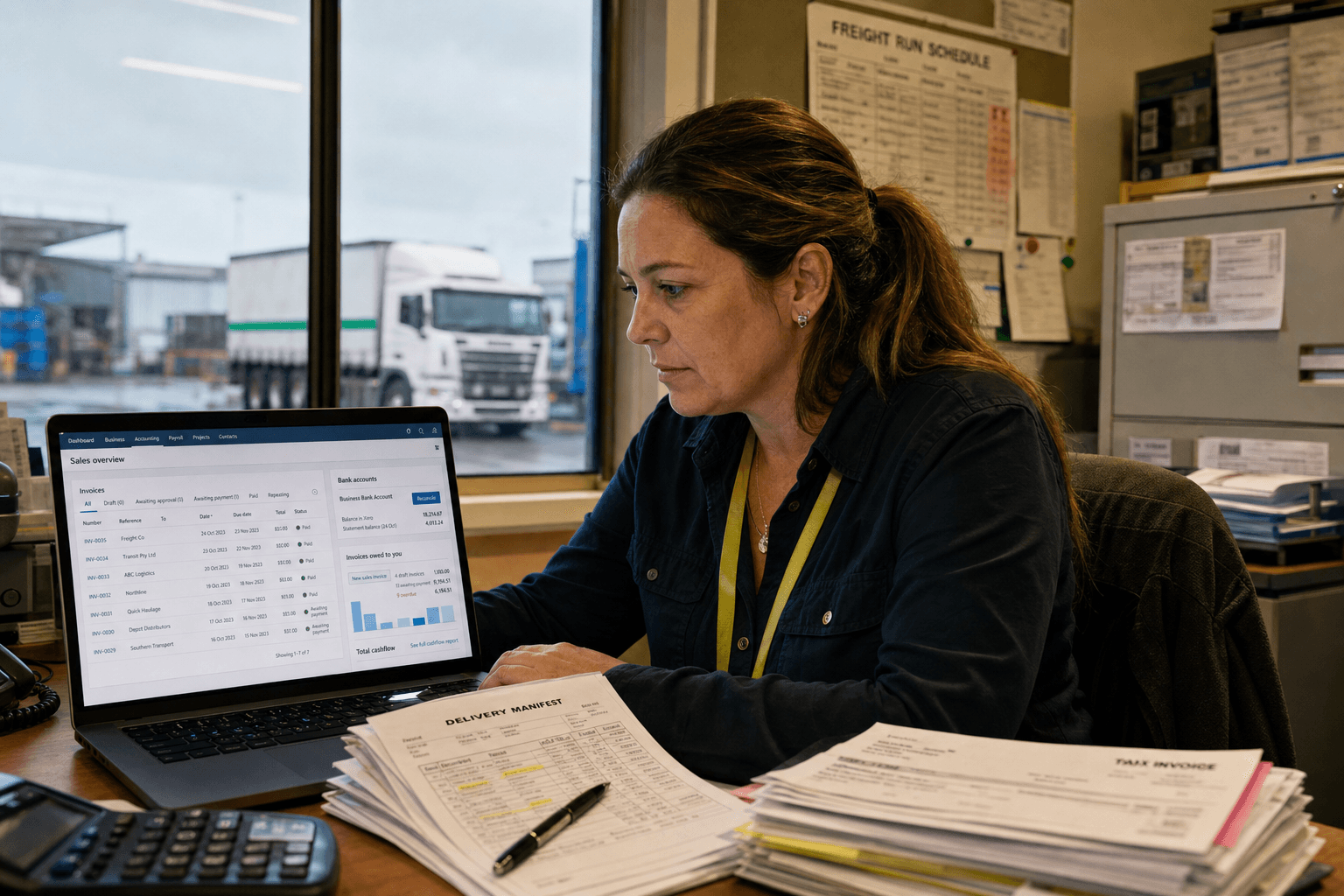
Key integration capabilities:
- Automatic invoice aging report analysis
- Real-time payment status updates
- Customer credit limit and terms retrieval
- Collection notes and activity logging
- Financial reporting integration
The system creates detailed audit trails for compliance requirements. All communication attempts, customer responses, and escalation decisions are logged with timestamps for AASB S2 reporting and internal audits.
API connectivity enables:
- Instant payment posting from customer portals
- Automatic hold release when payments clear
- Credit application workflow integration
- Dispute resolution tracking
Collection Rate Improvements and ROI
AI-powered accounts receivable automation typically improves collection rates by 25-40% while reducing Days Sales Outstanding (DSO) by 8-12 days for logistics companies.
Typical performance improvements:
Before automation:
- 72% collection rate within 60 days
- Average DSO: 52 days
- 15-20 hours weekly manual effort
- 8% accounts sent to external collection
After AI implementation:
- 89% collection rate within 60 days
- Average DSO: 41 days
- 3-5 hours weekly oversight required
- 3% accounts requiring external collection
Financial Impact Analysis
For a $50M revenue logistics company with typical payment terms:
Cash flow improvement:
- 11-day DSO reduction = $1.5M working capital improvement
- 17% collection rate increase = $340K annual bad debt reduction
- 75% labor cost reduction = $85K annual savings
- Total annual benefit: $1.925M
Implementation costs:
- Software licensing: $24K-48K annually
- Integration and setup: $15K-25K one-time
- Training and change management: $8K-12K
- ROI timeline: 3-4 months
Compliance and Audit Trail Management
AI accounts receivable systems maintain comprehensive compliance records for Australian financial reporting requirements. The technology automatically documents all collection activities with timestamps, communication content, and customer responses.
Compliance features include:
- AASB S2 audit trail requirements
- Privacy Act communication logging
- Fair debt collection practice compliance
- Dispute resolution documentation
- Credit management reporting
The system generates quarterly collection performance reports showing payment trend analysis, customer behavior patterns, and process efficiency metrics. These reports support board reporting requirements and provide data for credit policy refinements.
Implementation Considerations for Logistics Companies
Successful accounts receivable automation requires careful planning around customer communication preferences, staff training, and system integration timelines.
Critical success factors:
Customer communication audit: Review existing payment terms, communication frequency, and relationship management approaches before automation. Map customer preferences and segment requirements.
Staff transition planning: Retrain accounts receivable staff for exception handling and relationship management rather than routine follow-up tasks. Provide training on AI system oversight and escalation procedures.
Integration testing: Conduct thorough testing of accounting system connections, payment portal functionality, and communication delivery systems before full deployment.
Performance monitoring: Establish baseline collection metrics before implementation. Monitor early performance indicators and adjust communication timing and tone based on initial results.
Our communication automation services help logistics companies implement AI-powered accounts receivable systems that integrate seamlessly with existing workflows. For businesses looking to modernise their financial operations alongside other systems, our legacy modernisation approach ensures smooth transitions without disrupting critical processes.
Getting Started with AR Automation
Logistics companies should begin accounts receivable automation with pilot programs targeting specific customer segments or invoice categories. This approach allows testing and refinement before full-scale deployment.
Recommended implementation phases:
Phase 1 (Months 1-2): Small commercial accounts under $25K annual revenue Phase 2 (Months 3-4): Standard commercial accounts $25K-100K annually Phase 3 (Months 5-6): Premium accounts with customised communication protocols
The phased approach enables continuous improvement of AI communication effectiveness while maintaining relationships with key accounts during the transition period.
With AASB S2 compliance requirements increasing focus on financial process documentation, AI-powered accounts receivable automation provides both operational efficiency and audit readiness for Australian logistics companies. The technology transforms collection from reactive manual process to proactive relationship management while improving cash flow predictability.
Ready to reduce your accounts receivable workload and improve cash flow predictability? Our team can assess your current processes and design an AI communication system tailored to your logistics operation. Contact us to discuss how automation can streamline your invoice collection process.
Zero Footprint
The Zero Footprint team — AI modernisation for Australian logistics.