Multi-Modal Route Optimisation: Road, Rail, and Sea for Logistics
AI-powered multi-modal route optimisation combines road, rail, and sea transport to reduce Australian logistics costs by 15-30%. Learn how intelligent systems handle intermodal decisions, predict container dwell times, and navigate Australia's unique rail gauge challenges for optimal freight movement.
Multi-Modal Route Optimisation: Road, Rail, and Sea Combined for Australian Logistics
Australia's vast distances and concentrated population centres make multi-modal freight transport essential for cost-effective logistics. Modern AI systems can optimise complex routes across road, rail, and sea transport modes, delivering cost savings of 15-30% while improving delivery reliability.
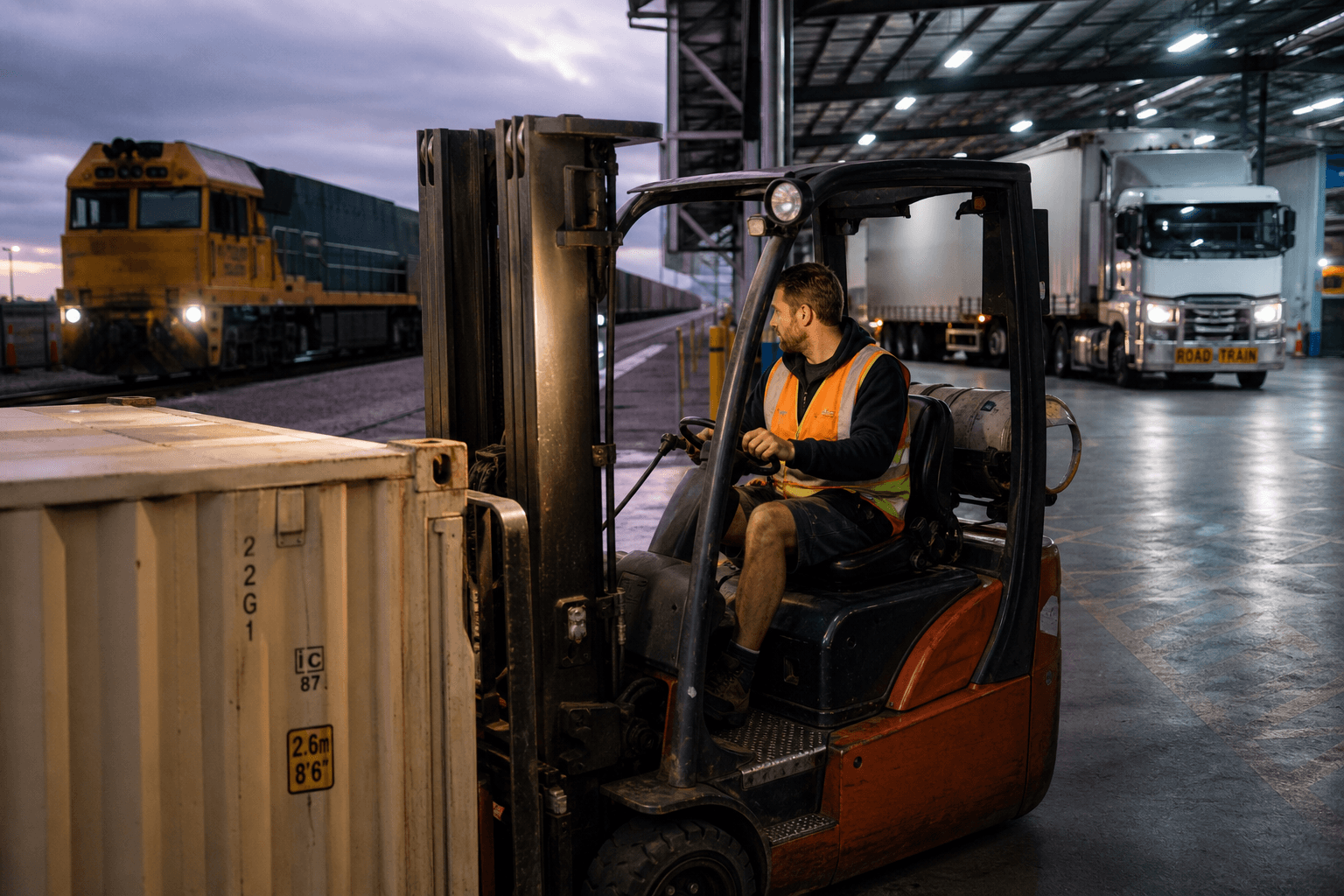
Multi-modal route optimisation combines transport planning across different modes to find the most efficient path for freight movement. Unlike single-mode routing, it considers the unique characteristics of road, rail, and sea transport, along with transfer points and modal handoffs.
How AI Improves Multi-Modal Route Planning
AI transforms multi-modal logistics by processing thousands of variables simultaneously — freight characteristics, mode capacities, transfer costs, weather patterns, and real-time delays. Traditional planning methods rely on static timetables and simple cost comparisons, while AI systems adapt continuously to changing conditions.
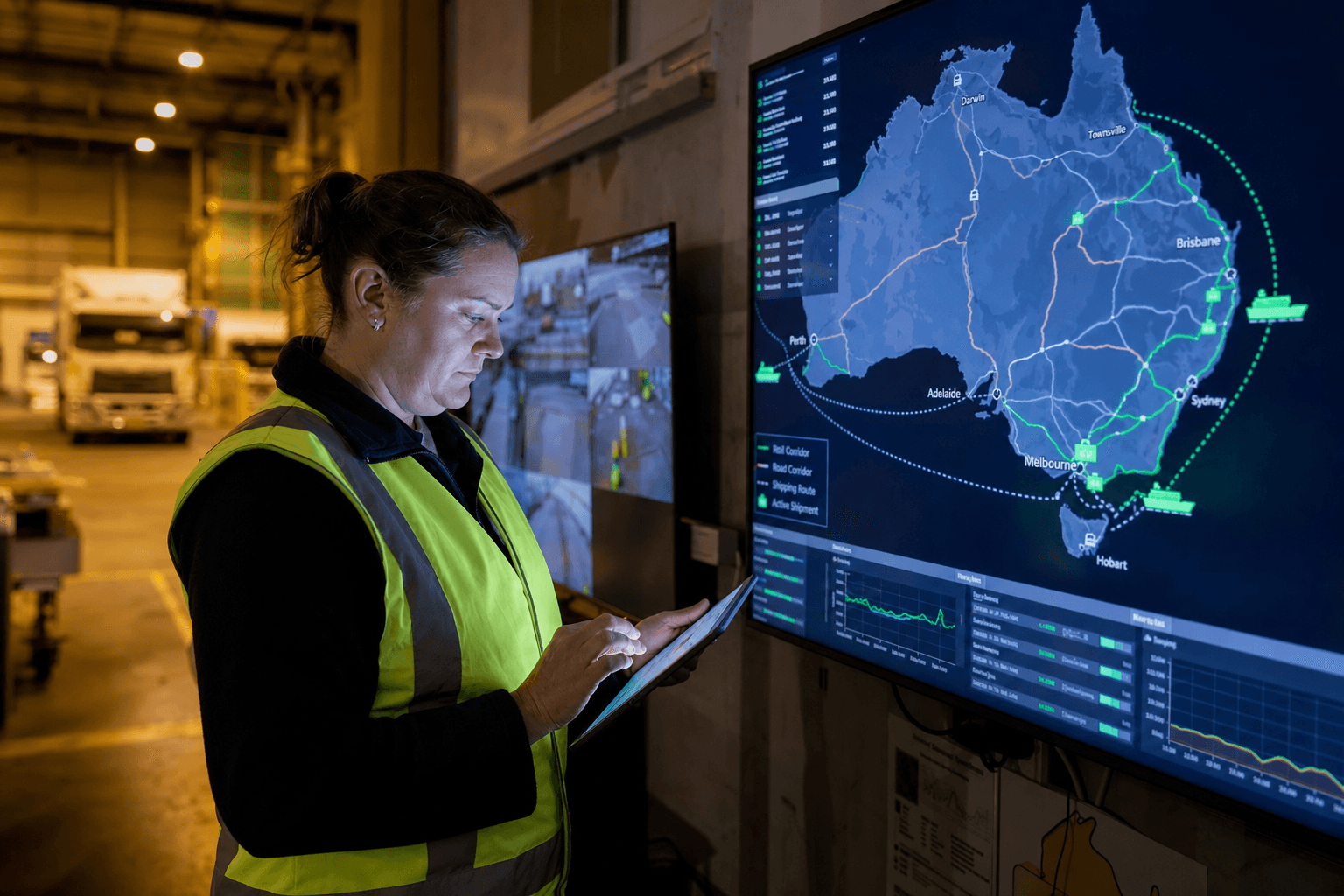
Machine learning algorithms analyse historical shipment data to predict optimal modal combinations for specific freight types. A 20-foot container moving from Melbourne to Perth might travel by rail to Adelaide, then road for final delivery — decisions made by weighing current rail capacity, road conditions, and delivery urgency.
Real-Time Decision Making
AI systems monitor transport networks continuously, adjusting routes when disruptions occur. If the Sydney-Brisbane rail corridor experiences delays, the system can automatically reroute containers via coastal shipping or direct road transport, minimising customer impact.
Intermodal Decision Logic in Australian Context
Intermodal decision logic determines which transport mode to use for each leg of a journey. Australian logistics faces unique challenges: standard gauge rail lines don't connect all major cities, road trains operate under NHVR regulations, and coastal shipping serves limited ports.
Distance-Based Modal Selection
For Australian interstate freight, distance thresholds guide modal selection:
- Road transport: Most cost-effective for distances under 500km
- Rail transport: Optimal for 500-2,000km routes with rail connectivity
- Sea transport: Competitive for long-haul coastal routes over 1,500km
Freight Characteristics Impact
AI systems consider freight density, value, and urgency. High-value electronics might travel by air freight to Darwin, then road distribution. Bulk commodities favour rail or sea transport despite longer transit times.
| Freight Type | Primary Mode | Secondary Mode | Decision Factor |
|---|---|---|---|
| Electronics | Road/Air | Rail (consolidated) | Speed + security |
| Automotive parts | Rail | Road (last mile) | Cost + reliability |
| Bulk commodities | Rail/Sea | Road (short haul) | Cost per tonne |
| Perishables | Road | Air (premium) | Time sensitivity |
Container Dwell Time Prediction
Container dwell time — how long containers remain at terminals between transport modes — significantly impacts multi-modal efficiency. Australian ports and rail terminals experience varying dwell times based on seasonal demand, labour availability, and infrastructure constraints.
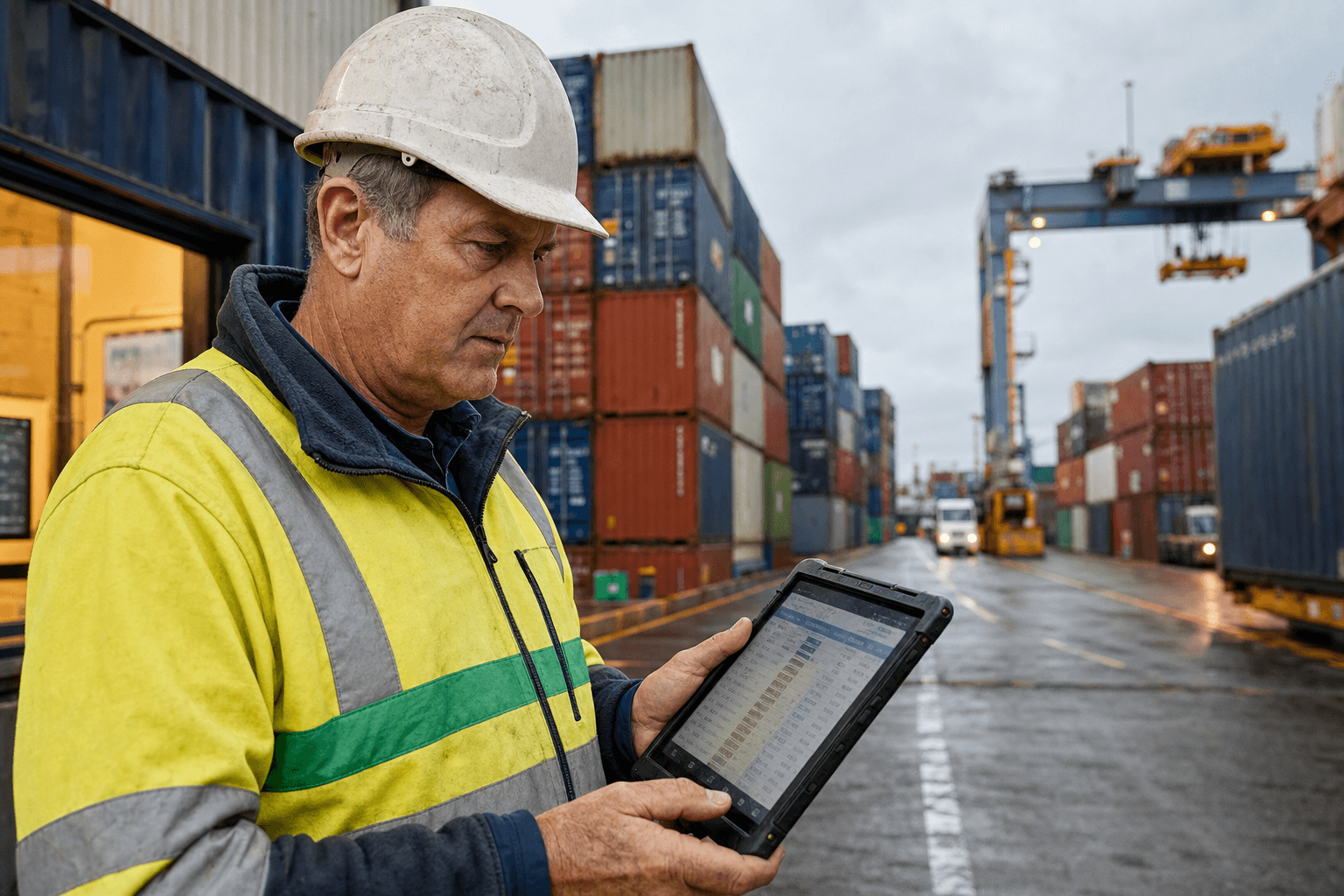
AI systems predict dwell times using historical data, current terminal congestion, and external factors like port strikes or weather delays. Accurate predictions enable better scheduling and reduce total transit time.
Terminal-Specific Patterns
Melbourne's Port of Melbourne typically shows 2-3 day dwell times during peak season (February-April), while regional terminals like Geelong may process containers same-day during off-peak periods. AI algorithms factor these patterns into route planning.
Dynamic Adjustment
When predicted dwell times exceed acceptable thresholds, AI systems can reroute containers through alternative terminals or recommend modal switches. A container destined for Adelaide might bypass congested Melbourne terminals by routing through Port Adelaide directly.
Australian Rail Gauge Considerations
Australia's mixed rail gauge system creates unique optimisation challenges. Standard gauge (1,435mm) connects Melbourne-Adelaide-Perth, but breaks of gauge occur at state borders for broad gauge (1,600mm) networks in Victoria and South Australia.
Gauge Break Optimisation
AI systems factor gauge breaks into route planning, considering:
- Container transfer time at gauge break points
- Available rolling stock for each gauge
- Alternative routing via standard gauge corridors
A shipment from Melbourne to Brisbane might travel via standard gauge through Adelaide and across the Nullarbor, avoiding gauge breaks entirely despite the longer distance.
Infrastructure Constraints
The Australian Rail Track Corporation (ARTC) manages the Interstate Rail Network with specific capacity limitations. AI optimisation considers:
- Available train paths on constrained corridors
- Loading gauge restrictions for oversized freight
- Track maintenance windows that affect scheduling
Cost-vs-Speed Trade-offs for Interstate Freight
Every logistics decision involves trade-offs between cost, speed, and reliability. AI optimisation quantifies these trade-offs, enabling data-driven decisions rather than rules of thumb.
Total Cost Analysis
True multi-modal cost includes:
- Primary transport costs (linehaul rates)
- Terminal handling charges
- Inventory carrying costs during transit
- Risk costs (damage, theft, delay penalties)
A Melbourne-Perth shipment might cost $800 by road (2 days), $600 by rail (4 days), or $400 by sea (7 days). The optimal choice depends on inventory value and customer urgency requirements.
Service Level Optimisation
AI systems can optimise for different service levels:
- Economy service: Minimise total cost, accept longer transit times
- Standard service: Balance cost and speed for typical freight
- Express service: Prioritise speed, using road or air modes
Customer-Specific Requirements
Different customers have varying cost-speed preferences. Automotive manufacturers require just-in-time delivery, favouring reliable road transport. Mining companies shipping bulk materials prioritise cost efficiency, accepting longer rail transit times.
Implementation Strategies for Australian Operators
Australian logistics operators can implement multi-modal AI optimisation through several approaches:
Start with High-Volume Corridors
Begin optimisation on major interstate corridors where modal options exist — Melbourne-Sydney, Melbourne-Adelaide-Perth, Brisbane-Sydney. These routes offer the greatest potential for cost savings and efficiency gains.
Integrate with Existing TMS
Many Australian operators use legacy Transport Management Systems (TMS) that can integrate with AI optimisation engines via APIs. This approach preserves existing workflows while adding intelligent routing capabilities.
Partner with Modal Providers
Collaboration with rail operators (Pacific National, Aurizon), shipping lines (SeaRoad, TasPorts), and road carriers enables access to real-time capacity and pricing data essential for effective optimisation.
Measuring Multi-Modal Optimisation Success
Successful implementation requires clear metrics:
- Total transport cost per tonne-kilometre: Overall efficiency improvement
- On-time delivery performance: Service level maintenance
- Modal utilisation rates: Balanced use of transport modes
- Dwell time reduction: Terminal efficiency gains
- Customer satisfaction scores: Service quality maintenance
Australian operators implementing multi-modal AI optimisation typically see 10-20% cost reductions on interstate freight, with corresponding improvements in delivery reliability and customer satisfaction.
Implementing multi-modal route optimisation requires careful assessment of your current systems and processes. Our AI readiness assessment helps identify the best opportunities for multi-modal integration, while our specialised route optimisation services can deliver immediate improvements to your freight operations.
Next Steps for Australian Logistics Operators
Multi-modal route optimisation represents a significant opportunity for Australian logistics operators facing increasing competition and cost pressures. The combination of AI decision-making and Australia's diverse transport infrastructure creates potential for substantial operational improvements.
Starting with a pilot program on key corridors allows operators to demonstrate value while building internal capability. The investment in multi-modal optimisation technology typically pays for itself within 12-18 months through reduced transport costs and improved asset utilisation.
Ready to reduce your logistics costs with intelligent multi-modal route optimisation? Our team understands Australia's unique transport challenges and can design a solution that works for your operations. Contact us to discuss how AI-powered route optimisation can improve your freight efficiency and bottom line.
Zero Footprint
The Zero Footprint team — AI modernisation for Australian logistics.