The Mid-Market Logistics AI Gap (And How to Close It)
Large operators have big consulting budgets. Small operators have off-the-shelf platforms. The mid-market — $20M-$500M carriers, 3PLs, and warehouse operators — has nobody. Here's how to close the gap.
The Market Nobody Serves Well
Australian logistics has a technology adoption problem, and it's concentrated in the mid-market.
Enterprise operators — large carriers and national 3PLs — have internal technology teams and substantial consulting budgets. They're adopting AI systematically: predictive analytics for fleet management, digital twins for warehouse optimisation, AI-powered demand forecasting across their networks.
Small operators — owner-drivers, small fleets, local courier companies — can use off-the-shelf platforms with built-in AI features (rate optimisation, automated dispatch, demand sensing) that work well for standard operations.
The mid-market — regional carriers with 100-500 vehicles, 3PLs managing multiple warehouses, freight forwarders handling complex multi-modal shipments — is stuck in between:
| Challenge | Why It Matters |
|---|---|
| Operations too complex for SaaS | Standard platforms can't handle their specific workflows, legacy integrations, or customer requirements |
| Budgets too small for large consultancies | $500K minimum engagement fees don't fit $20-$500M companies |
| No internal tech teams | Can't build solutions themselves; IT is one person managing email and printers |
| Legacy systems everywhere | 10-15 year old TMS/WMS with no APIs, no integration, no modern data access |
This creates a compounding disadvantage. While enterprise and SME operators improve year over year, the mid-market treads water — or falls behind.
What the Gap Looks Like in Practice
Scenario: Contract Renewal
A regional 3PL with 3 warehouses and 80 trucks is renewing a $3M annual contract with a retail customer.
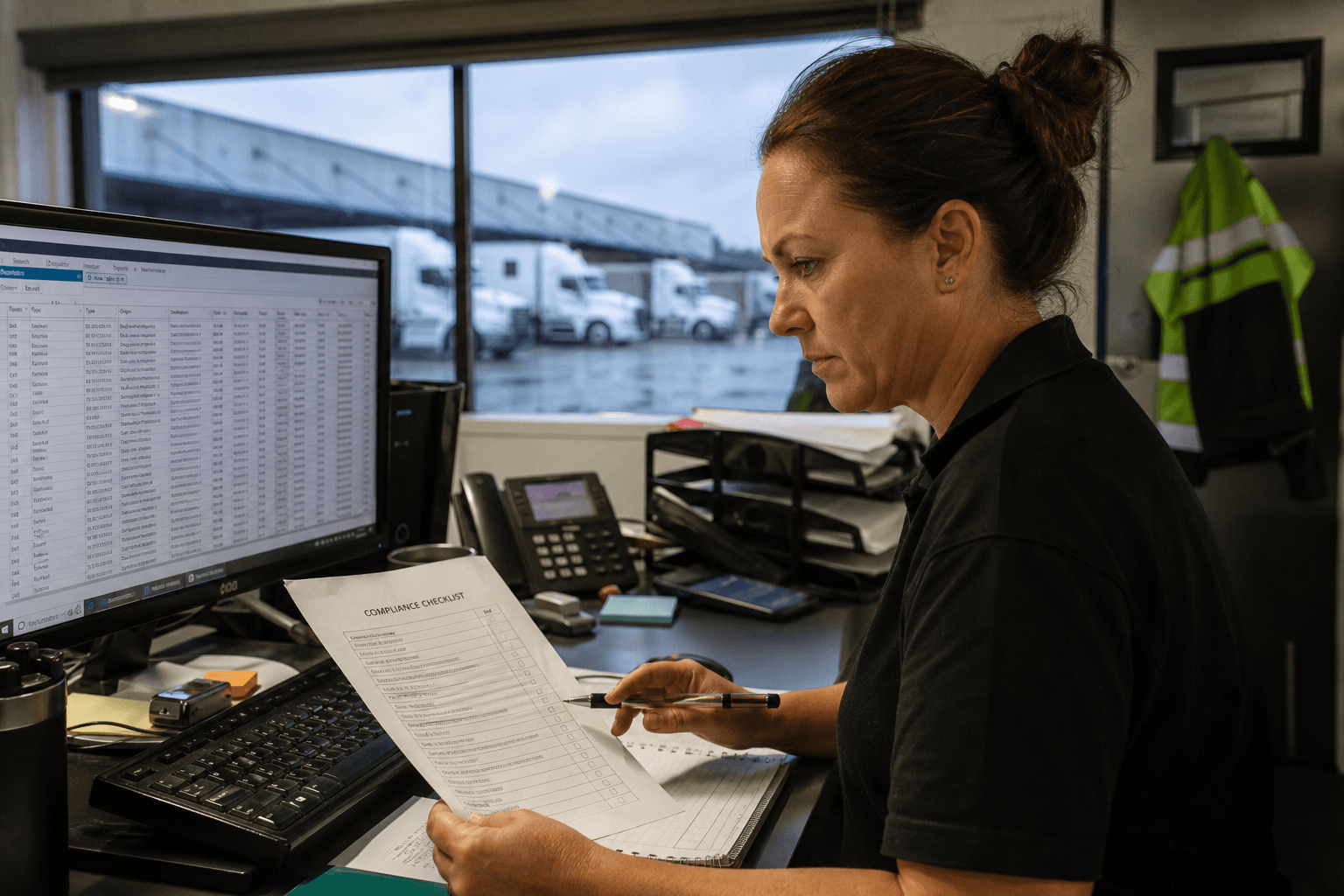
The customer's new requirements include:
- Real-time shipment tracking via API
- Per-consignment emissions data
- Monthly performance dashboards (on-time, damage, cost per unit)
- EDI integration for order and invoice exchange
The 3PL's 12-year-old TMS can't do any of this. The customer gives them 6 months to comply. A large consultancy quotes $400K and 9 months. Off-the-shelf platforms can replace the TMS but can't handle their complex rating engine and subcontractor management. The clock is ticking.
Scenario: Emissions Compliance
A carrier with $200M revenue hits the AASB S2 reporting threshold in FY28. They need Scope 3 emissions reporting across 300 owned vehicles and 60 subcontractors.
They don't have data science capability. Their telematics data sits in a vendor's cloud with no export API. Their subcontractors use paper-based processes. The compliance team is two people.
They need someone who can build the data pipeline, calculate the emissions, and produce audit-ready reports — not a slide deck about "digital transformation."
Why the Mid-Market Needs a Different Approach
Enterprise AI engagements follow a pattern: 3-month strategy phase, 6-month build phase, 3-month rollout. Total: 12+ months, $500K+. This works when you have dedicated project teams, clean data infrastructure, and budget runway.
Mid-market logistics operators need:
Faster Time to Value
They can't wait 12 months. The contract renewal is in 6 months. The emissions deadline is in 9 months. The competitor who can provide real-time tracking is winning contracts now.
Lower Entry Cost
$500K is a non-starter. But $40K-$100K for a focused project that solves a specific, measurable problem? That's within reach.
Practical, Not Theoretical
Strategy documents and roadmaps have their place, but mid-market operators need working solutions. Something they can show their customer, not a PowerPoint about what they could theoretically build.
Works With What They Have
They can't rip and replace their TMS. They can't hire a data engineering team. Solutions need to integrate with their existing systems and be operated by their existing people.
How to Close the Gap
1. Start With One Problem
Don't try to "do AI." Try to solve one specific, costly problem.
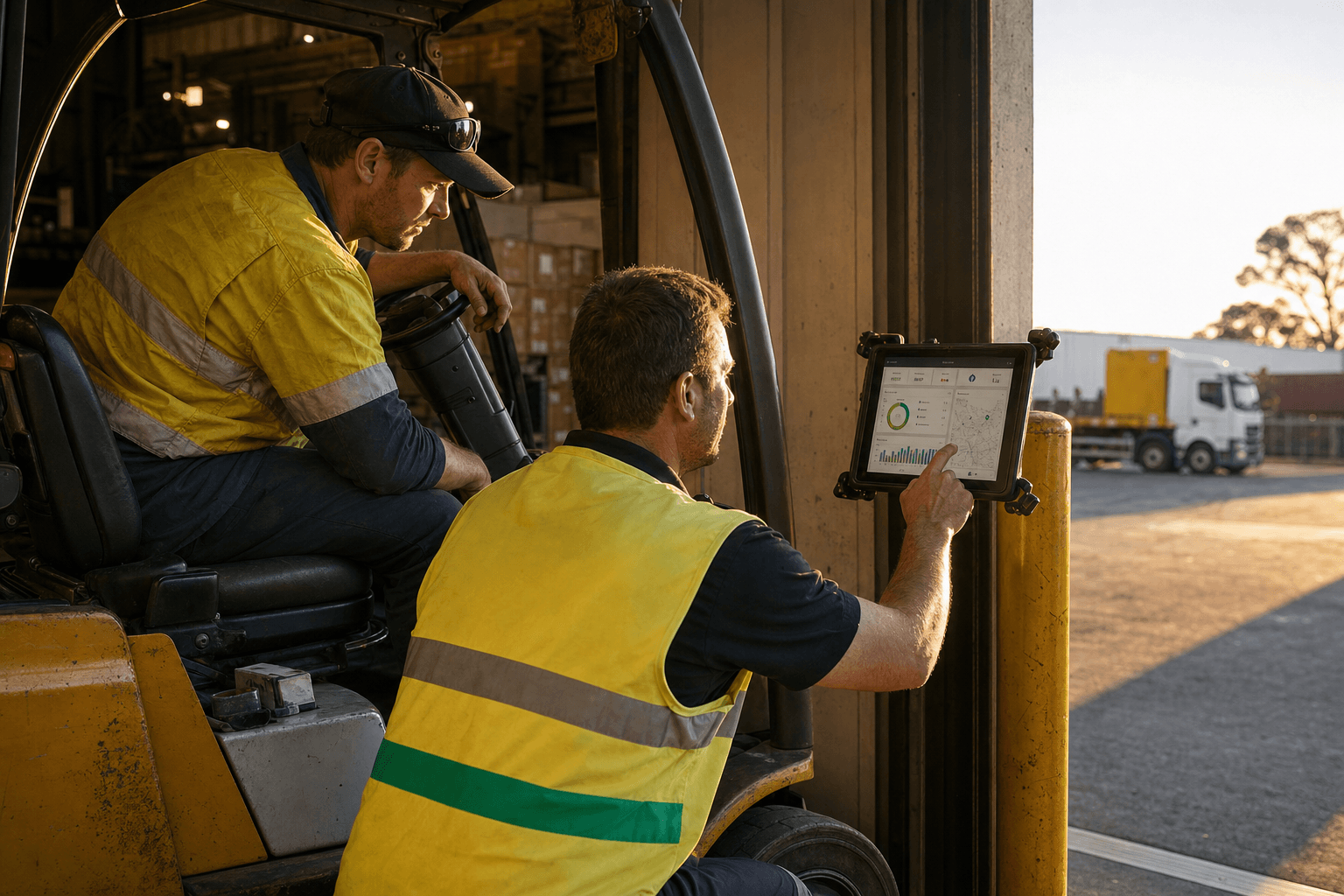
Good starting points:
- "We can't provide real-time tracking to our biggest customer" → build a visibility layer
- "We're spending 80 hours per quarter on emissions reporting" → automate the pipeline
- "Our admin team keys the same data into 3 systems" → document intelligence
- "Our routes are planned by gut feel" → route optimisation
2. Measure Before You Build
Before spending anything, quantify the problem:
- How much does this cost in staff hours?
- How much revenue is at risk?
- What's the error rate and cost of errors?
These numbers justify the investment and set the success criteria.
3. Build Incrementally
The most successful mid-market AI projects follow a pattern:
Week 1-4: Assessment and data integration Week 5-8: Build core solution and test against real data Week 9-12: Deploy, train, and validate Ongoing: Measure results and expand
Total investment for a focused project: $40,000-$100,000. Payback: typically within 6-12 months.
4. Integrate, Don't Replace
Build on top of existing systems. Add APIs, data pipelines, and new capabilities alongside the systems your team already knows. The TMS keeps running. The WMS keeps running. New capabilities layer on top.
5. Own the Result
Mid-market operators should own the solutions built for them. No ongoing platform fees, no vendor lock-in. The code, models, and data pipelines are yours.
If you're operating in this mid-market space, start by understanding where your biggest operational inefficiencies lie through an AI readiness assessment. For many operators, immediate wins come from route optimisation to reduce fuel costs and delivery times, or document intelligence to automate manual paperwork processing.
The Competitive Advantage
The mid-market AI gap is temporary. Over the next 3-5 years, the operators who close it first will have:
- Retained their best contracts by meeting modern capability requirements
- Attracted new customers who need technology-capable logistics partners
- Built data assets that compound in value (better models, better decisions, better forecasts)
- Reduced costs through automation and optimisation
- Met compliance requirements without hiring additional staff
The operators who wait will face a harder transition later — with worse data, less time, and customers who've already moved on.
The gap is closable. The question is whether you close it now, when you have time and choice, or later, when you're forced to.
Ready to close the AI gap at your mid-market logistics operation? We work specifically with Australian carriers, 3PLs, and warehouse operators to implement practical AI solutions that deliver measurable results. Get in touch to discuss how we can help you move beyond spreadsheets and manual processes.
Zero Footprint
The Zero Footprint team — AI modernisation for Australian logistics.