Measuring AI ROI Beyond Cost Savings in Australian Logistics
Many Australian logistics operators focus solely on cost reduction when measuring AI ROI, missing broader value creation opportunities. A comprehensive framework captures revenue growth, risk mitigation, and competitive advantages that AI delivers across logistics operations.

Measuring AI ROI Beyond Cost Savings in Australian Logistics
Many logistics operators in Australia focus on cost reduction when evaluating AI return on investment. While immediate savings are important, this narrow view overlooks AI's ability to generate revenue, reduce business risks, and create strategic advantages. A comprehensive ROI framework captures the full impact of AI investment across your operations.
Why Traditional ROI Measurement Falls Short
Traditional ROI calculations emphasise tangible cost savings because they're straightforward to quantify. However, this approach misses AI's broader value creation across multiple business dimensions that compound over time.
In Australian logistics, AI delivers value through six key areas that extend beyond immediate cost reduction:
- Revenue generation through enhanced service capabilities
- Risk reduction across operational and compliance areas
- Competitive positioning in the market
- Speed of decision-making and operational response
- Employee productivity and job satisfaction improvements
- Customer experience enhancement and retention
Our AI readiness assessment helps logistics operators identify where AI can create value beyond simple cost cutting.
Revenue Uplift: Quantifying Growth Opportunities
AI enables logistics operators to win new business and expand existing contracts through enhanced capabilities. Revenue uplift occurs when AI-powered services allow you to bid for contracts that were previously beyond your technical reach.
Contract Win Rate and Value
Track the number and value of contracts won where AI capabilities provided a competitive advantage. This includes tenders requiring real-time tracking, API integrations, or advanced analytics capabilities.
Document instances where AI-powered visibility, predictive delivery windows, or automated reporting justified premium pricing compared to basic service offerings.
Customer Expansion Revenue
Existing customers often increase their engagement when you demonstrate advanced capabilities. Track revenue growth from current customers who expand volumes or add services after AI implementation.
Monitor opportunities where AI insights reveal additional service possibilities like specialised handling, value-added logistics, or enhanced reporting requirements.
Risk Reduction: The Hidden Value of AI
Risk reduction represents significant but often unquantified ROI. AI systems help mitigate operational, financial, and compliance risks that could otherwise result in costly incidents or penalties.
Operational Risk Mitigation
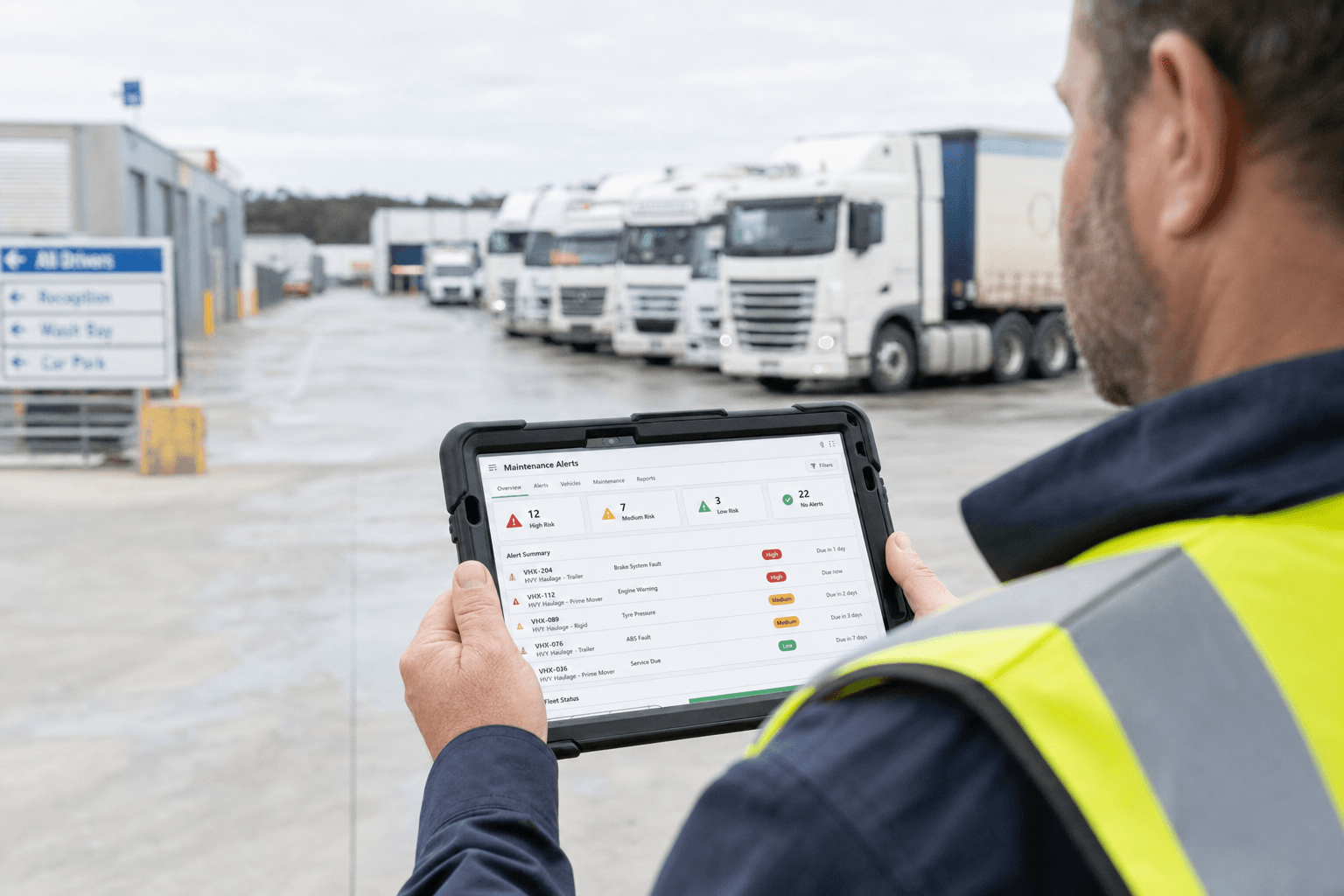
Document avoided costs from incidents AI helps prevent. This includes route optimisation reducing vehicle wear and accident risk, predictive maintenance preventing costly breakdowns, and automated compliance checking avoiding violations.
Track near-miss events where AI systems flagged potential issues before they became problems. Record the frequency and potential impact of these interventions to build a picture of ongoing risk reduction.
Compliance Risk Management
With regulations like AASB S2 emissions reporting becoming mandatory for Australian businesses, AI systems that ensure compliance represent significant avoided risk. Consider the potential cost of non-compliance, including penalties, audit expenses, and reputational impact.
Our emissions reporting solutions help Australian logistics operators maintain audit-ready records while reducing manual compliance workload.
Insurance Considerations
Some insurers recognise the risk reduction benefits of AI-powered fleet monitoring and safety systems. While policies vary, track any premium discussions or claims improvements that correlate with AI implementation.
Competitive Positioning Value
AI creates competitive advantages that are challenging to quantify but crucial for long-term success. These strategic benefits compound over time as they influence market position and customer relationships.
Market Differentiation
Document instances where AI capabilities differentiated your business in competitive situations. This includes RFP responses where technology features were evaluation criteria, customer retention when competitors lacked similar capabilities, and industry recognition related to innovation.
Response Time Advantage
Measure how quickly you can respond to new customer requirements or market opportunities compared to manual processes. Document examples where AI-powered agility allowed you to capture opportunities that required rapid response.
Speed-to-Insight Benefits
AI dramatically reduces the time required to generate actionable insights from operational data. This acceleration creates measurable business impact through faster decision-making and problem resolution.
Decision Cycle Time
Track how AI reduces the time from identifying an issue to implementing a solution. Compare pre and post-AI timelines for common decisions like route adjustments, capacity planning, and resource allocation.
Reporting Efficiency
Measure time savings in generating customer reports, management dashboards, and compliance documentation. AI systems often reduce manual reporting from hours to minutes, freeing staff for higher-value activities.
Workforce Impact and Productivity
AI's impact on workforce satisfaction and productivity creates ROI through improved retention, enhanced efficiency, and better job satisfaction in an industry facing labour shortages.
Staff Retention Considerations
Australian logistics faces significant recruitment and training challenges. Monitor whether AI implementation affects staff turnover, particularly in roles where AI eliminates repetitive tasks and allows focus on strategic work.
Track recruitment costs and time-to-productivity for new hires in AI-enhanced roles compared to traditional positions.
Productivity Beyond Cost Savings
While productivity improvements often translate to cost savings, they also enable growth without proportional staff increases. Consider revenue per employee trends before and after AI implementation to capture this scaling effect.
Customer Experience and Retention Value
Improved customer experience through AI translates to measurable business value through enhanced retention, referrals, and contract renewals.
Service Level Improvements
Track delivery performance, accuracy rates, and response times before and after AI implementation. Document how these improvements translate to customer satisfaction and contract performance bonuses.
Customer Feedback Integration
Monitor customer satisfaction scores and feedback related to AI-enhanced services. Track instances where improved visibility, communication, or reliability led to contract extensions or referrals.
Building Your ROI Framework
Developing a comprehensive AI ROI measurement approach requires establishing baseline metrics before implementation and tracking multiple value streams over time.
Start by identifying which value categories apply to your specific situation. Not every logistics operation will see benefits in all areas, but most will experience value beyond simple cost reduction.
Our route optimisation service includes ROI tracking support to help you measure the full impact of AI implementation on your operations.
Implementation Considerations
When building your ROI measurement framework, consider both immediate and long-term value creation. Some benefits, like improved competitive positioning, may take months or years to fully materialise.
Establish clear measurement protocols before AI implementation begins. This includes defining baseline metrics, setting tracking intervals, and identifying responsible team members for data collection.
Document both quantitative metrics and qualitative improvements to build a complete picture of AI's impact on your business.
Understanding the full value of AI investment helps justify continued development and expansion of AI capabilities across your logistics operations. A comprehensive ROI approach ensures you capture the complete business impact, not just the most obvious cost savings.
Ready to explore how AI can create value beyond cost reduction in your logistics operations? Get in touch to discuss your specific requirements and measurement approach.
Zero Footprint
The Zero Footprint team — AI modernisation for Australian logistics.