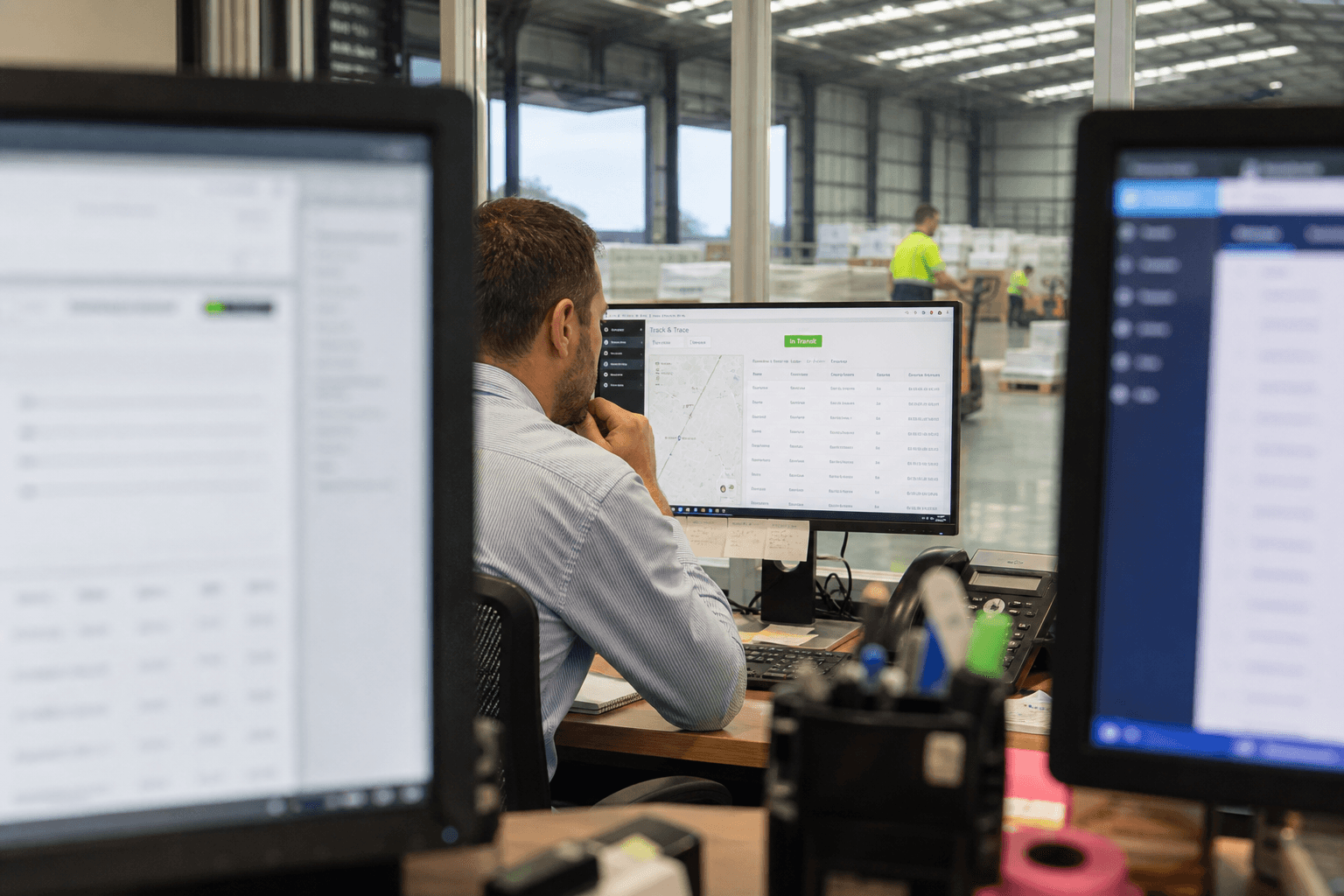
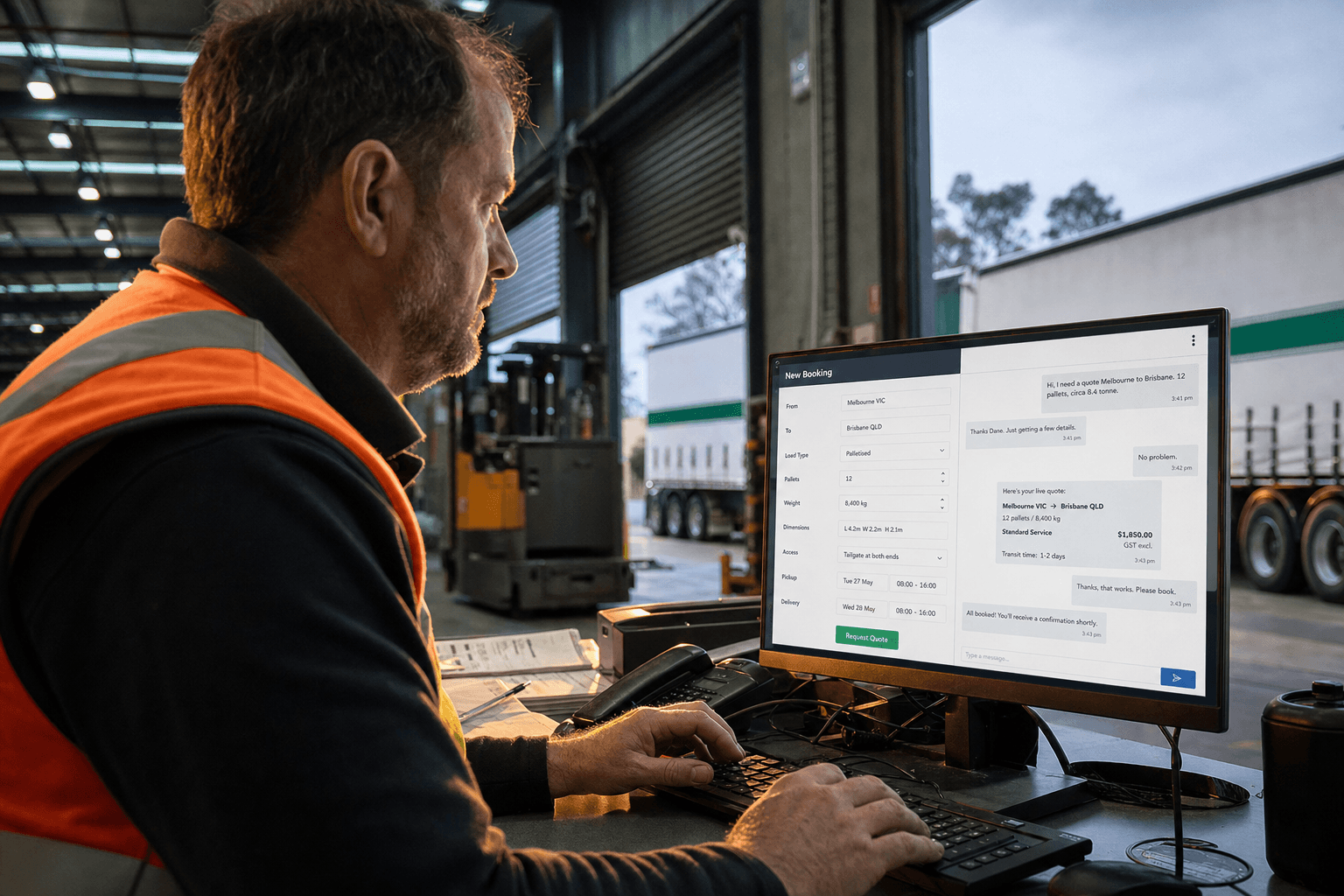
Proactive Exception Notification: AI-Driven Logistics Alerting
Proactive exception notification uses AI to flag freight delays, weather disruption, and capacity constraints before they escalate — but it only works once your TMS, WMS, and EDI data are properly integrated. Here's how the detection and mitigation pieces fit together.

What Is Proactive Exception Notification?
Proactive exception notification is the practice of using AI to flag freight, warehouse, or delivery problems as they form — rather than after a customer complains or a shipment is already late. It shifts exception handling from reactive firefighting to early detection, giving operations teams a window to intervene before a delay, damaged shipment, or missed SLA becomes unavoidable.
Most Australian carriers and 3PLs still manage exceptions the old way: a driver calls in, a customer emails asking where their freight is, or a dispatcher notices a truck hasn't moved in three hours. By the time someone knows there's a problem, the options for fixing it have usually narrowed. AI-driven alerting changes the timing of that discovery — not by predicting the future perfectly, but by surfacing patterns in freight, fleet, and system data that a human reviewing spreadsheets or dashboards manually would miss or catch too late.
How Does AI Detect Logistics Exceptions Before They Escalate?
AI detects logistics exceptions by continuously scanning operational data — GPS pings, ETAs, dock schedules, EDI messages, billing records — for patterns that deviate from what's normal for a given lane, customer, or time of day. This is fundamentally an anomaly detection problem: identifying unusual patterns in freight data, including potential billing errors, route deviations, or compliance exceptions, that would be missed in manual review.
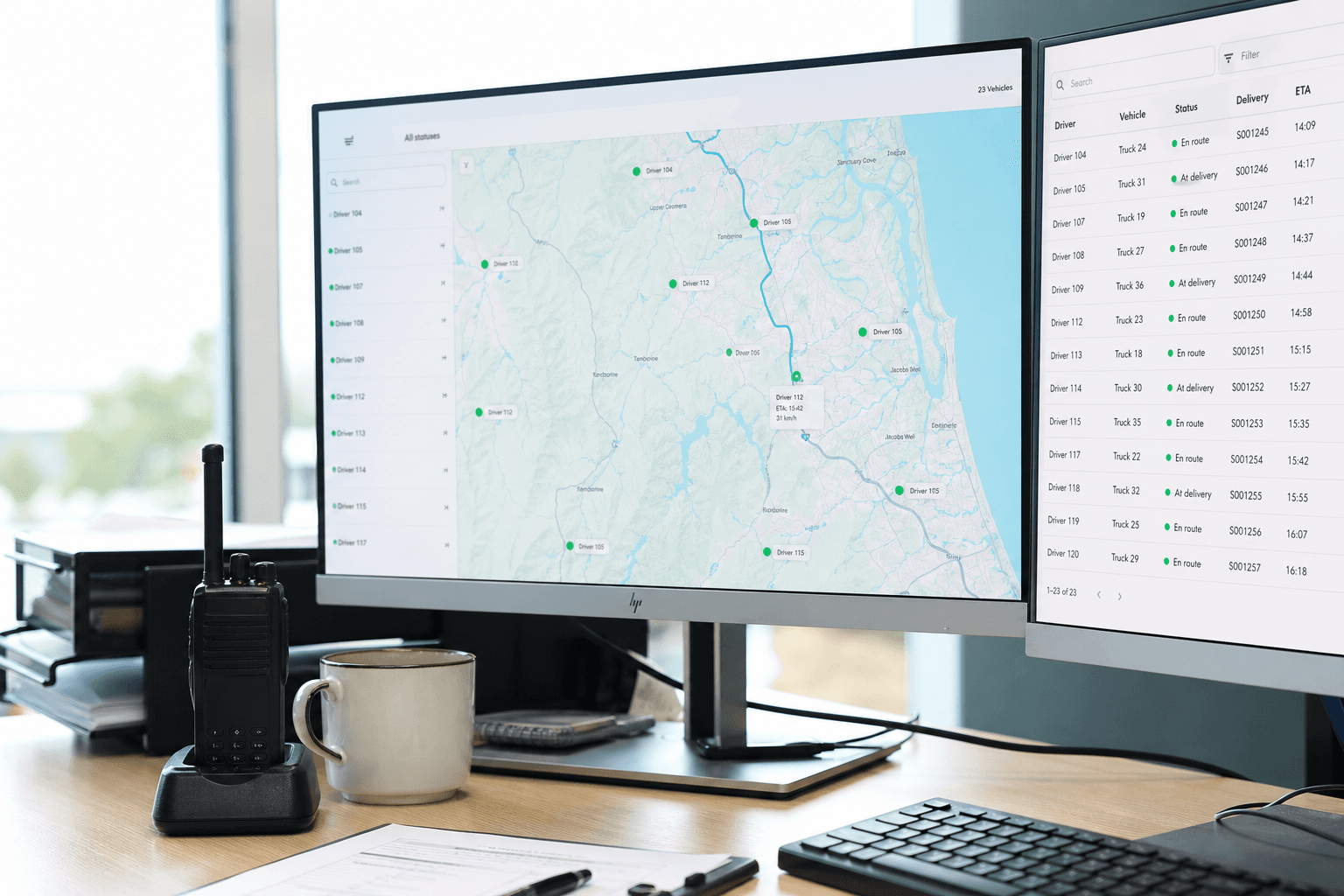
That detection capability is the foundation everything else in this article builds on. A system that can reliably spot "this shipment is behaving differently to how shipments on this lane normally behave" is the same underlying capability used to catch billing anomalies, flag a truck that's deviated from its planned route, or identify a compliance gap in a delivery record. Once that pattern-recognition layer exists, it can be pointed at different exception types — delays, weather disruption, capacity shortfalls — each requiring its own tuning but sharing the same core approach.
Delay Prediction
Delay prediction models compare a shipment's current progress against historical performance for similar routes, carriers, and conditions, flagging when a delivery is trending toward missing its window. Rather than waiting for a missed appointment, the model can surface a probability-based warning hours in advance, giving dispatch time to rebook a dock slot, notify the customer, or reroute.
The accuracy of these predictions depends heavily on how much clean historical data is available — which is why operators with years of TMS data in usable form tend to get more reliable signals than those relying on paper dockets or disconnected spreadsheets.
Weather Impact Assessment
Weather impact assessment layers external weather and road-condition data over your existing routes and schedules, so the system can flag shipments likely to be affected by a forecast event rather than only reacting once a driver reports a closed road. This is particularly relevant for regional Victorian and interstate freight corridors, where flooding, bushfire closures, or severe storms can shut down key routes with limited notice.
Used well, this doesn't replace a dispatcher's judgement — it gives them earlier visibility so decisions about rerouting or customer communication happen before the disruption hits, not after.
Capacity Constraint Detection
Capacity constraint detection is the monitoring of fleet, driver, dock, or warehouse capacity against forecast demand to identify bottlenecks before they cause missed pickups or overtime blowouts. For example, a system might flag that a distribution centre is trending toward exceeding dock capacity for a given afternoon, based on inbound booking patterns, before the yard actually backs up.
This kind of detection sits close to broader route optimisation work — both rely on having a real-time or near-real-time picture of where vehicles, drivers, and freight actually are, not just where a plan says they should be.
Automated Mitigation Suggestions
Automated mitigation suggestions are recommended actions — reroute this shipment, notify this customer, reassign this dock slot — generated once an exception is flagged, so the person handling it isn't starting from a blank page. This is the part of exception management that turns detection into action: the system doesn't just say "there's a problem," it proposes a starting point for the response.
It's worth being clear-eyed here: this typically works best as decision support, not full automation. A dispatcher or ops manager still makes the call, but they're making it with a shortlist of options rather than scrambling to work out what's even possible.
Why Proactive Alerting Depends on Your Data Foundation
Proactive exception notification isn't a bolt-on feature you install over messy systems — it's an end-state capability that depends on legacy TMS/WMS migration, system integration, and data consolidation being done first. AI tools for exception management, like those for route optimisation and demand forecasting, only work as well as the data feeding them.
If your TMS, WMS, and EDI systems don't talk to each other, or if key data still lives in spreadsheets and email threads, an alerting system has nothing reliable to detect anomalies against. This is why legacy system modernisation and data integration usually come before — or alongside — any exception alerting build, not after it.
Reactive vs Proactive Exception Handling
| Aspect | Reactive Exception Handling | Proactive Exception Notification |
|---|---|---|
| Trigger | Customer complaint or missed SLA | Pattern deviation detected in live data |
| Timing | After the problem has occurred | Before the problem fully materialises |
| Response options | Limited — damage control | Broader — reroute, rebook, notify early |
| Data requirement | Minimal | Clean, integrated TMS/WMS/EDI data |
| Staff experience | High stress, constant firefighting | Fewer surprises, more planning time |

Where Does This Fit in an AI Roadmap for Logistics?
Proactive exception alerting typically sits mid-to-late in a staged AI roadmap, after core data integration and reporting foundations are in place, and often alongside other applied use cases like document processing or emissions tracking. It's rarely the first thing an operator should build — it's what becomes possible once the groundwork is done.
That's why we start most engagements with an AI Readiness Assessment: it identifies where your data actually is, what's usable, and what needs fixing before an alerting or forecasting layer can produce trustworthy results. For operators dealing with paper-based dockets or scanned freight documents, document intelligence work often needs to happen in parallel, since exception detection is only as good as the underlying records it's checking against.
For more on how AI is being applied across Australian freight, warehousing, and 3PL operations, see our insights.
Get Started
If you're exploring how proactive exception alerting could fit into your operation — whether that's delay prediction, capacity monitoring, or better visibility into disruptions before they hit your customers — get in touch and we'll help you work out what's realistic given where your systems and data are today.
Zero Footprint
The Zero Footprint team — AI modernisation for Australian logistics.