Sustainability-Linked Loans: Using AI Emissions Data
Australian lenders are increasingly factoring ESG and emissions performance into credit decisions, which means carriers and 3PLs pursuing sustainability-linked financing need defensible, system-generated Scope 3 data — not manual spreadsheets. Here's how AI-integrated emissions tracking connects operational data to a genuine financing conversation.
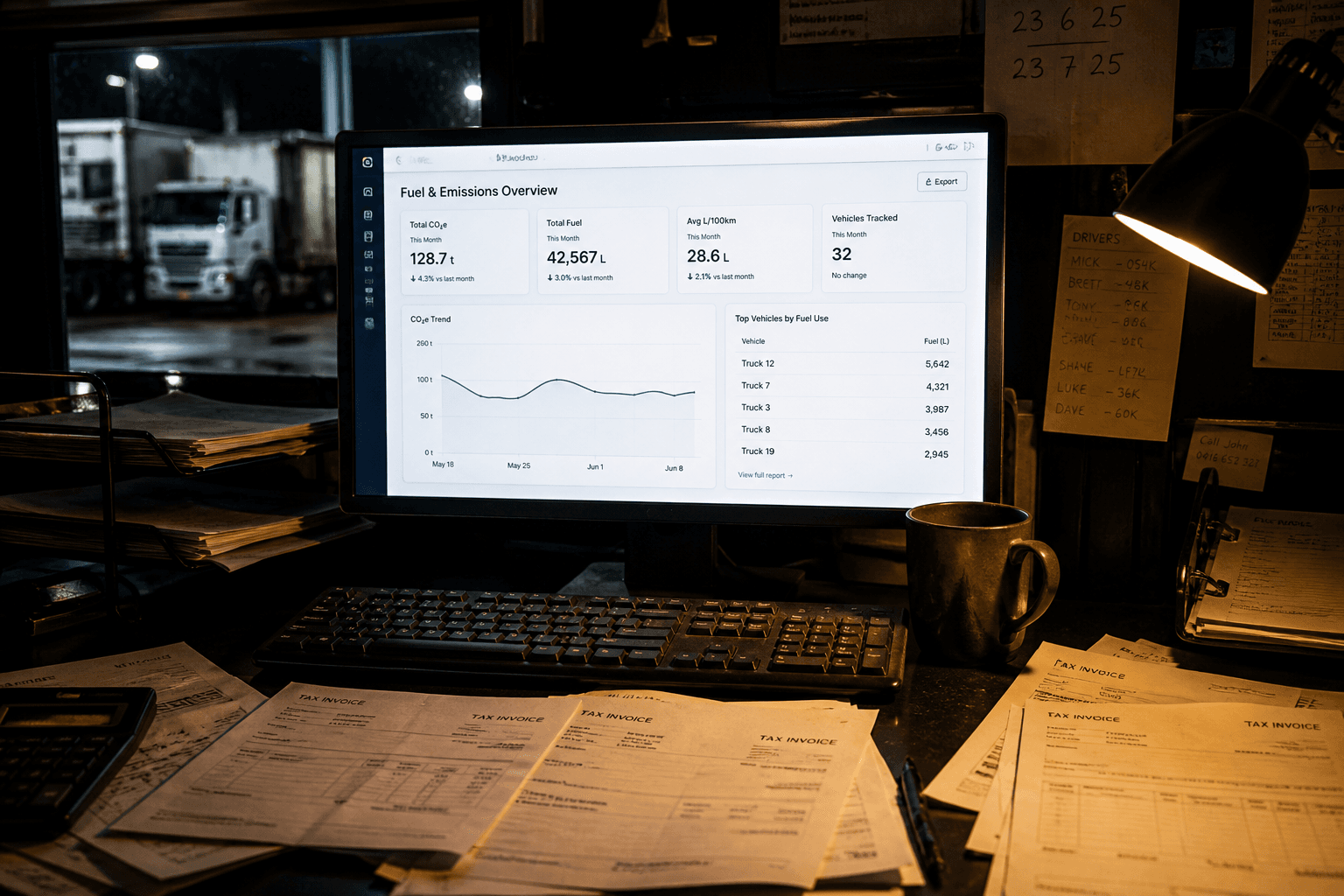
Australian lenders are starting to ask carriers and 3PLs a question many haven't had to answer before: can you prove your emissions numbers? As Scope 3 emissions logistics reporting becomes a credit and underwriting consideration rather than a sustainability nice-to-have, operators that can produce defensible, system-generated data are better positioned to negotiate favourable financing terms — and those relying on manual spreadsheets are not.
What is a sustainability-linked loan?
A sustainability-linked loan (SLL) is a financing facility where terms — typically the interest margin — are tied to the borrower meeting agreed sustainability performance targets, which can include emissions reduction. Unlike a green loan, which funds a specific green project, an SLL rewards overall improvement against KPIs. For a logistics operator, that KPI is often some measure of fleet or operational emissions intensity — which means the lender needs to trust the number behind it.
Why are Australian lenders factoring emissions into financing decisions?
Lenders and insurers are increasingly factoring ESG performance into credit and underwriting decisions, not as a marketing exercise but as part of how they assess risk and long-term viability. For mid-market carriers and 3PLs, this shows up as lenders asking harder questions during facility renewals, acquisition finance, or fleet lending — even for businesses not directly in scope of mandatory climate reporting.
This pressure compounds with the broader regulatory shift. AASB S2 requires Scope 3 disclosure for in-scope entities, and operators outside that direct scope still face indirect pressure from customers and lenders who need the data flowing through their own supply chains. If your bank, your biggest customer, and your insurer are all asking for the same emissions figures, it stops being a compliance side-project and starts being a genuine input into how your business is financed.
Why is Scope 3 data the hard part for carriers and 3PLs?
Scope 3 emissions typically represent the largest share of a logistics company's footprint, and they're also the hardest to measure, because the data depends on subcontracted carriers, owner-drivers and suppliers who may not track their own emissions at all. A carrier can have excellent visibility into its own fleet and still be unable to produce a credible Scope 3 figure if a third of its freight moves on subcontracted trucks with no telematics.
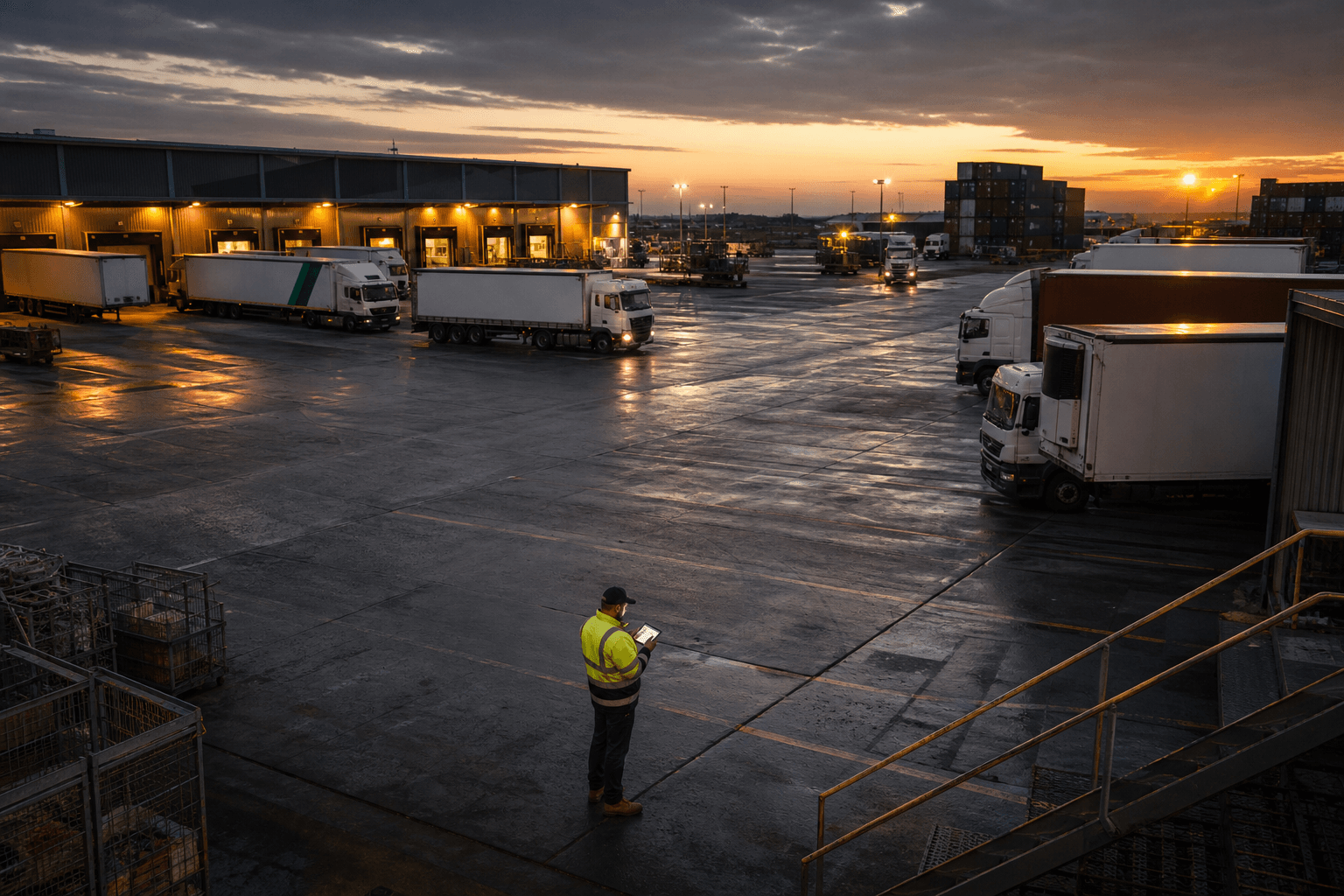
Producing an accurate, lender-ready number requires several data streams most businesses don't currently have in one place: vehicle-level fuel consumption data by job or lane, load factor and utilisation data, subcontractor and carrier emissions data, and accurate distance and route data. Most legacy TMS and WMS platforms were never built to capture any of this. Without it, emissions reporting defaults to manual estimation — spreadsheets, supplier self-reporting, and assumptions that don't hold up well under lender or auditor scrutiny.
What does an audit-ready emissions figure actually look like?
An audit-ready Scope 3 figure is one built from operational system data rather than retrospective estimation — it can be traced back to a specific job, lane, vehicle or subcontractor rather than an average applied across the whole fleet. That traceability is what a lender's credit team or an external auditor is actually looking for when they ask, "how did you arrive at this number?"
| Approach | Data source | Traceability | Lender/auditor confidence |
|---|---|---|---|
| Manual spreadsheet estimate | Supplier self-reports, fuel invoices, averages | Low — figures often aggregated at fleet or company level | Lower |
| AI-integrated emissions tracking | TMS/WMS, telematics, fuel systems, subcontractor data feeds | Higher — traceable to job, lane, vehicle | Higher |
This is a qualitative comparison, not a guarantee of outcome — every lender's underwriting process differs, and no operator should assume a particular financing result from improved data alone. But the direction of travel is consistent with how lenders assess risk more broadly: better evidence supports better conversations.
How does AI-driven emissions tracking support a financing conversation?
AI-driven emissions tracking turns scattered operational data — fuel consumption, route distance, load factors, subcontractor activity — into a continuously updated, system-generated emissions figure rather than a once-a-year manual reconciliation. That shift matters for financing because lenders and auditors are assessing not just the final number, but how it was produced and whether it can be reproduced consistently.
For a logistics operator pursuing a sustainability-linked facility, this means the emissions data used to set or report against a covenant comes from the same operational systems used to run the business day-to-day — not a separate compliance exercise bolted on at reporting time. That consistency is itself part of what makes a number defensible.
Where do single-purpose compliance tools fall short?
Some vertical compliance tools can calculate Scope 1-3 emissions and generate audit-ready reports, which is a legitimate starting point for a business that just needs a compliance output. The limitation is that these tools typically sit apart from the operational systems — fleet, routing, warehouse — that actually generate the underlying data, which means an operator with a messy legacy TMS or WMS still has to do significant manual work to get clean inputs into the tool in the first place.
For carriers and 3PLs, the more durable approach connects emissions calculation directly to the operational data already flowing through dispatch, routing and warehouse systems — so the emissions figure improves as the underlying operations data improves, rather than remaining a standalone reporting task. This is also where route optimisation and document intelligence work intersects with emissions reporting: better lane and utilisation data serves both the operational and the compliance conversation.
How should carriers and 3PLs get started?
Most mid-market operators don't need to build a full sustainability-linked loan strategy on day one. The practical starting point is an honest assessment of what emissions and operational data you can currently produce, where the gaps are (subcontractor data is usually the biggest one), and what it would take to make your Scope 3 figures system-generated rather than manually assembled.
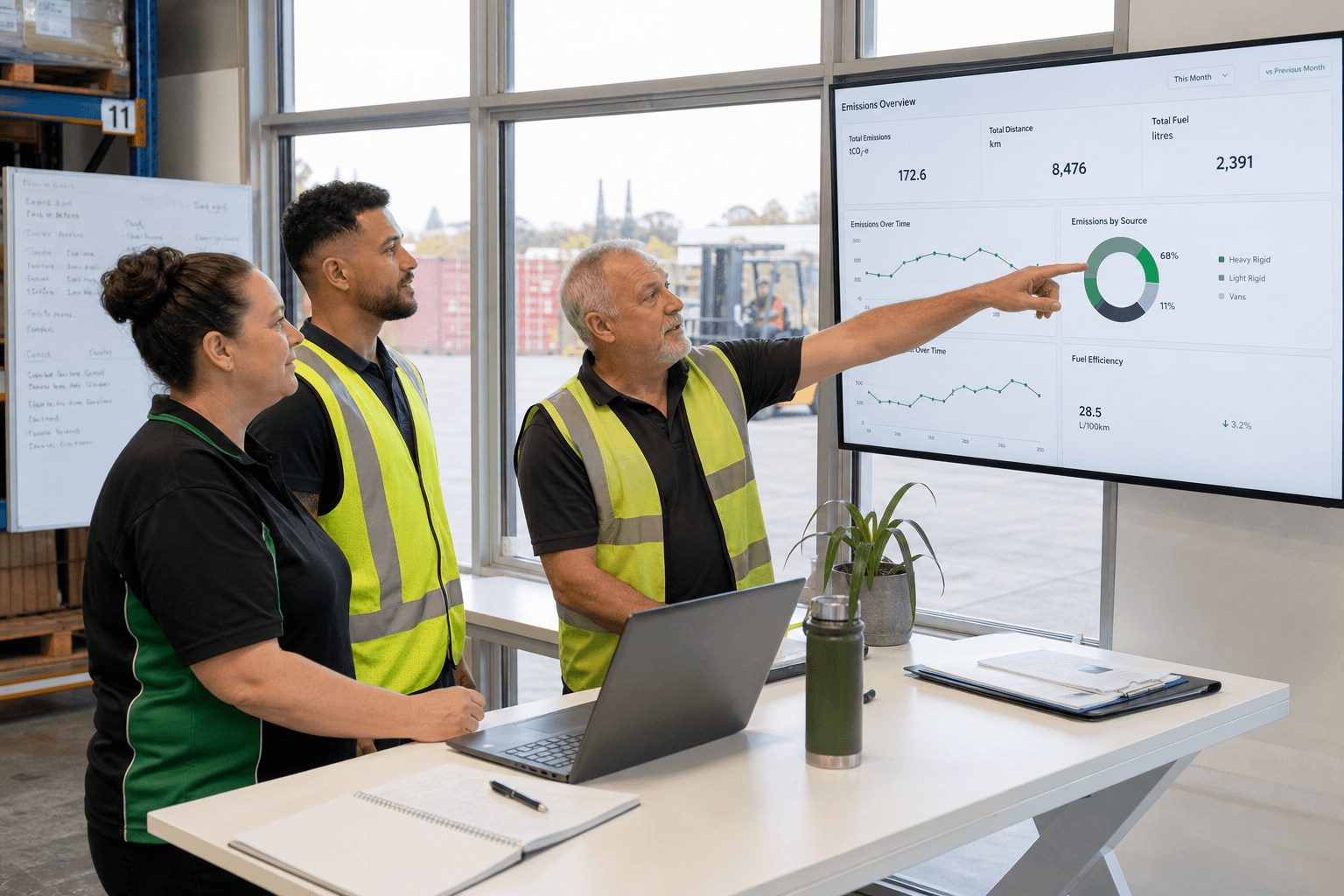
An AI Readiness Assessment is designed to surface exactly that — a clear picture of your current data maturity against what AASB S2 and lender-grade reporting actually require, before you commit to a larger build. From there, operators often move into a dedicated emissions reporting capability that integrates fleet, routing and subcontractor data into one defensible figure.
For more on the compliance timeline driving this, read our other pieces in our insights, including coverage of the AASB S2 reporting deadlines and what they mean for mid-market logistics businesses.
If you're exploring how better emissions data could support an upcoming financing conversation or covenant requirement, we can help — starting with an honest look at where your data stands today.
Zero Footprint
The Zero Footprint team — AI modernisation for Australian logistics.