5 AI Use Cases Delivering ROI in Australian Warehouses Right Now
Not theoretical. Not experimental. Five AI applications that are delivering measurable ROI in Australian warehouse operations today.
Beyond the Hype
There's a lot of noise about AI in warehousing. Autonomous mobile robots, digital twins, drone inventory counting, fully automated dark stores. Most of it is real — at enterprise scale with $10M+ budgets.
For mid-market Australian warehouse operators (1-10 sites, 50-500 staff), the practical AI opportunities are different. They're less flashy but they're delivering ROI today, with existing infrastructure and realistic budgets.
Here are five that work.
1. Demand Forecasting for Inventory Management
The problem: You're either overstocked (tying up cash and warehouse space) or understocked (losing sales and damaging customer relationships). Your forecasts are based on last year's numbers plus gut feel.
What AI does: Analyses historical order patterns, seasonal trends, promotional calendars, and external signals (weather, economic indicators, industry events) to predict demand by SKU, by location, 2-12 weeks ahead.
Real result: A Melbourne-based 3PL running 3 temperature-controlled warehouses reduced overstock by 22% and stockout events by 45% after implementing AI demand forecasting. The model paid particular attention to weather-driven demand patterns for fresh produce — something their manual forecasting couldn't capture.
Investment: $40,000-$80,000 implementation. ROI: 6-9 months through reduced carrying costs and fewer lost sales.
What you need: 12+ months of order history by SKU and location. The more history, the better the model.
2. Pick Path Optimisation
The problem: Your pickers are walking too far. In a standard warehouse, pickers spend 50-60% of their time walking between pick locations. The pick sequence is determined by the WMS — usually in location order, which isn't the shortest path.
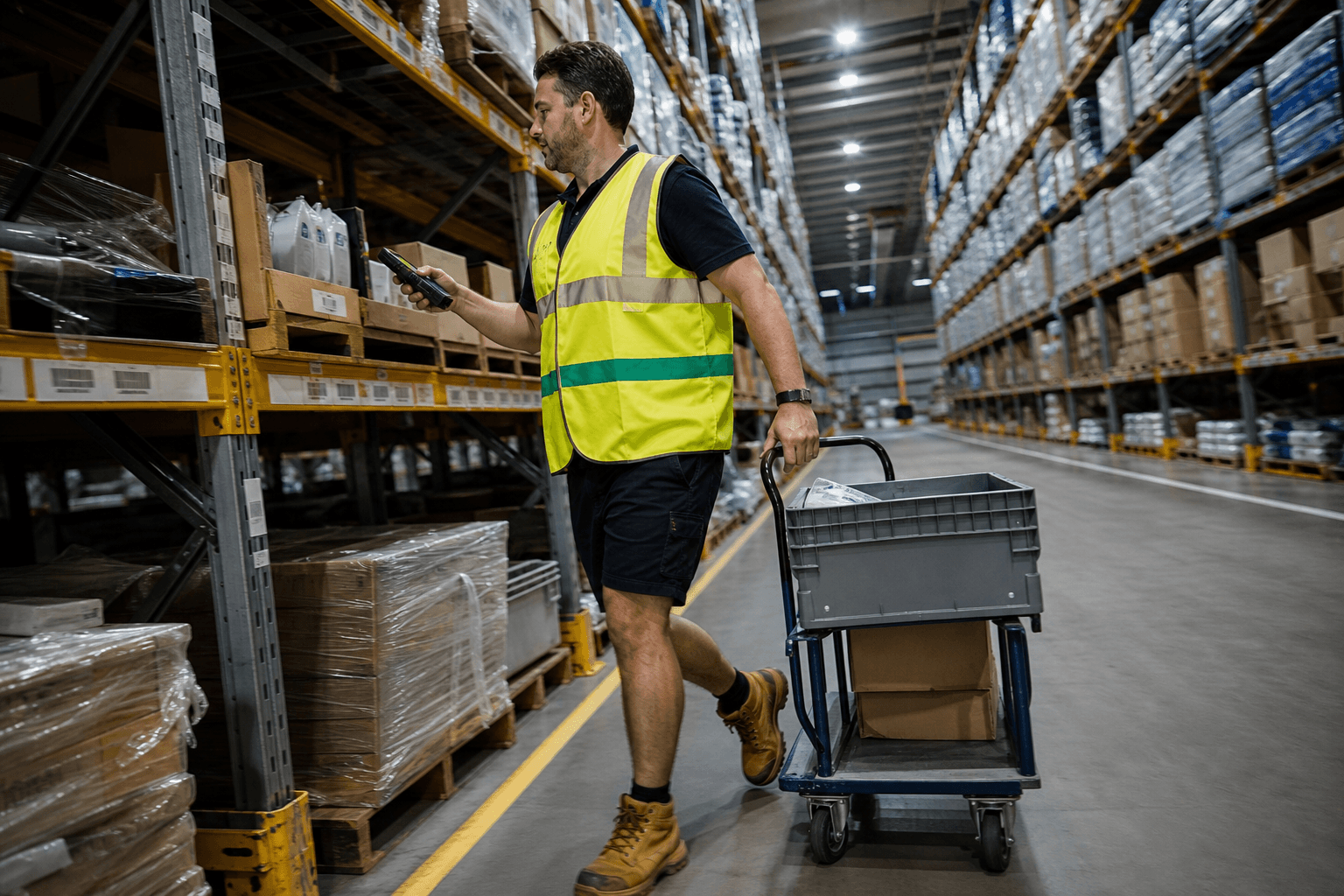
What AI does: Optimises pick sequences to minimise travel distance, considering warehouse layout, pick density, and batch compatibility. For wave-based picking, it also optimises how orders are grouped into waves.
Real result: A distribution centre handling 3,000 picks per day reduced average pick time by 18% through path optimisation. No changes to racking, no new hardware — just smarter sequencing. That 18% translated to handling the same volume with 3 fewer pickers per shift.
Investment: $30,000-$60,000 implementation (requires warehouse layout mapping). ROI: 3-6 months through labour savings.
What you need: Digital warehouse layout (or willingness to map it), WMS with pick data export, and a willingness to change pick sequencing logic.
3. Receiving and Putaway Optimisation
The problem: Inbound goods go to the first available location. Over time, fast-moving SKUs end up scattered across the warehouse, slow-movers occupy prime pick faces, and your layout makes less sense every month.
What AI does: Analyses pick frequency, velocity patterns, product relationships (items frequently ordered together), and physical characteristics to recommend optimal storage locations. Fast movers go to ergonomic, accessible positions. Co-ordered items go near each other. Seasonal stock gets positioned ahead of demand.
Real result: A spare parts warehouse with 15,000 SKUs reorganised its layout based on AI-optimised slotting. Average picks per hour increased by 25% and pick errors dropped by 40% (because pickers weren't reaching, bending, or navigating confusion areas as often).
Investment: $25,000-$50,000 for initial analysis and implementation. ROI: 3-6 months through productivity gains.
What you need: Pick history data (which SKUs are picked how often), product master data (dimensions, weight), and warehouse layout.
4. Computer Vision for Quality Inspection
The problem: Manual quality inspection at receiving is slow and inconsistent. Your team checks a percentage of incoming goods, misses damage on the items they don't check, and the process creates a bottleneck at the dock.
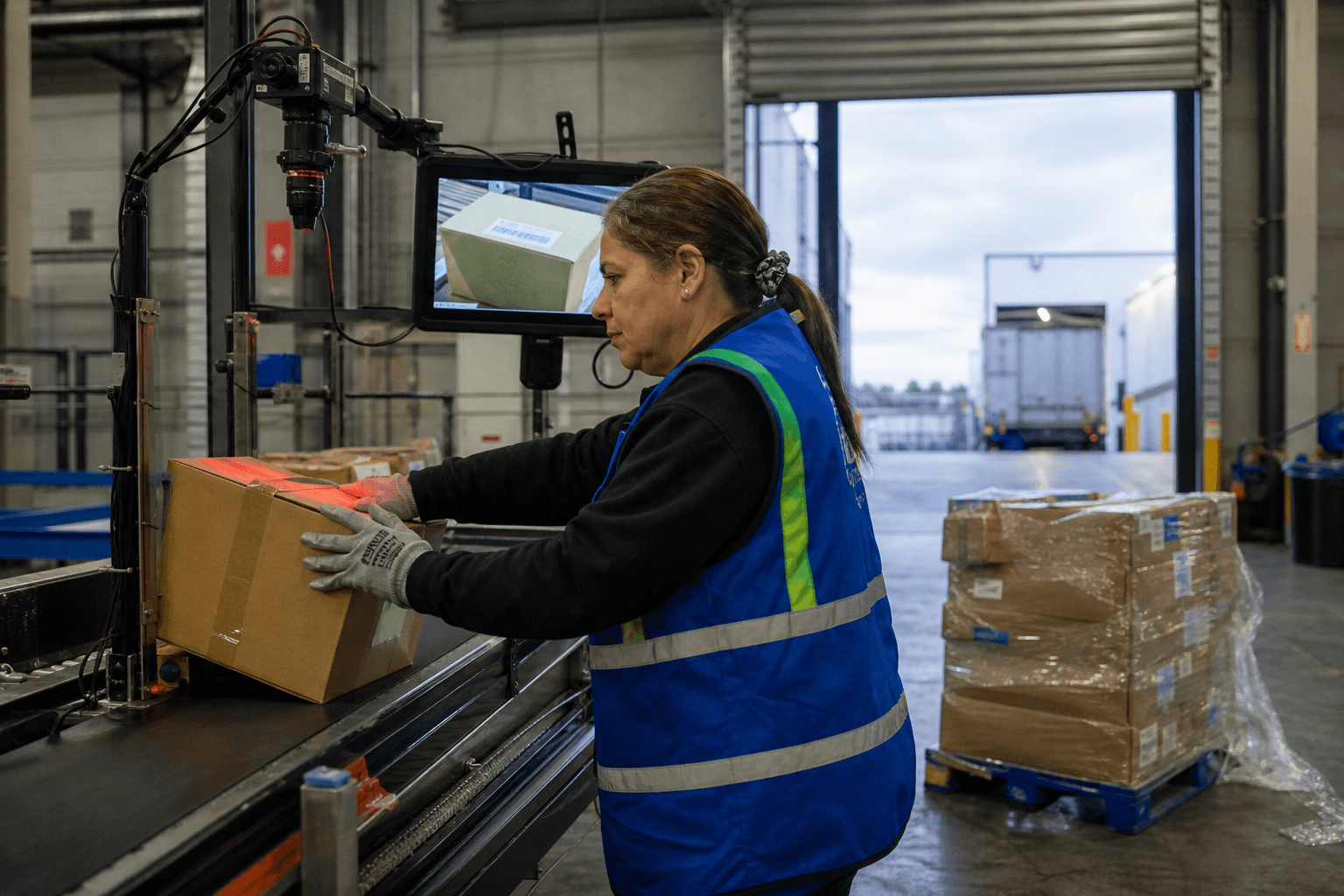
What AI does: Cameras at receiving stations capture images of incoming goods. Computer vision identifies visible damage (dents, tears, crushed packaging, water damage), counts items against the ASN, and verifies labelling. Damaged or discrepant goods are flagged for human review.
Real result: A cold chain warehouse reduced receiving inspection time by 60% and caught 30% more damage incidents (items that manual inspection was missing). The system paid for itself in 4 months through reduced customer claims for damaged goods that had been received and stored without detection.
Investment: $50,000-$100,000 (cameras + software + model training). ROI: 4-8 months through reduced damage claims and faster receiving.
What you need: Receiving stations where cameras can be mounted, consistent lighting, and a willingness to run the system in parallel for 4-6 weeks during training.
5. Labour Planning and Scheduling
The problem: You're either overstaffed (paying people to stand around) or understaffed (missing SLAs and paying overtime). Shift planning is done weekly based on averages, not actual expected demand.
What AI does: Predicts daily/hourly labour requirements based on expected inbound volumes, outbound orders, and value-added services. Generates optimised shift schedules that match labour supply to demand by hour of day.
Real result: A 3PL operating a contract logistics warehouse reduced labour costs by 12% while improving SLA compliance from 94% to 98%. The key was shifting from fixed weekly schedules to AI-optimised schedules that flexed with actual demand patterns.
Investment: $30,000-$60,000 implementation. ROI: 3-6 months through reduced overtime and improved staff utilisation.
What you need: 6+ months of daily throughput data, current shift schedules and costs, and a workforce that can flex (casuals, staggered start times, or cross-trained staff).
Ready to explore AI opportunities in your warehouse operations? Our AI readiness assessment helps identify the most practical AI applications for your specific operation and budget. We also specialise in route optimisation and custom AI solutions designed for Australian mid-market warehouse operators.
How to Choose Your First Project
| If your biggest problem is... | Start with... |
|---|---|
| Too much or too little inventory | Demand forecasting (#1) |
| Pickers are too slow | Pick path optimisation (#2) |
| Warehouse layout is chaotic | Putaway optimisation (#3) |
| Damage claims are high | Computer vision inspection (#4) |
| Labour costs are unpredictable | Labour planning (#5) |
Pick one. Measure the result. Use the ROI to fund the next one.
Identify the right AI project for your warehouse →
Want to identify which AI applications could deliver ROI in your warehouse operation? We work with Australian warehouse operators to implement practical AI solutions that work with existing infrastructure and realistic budgets. Get in touch to discuss your specific requirements and explore opportunities that make sense for your operation.
Zero Footprint
The Zero Footprint team — AI modernisation for Australian logistics.