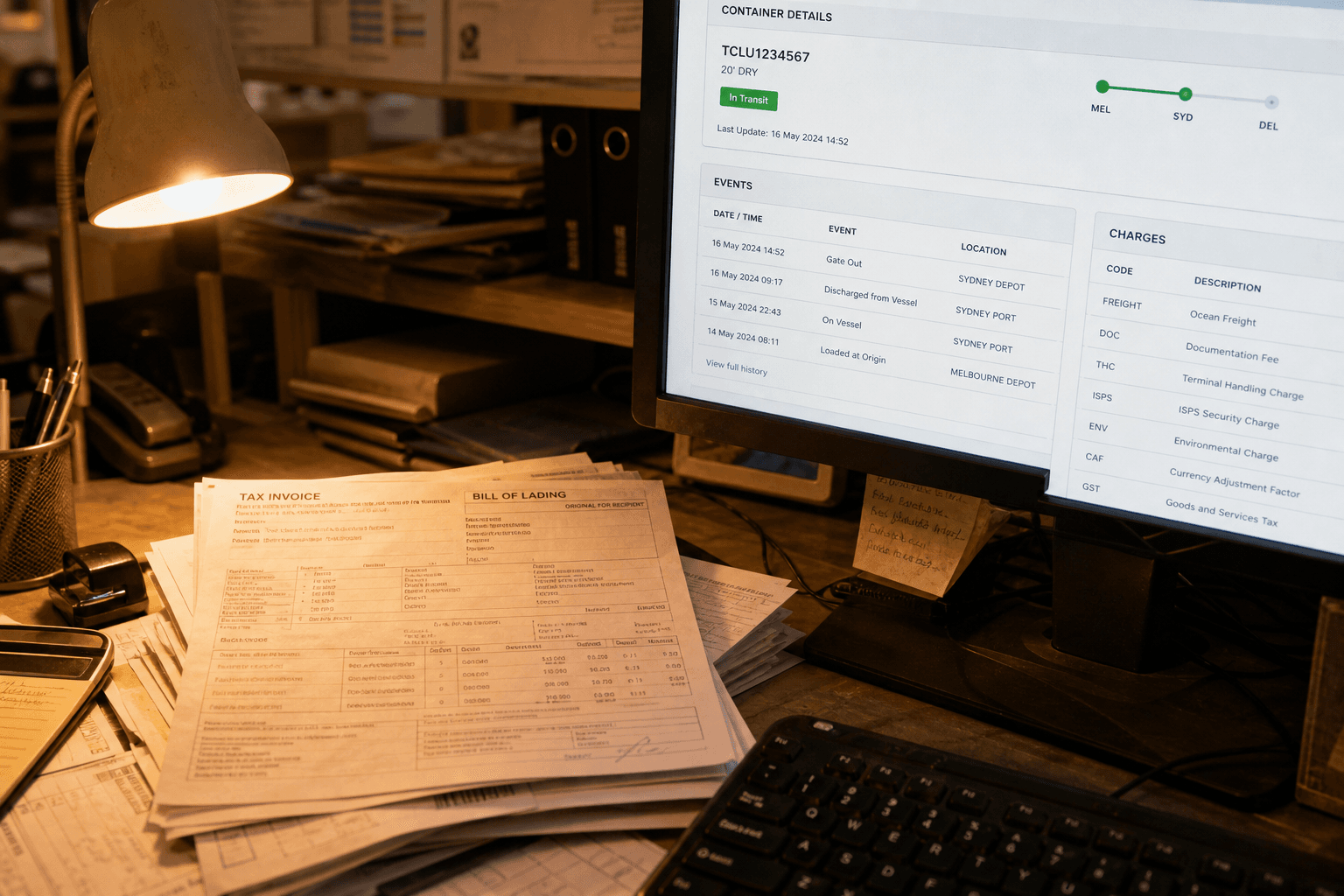
AI-Assisted Container and Slot Booking for Freight Forwarders
AI-assisted container and slot booking uses AI to match freight bookings against carrier schedules and capacity, confirming allocations automatically and flagging conflicts before they cause delays. This piece explains what it is, why manual booking processes break down, and how it can be layered onto an existing TMS without a full system replacement.
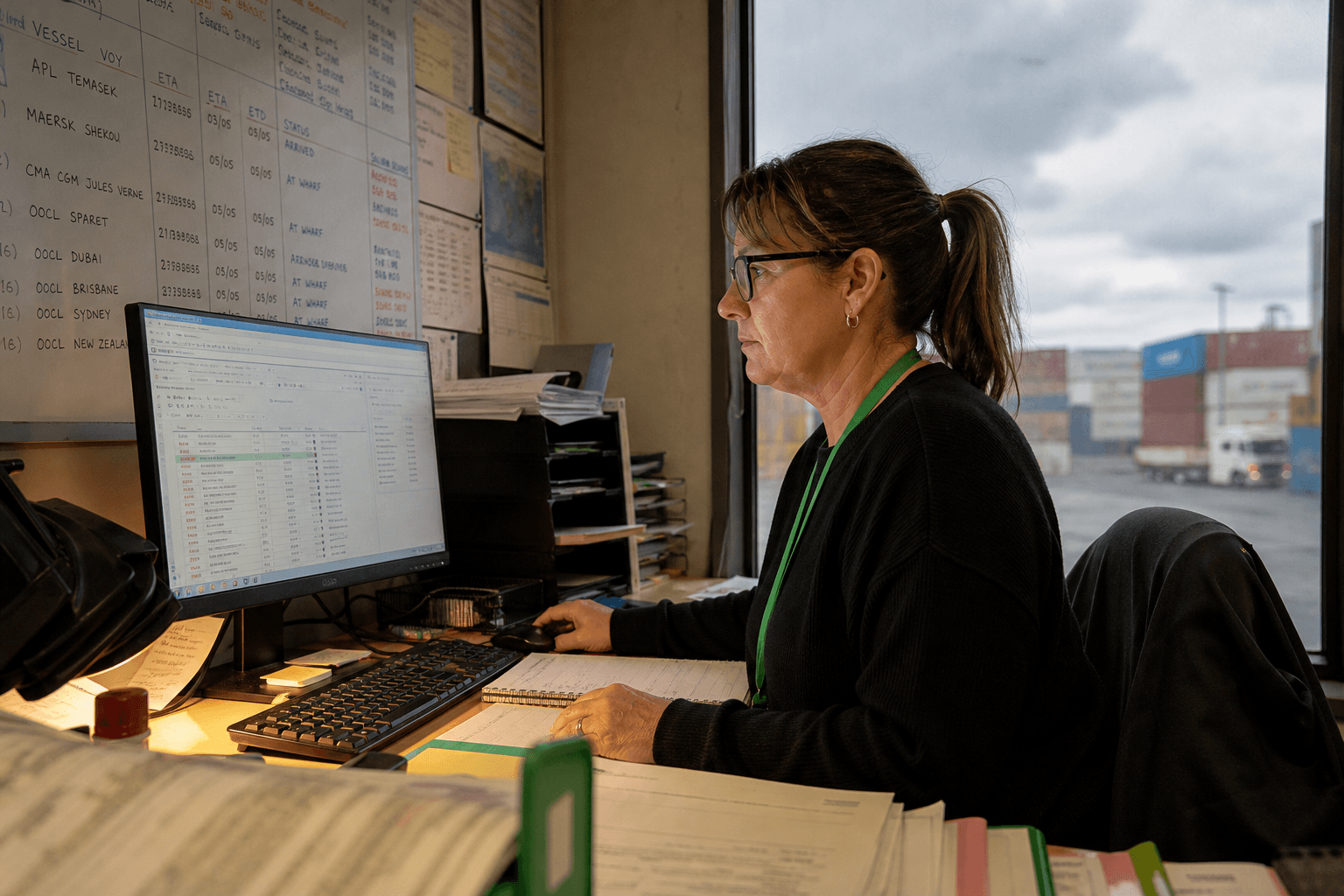
AI-assisted container and slot booking allocation is the use of artificial intelligence to match incoming freight bookings against shipping line schedules and available container capacity, confirm allocations automatically, and flag conflicts — such as double-bookings, missed cut-off times, or capacity shortfalls — before they affect a shipment. It's one of the more practical applications of AI in logistics right now, because it targets a specific, repetitive reconciliation task rather than trying to reinvent the booking process itself.
Freight forwarders juggle shipping line schedules, container availability, and customer booking requests across multiple carriers, often through a mix of spreadsheets, email, and ageing booking portals. When a slot allocation is missed or a conflict goes unnoticed, the result is a delayed shipment or a missed sailing — and an awkward phone call to the customer. For forwarders managing dozens of bookings a week across multiple shipping lines, AI isn't about replacing the booking process. It's about removing the manual reconciliation step that currently eats up staff time and introduces errors.
What is AI-assisted container and slot booking allocation?
In practice, this means software that reads booking requests, cross-checks them against carrier sailing schedules and space allocations, and surfaces exceptions for a human to resolve — rather than requiring a planner to manually reconcile every line. The AI isn't making judgement calls on customer priority or commercial terms. It's handling the data-matching work that a person would otherwise do by hand, and only escalating the cases that genuinely need attention.
This is part of a broader shift in Australian logistics AI toward automating structured, repetitive workflow steps rather than replacing entire platforms — a pragmatic approach that fits businesses running legacy systems with limited in-house technical resources.
Why do manual booking processes break down?
Manual booking allocation breaks down because it depends on a person correctly cross-referencing multiple data sources — carrier schedules, customer requirements, container stock, and cut-off times — often under time pressure, with no automated check for conflicts. The more bookings a forwarder handles, the higher the chance something is missed.
Common failure points include: booking requests sitting in an inbox past a carrier's cut-off time, two customers being allocated the same limited slot, container type or size mismatches only discovered at the terminal gate, and schedule changes from the shipping line not being reflected in internal records. Each of these is individually small, but at volume they add up to missed sailings, demurrage costs, and customer complaints — exactly the kind of operational friction that erodes margin in an already thin-margin business.
How can AI automate booking confirmations?
AI can automate booking confirmations by extracting booking details from emails, portals, or EDI messages, validating them against carrier schedules and available capacity, and issuing a confirmation or exception flag without manual re-keying. This reduces the administrative load on operations staff and shortens the time between a booking request and a confirmed allocation.
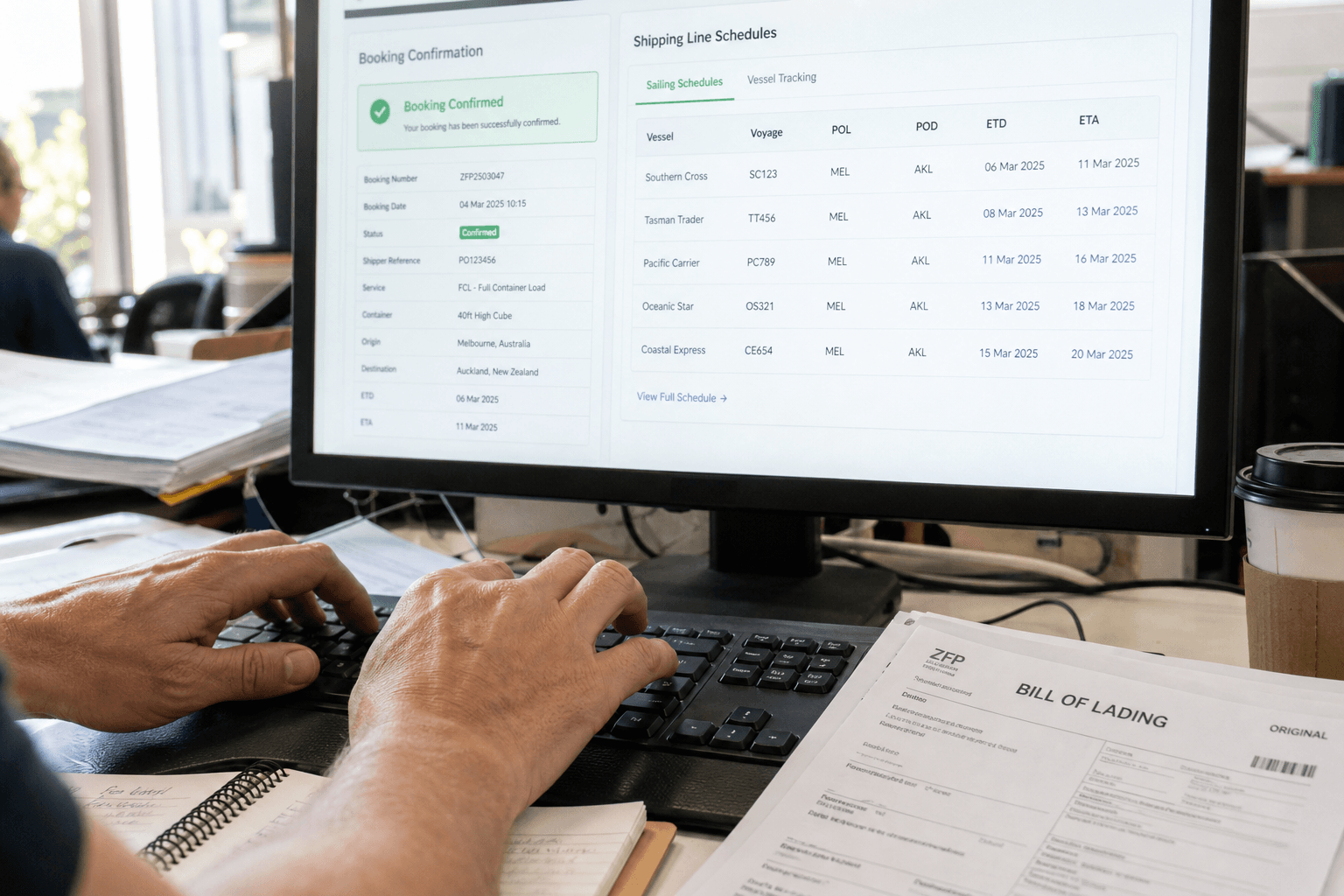
This is a natural extension of a pattern already proven across logistics operations: using AI to automate structured but repetitive workflow steps on top of existing systems. The same underlying logic applies to emissions reporting, where AI extracts and validates data from supplier invoices and carrier documents instead of booking confirmations — the mechanics of extraction, validation, and exception-flagging carry across use cases. Let the system handle the data matching, and let staff focus on the judgement calls.
How does AI flag booking conflicts before they cause delays?
AI flags booking conflicts by continuously comparing confirmed and pending bookings against carrier schedules, capacity limits, and cut-off times, raising an alert as soon as a mismatch appears rather than waiting for a human to notice it. This shifts conflict detection from reactive (after a missed sailing) to proactive (before the booking is finalised).

For a freight forwarder, the practical value is time. A planner who would otherwise need to manually check every booking against every carrier update can instead review a short list of flagged exceptions — the bookings that actually need attention — while routine, conflict-free allocations proceed without intervention. The same principle underpins route optimisation work we do with road freight operators: surface the exceptions that need a human decision, automate the rest.
Does this mean replacing our existing TMS?
No — in most cases, AI-assisted booking allocation can be layered onto an existing transport management system (TMS) rather than requiring a full platform replacement. AI can be used to automate specific manual workflow steps — such as order entry, allocation, or document processing — on top of legacy systems that are five, ten, or more years old.
This matters for freight forwarders running older or heavily customised TMS platforms, where a full system replacement is costly and disruptive. The more pragmatic path is usually to identify the specific manual steps causing the most friction — booking reconciliation, slot allocation, conflict checking — and target those with AI, while leaving the rest of the platform intact. An ai readiness assessment is the usual starting point: it maps exactly where those friction points sit before recommending any change, so you're not paying for capability you don't need.
Manual vs AI-assisted booking allocation
| Aspect | Manual process | AI-assisted process |
|---|---|---|
| Booking confirmation | Staff manually cross-check requests against carrier schedules | System matches requests to schedules and confirms automatically where no conflict exists |
| Conflict detection | Identified when a problem surfaces (often at the terminal or cut-off) | Flagged earlier, as soon as a mismatch is detected in the data |
| Staff involvement | Required for every booking, regardless of complexity | Reserved for flagged exceptions and judgement calls |
| Error source | Manual re-keying and cross-referencing under time pressure | Reduced re-keying; errors shift to data quality and integration issues |
| System footprint | Existing TMS plus spreadsheets and email | Existing TMS, layered with AI on top of current workflows |
The table isn't a promise of a specific outcome — every forwarder's booking volume, carrier mix, and system setup is different. What's consistent across the logistics operators we've worked with is that the manual reconciliation step is the first place worth targeting, because it's the one causing the most avoidable delay.
If you're running booking allocation across multiple carriers with a legacy TMS and manual cross-checking, it's worth understanding where the friction actually sits before committing to any platform change. For more insights into how AI applies across freight forwarding, 3PL, and warehouse operations, see more insights on our blog. To talk through whether this fits your operation, get in touch.
Zero Footprint
The Zero Footprint team — AI modernisation for Australian logistics.