AI-Powered Backhaul Matching to Reduce Empty Running Costs
AI-powered backhaul matching reduces empty running by analysing your existing TMS data to surface return-leg freight matches in near real time. Here's how it works, what data it needs, and the common barriers to adoption for Australian freight operators.
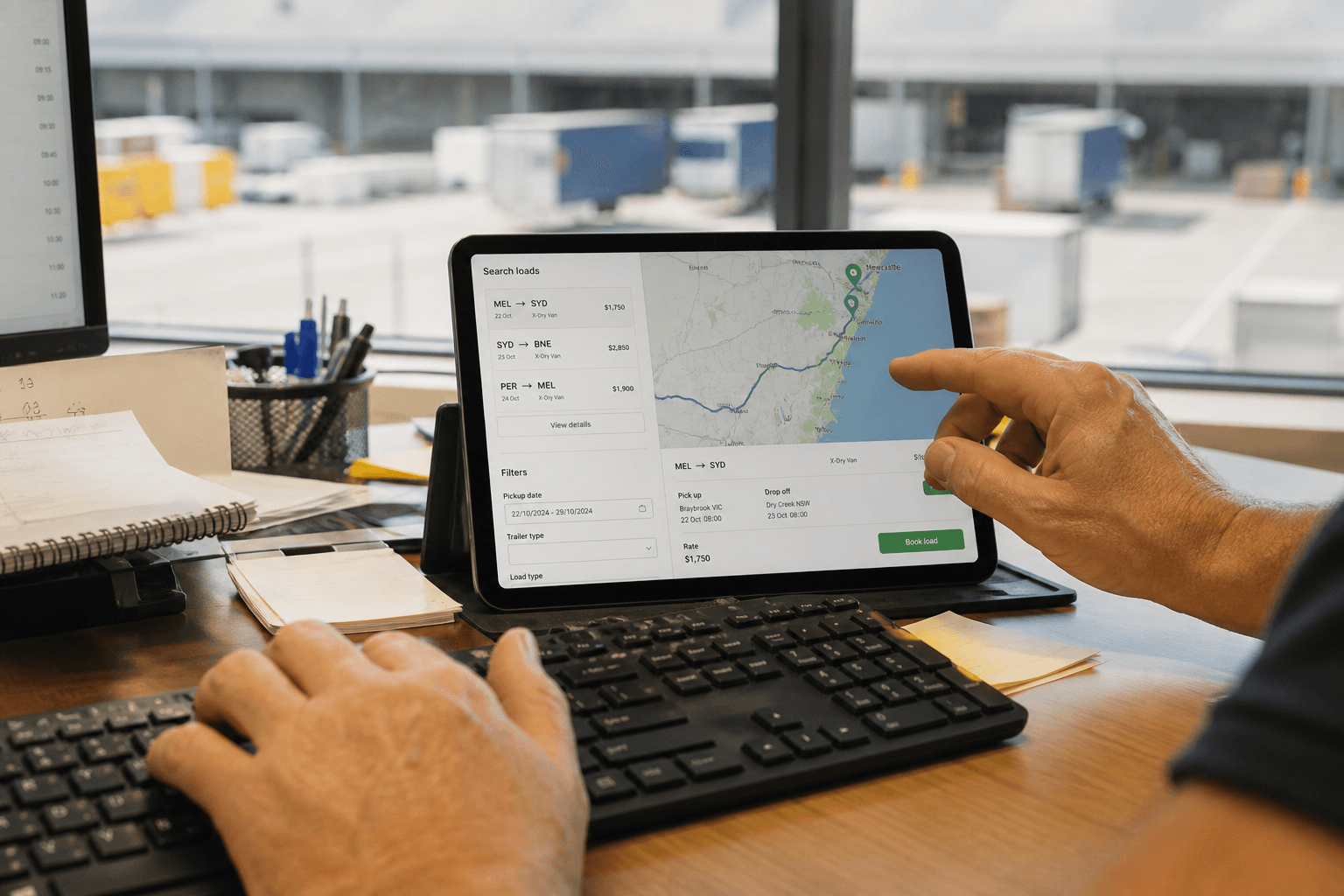
AI-powered backhaul matching reduces empty running by continuously scanning the booking, vehicle and delivery data you already hold in your TMS, then surfacing viable return-leg freight matches in near real time — without replacing the systems or the dispatchers you rely on today. That's the core of it. The rest of this article explains what backhaul matching actually involves, what data it needs, and how it fits alongside the processes you already run.
Empty running is one of the most persistent cost leaks in Australian road freight, and it's largely preventable. AI in logistics is increasingly being applied to a problem that's existed since the first truck left a depot without a return load: how do you fill the deadhead leg of a trip without burning hours on the phone chasing freight?
What Is Backhaul Matching and Why Does It Matter?
Backhaul matching is the process of pairing an outbound freight movement with a return-leg load so a vehicle doesn't travel empty after delivery. Deadhead kilometres are the distance a truck travels without a revenue-generating load on board — typically the return trip after a one-way delivery.
Every deadhead kilometre still costs fuel, driver hours, tyre wear, maintenance and insurance, but earns nothing. For fleets running regional or interstate lanes, backhaul gaps are often the single biggest drag on cost-per-kilometre — and the easiest to overlook because they're baked into "how we've always run this route."
How Much Does Empty Running Cost Australian Freight Operators?
The exact scale of empty running varies by vehicle class, lane and season, but it's a well-documented structural inefficiency in the Australian freight task. The National Transport Commission (NTC) and the Australian Bureau of Statistics (ABS) both publish data on heavy vehicle use and freight productivity that consistently points to a meaningful share of truck kilometres being run without load, particularly on regional and one-directional freight corridors.
This isn't unique to any one operator — it's a structural feature of freight networks where demand is directional (for example, freight flowing into a region for retail distribution with less return-leg demand). What AI changes isn't the existence of the problem, it's how quickly and consistently operators can identify and act on backhaul opportunities that would otherwise be missed in a manual booking process. The same underlying discipline — mining data you already have for decisions you're currently making by gut feel — is what underpins route optimisation more broadly, not just backhaul matching.
How Do AI Matching Algorithms Work With Existing TMS Data?
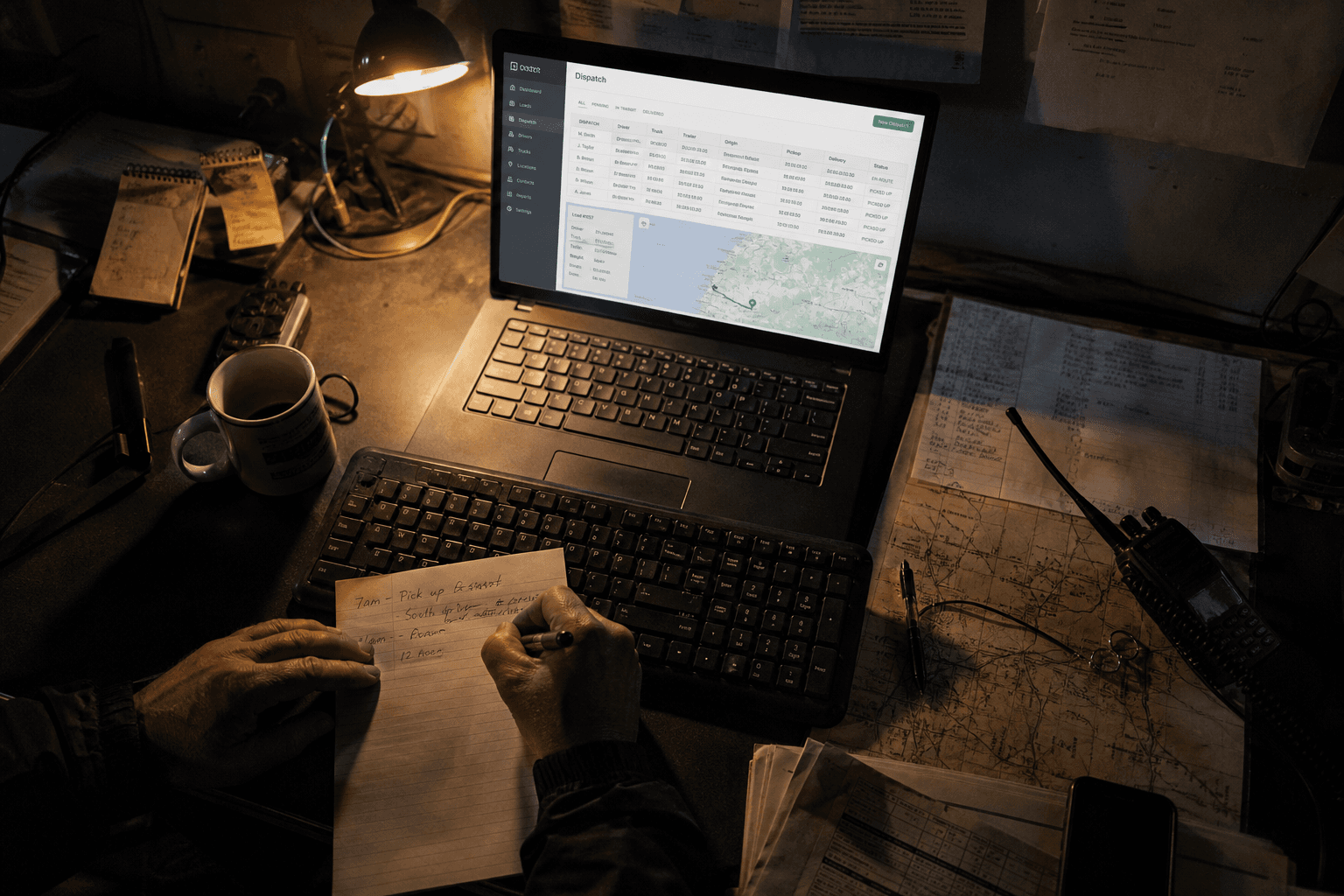
AI backhaul matching works by continuously analysing data you already generate — bookings, delivery locations, vehicle availability, freight type and timing windows — from your existing TMS, and surfacing viable return-leg matches in near real time. It doesn't require replacing your TMS; it sits alongside it, reading and enriching the data you already capture.
In practice, this means the system ingests consignment notes, delivery schedules, vehicle and trailer compatibility (temperature control, pallet capacity, hazardous goods certification), and historical lane patterns. It then scores potential backhaul opportunities against constraints like time windows, driver hours-of-service limits, and customer SLAs, and ranks matches for a dispatcher to action — rather than trying to fully automate the booking decision.
The quality of matching is directly tied to data quality. Operators with clean, structured TMS data see faster, more reliable matches. Operators with fragmented data — paper dockets, inconsistent address formats, manual freight descriptions — typically need a data cleanup phase first, which is often where a document intelligence layer helps by extracting structured data from PODs, consignment notes and freight manifests automatically.
Manual vs AI-Powered Backhaul Matching
| Factor | Manual backhaul booking | AI-powered matching |
|---|---|---|
| Speed of identifying a match | Hours to days, dependent on dispatcher availability | Near real-time, continuous scanning |
| Scope of search | Limited to known contacts and regular partners | Broader pool across the operator's own network and booked freight |
| Consistency | Varies by dispatcher experience and workload | Consistent application of constraints every time |
| Data requirements | Works with existing phone/email processes | Needs structured TMS data, improves with data quality |
| Visibility for reporting | Limited, often undocumented | Trackable, auditable match history |
This is a directional comparison, not a guarantee of specific improvement — actual outcomes depend on your fleet's lane mix, freight mix and existing data maturity.
What Data Do You Need to Get Started?
Getting backhaul matching working well starts with an honest look at your current data, not a new software purchase. At minimum, operators need consistent capture of pickup/delivery locations and time windows, vehicle and trailer specifications, freight type and weight, and driver hours availability.
Most mid-market operators we speak with already have this data — it's just scattered across a legacy TMS, spreadsheets, and driver phone calls rather than structured in one place. This is typically the first thing an ai readiness assessment uncovers: not a lack of data, but a lack of structure and connection between the systems already in use. Reducing empty running also has a secondary benefit worth noting for operators under AASB S2 pressure — fewer deadhead kilometres means a smaller fuel-related Scope 1 footprint, which feeds directly into the kind of data you'll need for emissions reporting obligations.
Common Barriers to Backhaul Matching Adoption
The most common barrier isn't technology — it's trust and workflow fit. Dispatchers who've booked freight manually for years are rightly cautious about a system suggesting matches they haven't personally vetted, particularly around customer relationships and freight compatibility.
The practical fix is to treat AI matching as a ranked recommendation tool, not an autonomous booking engine, at least initially. Dispatchers keep the final call on which match to accept, which customer relationships to prioritise, and which freight combinations make sense operationally. Over time, as trust in the match quality builds, more of the routine decisions can be handled with less manual review — but that's a maturity curve, not a day-one switch.
The other common barrier is data fragmentation across legacy systems that were never designed to talk to each other. This is solvable, but it's worth diagnosing properly before committing to a build — which is exactly what a structured readiness assessment is for, rather than guessing at scope upfront.
Where to Start
If empty running is a known cost centre in your network but you're not sure how much of it is addressable with the data you already have, the sensible first step is a short, scoped assessment rather than a full platform build. It tells you where your data stands, what's realistic to automate first, and what the likely sequencing looks like for your fleet and lanes.
For more on how AI fits into Australian freight operations more broadly, see our more insights on the topics operators are asking us about most.
If backhaul matching, route optimisation, or emissions reporting are on your radar for the year ahead, get in touch and we'll talk through what's realistic for your operation.
Zero Footprint
The Zero Footprint team — AI modernisation for Australian logistics.