AI in Logistics: Improving Kitting and Packaging Accuracy
AI improves kitting and contract packaging accuracy by verifying bills of materials in real time at the point of assembly, catching errors before they leave the dock. This guide covers where kitting accuracy typically breaks down and how document intelligence, computer vision, and workflow automation can be layered onto existing WMS platforms without a full replacement.
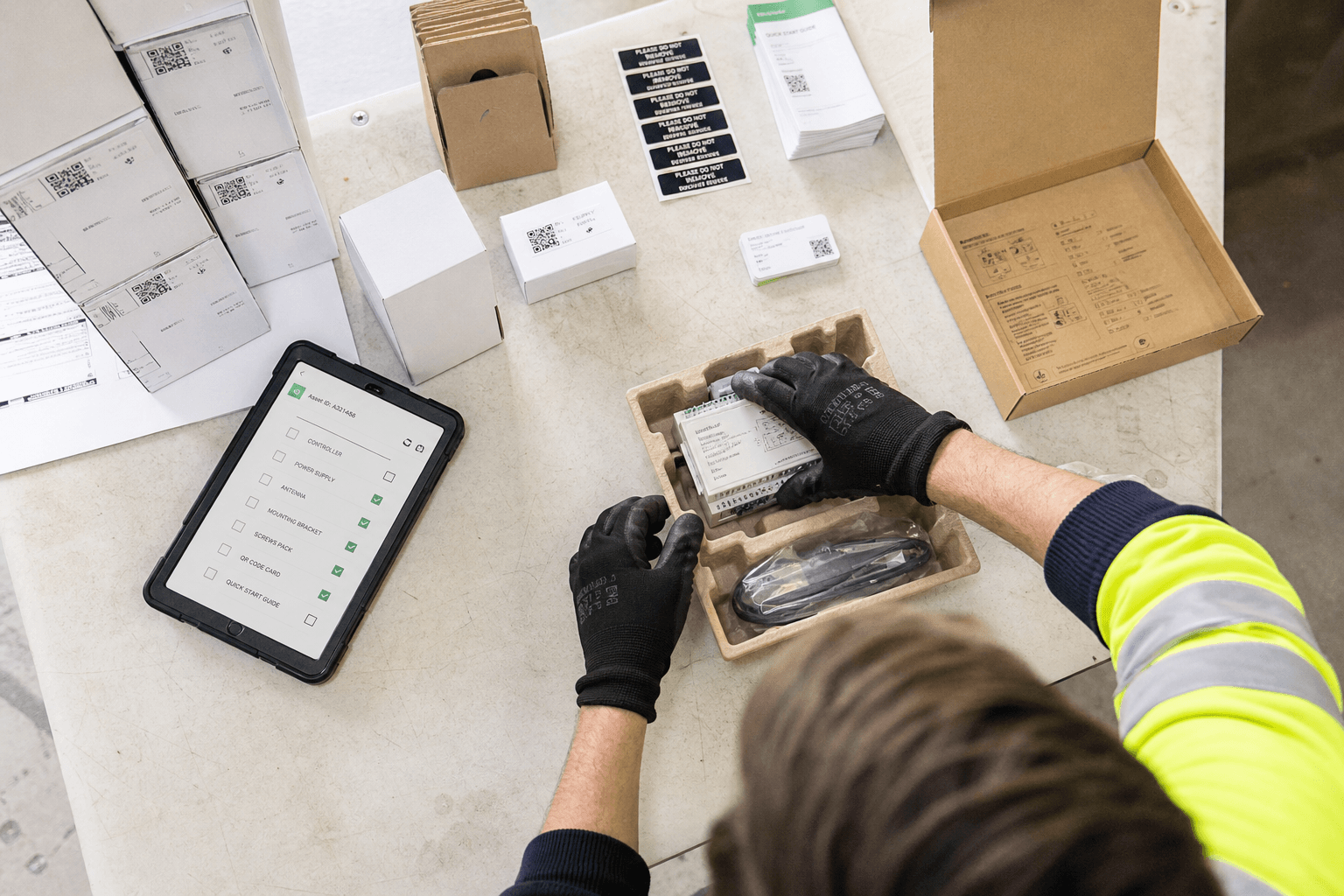
AI improves kitting and contract packaging accuracy by extracting the current approved bill of materials directly from customer documents, verifying component counts and placement with computer vision at the assembly station, and flagging mismatches before a kit is sealed — turning quality control from a post-hoc spot-check into a per-unit check. This matters for Australian 3PLs because a single BOM error on a retail promotional kit doesn't just cost a credit note; it costs trust with a customer who's now questioning whether you're the right partner for co-manufacturing work. This guide looks at where kitting accuracy typically breaks down, and how AI in logistics can be layered into existing warehouse workflows to catch errors before they leave the dock.
What makes kitting and contract packaging different from general warehousing?
Kitting is the process of combining multiple discrete components into a single saleable or shippable unit according to a defined bill of materials (BOM). Contract packaging (co-packing) extends this further, often involving assembly, labelling, and compliance steps performed on behalf of a brand owner. Unlike pick-pack-ship for single SKUs, every kitting job carries BOM risk, assembly sequence risk, and labelling risk simultaneously — which is why accuracy failures here tend to be more expensive and more visible to the end customer than a standard mis-pick.
Why does bill-of-materials accuracy matter so much for co-manufacturing 3PLs?
A bill of materials is the authoritative list of components, quantities, and specifications required to assemble a finished kit or packaged product correctly. If the BOM used on the floor doesn't match the version the customer last approved — a common issue when BOMs are managed through spreadsheets or email — the wrong components get used, and the error often isn't caught until the finished goods reach a retailer or end consumer, by which point rework costs dwarf the original job value.
For co-manufacturing 3PLs juggling multiple brand owners, each with their own BOM formats, revision cycles, and approval processes, keeping the current version in front of the floor team at the moment of assembly is the actual operational problem — not a lack of willingness to follow process.
Where do assembly errors typically enter the process?
Most kitting errors trace back to a handful of recurring failure points: BOM version control, component substitution without sign-off, manual quantity counts, and visual inspection fatigue on repetitive assembly lines. None of these are solved by hiring more supervisors — they're solved by removing the manual translation step between "what the customer approved" and "what the line is actually building."

| Failure point | Typical manual control | Where it breaks down |
|---|---|---|
| BOM version control | Email/PDF distribution to floor supervisors | Outdated version used after a late-stage customer change |
| Component count verification | Visual count or weigh-check by operator | Fatigue-driven miscounts on long runs |
| Substitution handling | Verbal approval, logged after the fact | No audit trail if a dispute arises |
| Finished kit inspection | Spot-check sampling | Defects in unsampled units reach the customer |
| Label/SKU matching | Manual barcode scan at pack-out | Scan confirms the label exists, not that contents match the BOM |
How can AI actually verify BOM accuracy on the floor?
AI can verify kitting accuracy by extracting the current approved BOM directly from customer documentation, cross-checking it against what's scanned or imaged at the assembly station, and flagging mismatches in real time — before the kit is sealed and labelled. This shifts quality control from a post-hoc sampling exercise to a per-unit check, without requiring a new WMS platform.

In practice, this looks like three layers working together:
- Document intelligence to read incoming customer BOMs, purchase orders, and spec sheets — including inconsistent formats across different brand owners — and keep a single current version flowing to the floor instead of relying on whoever last forwarded the right PDF. Our document-intelligence work focuses specifically on this kind of structured extraction from messy, inconsistent source documents.
- Computer vision at the assembly or pack-out station to confirm component presence, count, and placement against the BOM, catching substitutions or omissions at the point of assembly rather than after the kit is boxed.
- Workflow automation and exception flagging that routes anomalies to a supervisor immediately, with a logged audit trail — useful not just for quality control but for resolving customer disputes about what was actually shipped.
Does this require replacing our existing WMS?
No — for most mid-market 3PLs, AI verification can be layered on top of the warehouse management system already in place. Many Australian 3PLs are running WMS platforms implemented five or more years ago that lack real-time visibility and modern API integration, which forces manual workarounds for tasks like order entry and dispatch allocation. The same constraint applies to kitting: legacy systems weren't built with per-unit BOM verification in mind, but AI can be applied as a layer — through data extraction, workflow automation, and predictive analytics — without a full platform replacement.
This matters for budget-conscious operators because it changes the conversation from "we need a new WMS" to "we need to close a specific accuracy gap," which is a much smaller and more defensible investment to put in front of a board or ownership group.
Where kitting accuracy fits into a broader AI roadmap
Kitting and contract packaging accuracy is one piece of a wider pattern we see across Australian logistics operators: legacy systems that can't keep pace with customer expectations, without the appetite or budget for a full platform replacement. The same document intelligence and workflow automation approach used for BOM verification applies elsewhere in the business — from emissions reporting for AASB S2 and Scope 3 obligations, to route optimisation for fleet and delivery scheduling.
If you're not sure where kitting accuracy ranks against other priorities, an ai readiness assessment is usually the fastest way to find out. It maps your current systems, data quality, and operational pain points against where AI can realistically help — without committing to a platform change upfront. For more on how AI applies across warehousing, freight, and compliance, see more insights on our blog.
Ready to talk through where kitting accuracy sits on your list? Get in touch and we'll have a straightforward conversation about what's actually worth fixing first.
Zero Footprint
The Zero Footprint team — AI modernisation for Australian logistics.