AI-Powered Load Consolidation for Multi-Customer LTL Freight
AI matching engines can consolidate LTL shipments from multiple customers onto fewer, fuller trailers — a different problem to single-shipment route sequencing. Here's how it works, what data foundations it needs, and why no Australian-native tool exists yet.
What is AI-powered load consolidation?
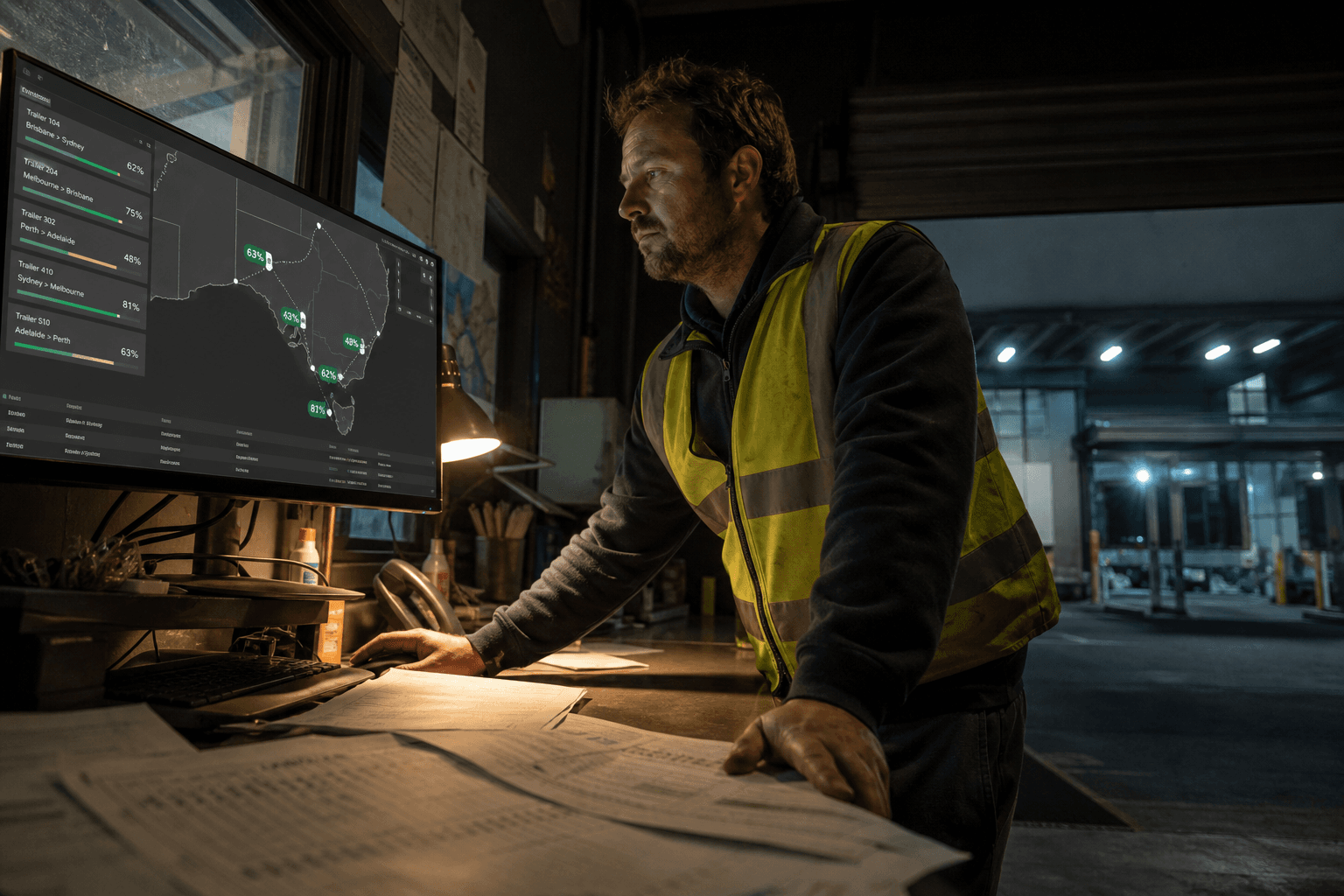
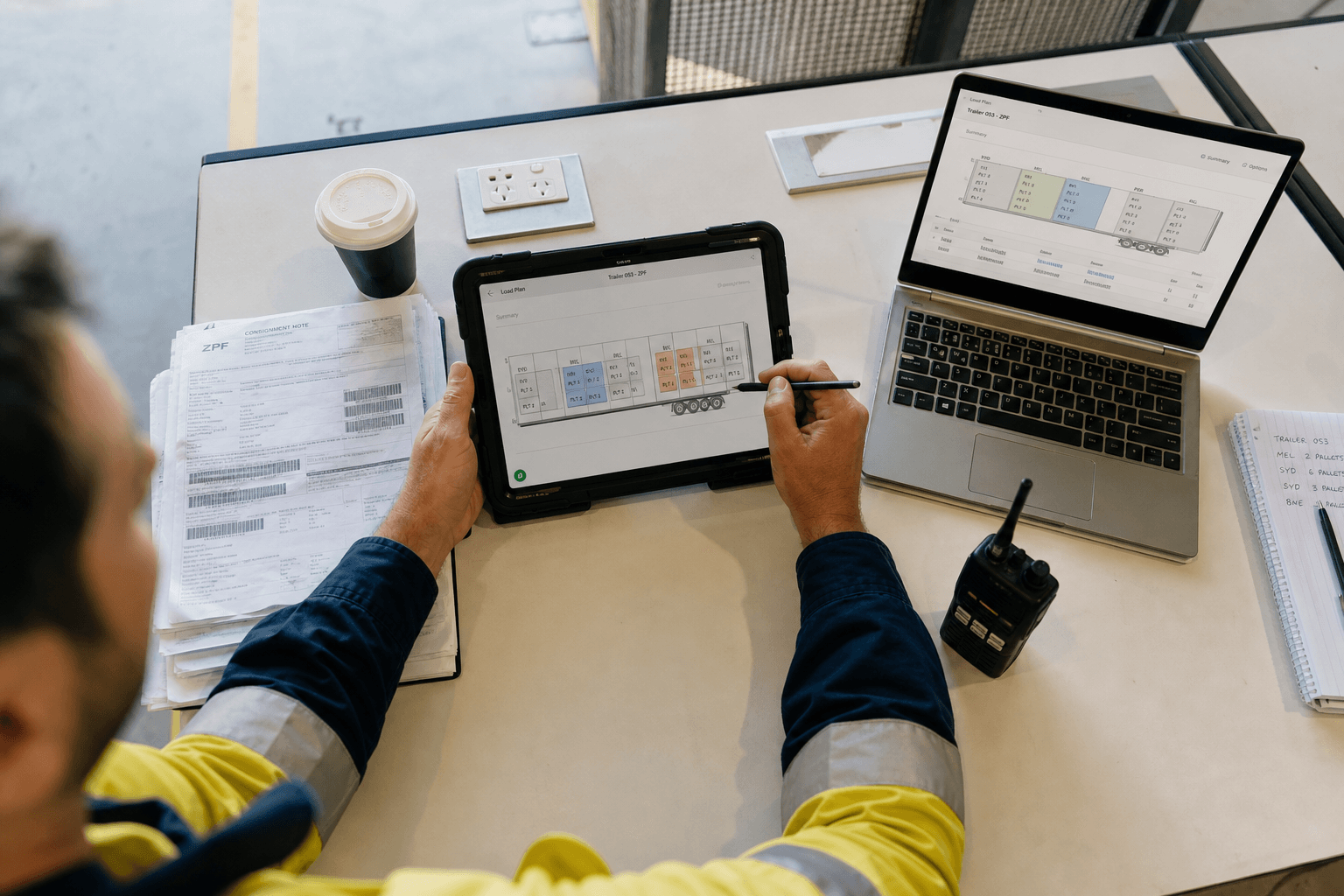
AI-powered load consolidation is the use of matching algorithms to combine less-than-truckload (LTL) shipments from multiple customers and lanes into fewer, fuller trailers. Unlike route optimisation, which sequences stops for a single vehicle or shipment, consolidation decides which shipments should travel together in the first place — before a route is ever planned. For Australian carriers and 3PLs running mixed freight across metro and regional lanes, this distinction matters: you can have a perfectly optimised route and still be hauling half-empty trailers because no one matched compatible loads before dispatch.
How is consolidation different from route optimisation?
Route optimisation answers "what's the best sequence of stops for this truck?" Load consolidation answers "which shipments, from which customers, should go on this truck at all?" They solve different problems and usually sit at different points in the planning cycle — consolidation happens at the booking/allocation stage, route sequencing happens closer to dispatch. Our route-optimisation work typically assumes loads have already been assigned to a vehicle; consolidation is what determines that assignment in a multi-customer network.
In a single-customer dedicated fleet, this distinction is less important — you're moving one shipper's freight and the main lever is sequencing. In a multi-customer LTL network, consolidation is often the bigger utilisation lever, because empty or under-filled trailer space is lost the moment a truck leaves the dock, regardless of how well its route is sequenced.
Why does trailer utilisation matter for Australian LTL operators?
Trailer utilisation is the proportion of available deck space or weight capacity actually used on a run. Low utilisation and empty running (trucks travelling with no load or a partial load) directly inflate cost per shipment and — increasingly relevant for logistics operators facing AASB S2 obligations — inflate Scope 3 emissions intensity per tonne-kilometre moved. For operators already building out emissions reporting capability, consolidation is one of the few operational levers that improves cost and carbon intensity at the same time, because fewer, fuller trailers mean less distance travelled per unit of freight carried.
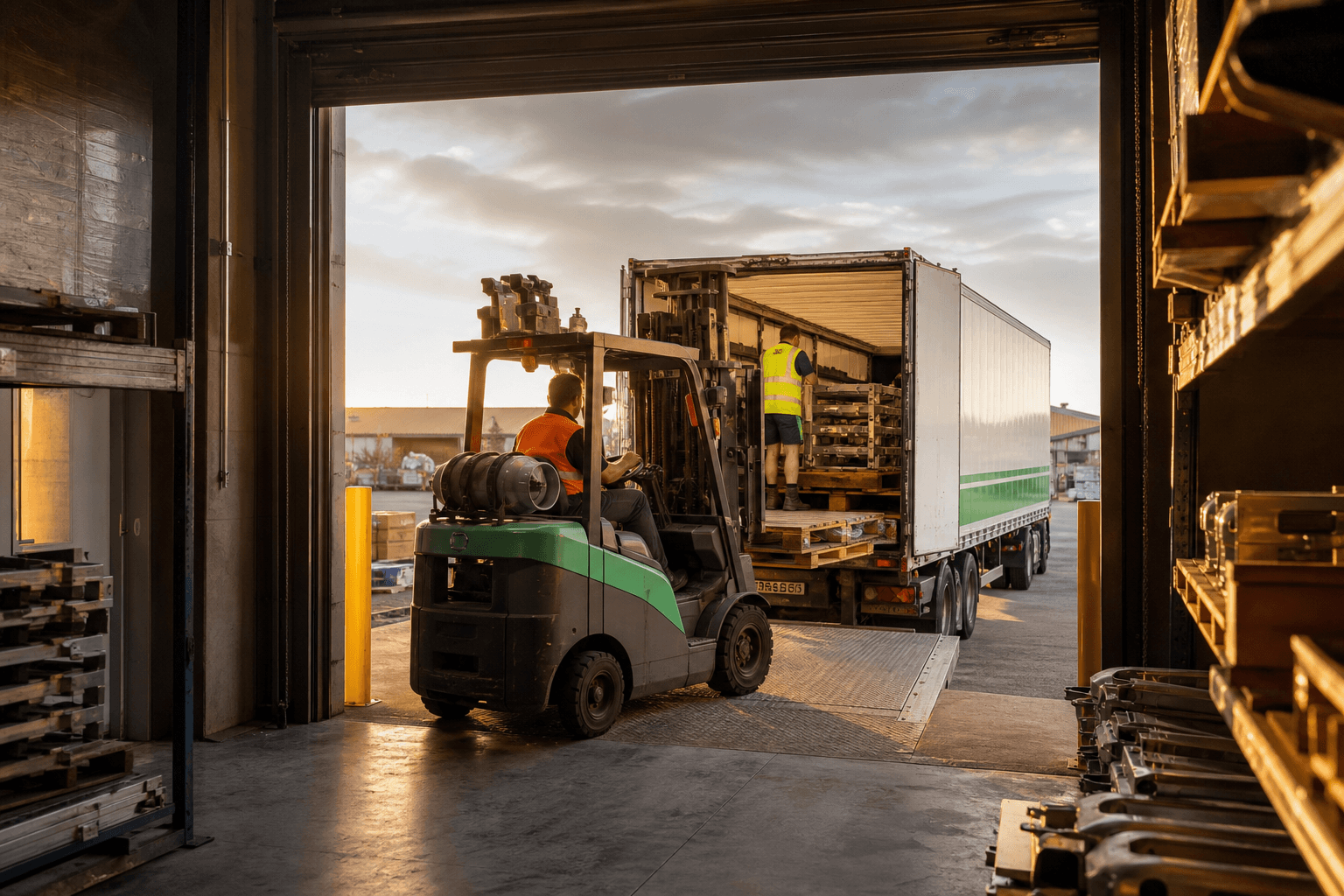
If your business is approaching an AASB S2 reporting deadline and trying to quantify Scope 3 freight emissions, consolidation data (loads combined, deck space utilised, empty kilometres avoided) becomes a useful input alongside the broader emissions-reporting work most carriers now need to do.
What does an AI matching engine actually do?
An AI matching engine evaluates incoming shipment requests against available trailer capacity, delivery windows, lane compatibility, and customer service commitments, then recommends which shipments should be grouped onto the same trailer or run. It's solving a constrained optimisation problem across multiple variables simultaneously — weight, cube, delivery deadlines, compatibility (e.g. temperature-controlled vs ambient), and customer-specific SLAs — rather than the simpler sequencing problem route optimisation tools handle.
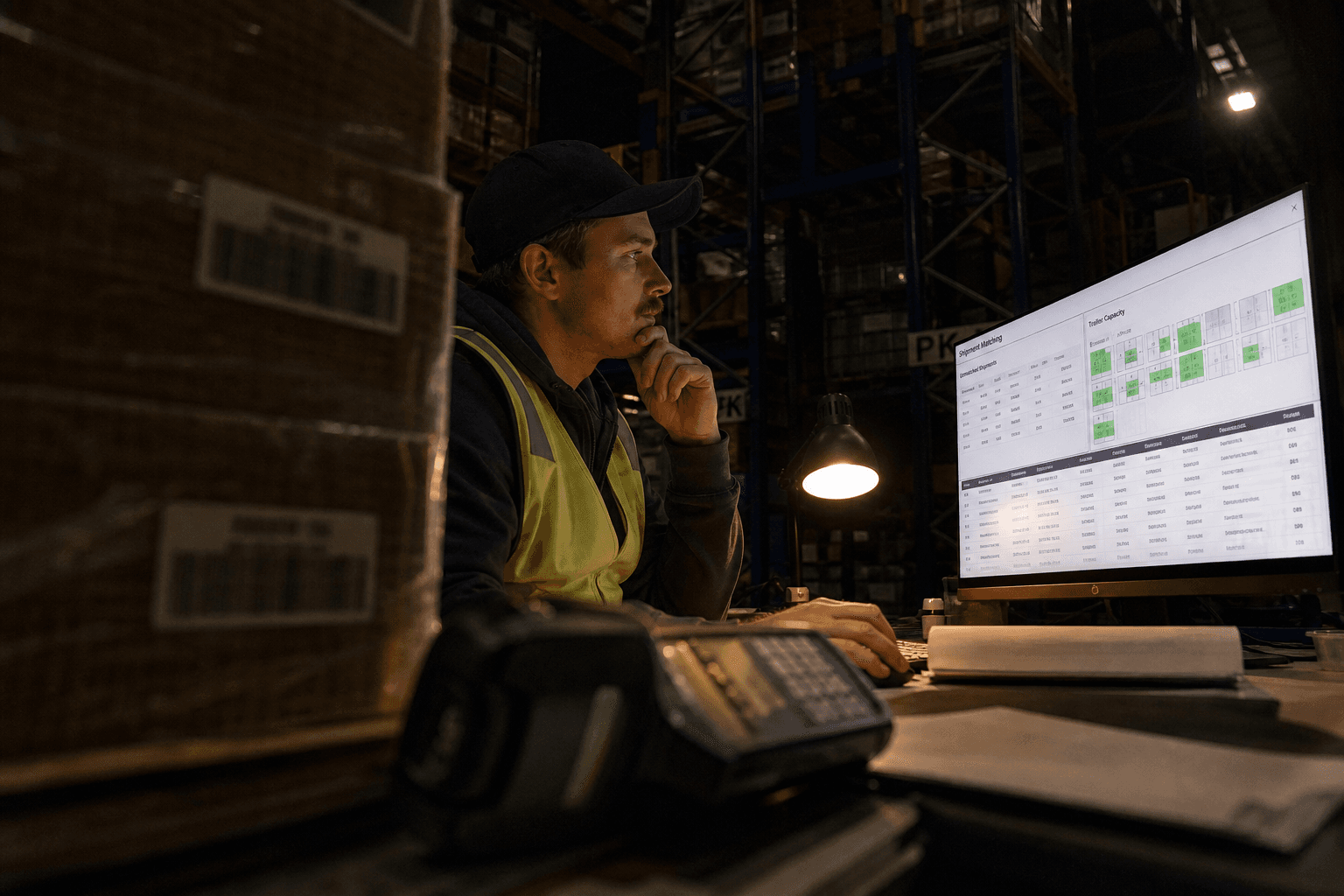
This is an established category in freight technology internationally. US-based freight tech provider Loadsmart, for example, markets automated load matching and carrier procurement across truckload, LTL, and intermodal freight as a core part of its offering — confirming that AI-driven consolidation and matching is a proven use case, not a speculative one. It's worth noting, however, that platforms like this are generally built around North American freight lanes, carrier networks, and compliance frameworks, and typically require significant reconfiguration before they'd fit Australian road freight or 3PL workflows. There isn't yet a widely available, Australian-market-native equivalent — which is part of why most mid-market operators here are still running consolidation decisions manually, by phone and spreadsheet, even where their route planning is already automated.
What has to be in place before a consolidation engine will work?
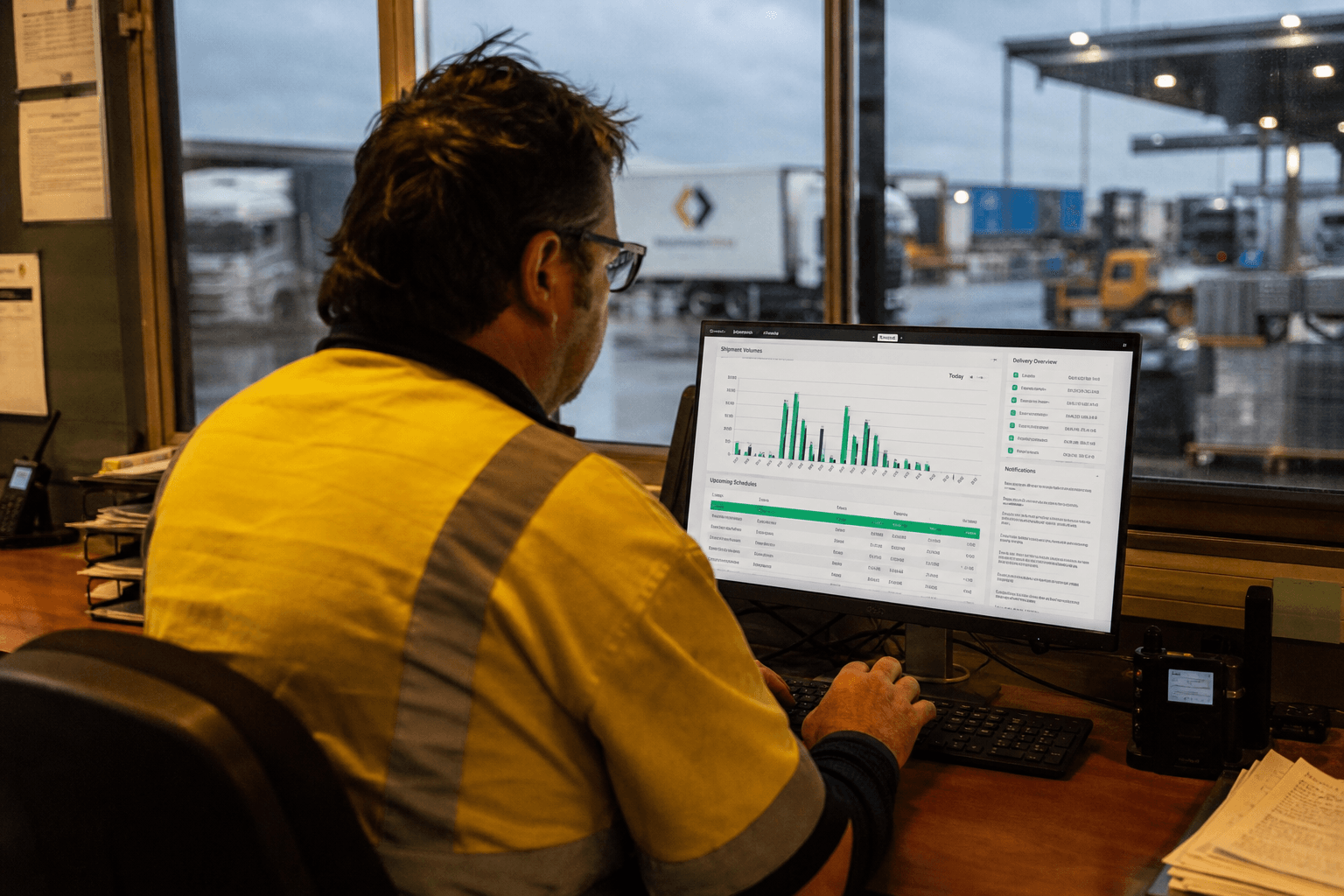
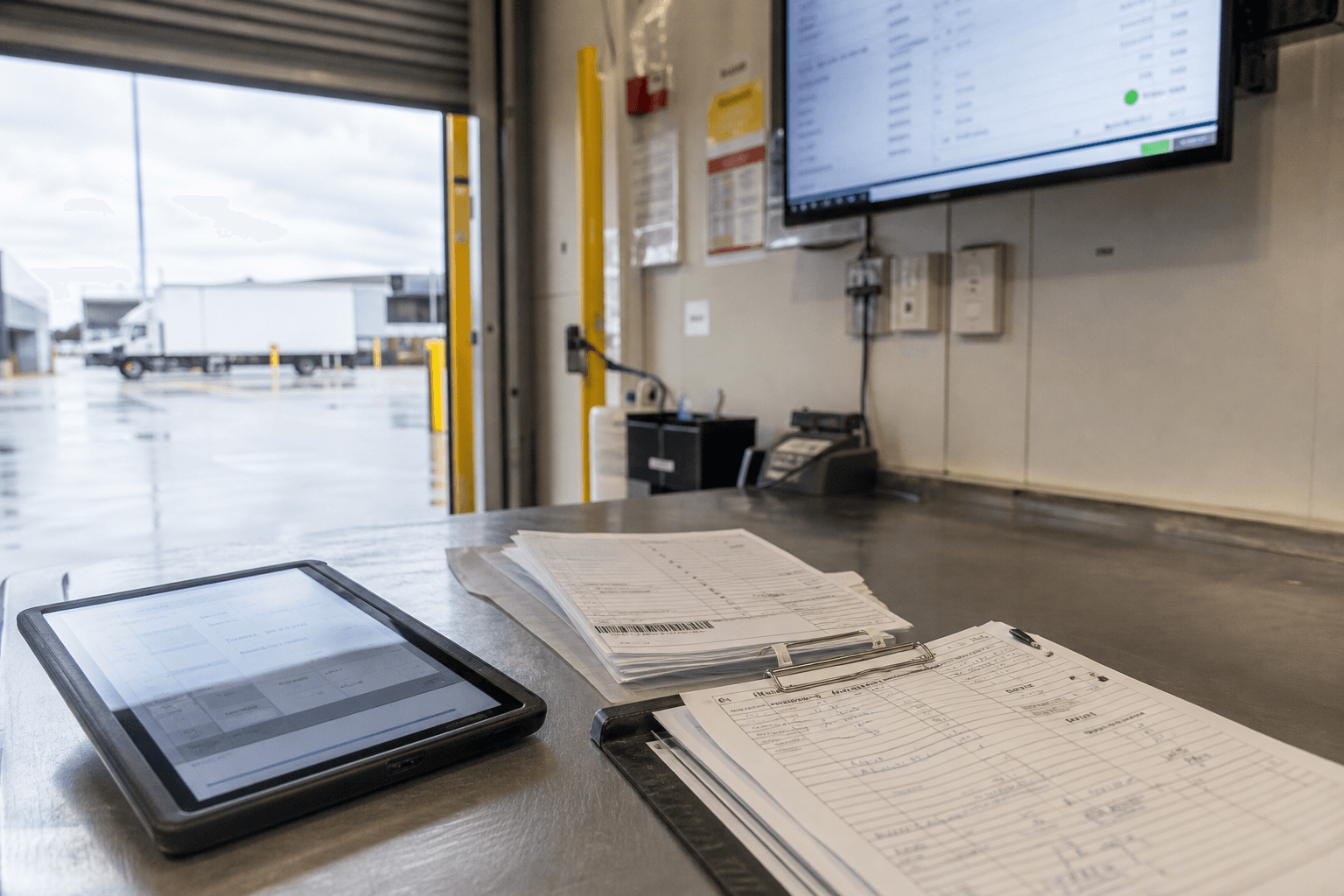
An AI matching engine is only as good as the data and systems feeding it — shipment details, trailer capacity, delivery windows, and customer commitments all need to be captured consistently and available in a form the model can use. For many mid-market Australian operators, this is the real blocker, not the matching logic itself. Legacy TMS and WMS platforms that are five or more years old, combined with manual, email-based booking processes, mean shipment and capacity data is often scattered, inconsistent, or simply not digitised.
This is why we treat AI capability — including optimisation and consolidation use cases — as something layered on top of modernisation foundations: system integration, data consolidation, and clean master data. Trying to bolt a matching engine onto fragmented systems tends to produce unreliable recommendations that operations teams learn to ignore, which defeats the purpose. It's also worth being deliberate about platform fit: enterprise-scale consolidation tools designed for very large freight networks often don't translate well to mid-market workflows, and can introduce more complexity than they remove.
How do manual, rule-based, and AI-driven approaches compare?
The table below compares the three broad approaches to load consolidation decisions seen in Australian LTL and 3PL networks today. These are qualitative comparisons based on how each approach typically behaves, not measured benchmarks.
| Approach | How decisions are made | Scalability across customers/lanes | Adaptability to changing volumes |
|---|---|---|---|
| Manual (phone/spreadsheet) | Planner judgement, built on tribal knowledge | Low — breaks down as customer count grows | Low — slow to respond to sudden changes |
| Rule-based TMS logic | Fixed rules (e.g. "always combine lane A and B") | Moderate — works until rules go stale | Low — rules need manual updating |
| AI matching engine | Continuous optimisation against live constraints | Higher — designed to handle growing complexity | Higher — recalculates as conditions change |
How should a mid-market operator approach this?
Given the gap between what's commercially available (mostly US-built, enterprise-oriented tools) and what Australian mid-market networks actually need, most operators are better served starting with an assessment of their own data and process readiness before evaluating or building any matching capability. That typically means mapping current shipment and capacity data, identifying where it's fragmented across systems, and establishing what a consolidation engine would need to see in order to make reliable recommendations.
This is the starting point of our ai-readiness-assessment — a structured look at your data, systems, and processes to determine what's achievable now versus what needs foundation work first. For operators dealing with paper-based booking confirmations or inconsistent shipment documentation, our document-intelligence work is often a necessary precursor, since consolidation logic depends on accurate, structured shipment data rather than scanned PDFs and email threads.
We've written more broadly about the sequencing of modernisation work in our insights, including how legacy system constraints shape what AI use cases are realistic in the short term.
The bottom line
Load consolidation and route optimisation are related but distinct problems — one decides what goes together, the other decides the best order to deliver it. AI matching engines for multi-customer LTL networks are a proven category internationally, but there's currently no off-the-shelf, Australian-native solution, and most mid-market operators have system and data gaps that would need addressing before any matching engine could run reliably.
If you're exploring how to lift trailer utilisation across a multi-customer freight network, get in touch and we can walk through what foundation work, if any, would need to happen first.
Zero Footprint
The Zero Footprint team — AI modernisation for Australian logistics.