AI-Powered Cargo Damage and Claims Evidence Capture
AI can analyse pickup and delivery photos and documentation to flag likely cargo damage disputes early, reducing claims investigation time and improving evidence quality for insurers and customers. Here's how it works and where to start.
Cargo damage disputes are one of the most time-consuming, margin-eating problems in freight and 3PL operations. AI in logistics is increasingly being applied to the photos, scans, and paperwork already captured at pickup and delivery, turning scattered evidence into a structured record that flags likely disputes before they escalate. This article looks at how that works, what's realistic today, and where the gaps still are.
What is AI-powered cargo damage and claims evidence capture?
AI-powered cargo damage and claims evidence capture is the use of computer vision and document processing to analyse photos, condition reports, and proof-of-delivery paperwork collected at pickup and drop-off, in order to detect visible damage, inconsistencies, or missing evidence earlier in the shipment lifecycle. Instead of evidence sitting unreviewed in a driver app or inbox until a claim is lodged weeks later, it's assessed close to the point of capture.
This is a genuinely emerging area. There's no single off-the-shelf standard for it in the Australian market yet, and most mid-market carriers and 3PLs are still relying on manual review — a claims officer opening a folder of photos after a customer complaint has already landed.
Why do damage claims cost Australian freight operators so much time?
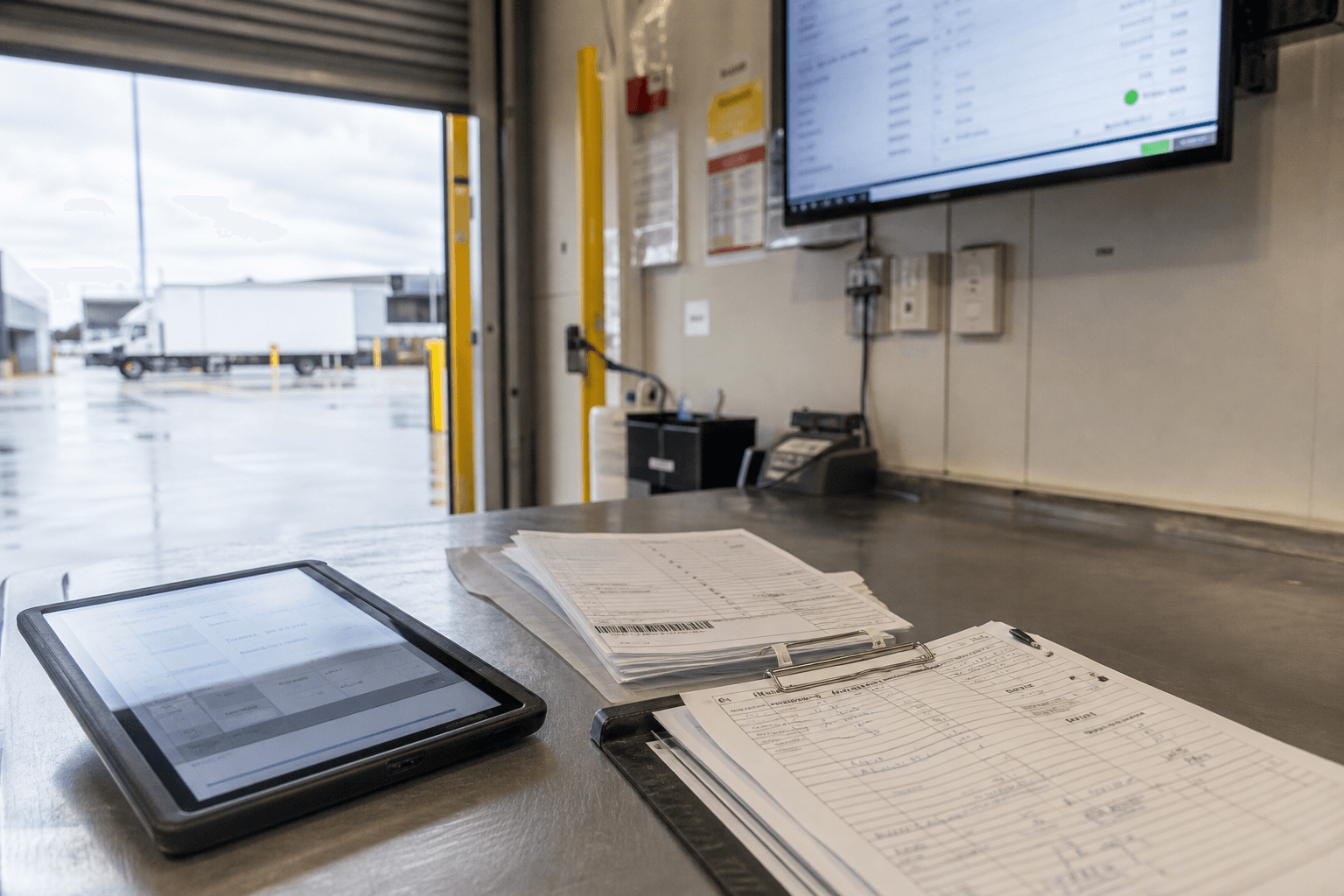
Damage claims are expensive because the evidence is usually incomplete, unstructured, or hard to compare. A driver photo taken in poor light at 6am, a paper condition report filled out by hand, and a delivery signature captured on a different app rarely sit together in one place — so investigating a dispute means manually reconstructing a timeline across systems.
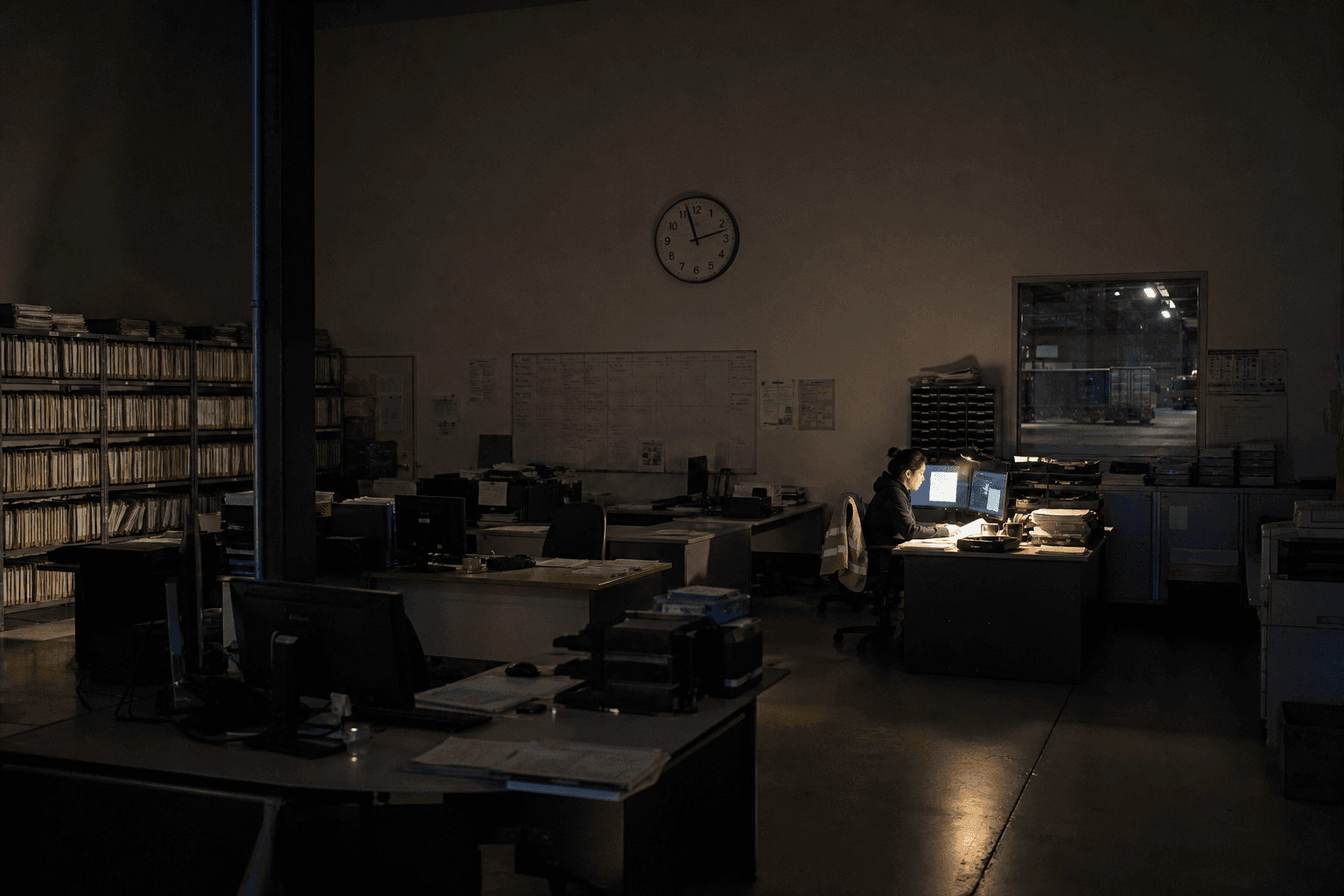
For operations teams already stretched thin, this means claims investigation becomes a background task that drags on for days or weeks, tying up staff who could be managing exceptions elsewhere. For finance and insurance teams, poor evidence quality also weakens the carrier's negotiating position when a claim is contested.
How does AI analyse pickup and delivery photos?
Computer vision models can be trained to identify visual indicators of damage — dents, tears, water staining, crushed packaging — in photos taken at pickup and delivery, and to compare condition between the two capture points. The goal isn't to replace human judgement on liability, but to surface the shipments most likely to result in a dispute so a human reviews them faster and with better information.
In practice, this typically involves three layers working together:
- Image analysis — flagging visible damage or quality issues in photos captured on driver or warehouse apps.
- Document intelligence — extracting structured data (weights, item counts, signatures, timestamps) from condition reports and proof-of-delivery paperwork, similar to the intelligent document processing approaches already used to pull structured data out of legacy freight paperwork. Our document-intelligence work applies this kind of extraction to freight documentation generally, which is directly relevant to claims evidence.
- Consistency checks — cross-referencing pickup and delivery evidence to spot gaps, such as a missing photo, an unsigned POD, or a mismatch between declared and received item counts.
What role does documentation play in reducing disputes?
Documentation is the deciding factor in most cargo damage disputes — whoever has clearer, better time-stamped evidence generally has the stronger position with insurers and customers. AI doesn't change what needs to be captured; it makes sure what's captured is complete, consistent, and easy to retrieve when a claim is raised.
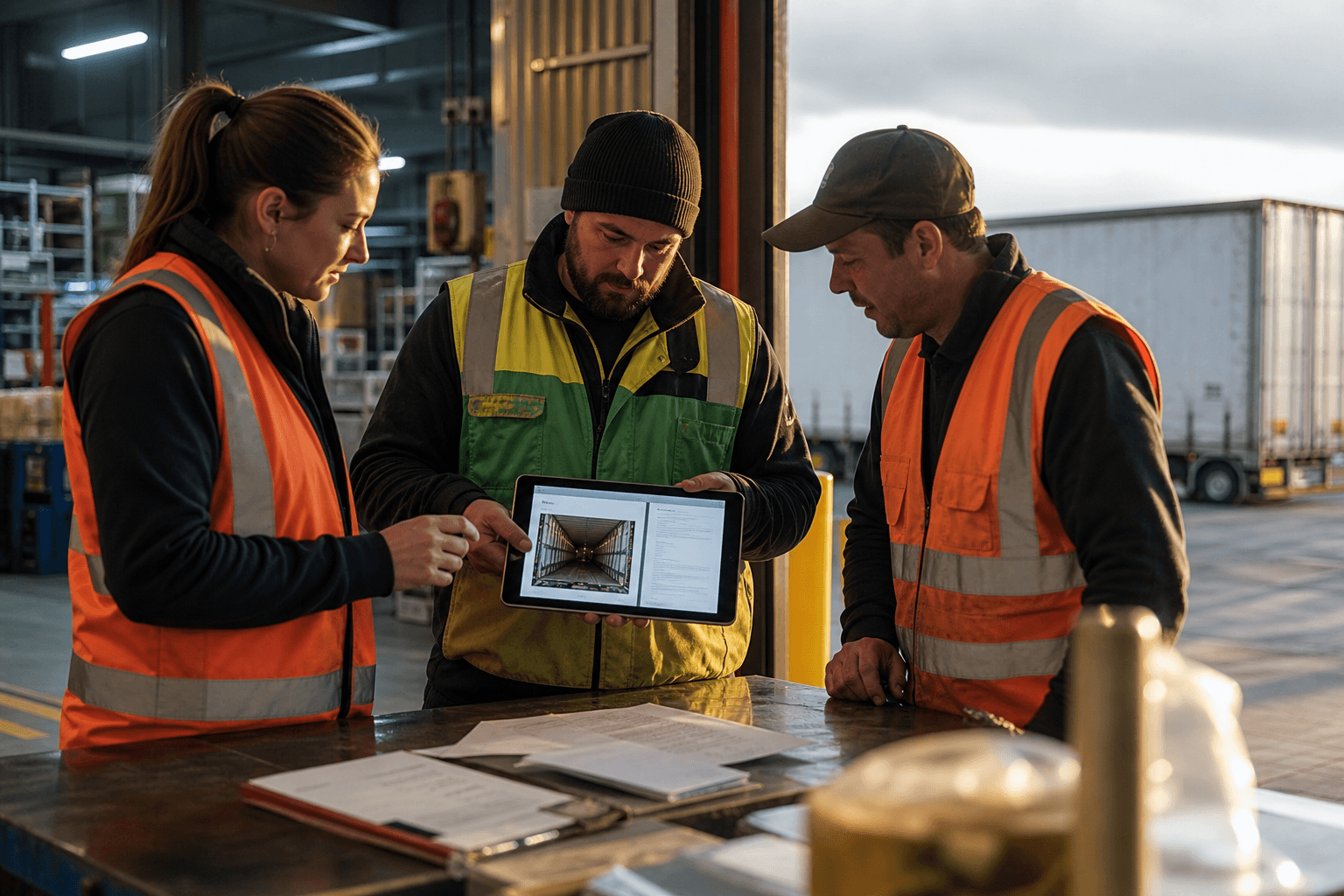
This matters most for operators whose systems are legacy TMS or WMS platforms that were never built with structured evidence capture in mind. AI tooling can often be layered on top of an existing TMS or WMS to automate proof-of-delivery processing and evidence flagging without a full system replacement — a lower-risk starting point than a platform migration, and one we cover in more detail in our ai-readiness-assessment.
Manual vs AI-assisted evidence review: what actually changes?
The table below compares typical manual claims evidence workflows with an AI-assisted approach. These are qualitative comparisons based on how the underlying processes differ, not measured performance figures.
| Aspect | Manual review | AI-assisted review |
|---|---|---|
| When issues are identified | After a claim is lodged | Closer to point of pickup/delivery |
| Evidence consistency | Varies by driver/warehouse staff | Standardised checks applied automatically |
| Staff effort per claim | Higher — manual reconstruction of timeline | Lower — flagged evidence pre-organised |
| Evidence quality for insurers | Dependent on individual diligence | More consistently structured and timestamped |
| Scalability across fleet/network | Limited by staff capacity | Scales with shipment volume |
What does this mean for insurers and customers?
Better-organised evidence benefits both sides of a claim — insurers get a clearer, more consistent record to assess, and customers get faster resolution because disputes aren't stuck waiting on manual investigation. For carriers, this also reduces the reputational cost of claims that drag on, which matters when customers are increasingly comparing digital capability across freight providers as part of tender decisions.
It's worth being realistic here: AI flagging likely damage or missing evidence is not the same as automated liability determination. Claims decisions still involve human judgement, contractual terms, and insurer processes. The value is in reducing the time and friction of getting to that decision, not removing the decision-maker.
How do you get started without ripping out your TMS?
Most carriers don't need a new platform to start improving claims evidence — they need to understand what data they're already capturing, where it's inconsistent, and where AI can be layered on to close the gaps. That's the starting point of an AI readiness assessment: mapping current pickup and delivery documentation workflows before recommending where computer vision or document intelligence would actually reduce claims investigation time.
Because this is a newer application area, we'd recommend treating any vendor claims — including ours — with appropriate scrutiny, and starting with a scoped assessment rather than a large platform commitment. You can read more on how we approach this kind of engagement in our insights.
If you're exploring how AI could reduce time spent on cargo damage claims investigation, get in touch and we can talk through whether it's a fit for how your operation actually runs.
Zero Footprint
The Zero Footprint team — AI modernisation for Australian logistics.