AI-Powered Load Consolidation for Australian LTL Freight
AI-powered load consolidation combines partial LTL shipments from multiple customers onto shared trailers, lifting utilisation and cutting empty running. Here's how matching engines work, what data they need, and where the Australian market currently stands.
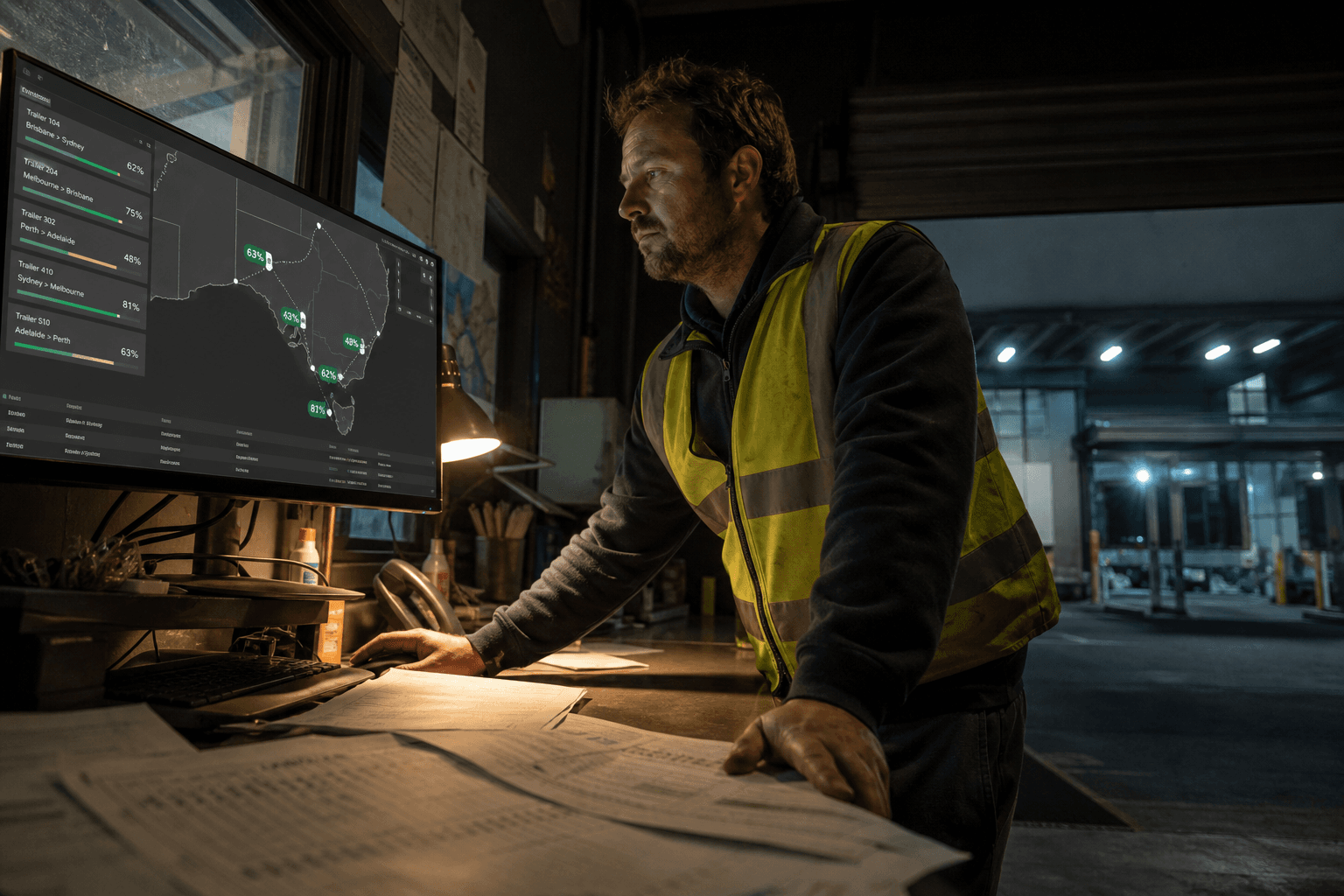
AI-powered load consolidation uses matching engines to combine partial, less-than-truckload (LTL) shipments from multiple customers onto shared trailers across common lanes — lifting trailer utilisation and cutting empty running. It's a different problem to route sequencing, which optimises the stop order for a single vehicle or shipment rather than deciding which freight should travel together in the first place.
What Is Load Consolidation in LTL Freight?
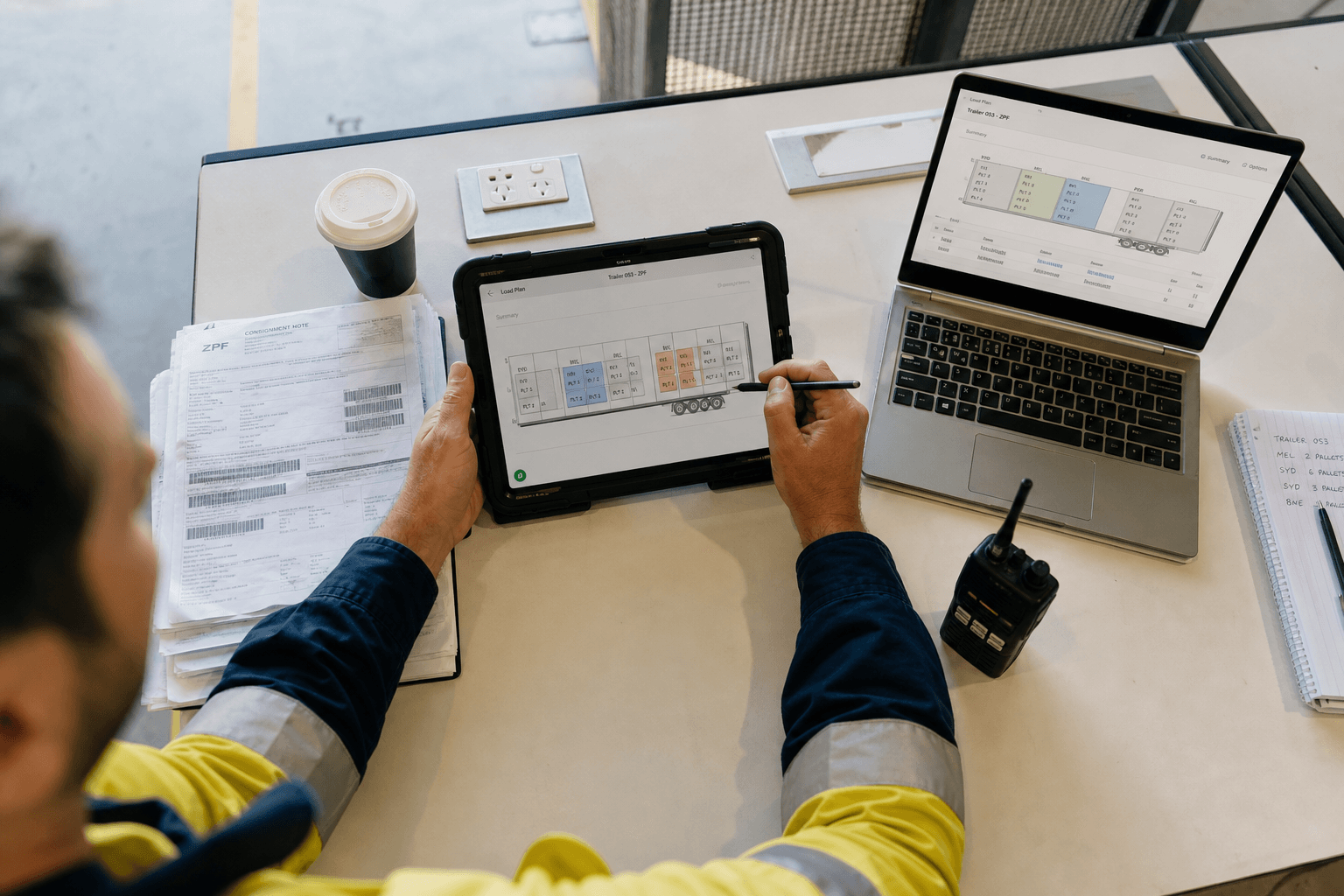
Load consolidation is the practice of combining smaller, partial shipments from different customers into a single trailer movement along a shared lane, rather than dispatching each shipment separately. In LTL networks, this matters because a meaningful share of trailer space and payload capacity is routinely left unused on partly loaded runs. Consolidation is the decision layer that determines which shipments, from which customers, can share which trailer, on which day — before a driver ever sees a route.
This is distinct from single-shipment route sequencing, which assumes the load is already fixed and simply works out the most efficient stop order to deliver it. Consolidation happens earlier in the planning process: it decides what goes on the truck, not how the truck moves once loaded.
How Is Load Consolidation Different From Route Sequencing?
Operators often use "route optimisation" as a catch-all term, but consolidation and sequencing solve different problems with different inputs and outputs. The table below sets out the practical distinction.
| Dimension | Route Sequencing | Load Consolidation |
|---|---|---|
| Decision unit | A single vehicle, single shipment or fixed manifest | Multiple shipments across multiple customers and lanes |
| Core question | "What order should stops be visited in?" | "Which shipments should be combined onto which trailer?" |
| Timing in planning | After the load is confirmed | Before the load is finalised |
| Primary lever | Distance, time windows, traffic | Trailer capacity, weight, compatibility, lane timing |
| Typical outcome | Shorter, faster individual trips | Higher trailer utilisation, fewer partly loaded runs |
Both capabilities matter, and many carriers eventually want both. But consolidation is the harder, less commonly solved problem — it requires visibility across customers and lanes, not just within a single job.
If your business already runs route optimisation but still sees trailers leaving partly full, consolidation is usually the missing layer.
How Do AI Matching Engines Consolidate Multi-Customer Loads?
AI matching engines for consolidation typically work by treating available shipments as items to be packed against constraints — trailer capacity, weight limits, delivery windows, and commercial compatibility — and continuously re-evaluating combinations as new bookings arrive. This is conceptually related to bin-packing algorithms, which solve for the best way to fit variable-sized items into a fixed-capacity container, extended here to cope with shifting freight volumes and multiple customers rather than a static, single-shipper load.
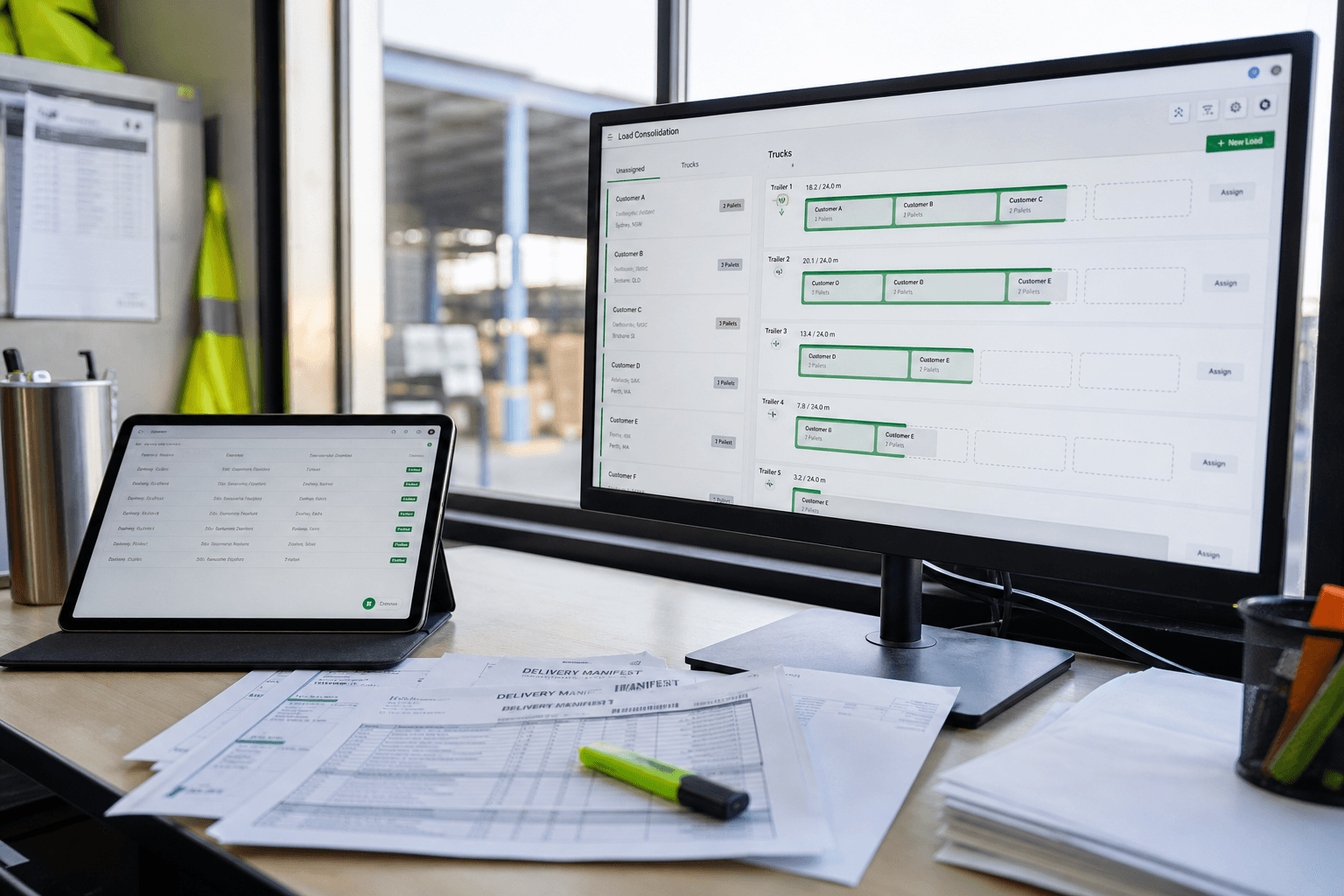
A practical engine needs to weigh several variables at once: which shipments are heading in a compatible direction and timeframe, whether combining them breaches weight or dimension limits, whether customer service commitments (delivery windows, exclusivity requirements) allow co-loading, and whether the resulting trailer fill justifies the added complexity of an extra pickup or drop. This is a genuinely harder optimisation problem than sequencing stops on one manifest, because the number of valid combinations grows quickly as more customers and lanes are added.
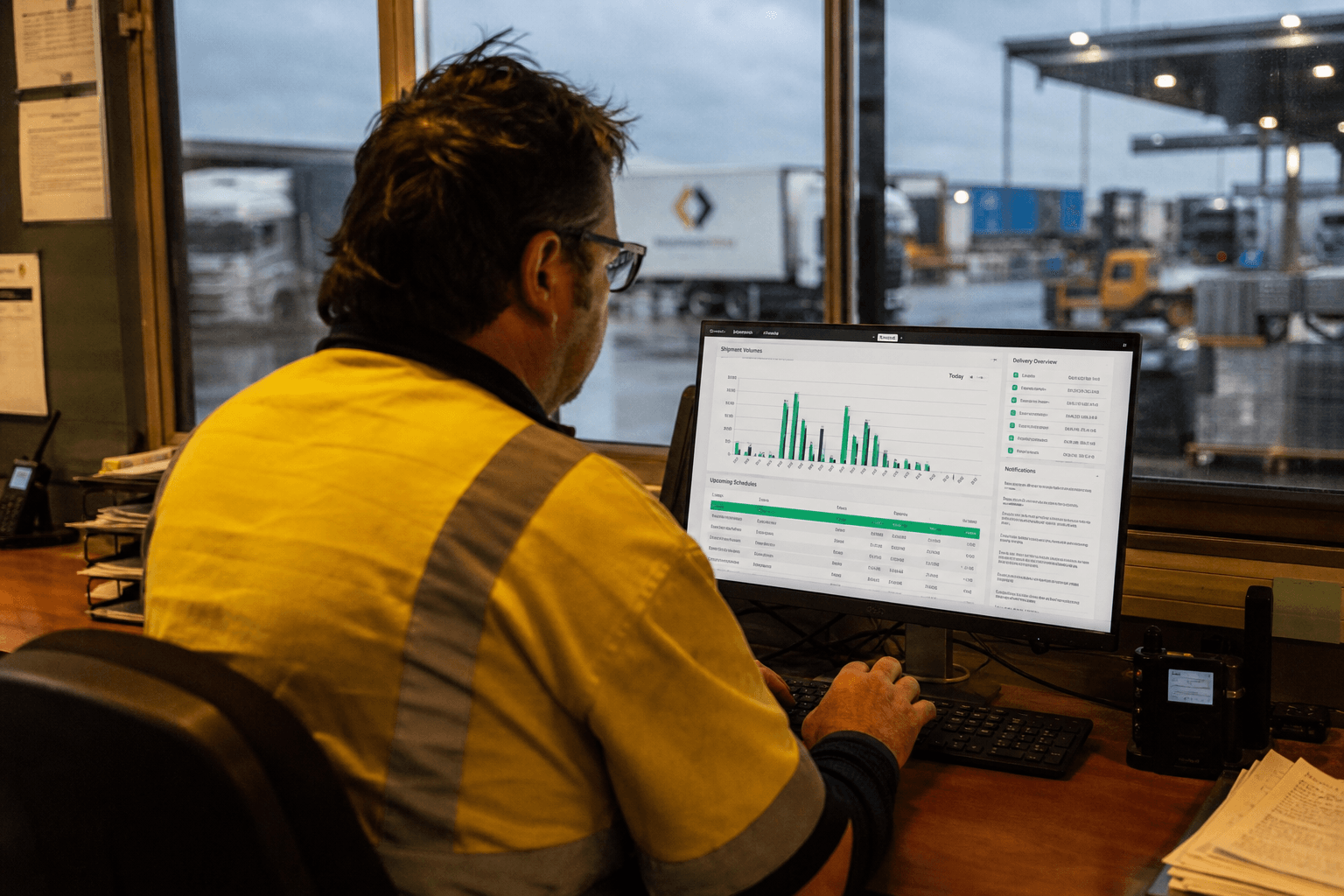
Dynamic multi-shipper matching — continuously re-running these combinations as bookings come in throughout the day — is what separates a modern consolidation engine from a static, manually built load plan built once a day in a spreadsheet.
What Data Do You Need Before You Can Consolidate Loads With AI?
Consolidation engines are only as good as the shipment and network data feeding them. At minimum, operators need reliable, structured data on shipment weight and dimensions, origin and destination, delivery windows, customer compatibility rules, and current trailer capacity — captured consistently across customers, not just within one account.
For many mid-market carriers and 3PLs, this is the real blocker. If booking details still arrive by email, paper bill of lading, or inconsistent spreadsheets, there's no clean input for a matching engine to work with. This is where document intelligence tools that extract structured shipment data from freight documents become a practical precondition — not a nice-to-have — for consolidation to work reliably.
What's Available in the Australian Market Today?
The honest answer is that purpose-built, AI-driven multi-customer load consolidation tooling for Australian LTL networks is still an emerging capability rather than an off-the-shelf standard. A number of international freight technology vendors market automated load matching and carrier procurement platforms built on large regional freight datasets, but these products are generally built around North American or European lane density, freight documentation standards, and regulatory settings. They don't map cleanly onto the mix of consignment note formats, lane volumes, and legacy TMS/WMS environments common across Australian carriers and 3PLs.
That gap is exactly why this tends to be a build-to-fit problem rather than a buy-off-the-shelf one for Australian operators. A consolidation engine has to be configured around your actual lanes, your customer compatibility rules, and the state of your existing data — not retrofitted from a platform designed for a different market. This is also where AI in logistics projects in Australia tend to differ from the US and European experience: the starting point is usually lower data maturity, which means the assessment and data-cleanup phase matters as much as the matching algorithm itself.
If you're weighing up whether consolidation is worth pursuing now, the practical first step is an AI readiness assessment — it establishes whether your current shipment, customer, and trailer data is clean enough to support a matching engine, and what needs fixing first if it isn't. For carriers who are also facing AASB S2 reporting obligations, it's worth noting that better shipment-level visibility from a consolidation project can also feed directly into emissions reporting, since fewer partly loaded trailer movements has a direct bearing on Scope 3 freight emissions calculations.
For more on how AI applies across freight and warehouse operations, see more insights on our blog.
If load consolidation, route optimisation, or emissions reporting is on your radar for the year ahead, get in touch and we'll talk through what's realistic for your network.
Zero Footprint
The Zero Footprint team — AI modernisation for Australian logistics.