CBAM Readiness for Australian Freight Forwarders and Exporters
The EU's Carbon Border Adjustment Mechanism (CBAM) is a new compliance pressure for Australian exporters shipping carbon-intensive goods to Europe — distinct from AASB S2 and NGER. Here's what freight forwarders need to understand about the difference, and where to start.
What Is CBAM and Why Should Australian Exporters Care?
CBAM (the Carbon Border Adjustment Mechanism) is a European Union regulation that applies a carbon cost to certain goods imported into the EU, based on the greenhouse gas emissions embedded in how they were produced. It's designed to stop EU manufacturers from being undercut by imports made in countries with weaker carbon pricing. For Australian exporters selling into the EU — particularly in sectors like cement, iron and steel, aluminium, fertilisers, hydrogen, and electricity — this means EU-based importers will increasingly need embedded emissions data from you before goods clear customs.
This is a genuinely new compliance pressure, distinct from anything in Australia's domestic reporting regime. It sits alongside, not instead of, your AASB S2 and NGER obligations — and it's worth understanding the difference before your EU customers start asking questions you can't answer.
How Is CBAM Different From AASB S2 and NGER Reporting?
AASB S2 and NGER are Australian domestic frameworks that require companies to measure and disclose their own emissions to Australian regulators and financial statement users. CBAM is an EU border mechanism that requires the importer of goods into the EU to report (and eventually pay for) the emissions embedded in those specific goods — which means the exporting business supplying that data sits one step removed from the direct compliance obligation, but is the only source that can actually provide it.
This distinction matters operationally. AASB S2 is about your company's overall climate risk and emissions profile for Australian regulators and investors. CBAM is about the carbon footprint of a specific shipment, tied to customs declarations, and driven by a trading partner's legal obligation in a foreign jurisdiction.
| Framework | Who is legally obligated | What it covers | Trigger |
|---|---|---|---|
| AASB S2 | Australian reporting entities meeting size thresholds | Entity-wide climate risk and emissions disclosure | Domestic financial reporting cycle |
| NGER | Australian facilities/corporations above reporting thresholds | Direct and energy-related emissions at facility/corporate level | Annual reporting to the Clean Energy Regulator |
| CBAM | EU-based importers of covered goods | Embedded emissions of specific imported products | Customs declaration at EU border |
Which Goods and Shipments Does CBAM Affect?
CBAM currently targets a defined set of carbon-intensive product categories — goods such as cement, iron and steel, aluminium, fertilisers, hydrogen, and electricity are the sectors the mechanism is built around. If your freight forwarding business handles exports in these categories bound for EU ports, your EU-based customers or their customs agents are the ones who will eventually need to report embedded emissions data per shipment.
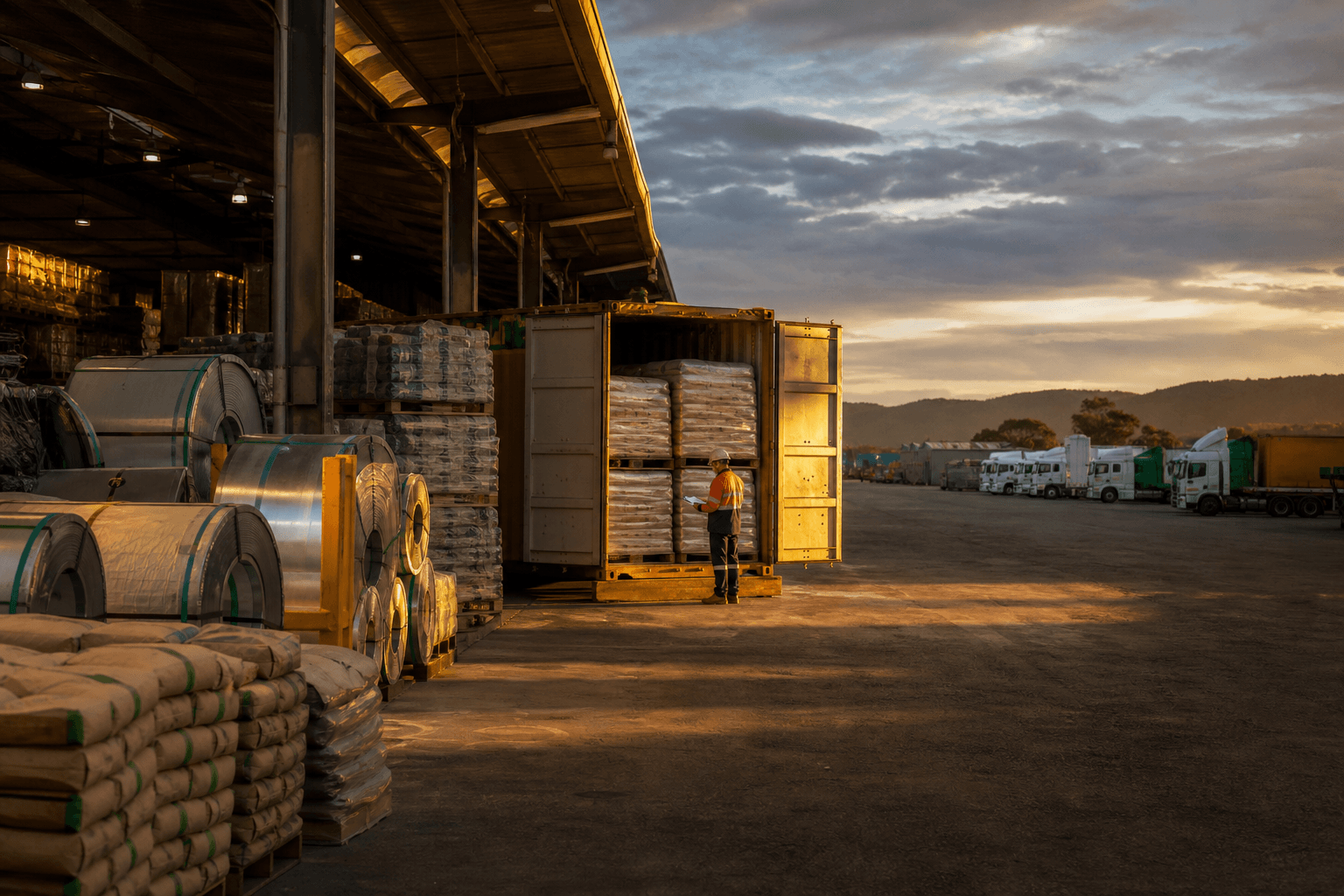
Most Australian logistics operators we talk to haven't yet had this conversation with their EU trading partners — it tends to surface when a long-standing customer suddenly asks for product-level carbon data as part of a shipment, rather than as a formal notice. If you're moving goods in these sectors, it's worth checking with your customers directly whether CBAM applies to their imports, rather than assuming it doesn't.
What Should Freight Forwarders Do to Prepare?
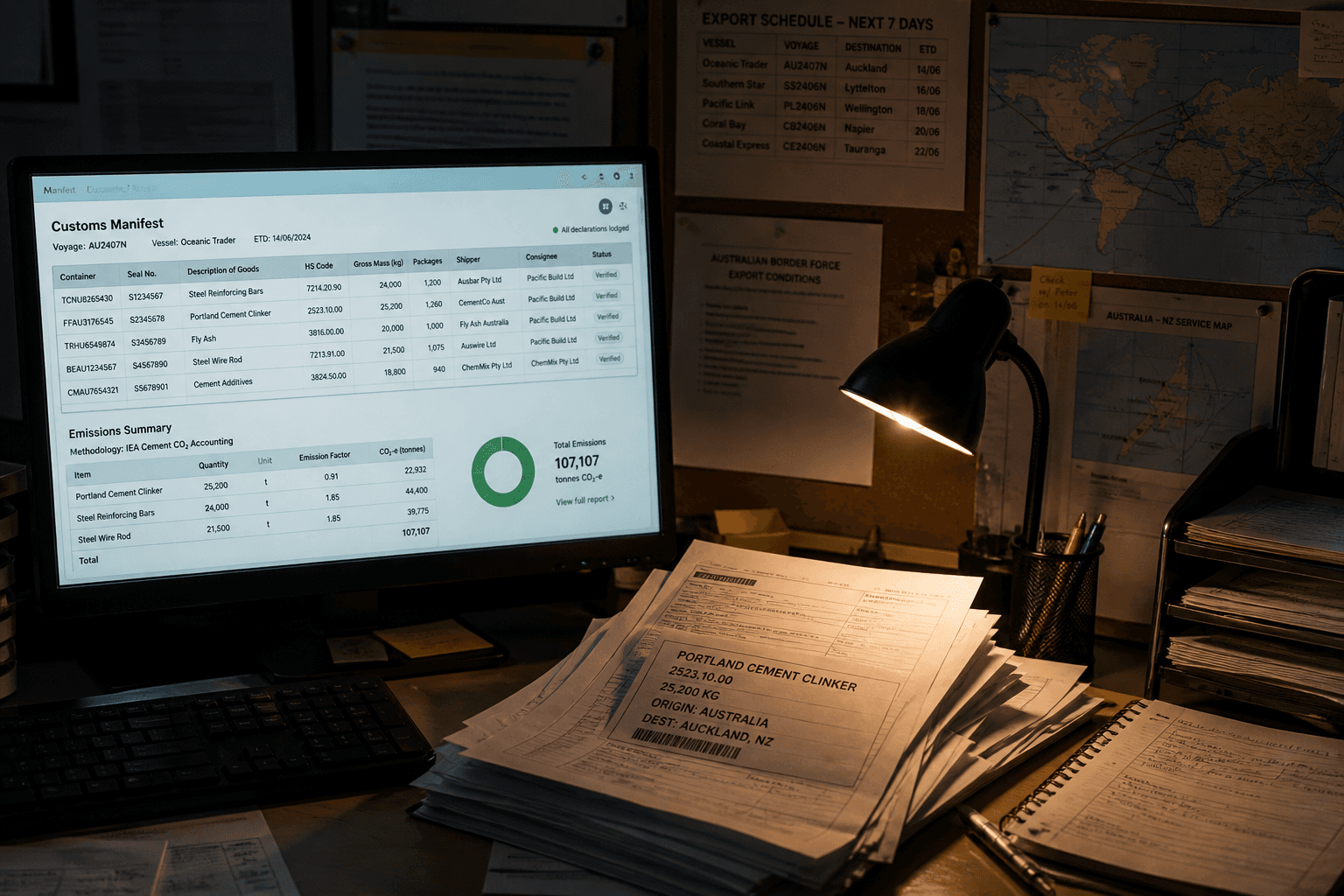
The practical starting point is the same regardless of which framework you're responding to: you need reliable, shipment-level emissions and production data that can be traced back to source, not estimated after the fact. Whether that data is destined for an AASB S2 disclosure, an NGER return, or a CBAM declaration from your EU customer, the underlying problem is identical — most mid-market logistics businesses don't currently have a system that captures this data consistently.

This is where the overlap with your existing emissions-reporting work becomes useful. If you're already building the data infrastructure to measure Scope 3 emissions for AASB S2 purposes, you're building much of the same foundation a CBAM response would need — shipment-level data, supplier emissions factors, and an auditable trail from source document to final figure. Businesses still relying on manual data capture, scattered spreadsheets, and paper bills of lading will find both obligations difficult to meet consistently, which is often where document-intelligence tools that extract and structure shipment data from existing paperwork start to pay off.
Is This Something Zero Footprint Advises On Directly?
To be direct: CBAM is a specialised area of EU trade and customs law, and specific compliance steps for your business should be confirmed with a customs broker or trade compliance specialist who tracks the regulation's implementation closely. We're not positioning ourselves as CBAM legal advisors.
What we do help with is the underlying data problem that sits behind every one of these frameworks — AASB S2, NGER, and increasingly CBAM-related customer requests. If your business doesn't currently have a reliable way to capture and trace emissions data at the shipment or product level, that's a gap worth closing regardless of which regulator or trading partner is asking. Our ai-readiness-assessment is typically where this conversation starts — it looks at what data you're already capturing, where the gaps are, and what a practical build would look like.
Where to Go From Here
If an EU customer or trading partner has raised CBAM with you, the first step is confirming exactly what they're asking for and when — and whether it's a formal declaration requirement or an early-stage data request ahead of enforcement. From there, the question becomes whether your current systems can produce that data reliably, or whether you're relying on manual processes that won't scale.
For more on how Australian logistics operators are building the data foundations to meet climate reporting obligations generally, see our insights.
If you're fielding CBAM questions from EU trading partners and aren't sure whether your current data systems can keep up, get in touch — we can help assess where the gaps are.
Zero Footprint
The Zero Footprint team — AI modernisation for Australian logistics.