AI Document Processing for Biosecurity in Freight
AI-assisted document processing extracts and cross-checks biosecurity paperwork — treatment certificates, import declarations, phytosanitary records — so mismatches surface before goods reach quarantine. It doesn't replace DAFF's regulatory role, but it cuts the manual re-keying that slows mid-market freight operators down.
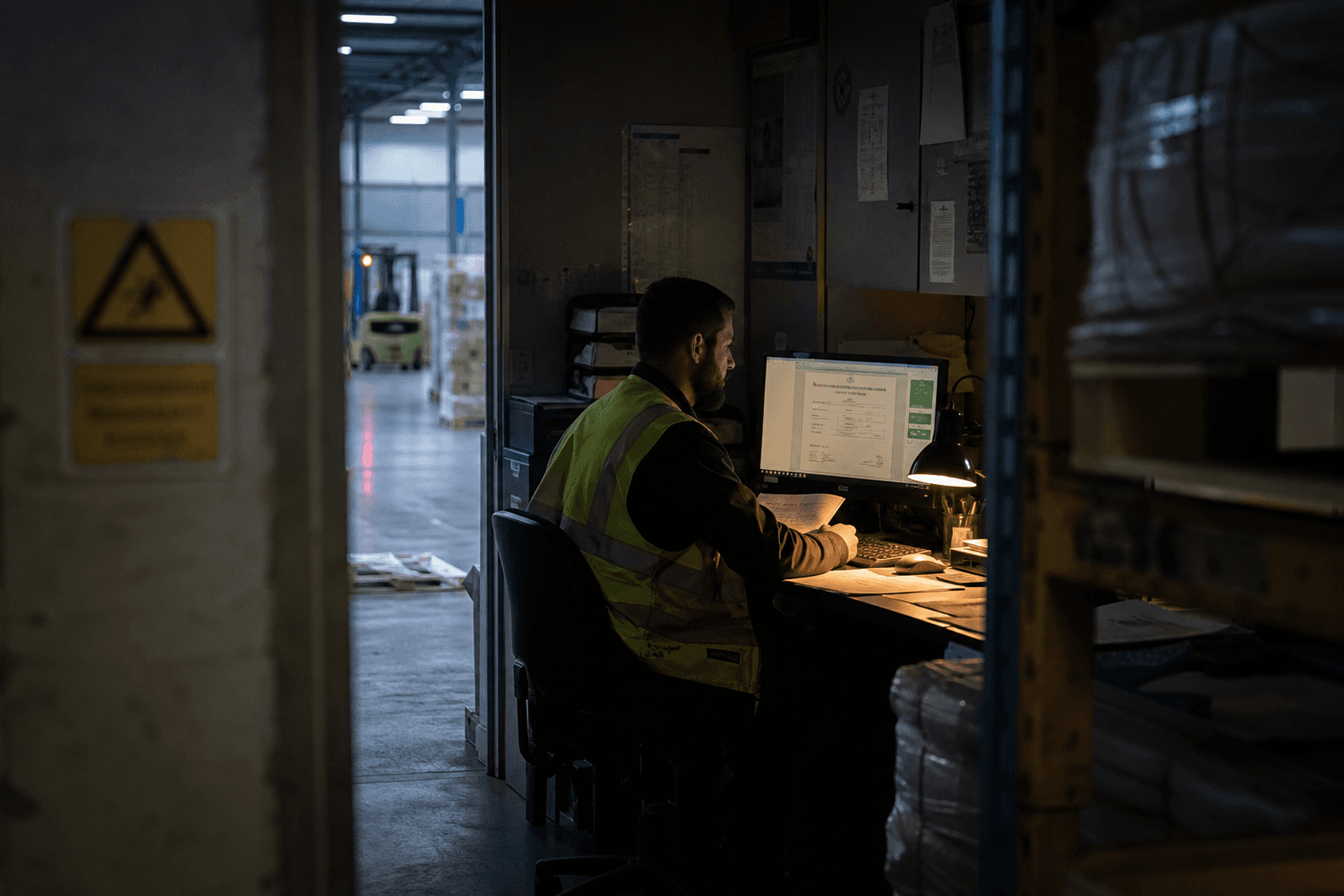
AI-assisted document processing reduces the manual re-keying and cross-checking that slows down biosecurity and quarantine clearance for Australian freight forwarders and 3PLs. It extracts data — consignment numbers, treatment dates, commodity codes, certificate numbers — directly from supplier PDFs, scans, and emails, then checks it against the shipment manifest and import declaration so mismatches and missing paperwork surface before goods reach quarantine, not after. It doesn't replace biosecurity compliance expertise or regulatory decision-making — that stays with the Department of Agriculture, Fisheries and Forestry (DAFF). What it changes is how much manual effort goes into getting the paperwork right before an inspector ever looks at it.
What is biosecurity documentation in freight import/export?
Biosecurity documentation is the set of declarations, permits, treatment certificates, and inspection records required before goods can clear quarantine at the Australian border. It's administered under the Biosecurity Act 2015 and enforced by DAFF, which maintains the BICON (Biosecurity Import Conditions) system that importers and brokers use to determine what's required for a given commodity.
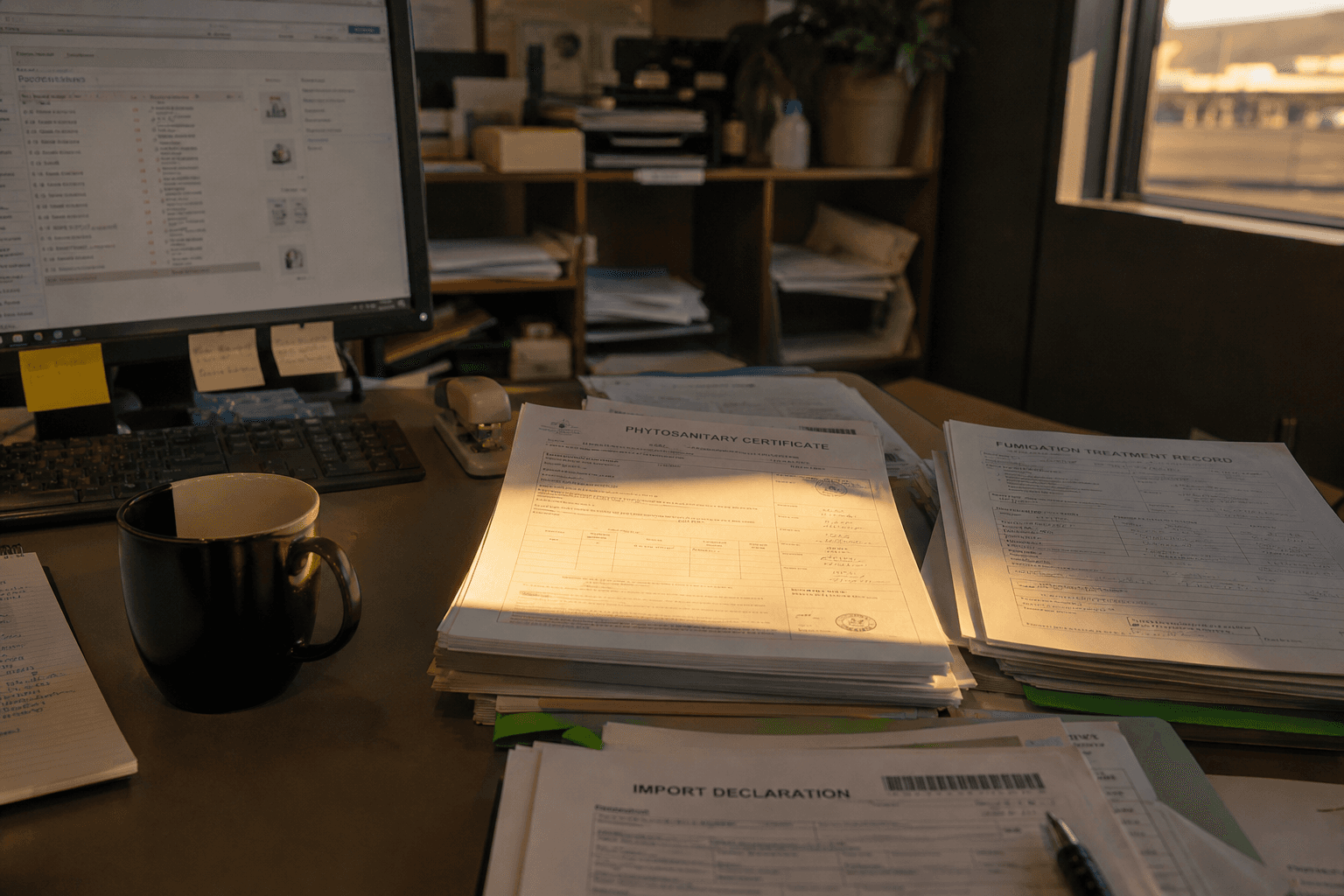
For freight forwarders and 3PLs, this typically means managing multiple document types per shipment: import declarations, phytosanitary or health certificates, fumigation and treatment records, country-of-origin certificates, and packing declarations. Each has its own format, depending on the exporting country and commodity, and discrepancies between any of them can trigger a hold.
Why does quarantine paperwork slow down import clearance?
Quarantine clearance slows down when documentation is incomplete, inconsistent, or arrives in a format that doesn't match what's expected in the importer's systems. Because biosecurity documents originate from multiple parties — overseas suppliers, shipping lines, customs brokers, treatment providers — in a mix of PDFs, scanned images, and emails, manual data entry and cross-checking is the default approach for most mid-market operators.
This is where the operational pain actually shows up. Staff re-key data from certificates into TMS or compliance systems, manually compare values across documents to catch mismatches, and chase missing paperwork by phone or email. None of this is specific to biosecurity — it's the same manual document handling problem that shows up across freight operations generally, just with higher compliance stakes and tighter error tolerance.
How can AI-assisted document processing help?
AI-assisted document processing is the use of machine learning models to read, extract, and structure data from unstructured documents — PDFs, scans, and images — so it can be validated and routed without manual re-entry. Applied to quarantine paperwork, this means extracting fields like consignment numbers, treatment dates, commodity codes, and certificate numbers directly from supplier documents, then checking them against what the shipment manifest and import declaration expect.
The underlying capability is the same intelligent document processing and data extraction and normalisation used elsewhere in freight operations to clean up order entry and proof-of-delivery paperwork. It isn't a biosecurity-specific technology — it's a general-purpose document intelligence capability applied to a biosecurity-specific document set. That distinction matters: the compliance rules and acceptance criteria still come from DAFF and the relevant import conditions, not from the AI tooling itself.
In practice, this can mean flagging a mismatch between a treatment certificate date and a shipment's arrival window before it reaches an inspector, or surfacing a missing phytosanitary certificate while there's still time to request it from the supplier — rather than discovering the gap when the container is already sitting in quarantine.
What does manual versus AI-assisted quarantine document handling look like?
| Step | Manual process | AI-assisted process |
|---|---|---|
| Document intake | Staff manually open and sort PDFs/scans from email | Documents are automatically classified by type |
| Data extraction | Key fields re-typed into TMS or compliance spreadsheet | Fields extracted automatically, with confidence flags on low-quality scans |
| Cross-checking | Manual comparison across certificates and manifest | Automated consistency checks across linked documents |
| Exception handling | Discrepancies found late, often after goods arrive | Discrepancies surfaced earlier, while there's time to act |
| Audit trail | Email threads and shared drives | Structured, searchable record of what was checked and when |
This comparison reflects the general shift that document intelligence tools bring to any paper-heavy compliance workflow — it's a reasonable extension of that pattern to biosecurity paperwork, not a claim about a specific product outcome.
What are the limits of AI in biosecurity documentation?
AI document processing does not replace biosecurity compliance expertise or DAFF's regulatory role. It is a tool for reducing manual data handling and catching inconsistencies earlier — the actual clearance decision, inspection requirements, and treatment standards remain governed by DAFF and the conditions set out in BICON for each commodity and origin country.
Operators should also expect that model accuracy on extraction tasks depends heavily on document quality. A blurry fax-quality scan of a phytosanitary certificate from an overseas supplier is a harder extraction problem than a clean digital PDF, and any implementation needs a human review step for low-confidence extractions rather than fully automated pass-through.
How does this fit into wider digital transformation for freight businesses?
Quarantine document automation sits alongside other document-heavy workflows — proof of delivery, inbound receiving, EDI integration — that mid-market freight and logistics operators are digitising as part of broader legacy system modernisation. For many operators, document intelligence is one module in a wider programme that might also include route optimisation for fleet efficiency or emissions reporting to meet AASB S2 and Scope 3 obligations. These aren't separate projects bolted together — they typically share the same underlying data pipeline and integration work with your existing TMS or WMS.
The starting point for most operators isn't a full platform build. It's understanding where the manual effort actually sits in your business, what a realistic automation scope looks like given your current systems and data quality, and what order to tackle it in. That's what an ai readiness assessment is for — a structured look at your document volumes, system landscape, and compliance exposure before committing to a build.
If quarantine paperwork, EDI gaps, or manual dispatch are eating into your team's time, it's worth a conversation about where AI actually fits in your operation and where it doesn't. For more on how this plays out across freight and logistics more broadly, see our more insights on the blog, or get in touch to talk through your specific documentation and compliance workload.
Zero Footprint
The Zero Footprint team — AI modernisation for Australian logistics.