AI Classification of Dangerous Goods Documents in Australia
AI is increasingly used to extract UN numbers, parse safety data sheets, and validate dangerous goods documentation against the ADG and IMDG codes. Here's how it works and where it fits for Australian freight operators.
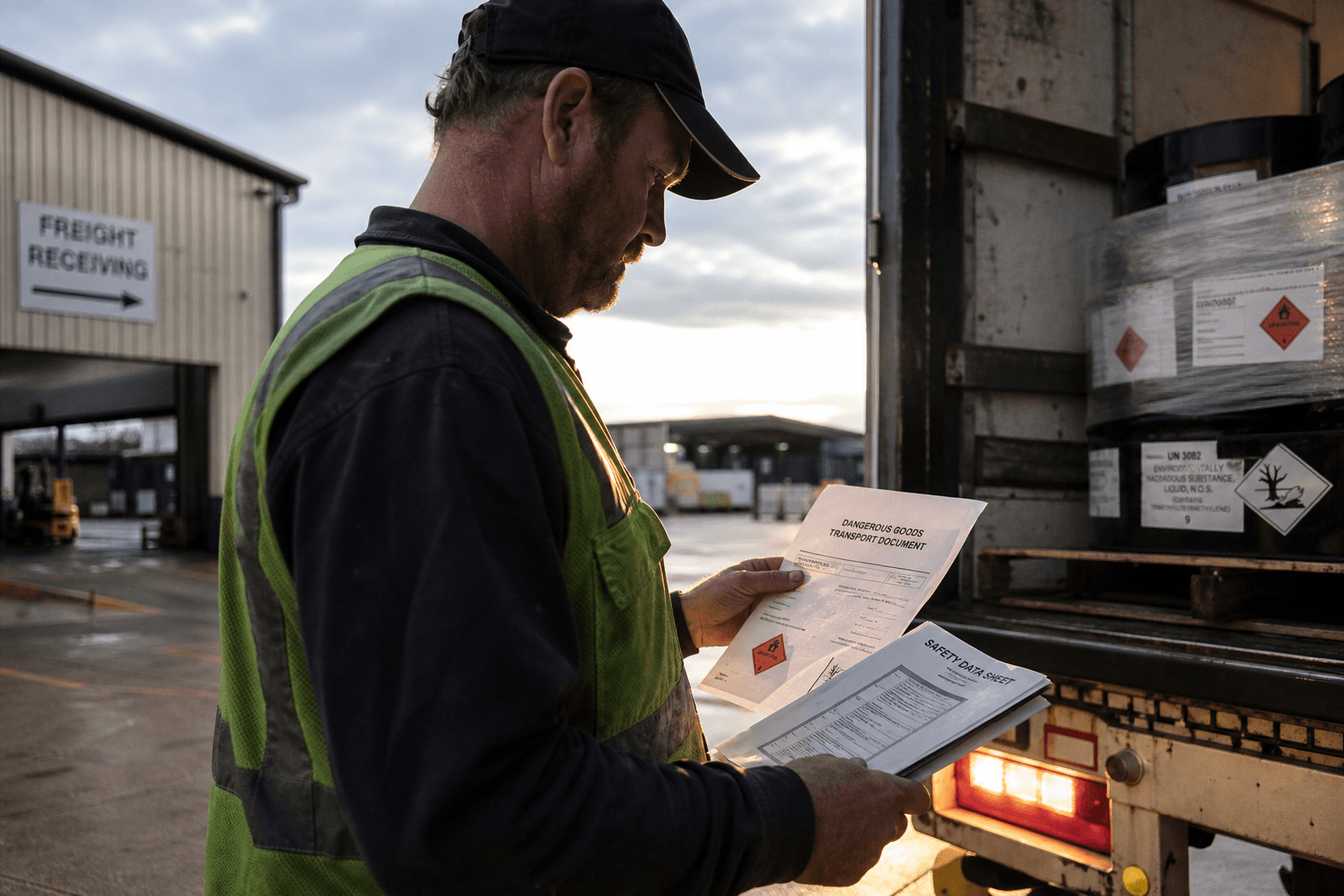
Dangerous goods documentation is one of the most error-prone, time-consuming parts of freight compliance in Australia. A single missing UN number or misclassified hazard class can hold up a shipment, trigger a fine, or worse, create a genuine safety risk. AI in logistics is now being applied directly to this problem — reading freight documents, extracting classification data, and flagging compliance gaps before goods leave the dock.
This article looks at how AI-assisted document intelligence supports dangerous goods classification under the ADG Code and IMDG Code, and what that means for operators managing road, rail, and sea freight compliance.
What is dangerous goods classification and why does it matter?
Dangerous goods classification is the process of assigning a substance or article to a UN number, hazard class, and packing group based on its physical and chemical properties. It matters because Australian transport law requires correct classification, labelling, and documentation before dangerous goods can be legally moved by road, rail, or sea — get it wrong and you risk regulatory penalties, rejected shipments, or a safety incident in transit.
For operators moving chemicals, batteries, aerosols, or industrial materials, classification isn't a one-off task. It happens on every consignment, often under time pressure, and frequently relies on a dispatcher or warehouse team member manually cross-referencing a safety data sheet against a printed dangerous goods list.
What does the ADG Code require for dangerous goods documentation?
The Australian Dangerous Goods (ADG) Code is the national standard, published by the National Transport Commission, governing the transport of dangerous goods by road and rail in Australia. It requires a dangerous goods transport document that correctly states the UN number, proper shipping name, class and subsidiary risk, packing group, and quantity for every consignment.
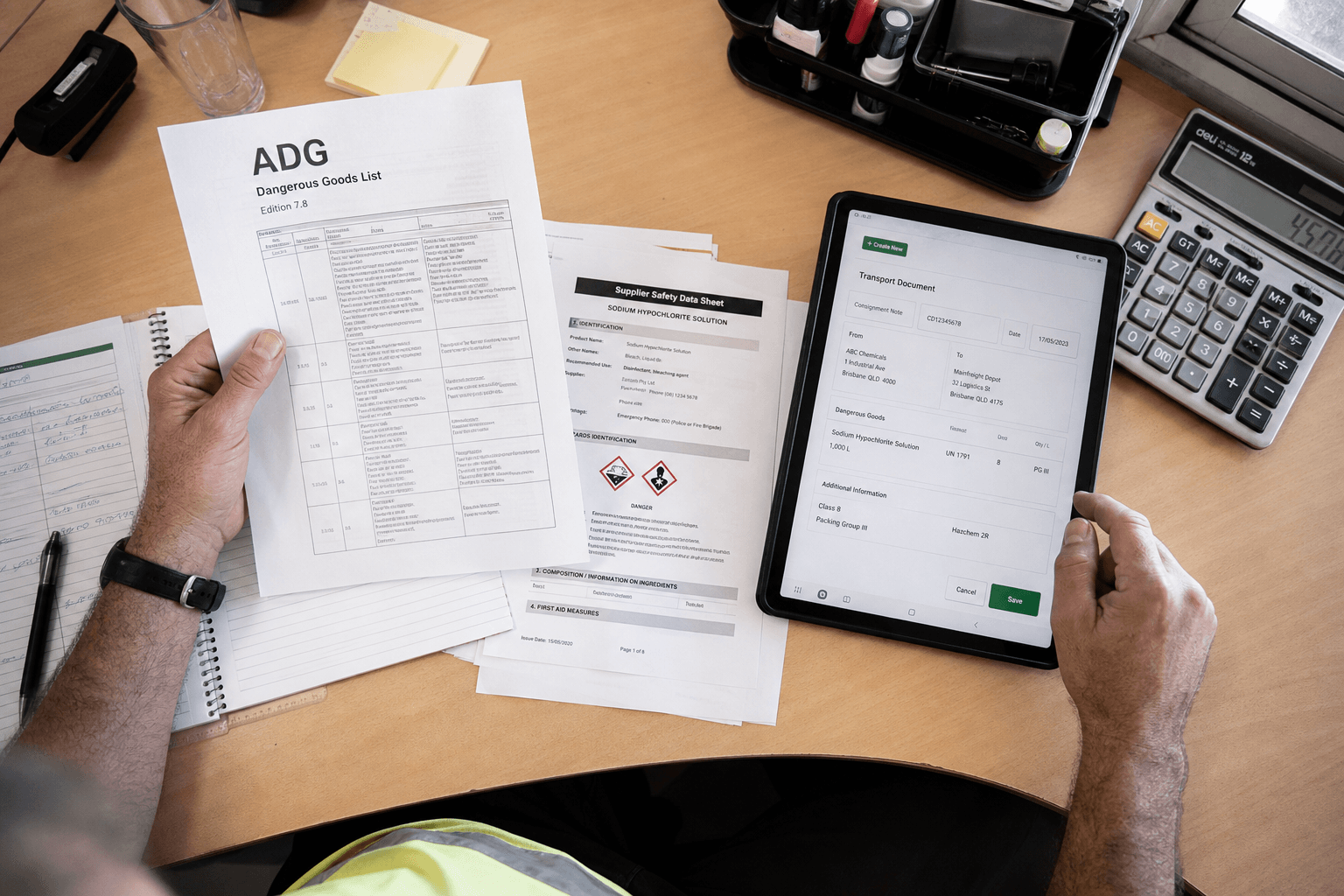
Most operators still assemble this documentation manually — pulling data from supplier safety data sheets, matching it against the ADG dangerous goods list, and typing it into a transport document or TMS field. This is exactly the kind of repetitive, rules-based task that AI document processing is well suited to, because the source data (SDS, purchase orders, packing lists) is usually available, it's just not connected to the output document.
How does IMDG differ from ADG for sea freight?
The International Maritime Dangerous Goods (IMDG) Code is the international standard, maintained by the International Maritime Organization, governing the sea transport of dangerous goods, and it applies whenever a consignment moves by vessel — including the export leg of an Australian domestic shipment. IMDG uses the same UN numbering system as ADG but has its own packaging, stowage, segregation, and documentation requirements, including the Dangerous Goods Declaration required for sea freight.
For freight forwarders and 3PLs handling both domestic and export dangerous goods, this means maintaining two overlapping but distinct compliance frameworks. An operator classifying a shipment for road transport under ADG still needs to check IMDG segregation and stowage rules if that shipment is going onward by sea — a step that's easy to miss when classification is done manually and by different teams.
How does AI extract UN numbers and classification data from freight documents?
AI-based document extraction uses optical character recognition combined with natural language processing to read unstructured documents — SDS, supplier invoices, packing lists — and pull out the specific fields needed for a dangerous goods declaration, such as UN number, proper shipping name, hazard class, and packing group. Instead of a person scanning a multi-page PDF, the model identifies and structures the relevant data automatically.
This matters because dangerous goods information doesn't arrive in a consistent format. Every supplier's SDS looks different, uses different section numbering, and often has classification data buried in section 14 (Transport Information) among dozens of other fields. A trained extraction model can locate that section reliably across varying document layouts, which is the main reason manual data entry is slow in the first place.
How does AI parse safety data sheets for compliance data?
Safety data sheet (SDS) parsing is the process of automatically identifying and extracting the regulated transport, handling, and hazard information from an SDS so it can populate a dangerous goods transport document without manual re-keying. In Australia, SDS format follows the Globally Harmonised System (GHS) as adopted by Safe Work Australia, which gives AI models a consistent 16-section structure to work from.
Once parsed, this data can be cross-checked against the ADG dangerous goods list or IMDG code index automatically, rather than relying on a person's memory or a printed reference table. This doesn't replace the judgement of a qualified dangerous goods consultant for edge cases — it removes the repetitive lookup and transcription work so that human review is focused where it's actually needed.
How does AI validate compliance before goods move?
Compliance validation is the step where extracted classification data is checked against current regulatory rules — correct UN number and shipping name pairing, valid packing group, required subsidiary risk labels, and segregation requirements — before a shipment is dispatched. AI-assisted validation flags mismatches or missing fields at the point of booking, rather than after a document has already been printed and attached to a load.
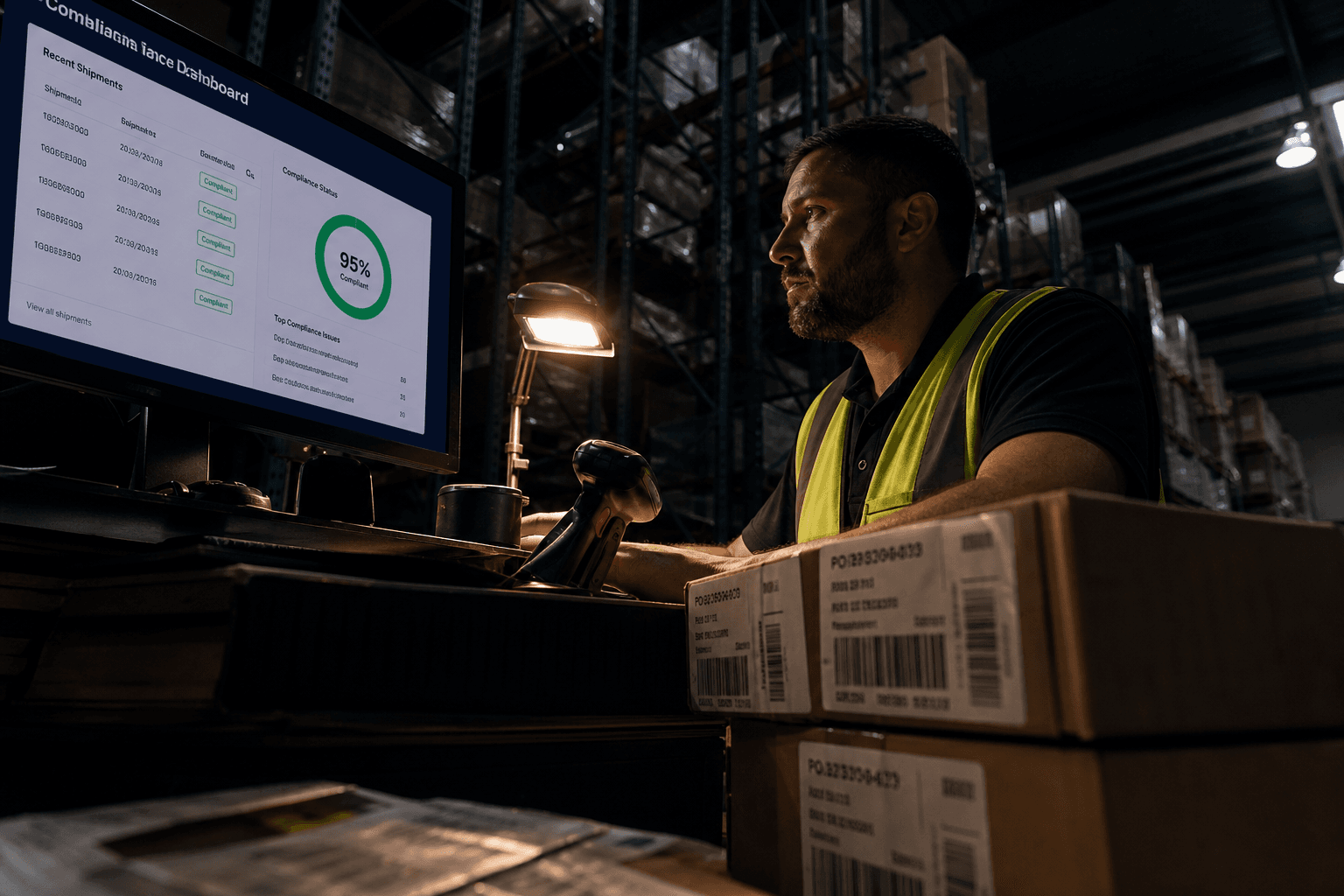
This is particularly useful for operators managing high volumes of mixed-hazard consignments, where a single transport document error can affect an entire load if it's not caught before the vehicle leaves. Building this kind of validation into existing workflows is a core part of what we cover in our document-intelligence work with freight and 3PL clients.
Manual vs AI-assisted dangerous goods documentation
| Task | Manual process | AI-assisted process |
|---|---|---|
| SDS data lookup | Person reads full SDS, locates Section 14 | Model extracts Section 14 fields automatically |
| UN number matching | Cross-referenced against printed ADG list | Matched against structured, up-to-date reference data |
| Transport document creation | Manually typed into TMS or paper form | Auto-populated from extracted data, reviewed by staff |
| Compliance check | Done visually, often after documents are printed | Flagged at booking stage, before dispatch |
| Consistency across staff | Varies by experience and workload | Consistent rules applied every time |
The goal isn't to remove human oversight from dangerous goods compliance — regulation requires qualified sign-off regardless. The goal is to reduce the manual burden of data entry and lookup, so the people responsible for compliance can spend their time on judgement calls, not transcription.
Where does this fit into a broader logistics modernisation plan?
Dangerous goods document automation is usually one module within a wider digital transformation logistics Australia strategy, sitting alongside route optimisation, warehouse throughput, and emissions reporting work. For operators still running manual, spreadsheet- and paper-based processes, it's often one of the clearest starting points because the compliance risk is tangible and the current process is well understood.
If you're assessing where AI can realistically fit into your operation — dangerous goods documentation included — an ai-readiness-assessment is a practical starting point. It looks at your existing systems, data, and workflows before recommending where automation will actually reduce risk and manual effort, rather than adding another disconnected tool. You can also browse our insights for more on how AI is being applied across Australian freight and warehousing.
If you're exploring how AI could support dangerous goods classification or broader document compliance in your operation, get in touch and we'll talk through what's realistic for your systems and data.
Zero Footprint
The Zero Footprint team — AI modernisation for Australian logistics.