AI Cold Chain Monitoring: What Australian Operators Need to Know
AI-powered cold chain monitoring moves Australian operators from reactive threshold alerts to predictive maintenance — detecting equipment failures hours before they cause product loss or compliance breaches. This guide covers the key use cases, data requirements, and how to assess whether your refrigerated fleet and cold store operations are ready to make the shift.
AI-Powered Cold Chain Monitoring: What Australian Logistics Operators Need to Know
Cold chain logistics in Australia is unforgiving. A temperature excursion in a refrigerated trailer heading from Melbourne to Brisbane, a compressor that fails overnight in a cold store, a consignment of pharmaceuticals that arrives outside the required range — any of these events can mean product write-offs, regulatory breaches, and lost customer contracts. AI-powered cold chain monitoring is changing how operators detect and prevent these failures before they become costly.
This guide covers how AI applies to temperature monitoring and predictive maintenance in Australian cold chain operations, what's realistic to expect, and how to evaluate whether your business is ready to make the move.
What Is AI Cold Chain Monitoring?
AI cold chain monitoring is the use of machine learning and sensor data to continuously track temperature, humidity, and equipment performance across refrigerated transport and storage — and to predict failures before they occur, rather than reacting after the fact.
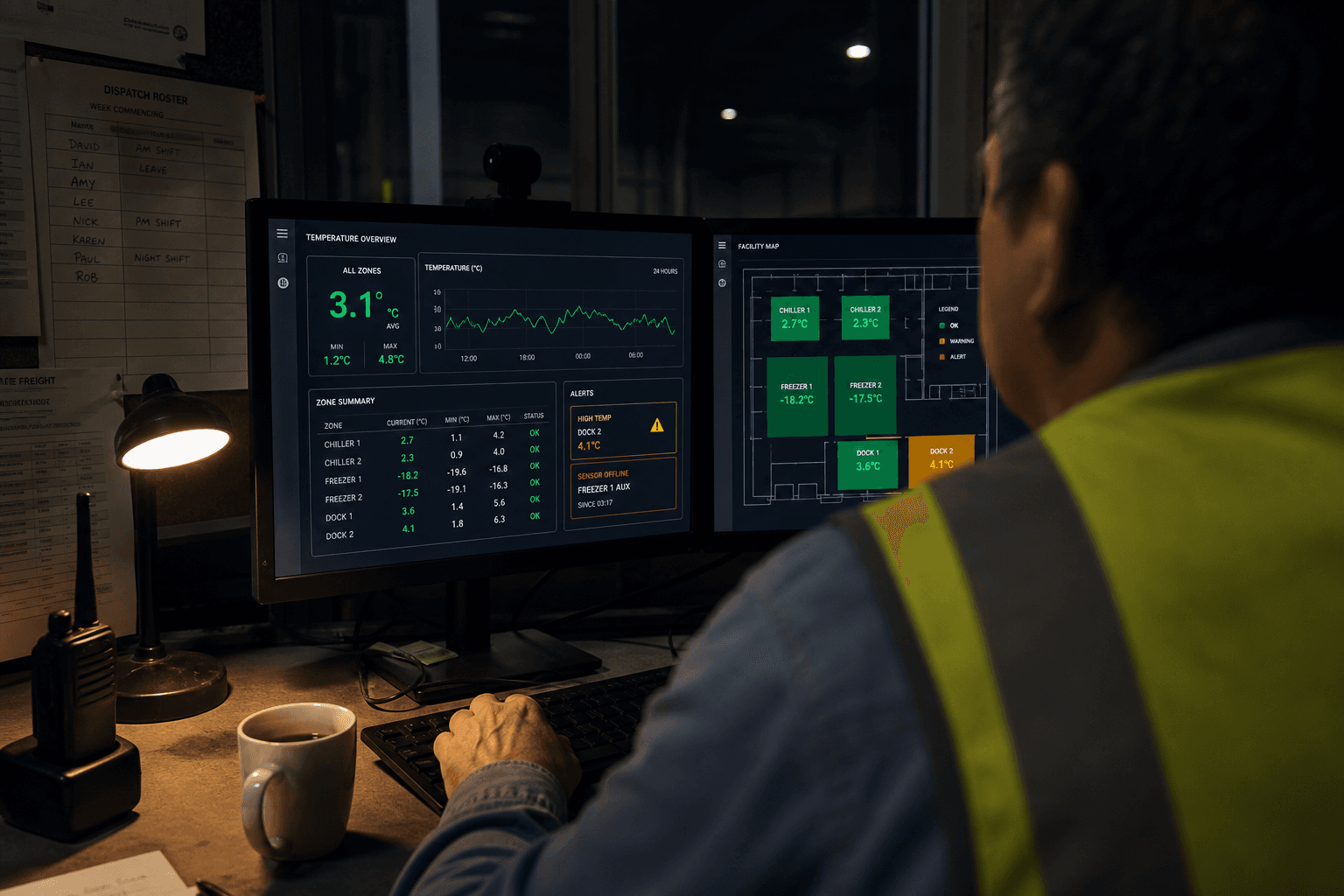
Traditional cold chain monitoring relies on threshold alerts: a sensor reads above or below a set point and triggers an alarm. This is reactive. By the time the alarm fires, the excursion has already started. AI-based systems work differently — they learn the normal operating patterns of your equipment and flag anomalies that precede failures, often hours before a threshold is breached.
For Australian operators running temperature-controlled freight across long distances or managing large cold store facilities, this shift from reactive to predictive monitoring has meaningful operational implications.
Why Does Cold Chain Monitoring Matter More in Australia?
Australia's cold chain sector faces conditions that compound the risk of temperature excursions:
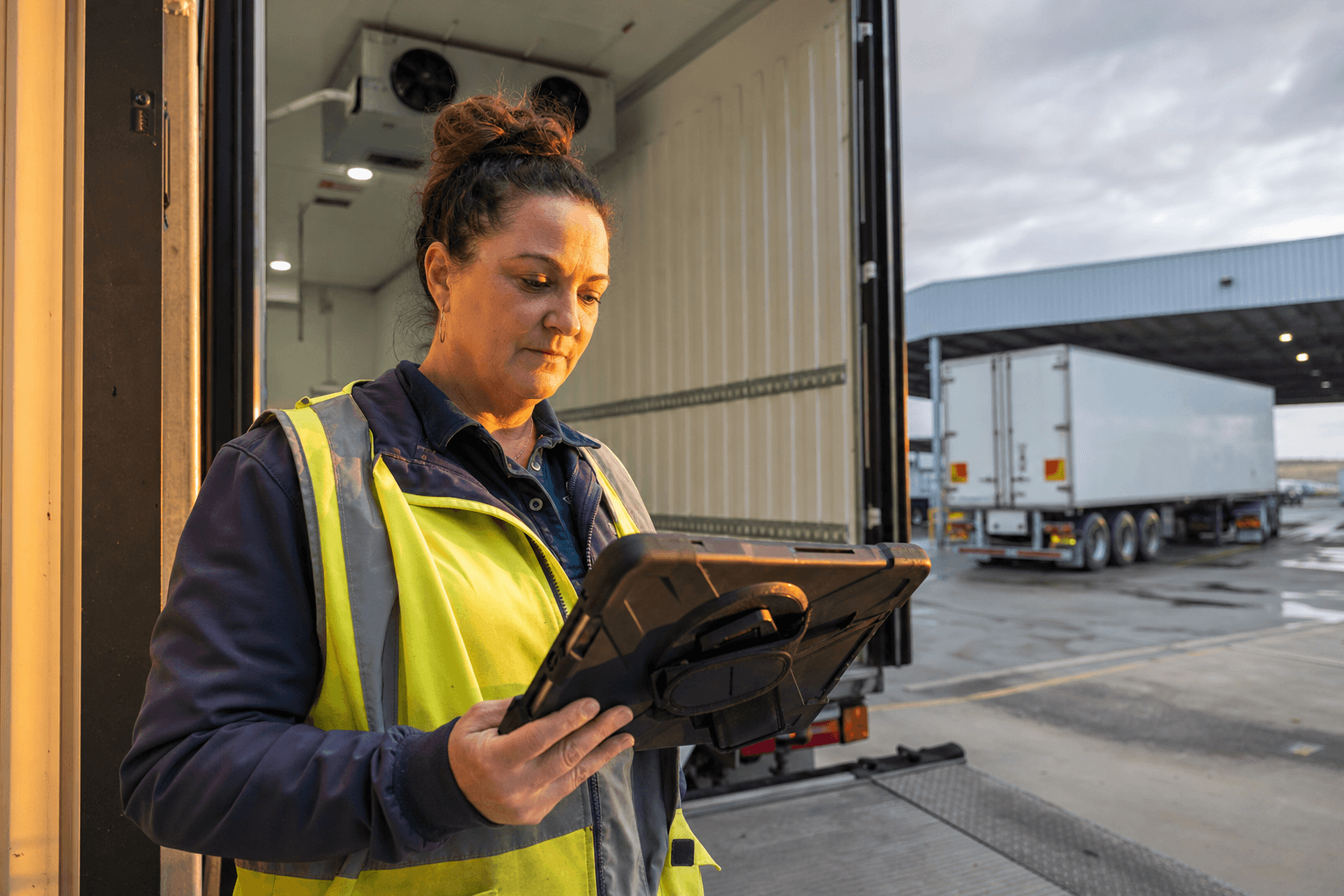
- Distance: Refrigerated linehaul routes between major capitals often exceed 1,000 km. Equipment failures mid-route are difficult to respond to quickly.
- Climate variability: Ambient temperatures across Australian states vary dramatically by season and region. Equipment working hard in a Queensland summer is under different stress than the same unit running in a Victorian winter.
- Regulatory pressure: The Australia New Zealand Food Standards Code sets specific temperature requirements for food transport and storage. The Therapeutic Goods Administration (TGA) sets its own requirements for pharmaceutical cold chain. Breaches carry real compliance risk.
- Labour constraints: Many cold chain operators don't have the staffing to monitor equipment around the clock. Automated AI monitoring fills that gap.
These factors mean the cost of a monitoring failure in Australian cold chain is typically higher than in markets with shorter supply chains and denser service networks.
How Does Predictive Maintenance Work in Cold Chain?
Predictive maintenance in cold chain uses sensor data — compressor run times, suction and discharge pressures, evaporator fan speeds, door open/close cycles, energy consumption — and applies machine learning models to identify patterns that indicate an impending failure.
A refrigeration compressor about to fail, for example, often shows subtle changes in run time patterns and power draw well before it stops working. A door seal beginning to degrade shows up in how quickly the unit recovers after a door opening. AI models trained on this data can surface these signals and generate a maintenance alert before the unit fails in service.
The practical workflow looks like this:
| Stage | Traditional Approach | AI-Powered Approach |
|---|---|---|
| Detection | Alert fires when temperature breaches threshold | Anomaly flagged hours before threshold breach |
| Diagnosis | Technician investigates on-site | System identifies likely fault component |
| Response | Reactive repair, possible product loss | Scheduled maintenance, product protected |
| Record-keeping | Manual log or basic report | Automated audit trail with timestamps |
| Compliance evidence | Manual compilation | Continuous, exportable data record |
This shift from reactive to predictive doesn't eliminate breakdowns, but it meaningfully reduces unplanned failures — which are the ones that cause product loss and customer complaints.
What Data Does AI Cold Chain Monitoring Require?
AI cold chain monitoring requires reliable, continuous sensor data. The most common data sources include:
- In-vehicle telematics: Refrigerated trailer and truck body sensors that report temperature at defined intervals. Many modern refrigeration units (Thermo King, Carrier Transicold) already have telemetry capability.
- Fixed sensor networks: IoT sensors installed in cold rooms, freezer stores, and loading docks.
- Equipment control systems: Direct integration with refrigeration unit controllers to capture operational parameters beyond just temperature.
- External data: Ambient temperature and route data to contextualise equipment behaviour.
For many mid-market Australian operators, some of this data already exists — but it's siloed in proprietary systems, inconsistently captured, or simply not being used. A common starting point is an AI readiness assessment to map what data exists, where the gaps are, and what integration work is needed before AI models can be applied meaningfully.
What Are the Key Use Cases for AI in Cold Chain?
Real-Time Temperature Visibility Across the Fleet
AI systems can aggregate sensor data from across a refrigerated fleet into a single dashboard, flagging active excursions and near-miss events. This gives operations managers real-time visibility across all vehicles and storage assets — not just the ones that have already triggered an alarm.
Predictive Equipment Maintenance
As described above, AI models can identify early indicators of equipment failure and generate maintenance work orders before a breakdown occurs. This is particularly valuable for operators running 24-hour cold stores where a compressor failure overnight means hours of unmonitored temperature drift.
Automated Compliance Documentation
Regulatory audits and customer requirements increasingly demand continuous temperature records. AI monitoring systems generate these records automatically, with timestamps and chain of custody data that manual logs cannot match. For pharmaceutical distributors, this is often a non-negotiable requirement.
Excursion Root Cause Analysis
When an excursion does occur, AI systems can replay the sequence of events — equipment status, door events, ambient conditions, route data — to identify root cause. This supports both operational improvement and customer dispute resolution.
Emissions Monitoring Integration
Refrigeration units are significant fuel consumers and, in some cases, sources of refrigerant leakage. Integrating cold chain monitoring data with your broader emissions reporting platform allows more accurate measurement of Scope 1 emissions from your cold chain assets — relevant as AASB S2 reporting obligations approach for mid-market operators.
What Should You Look for in a Cold Chain AI System?
There's no shortage of vendors offering IoT sensors and monitoring dashboards. The harder question is whether the system you're evaluating can actually do predictive analytics, or whether it's just a better threshold alarm.
Key questions to ask:
Is the system learning from your equipment, or applying generic rules? Generic threshold alerts don't require AI. A system that genuinely builds a model of your specific equipment's behaviour will outperform one applying industry-average rules.
What happens when connectivity drops? Refrigerated trucks travel through areas with poor mobile coverage. The system needs to handle data gaps gracefully and not generate false alerts when connectivity resumes.
How does it integrate with your existing TMS and maintenance systems? Monitoring data that sits in a separate silo requires manual effort to act on. Integration with dispatch and maintenance workflows is where the operational value is realised.
What is the audit trail format? For pharmaceutical and regulated food products, the format and accessibility of temperature records matters as much as the records themselves.
Can it scale across your asset types? Cold chain operators often run a mix of rigid trucks, semi-trailers, and fixed cold stores. A monitoring system should be able to cover all asset types from a single platform.
Is Your Business Ready for AI Cold Chain Monitoring?
Readiness for AI cold chain monitoring depends on a few factors:
- Do your refrigeration units already have telematics capability, or would hardware installation be required?
- Is your sensor data currently being collected consistently, or are there gaps and manual processes in the data capture?
- Do you have the operational processes to act on predictive alerts — i.e., a maintenance team that can respond to a scheduled alert rather than a breakdown call?
- Are your customers or regulators applying increasing pressure around temperature documentation?
For most mid-market Australian cold chain operators, the honest answer is that some of these foundations are in place and some aren't. That's not a reason to delay — it's a reason to start with a structured assessment of where you are and what the build sequence looks like.
Explore our insights for more on how Australian logistics operators are approaching AI adoption across operations, compliance, and fleet management.
Getting Started
Cold chain monitoring is one of the more tractable AI applications in logistics — the data sources are well understood, the use cases are specific, and the cost of inaction is visible in product write-offs and compliance risk.
If you're running refrigerated operations and want to understand what AI-powered monitoring would look like for your specific fleet and facilities, our AI readiness assessment is designed to give you a clear picture in two to four weeks — without committing to a full build.
Get in touch and we'll have a direct conversation about what's realistic for your operation.
Zero Footprint
The Zero Footprint team — AI modernisation for Australian logistics.