AI in Logistics: How AI Cuts Freight Cost for Australian Operators
AI reduces freight cost through four concrete mechanisms — dynamic pricing, anomaly detection, demand forecasting and negotiation support — but most commercial tools are calibrated for US freight data. Here's what that means for Australian carriers, 3PLs and warehouse operators, and what to fix first.
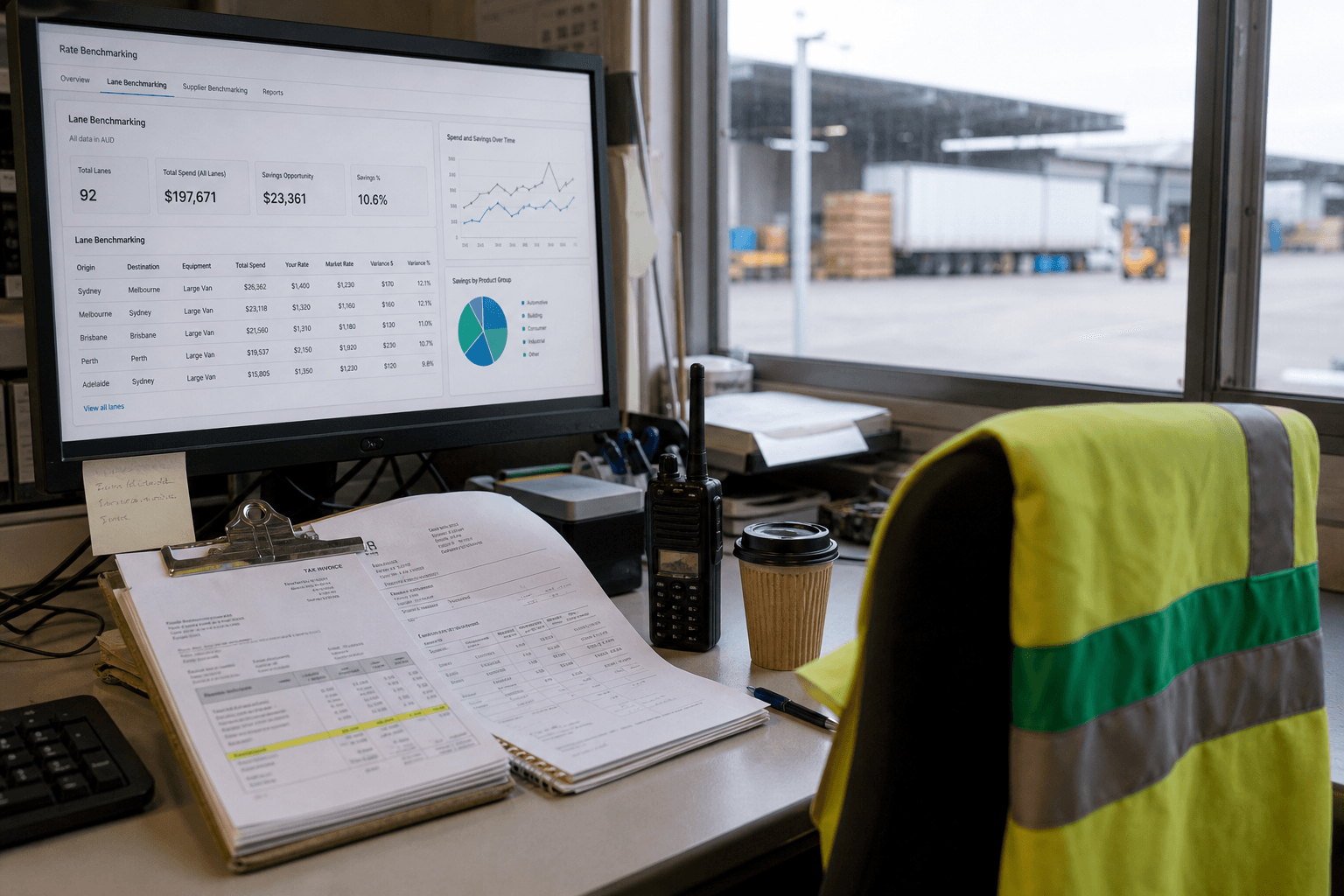
AI reduces freight cost through four concrete mechanisms: dynamic pricing engines that adjust quotes based on real-time capacity signals, anomaly detection that flags rate outliers in carrier invoices, demand forecasting that gives planners lead time ahead of peak periods, and negotiation support built on benchmarked market data. None of these is a single black-box algorithm — they're discrete tools layered over rate, capacity and network data specific to your operation. This guide breaks down how each mechanism works, what's commercially available, and why the starting point for Australian carriers, 3PLs and freight forwarders looks different to the US market that most AI in logistics tooling is built for.
What Is AI-Driven Freight Cost Reduction?
AI-driven freight cost reduction is the use of machine learning and data analytics to identify and act on cost-saving opportunities across transport operations — typically in rate benchmarking, route and load planning, and carrier performance monitoring. It's not one saving lever. It's a set of applications sitting on top of your existing rate, capacity and network data, each solving a narrow, well-defined problem rather than promising a blanket cost reduction.
For Australian road freight, 3PL and cold chain operators, this usually shows up as an extension of work already underway in route optimisation and dispatch planning, rather than a standalone project.
How Each Mechanism Actually Works
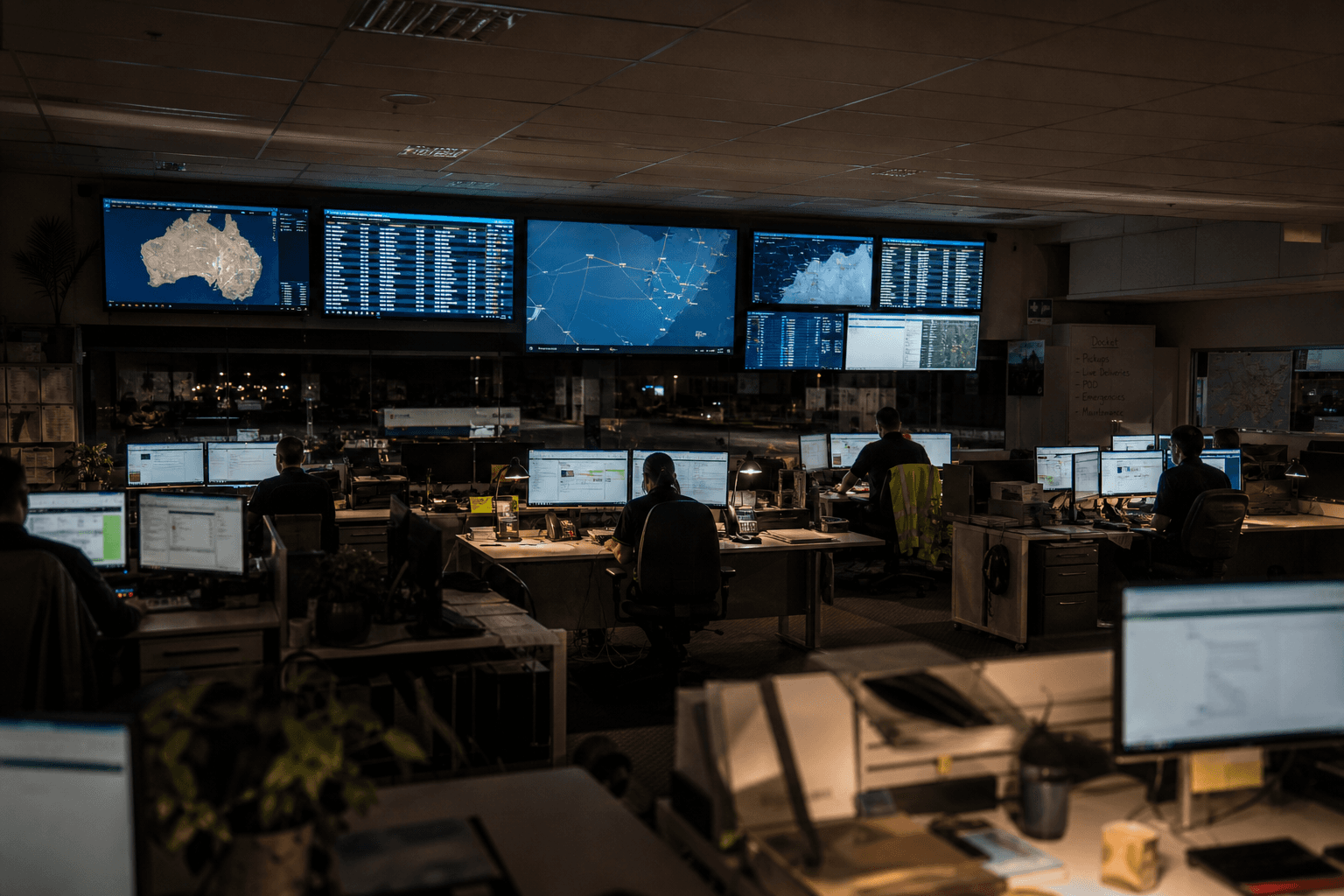
Each of the four mechanisms solves a different operational problem:
- Dynamic pricing helps operators quote competitively without under-pricing capacity-constrained lanes, using real-time signals rather than static rate cards.
- Anomaly detection catches invoice errors and rate creep that manual audits miss at scale — a persistent issue in freight billing where accessorial charges and fuel surcharges are easy to misapply or duplicate.
- Demand forecasting gives planners lead time to secure capacity or adjust pricing before peak season squeezes margins, rather than reacting after rates have already moved.
- Negotiation support gives account managers a data-backed position when renegotiating carrier contracts, rather than relying on gut feel or last year's rate card.
None of this replaces routing and consolidation decisions — it informs them. That's where route optimisation modelling and structured document processing come in, feeding cleaner inputs into pricing and forecasting models.
What Tools Are Available for Freight Cost Intelligence?
The commercial market for AI-driven freight cost tools is dominated by platforms built and calibrated for North American truckload, LTL and intermodal markets. Two frequently cited examples are ThroughPut Inc., which applies constraint-based analytics to identify bottlenecks across warehouse and distribution operations, and Optimal Dynamics, which focuses on AI-driven dispatch and network optimisation for trucking fleets. Both illustrate the category well, but neither was built with Australian freight data as the primary input.
The most established freight rate intelligence platform, FreightWaves' SONAR, aggregates data from thousands of US freight sources to power real-time rate and capacity benchmarking. It's a genuinely useful reference point for understanding what mature freight data infrastructure looks like — but it sells data and market intelligence, not implementation, and its calibration is largely irrelevant to Australian domestic lanes.
| Capability | US-calibrated platforms (e.g. SONAR) | Typical Australian mid-market operator |
|---|---|---|
| Market rate benchmarking depth | Built on thousands of aggregated sources | Limited to internal history and broker knowledge |
| Real-time capacity signals | Available at lane level | Rarely available at this granularity |
| Invoice anomaly detection | Achievable with existing data feeds | Requires building a clean data feed first |
| Demand forecasting inputs | Rich historical and macro data | Often just internal TMS history |
| Path to deployment | Buy access, integrate | Data integration layer needed before AI adds value |
Why Doesn't This Work Out of the Box for Australian Operators?
The catch for Australian operators isn't appetite for AI — it's data availability. There is no equivalent large-scale proprietary freight data platform for Australian domestic freight at the depth of SONAR, so carriers, 3PLs and forwarders typically fall back on internal TMS/WMS history, industry association data, and broker knowledge.
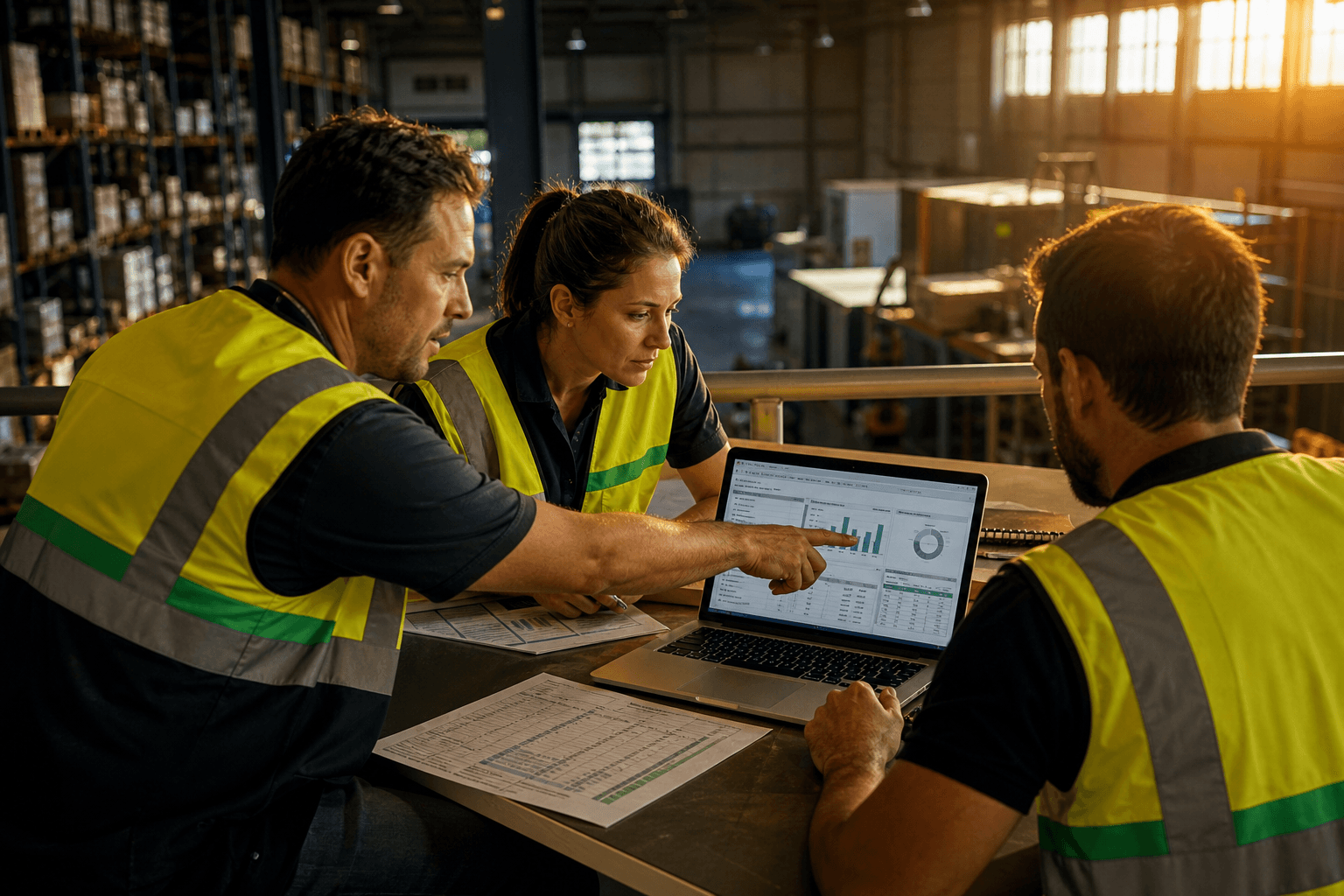
That gap matters more than it sounds. Dynamic pricing and rate-benchmarking models are only as good as the data feeding them. If an operator's TMS history is inconsistent, siloed across systems, or trapped in PDFs and paper BOLs, an AI model has nothing reliable to learn from. This is the same underlying issue we cover in document intelligence work — structured, usable data has to exist before AI can be applied to it at all.
It's also worth noting this data problem doesn't stay contained to freight cost. The same fragmented TMS and invoice data that blocks pricing models also makes Scope 3 emissions reporting under AASB S2 harder than it needs to be — carriers are increasingly being asked by customers and auditors for emissions data they simply don't have in a usable format. Fixing the data layer once tends to unlock both problems.
What Should Australian 3PLs and Carriers Do First?
Mid-market operators running legacy TMS systems typically need a data integration layer built before AI pricing or rate-benchmarking models can be applied effectively. AI can't reduce freight cost until the underlying data — rate history, invoice detail, lane volumes, carrier performance — is consolidated and usable.
In practice this looks like:
- Auditing what data already exists across TMS, WMS, accounting and carrier portals.
- Identifying data quality gaps — missing fields, inconsistent formats, manual entry errors.
- Building a single, structured feed that pricing, forecasting and anomaly detection tools can actually run on.
- Piloting one mechanism (usually invoice anomaly detection, since it has the clearest data trail) before expanding to dynamic pricing or demand forecasting.
This sequencing matters. Operators who skip straight to buying a pricing tool without fixing the data layer underneath it typically end up with a system that produces confident-sounding numbers built on inconsistent inputs — which is worse than no model at all.
An AI readiness assessment is the practical way to work through this sequence: it audits what data exists, where the gaps are, and which mechanism is realistic to deploy first for your operation. It's not a generic diagnostic — it's calibrated to how Australian carriers, 3PLs and warehouse operators actually run, not how a software vendor assumes a US truckload fleet operates.
If you're weighing up where AI genuinely fits in your operation versus where it's premature, that's exactly the conversation worth having before committing budget to a platform. For more on how this plays out across routing, warehouse throughput and compliance reporting, see our more insights on logistics AI in Australia.
If freight cost, data fragmentation, or AASB S2 reporting pressure are live issues for your business right now, get in touch and we'll walk through where the gaps actually are before recommending anything.
Zero Footprint
The Zero Footprint team — AI modernisation for Australian logistics.