AI-Driven Driver Retention Analytics for Transport Operators
Driver shortages have pushed many Australian transport operators to recruit harder without asking why drivers leave. AI-assisted recruitment and retention analytics connects hiring, onboarding, and turnover data to show where the real problem sits.
Australian transport operators have spent years throwing recruitment spend at a problem that recruitment alone can't fix. The driver shortage isn't just a hiring problem — it's a retention problem, and most fleets have no systematic way to see it coming. AI-assisted recruitment and retention analytics gives operators visibility into which channels actually produce drivers who stay, where onboarding is losing people, and which signals predict a resignation before it happens.
This is a newer application of AI in logistics than route optimisation or emissions reporting, and it deserves a more cautious, specific look than most of the hype around "AI for logistics" tends to give it.
What Is Driver Recruitment and Retention Analytics?
Driver recruitment and retention analytics is the practice of applying data analysis — increasingly AI-assisted — to the full driver lifecycle: which recruitment channels produce applicants, which applicants convert to hires, which hires complete onboarding, and which drivers stay versus leave within a given period. Rather than treating each stage as a separate HR function, it treats the whole pipeline as one connected dataset.
For most mid-market transport operators, this data already exists. It's just scattered across job board exports, a TMS, a payroll system, and someone's inbox — never joined up in a way that shows patterns.
Why Is Driver Turnover Such a Costly Problem for Australian Transport Operators?
Driver turnover is expensive because every departure resets the clock on recruitment advertising, screening, licence and medical checks, induction, and the weeks it takes a new driver to reach full productivity on a route or account. Industry bodies including the Australian Trucking Association have repeatedly flagged driver shortages as a structural issue facing road freight, not a short-term blip tied to any single cause.
When turnover is high, operators tend to respond by recruiting harder — more job ads, more agencies, more sign-on incentives — without asking why drivers are leaving in the first place. That's a reasonable first response, but it treats a pattern as a series of unrelated events.
How Can AI Analyse Recruitment Channel Performance?
AI can connect applicant source data (job boards, agencies, referrals, social channels) to downstream outcomes — not just cost-per-hire, but cost-per-retained-driver at six and twelve months. This reframes recruitment spend around quality of retention rather than speed of fill.

Most operators can already tell you which channel is cheapest per application. Very few can tell you which channel produces drivers still on the roster a year later. That gap is exactly where a machine learning model, trained on historical hiring and tenure data, adds value — it can surface correlations a spreadsheet won't show, such as a particular agency or region consistently producing shorter-tenure hires.
What Causes Onboarding Drop-Off — and How Can AI Flag It Early?
Onboarding drop-off is the loss of candidates or new hires between offer acceptance and becoming a fully inducted, rostered driver — a period where paperwork delays, licence or medical check bottlenecks, and unclear induction processes commonly cause people to disengage or walk away. AI-assisted tracking can flag where in this sequence candidates stall, so operators can intervene with a phone call or a faster document turnaround instead of discovering the loss weeks later.
This is also where document-heavy onboarding processes — licence verification, medical certificates, induction sign-offs — benefit from faster processing. Tools built for document intelligence can extract and validate this paperwork automatically, which shortens the onboarding window and removes one of the common points of drop-off.
Can AI Predict Turnover Risk Before a Driver Resigns?
AI can model turnover risk by learning from patterns in historical data — tenure length by route type, roster changes, overtime load, time since last pay review, or incident and fatigue reporting — to flag drivers whose current profile resembles those who left previously. This is predictive analytics applied to workforce data rather than freight volumes or maintenance schedules, but the underlying technique is the same one increasingly used elsewhere in logistics for demand and asset forecasting.
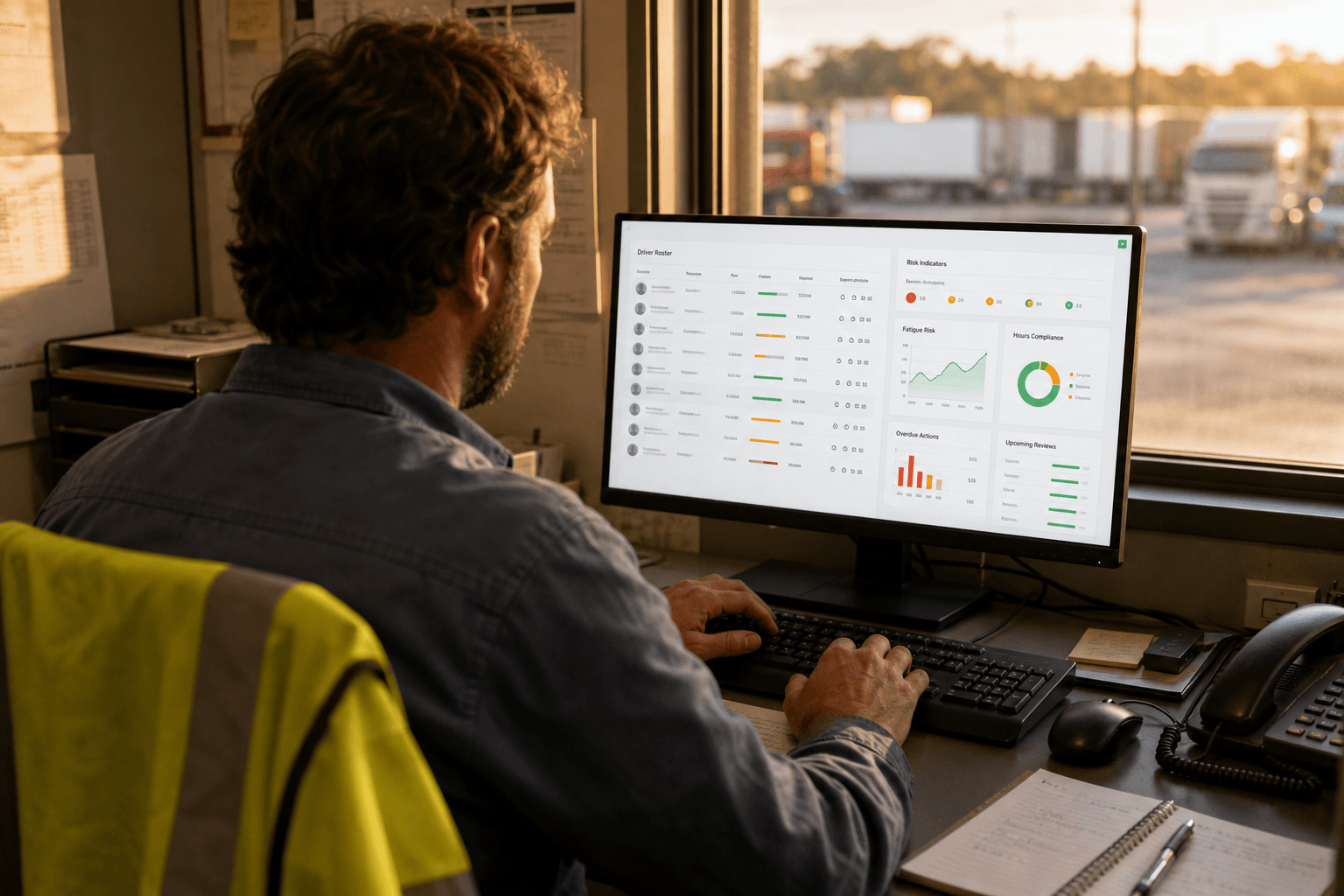
It's worth being precise about what this can and can't do. A turnover risk model doesn't tell you why an individual driver might leave, and it isn't a substitute for actually talking to your people. What it does is prioritise where a manager's limited time for retention conversations should go, based on patterns across the whole fleet rather than gut feel.
Beyond Scheduling: Why Retention Analytics Needs to Go Deeper Than Day-to-Day Coordination
A lot of AI tools marketed to transport operators focus on solving today's dispatch problem — who's available, who's close to a job, who needs a break under fatigue rules. That's useful, but it's a different layer of the problem to retention. Scheduling tools answer "who can we put on this job tomorrow." Retention analytics answers "which of our drivers are we likely to lose in the next quarter, and why."
| Approach | Focus | Typical output |
|---|---|---|
| Day-to-day scheduling/communication tools | Immediate roster and dispatch coordination | Who's available today, fatigue compliance, job allocation |
| Recruitment channel analytics | Hiring pipeline performance | Which channels produce drivers who stay |
| Onboarding drop-off tracking | Candidate-to-hire conversion | Where and why new hires disengage before full induction |
| Turnover risk modelling | Workforce-wide risk signals | Which current drivers show patterns similar to past leavers |
Operators who only invest in the first row are solving a real but narrower problem. The other three rows are where the driver shortage is actually won or lost over a 12-month horizon.
What Needs to Be in Place Before You Can Build Driver Analytics?
Most mid-market transport operators run legacy TMS or WMS platforms implemented five or more years ago, and these systems were not built with workforce analytics in mind. They typically require manual workarounds for common tasks and lack real-time visibility, reporting, or analytics capability — the same limitation that makes demand forecasting and route planning harder also makes driver data hard to pull together in one place.
In practice, this means the first step usually isn't buying a retention analytics tool — it's an honest audit of what data you actually have, where it lives, and how clean it is. Driver tenure records sitting in payroll, applicant data sitting in a recruitment inbox, and incident reports sitting on paper all need to be brought together before any model is worth building.
Where Does This Fit Into a Broader AI Strategy?
Driver recruitment and retention analytics isn't a standalone product most operators can buy off the shelf — it's typically a custom build, scoped around your specific recruitment channels, your TMS, and your payroll or HR system. That scoping work is exactly what an ai-readiness-assessment is designed to do: map your existing systems and data quality, identify where manual workarounds are hiding useful data, and flag which problems — recruitment, retention, route efficiency, or warehouse throughput — are worth solving first.
For operators already using AI for route-optimisation or planning, retention analytics is a natural next layer — the same underlying approach to historical data and pattern detection, aimed at the workforce side of the business rather than the freight side. You can read more operational AI topics on our insights.
If you're exploring how AI could help you understand recruitment and retention patterns in your own fleet, get in touch — we'll help you work out whether the data and systems you already have are a realistic starting point.
Zero Footprint
The Zero Footprint team — AI modernisation for Australian logistics.