AI for Intermodal Rail-to-Road Freight Scheduling in Australia
AI scheduling tools can reduce dwell time at Australian intermodal terminals by forecasting rail-road handovers instead of relying on static timetables — but the tooling for this is still maturing locally, and regulatory constraints like NHVR hours-of-service rules shape what's feasible.
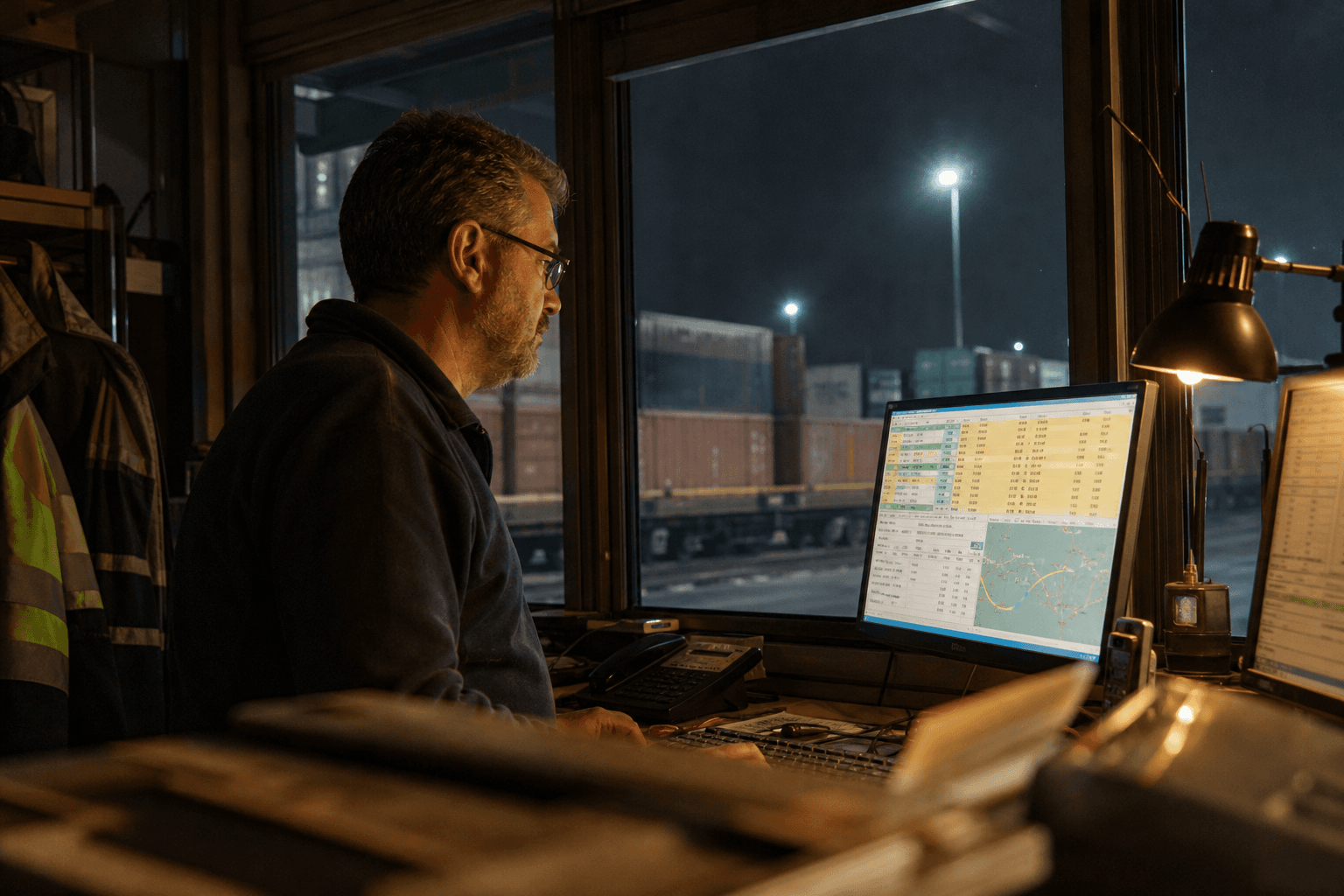
AI in logistics scheduling helps coordinate rail-to-road handoffs at Australian intermodal terminals by combining rail arrival estimates, terminal throughput capacity, and road-fleet availability into a single forecasting layer. Instead of relying on static timetables, this approach predicts realistic pickup windows and flags conflicts — such as a truck being dispatched before its container has actually cleared rail — before they happen. The result, in principle, is less dwell time, fewer missed road-leg slots, and less manual phone-and-email reconciliation between rail and road teams.
That said, this is a genuine gap area for us. We haven't yet built a dedicated rail-to-road scheduling solution, and there's limited Australian-specific public data on how intermodal terminal AI performs here compared with overseas markets. What follows draws on what we do know — workforce scheduling, digital transformation sequencing, and the state of Australian freight data — and flags clearly where more terminal-specific work is needed.
What is intermodal rail-to-road freight scheduling?
Intermodal rail-to-road freight scheduling is the coordination of container or trailer movements as they transfer between rail services and road transport at a terminal. It covers rail slot booking, crane or straddle-carrier allocation, and the timing of truck arrivals so containers move off rail wagons and onto road transport (or vice versa) with minimal dwell time. Dwell time is the period a container sits at a terminal waiting for its next leg — a key cost and congestion driver in any intermodal network.
Why does dwell time at intermodal terminals matter?
Dwell time matters because every hour a container sits idle ties up terminal space, delays downstream delivery commitments, and increases the chance of missed road-leg slots or driver hours running out mid-shift. For operators running tight customer SLAs, unpredictable dwell time is often a bigger cost driver than the line-haul transit time itself.
Much of the inefficiency comes from the handover point itself — rail arrival times, terminal processing capacity, and road-fleet availability are typically planned by separate teams using separate systems, with coordination happening by phone and email rather than shared data. This is the same fragmented-systems problem we see across the sector during an AI readiness assessment — data exists, but it sits in silos that don't talk to each other.
How can AI improve coordination between rail and road legs?
AI scheduling tools can, in principle, improve handover coordination by ingesting rail arrival estimates, terminal throughput capacity, and road-fleet availability into a single forecasting layer that predicts realistic pickup windows rather than relying on static timetables. This is the same pattern used in broader route optimisation work, extended to account for a rail dependency upstream of the road leg.
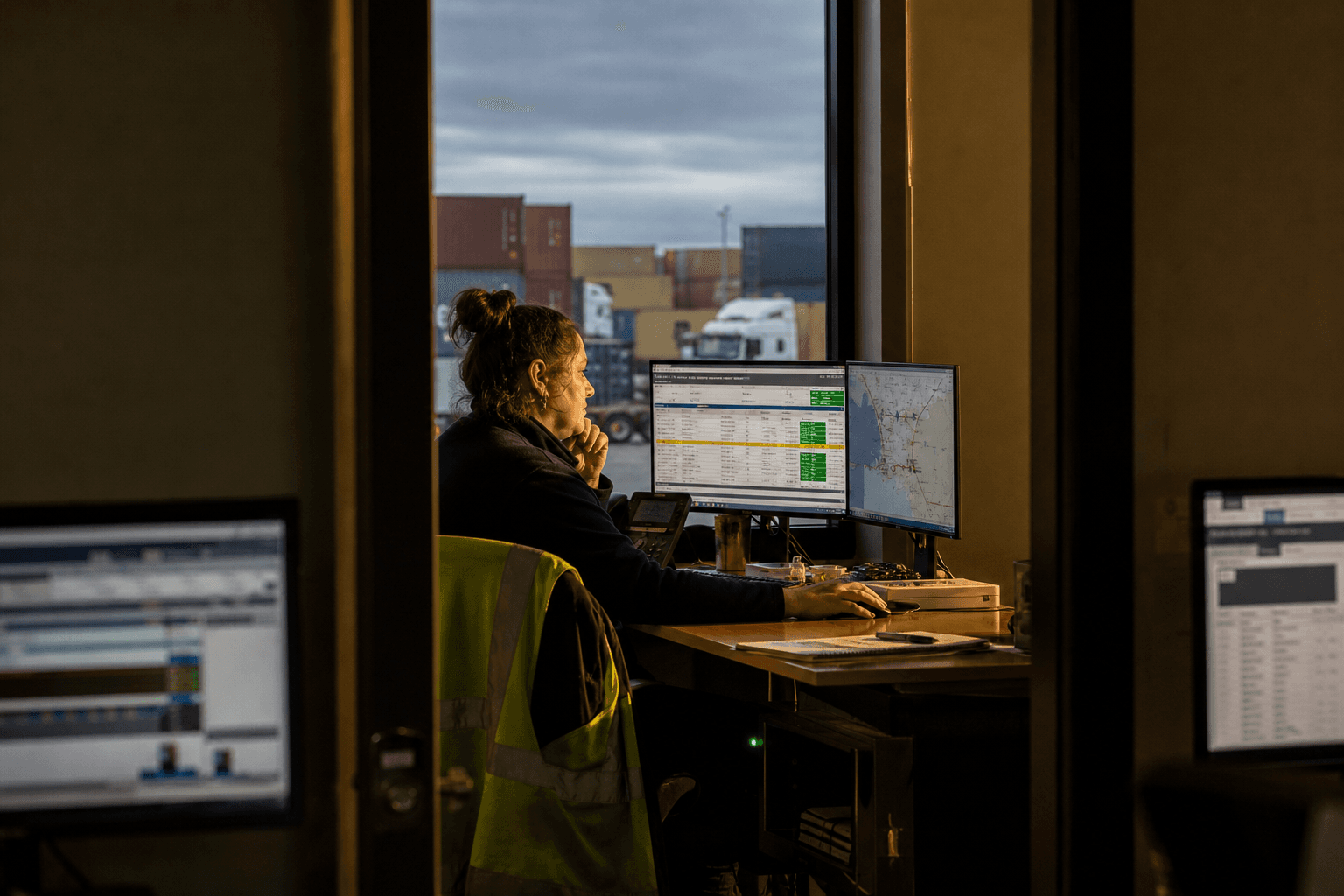
In practice, this means matching predicted rail arrival against driver and vehicle availability, factoring in terminal slot constraints, and flagging conflicts before a truck is dispatched — rather than discovering the mismatch when the driver is already at the gate. The mechanics are similar to workforce and dock scheduling problems we do have direct experience with, where driver availability constrains which jobs can be serviced and when.
What Australian regulatory constraints apply to the road leg?
Any AI scheduling tool touching the road leg of an intermodal movement has to operate within the Heavy Vehicle National Law administered by the National Heavy Vehicle Regulator (NHVR), which governs driver hours-of-service, and within Fair Work Act obligations for rostering. These aren't optional constraints a scheduling model can override — they define the feasible solution space before optimisation even starts.
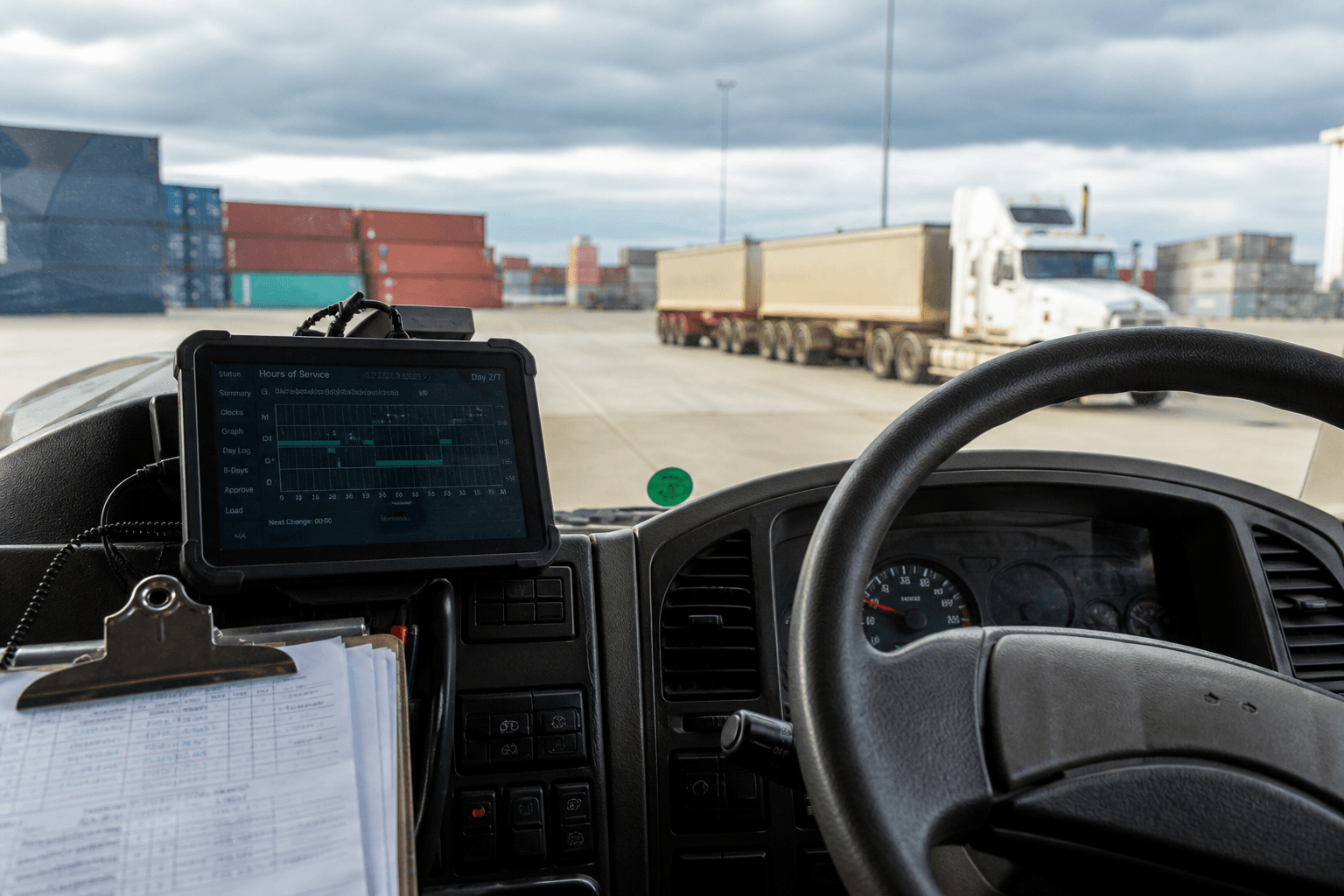
This is a meaningful difference from systems built for other markets, where hours-of-service rules differ or terminal operating models vary. An AI scheduling tool for Australian intermodal terminals needs these constraints built in from day one, not bolted on afterwards.
Manual vs AI-assisted coordination: a qualitative comparison
The table below compares typical manual coordination against what an AI-assisted approach aims to achieve. These are directional, qualitative comparisons — we're not citing specific percentage improvements because we don't have verified Australian intermodal benchmark data to support them.
| Aspect | Manual coordination | AI-assisted coordination |
|---|---|---|
| Rail arrival visibility | Phone/email updates, often reactive | Continuous ingestion of arrival estimates |
| Road-fleet matching | Planned separately, reconciled manually | Matched against predicted rail windows |
| Hours-of-service compliance | Checked after rostering | Built into scheduling constraints upfront |
| Dwell time response | Identified after the fact | Flagged as a predicted risk before it occurs |
| Data source | Siloed TMS/rail systems | Integrated data layer across modes |
Why there's no off-the-shelf Australian freight intelligence platform to plug into
Australia doesn't currently have a large-scale freight market intelligence platform equivalent to North America's SONAR from FreightWaves, which aggregates freight rate and capacity data across carriers. This means any AI scheduling tool built for Australian intermodal freight has to be built on an operator's own operational data — TMS records, terminal booking systems, driver roster data, and whatever rail arrival feeds are available — rather than drawing on a shared industry dataset. That's a harder starting point, but it's also one most operators already have the raw material for; the gap is usually integration and data quality, not data existence.
For operators also working through Scope 3 emissions logistics reporting obligations under AASB S2, the same fragmented-data problem shows up again — rail and road emissions data sitting in separate systems that don't reconcile easily. Our work in emissions reporting follows a similar first step to any scheduling project: get the underlying operational data into one place before trying to optimise or report on top of it.
Where this leaves intermodal operators today
If you run or coordinate intermodal terminal operations, the honest starting point isn't a scheduling algorithm — it's an assessment of what data you already have, where it sits, and how reliably it updates. Rail arrival feeds, terminal booking systems, and your TMS all need to be talking to each other before any AI layer can add real value. That's foundational work, not a shortcut, and it's the same groundwork we'd recommend before building a dedicated rail-to-road coordination tool.
We're upfront that this is an emerging area for Australian intermodal terminals specifically, rather than a solved problem with proven local benchmarks. If you're dealing with dwell-time blowouts, missed slots, or manual reconciliation between rail and road teams, it's worth starting with a clear-eyed look at your current data and process gaps rather than assuming an off-the-shelf tool will fix it. You can browse more insights on how Australian logistics operators are approaching AI, or get in touch if you'd like to talk through where your terminal operations actually stand.
Zero Footprint
The Zero Footprint team — AI modernisation for Australian logistics.