How AI Reduces Freight Costs for Australian Operators
AI is helping Australian freight operators reduce cost per shipment through route optimisation, smarter load planning, and data-driven carrier selection. This practical guide explains how each approach works, what data you need, and how to get started without replacing your existing systems.
How AI Reduces Freight Costs for Australian Operators
Freight cost reduction through AI is no longer the preserve of large logistics conglomerates. Australian carriers and 3PLs running legacy systems and manual processes are now applying practical AI tools — across route optimisation, load planning, and carrier selection — to bring down cost per shipment without a complete technology overhaul.
This guide explains how each approach works, what it requires, and how to assess whether your business is ready to act.
Why Freight Costs Keep Climbing for Mid-Market Operators
Mid-market Australian freight operators face cost pressure from multiple directions at once: rising fuel prices, driver wage growth, customer demands for tighter delivery windows, and increasing compliance overhead. The problem isn't usually a single inefficiency — it's several small inefficiencies compounding across every run, every shift, every week.
Manual dispatch, spreadsheet-based load planning, and gut-feel carrier selection are common in businesses turning over $20M–$200M. These approaches worked when volumes were lower and margins were healthier. They're harder to defend now.
AI doesn't solve all of this overnight. But applied to the right problems, it surfaces decisions that used to be invisible — and makes better ones faster.
What Is AI-Driven Freight Cost Reduction?
AI-driven freight cost reduction is the application of machine learning, optimisation algorithms, and data automation to identify and eliminate waste across freight operations — including routing, load consolidation, carrier selection, and demand forecasting.
It differs from basic software automation in that the system improves over time as it processes more data, and it can handle the complexity and variability that makes logistics hard to optimise manually.
Route Optimisation: The Most Immediate Win
Route optimisation is the process of using algorithms to determine the most efficient sequence and path for vehicle runs, accounting for distance, time windows, vehicle capacity, driver hours, and traffic conditions.
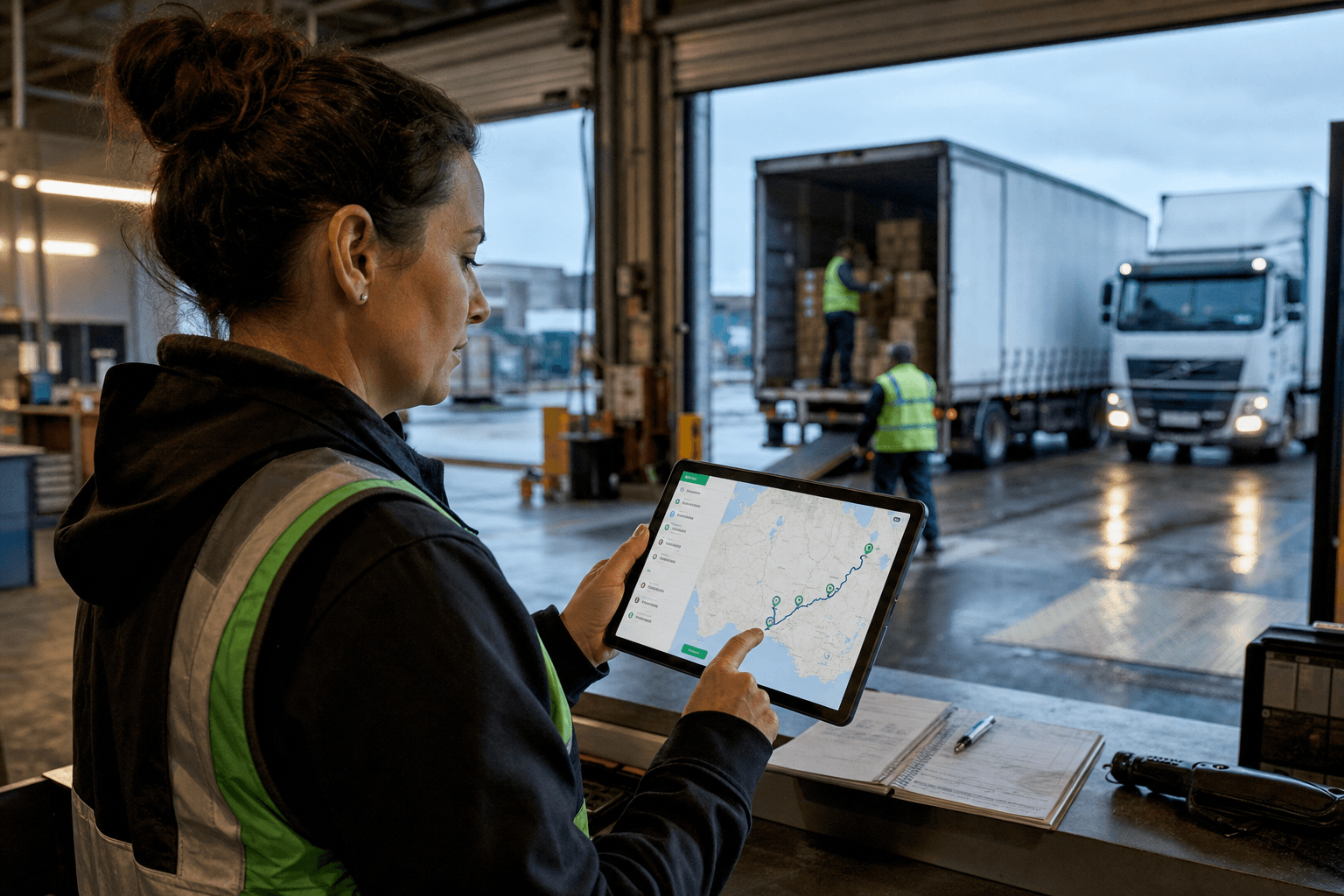
For most freight operators, this is where AI delivers the most visible and measurable impact. Manual route planning — even by experienced dispatchers — struggles to account for all variables simultaneously. As fleet size grows, the number of possible route combinations becomes too large for human planners to evaluate in real time.
AI-based route optimisation tools can process hundreds of variables simultaneously: delivery windows, vehicle capacities, driver fatigue regulations, real-time traffic, customer access restrictions, and more. The output is a set of runs that are tighter, better sequenced, and less reliant on individual dispatcher knowledge.
What this typically affects:
- Kilometres driven per delivery
- Fuel consumption
- Overtime and driver hours
- Fleet utilisation (fewer vehicles needed for the same volume)
- On-time delivery rates
Route optimisation also reduces dependency on tribal knowledge. When a key dispatcher leaves, the logic doesn't leave with them.
What Do You Need to Get Started?
At minimum: a digital record of your delivery addresses, time windows, and vehicle specifications. Most operators already have this scattered across their TMS, spreadsheets, or email — it just needs to be consolidated. A structured AI readiness assessment will quickly identify whether your data is usable as-is or needs light preparation.
Load Planning: Reducing Empty Space and Wasted Runs
Load planning is the process of assigning freight to vehicles or containers in a way that maximises cubic or weight utilisation while meeting delivery constraints.
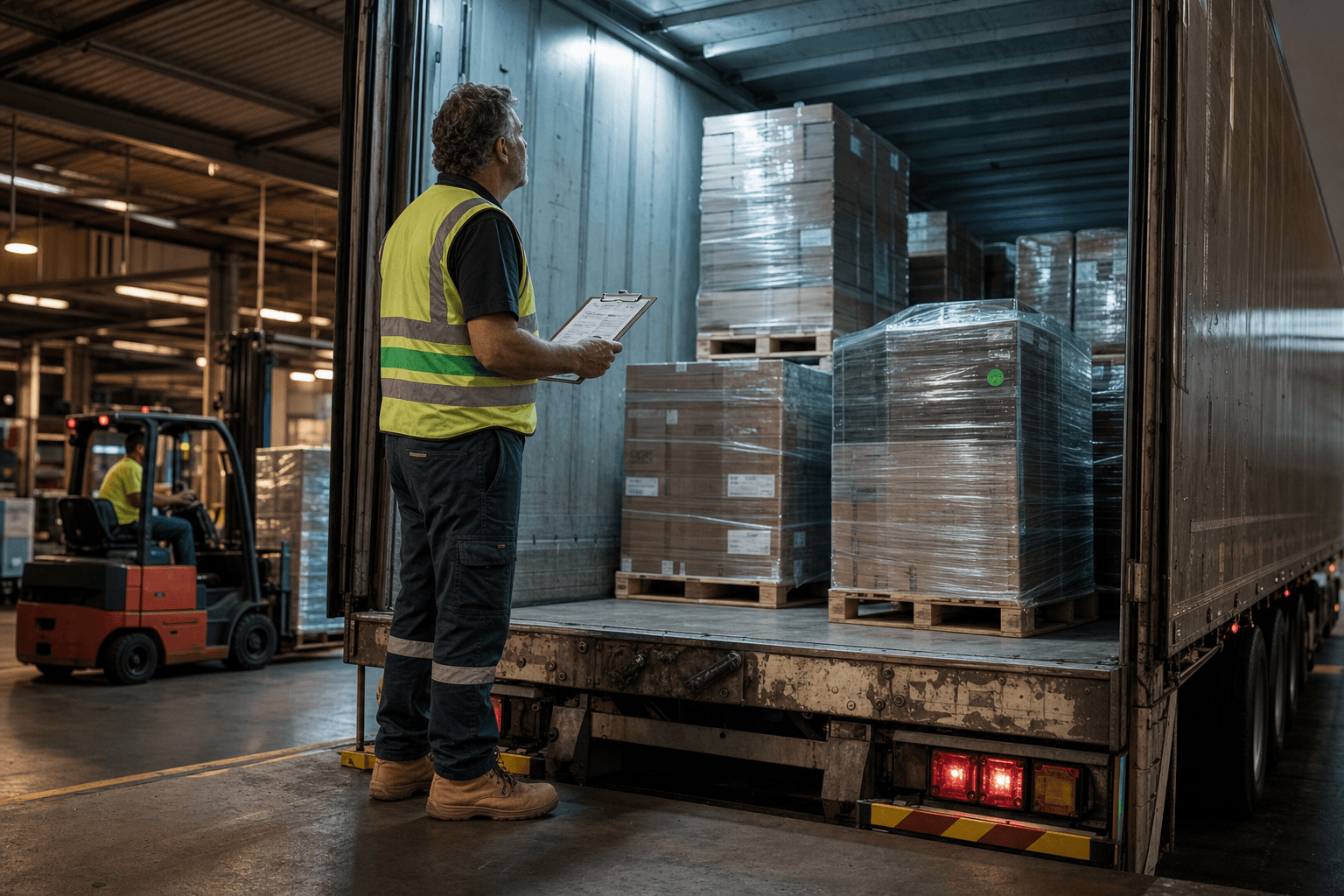
Poor load planning is one of the quieter cost drivers in road freight. Running vehicles at 60–70% capacity on routes that could support 90%+ is a structural margin leak. It shows up as extra runs, extra fuel, and extra driver hours — costs that are hard to attribute without visibility into utilisation data.
AI load planning tools use constraint-based optimisation to pack freight more efficiently. They account for weight limits, stackability, hazardous goods segregation, delivery sequence (so items unloaded first are loaded last), and vehicle dimensions. Some systems also flag consolidation opportunities — where two partial loads going to similar destinations can be combined into one run.
Common outcomes from better load planning:
- Reduced number of runs for the same volume
- Higher utilisation per vehicle
- Fewer damage claims (better sequencing reduces freight movement in transit)
- Improved ability to quote competitively on shared loads
For 3PLs managing multiple customers' freight, AI load planning also helps demonstrate utilisation to customers — useful for contract retention and rate reviews.
Carrier Selection: Bringing Data Into Rate Decisions
Carrier selection is the process of choosing which carriers to use for specific lanes, freight types, and service levels — balancing cost, reliability, and capacity.
Many operators rely on historical relationships and rate cards that haven't been reviewed in years. This works until freight volumes shift, a carrier's service quality changes, or the market moves. Without data, it's hard to know when you're overpaying or when a carrier's reliability is quietly degrading.
AI tools applied to carrier selection typically do two things:
- Performance tracking: Aggregating on-time delivery rates, damage claims, and invoice accuracy by carrier and lane — automatically, rather than through manual audits.
- Rate benchmarking: Comparing contracted rates against current market rates on key lanes, flagging where renegotiation may be warranted.
For operators using a mix of owned fleet and subcontractors, this data also informs make-vs-buy decisions: which lanes are cheaper to run in-house, and which are better outsourced.
Document Intelligence: Eliminating the Admin Cost of Freight
Frieght cost isn't just fuel and wages — it includes the labour cost of processing paperwork. Proof of delivery, freight invoices, BOLs, customs documentation, and carrier invoices all require manual handling in most mid-market operations.
Document intelligence tools use AI to extract, validate, and route data from these documents automatically. A freight invoice that used to require 10 minutes of manual keying and cross-checking can be processed in seconds, with exceptions flagged for human review rather than everything passing through human hands.
The cost impact compounds quickly across high-volume operations. More importantly, automation reduces errors — incorrect freight charges that go uncontested because nobody had time to audit them.
How These Pieces Fit Together
Route optimisation, load planning, carrier selection, and document intelligence aren't separate projects — they feed each other. Better route data improves load planning. Better carrier performance data improves rate negotiations. Automated document processing produces cleaner data for all of the above.
Operators who treat these as isolated tools often see limited results. Those who connect the data across systems — even imperfectly — see compounding improvements over time.
| Area | Primary Cost Driver Addressed | Data Required |
|---|---|---|
| Route optimisation | Fuel, driver hours, kilometres | Delivery addresses, time windows, fleet specs |
| Load planning | Vehicle utilisation, run count | Freight dimensions, weight, delivery sequence |
| Carrier selection | Subcontractor rates, service quality | Historical invoices, delivery records |
| Document intelligence | Admin labour, invoice errors | Existing document workflow |
What About Legacy Systems?
Most mid-market Australian freight operators don't have a modern TMS or a clean data warehouse. They're running a legacy system that's five to ten years old, supplemented by spreadsheets and email.
This is not a disqualifier for AI. It does mean the implementation path needs to account for where the data currently lives and how it's structured. A system that requires a full TMS replacement before delivering any value is the wrong starting point for most businesses in this position.
The right approach is to build AI capabilities that work with your existing data sources — extracting, cleaning, and connecting them — rather than requiring a clean-slate rebuild. This is faster, cheaper, and lower risk.
If you're unsure where your data stands, explore our insights on digital readiness for logistics operators, or consider a structured readiness review before committing to a build.
Is Your Business Ready to Act?
Not every freight business is at the same point of readiness. Some have the data but lack the tooling. Some have basic tools but aren't using them well. Some are starting from a genuinely low base.
A practical starting point is an AI readiness assessment — a structured review of your data, systems, and processes that produces a clear picture of where AI can deliver value and in what order. This isn't a sales pitch disguised as a diagnostic. It's a way to avoid spending $200K on the wrong problem.
Summary: What to Take Away
- AI-driven freight cost reduction works through route optimisation, load planning, carrier selection, and document automation — not as a single magic solution, but as a set of targeted tools.
- Mid-market operators with legacy systems and manual processes are strong candidates for this kind of work. Clean data and a modern TMS are not prerequisites.
- The biggest mistake is treating these as isolated technology projects rather than connected operational improvements.
- A readiness assessment is the lowest-risk entry point — it clarifies what's possible before any significant investment.
If you're looking at freight cost reduction and want to understand which AI tools are actually relevant to your operation, get in touch. We work with Australian carriers and 3PLs to identify where the real opportunities are — and build systems that fit how your business actually runs.
Zero Footprint
The Zero Footprint team — AI modernisation for Australian logistics.