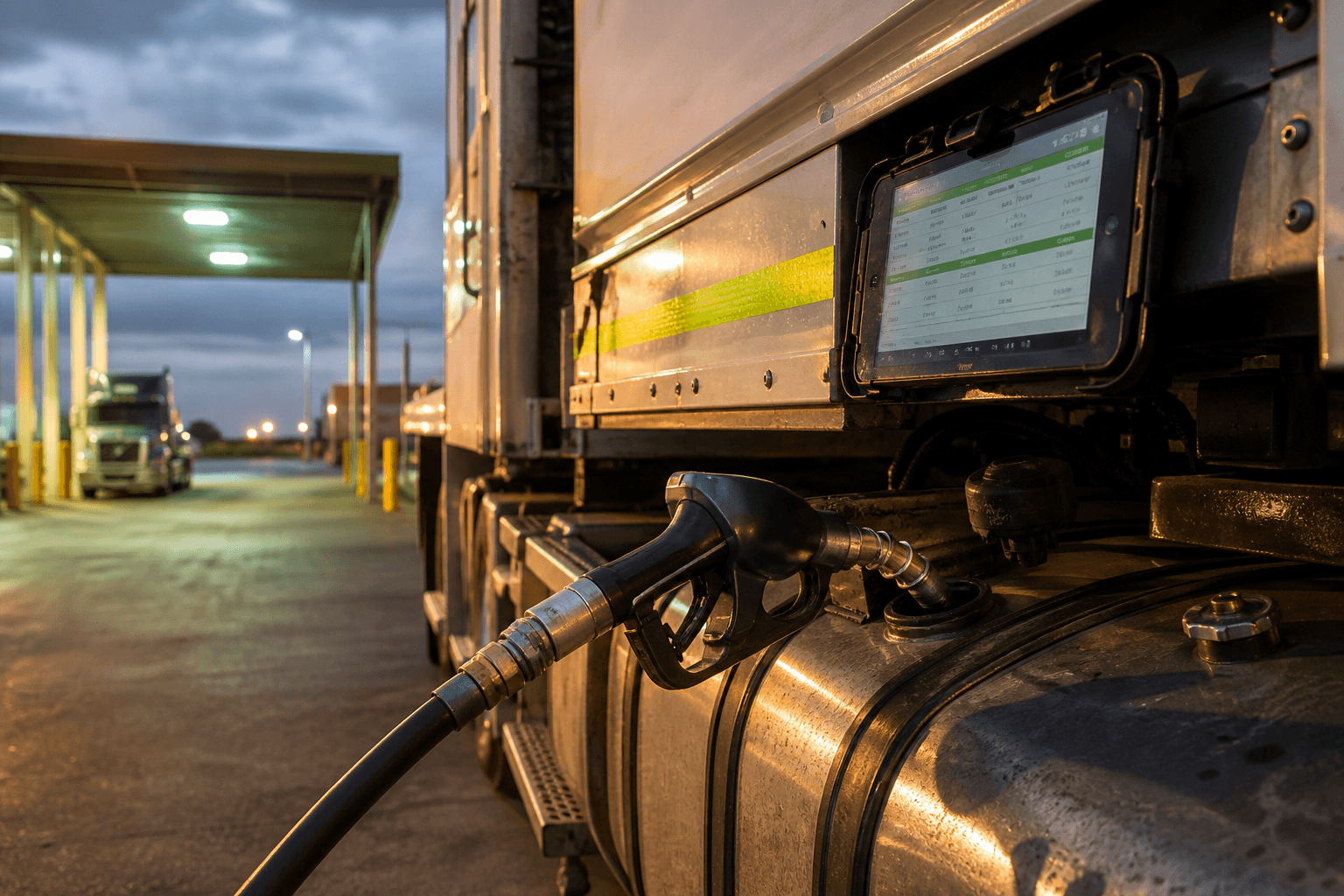
AI for Grain and Bulk Freight Logistics in SA and WA
For SA and WA grain and bulk exporters, AI in logistics means sharper seasonal capacity forecasting, better-coordinated road-rail-port scheduling, and cleaner weighbridge data feeding it all. Here's what's proven, and what's still emerging.
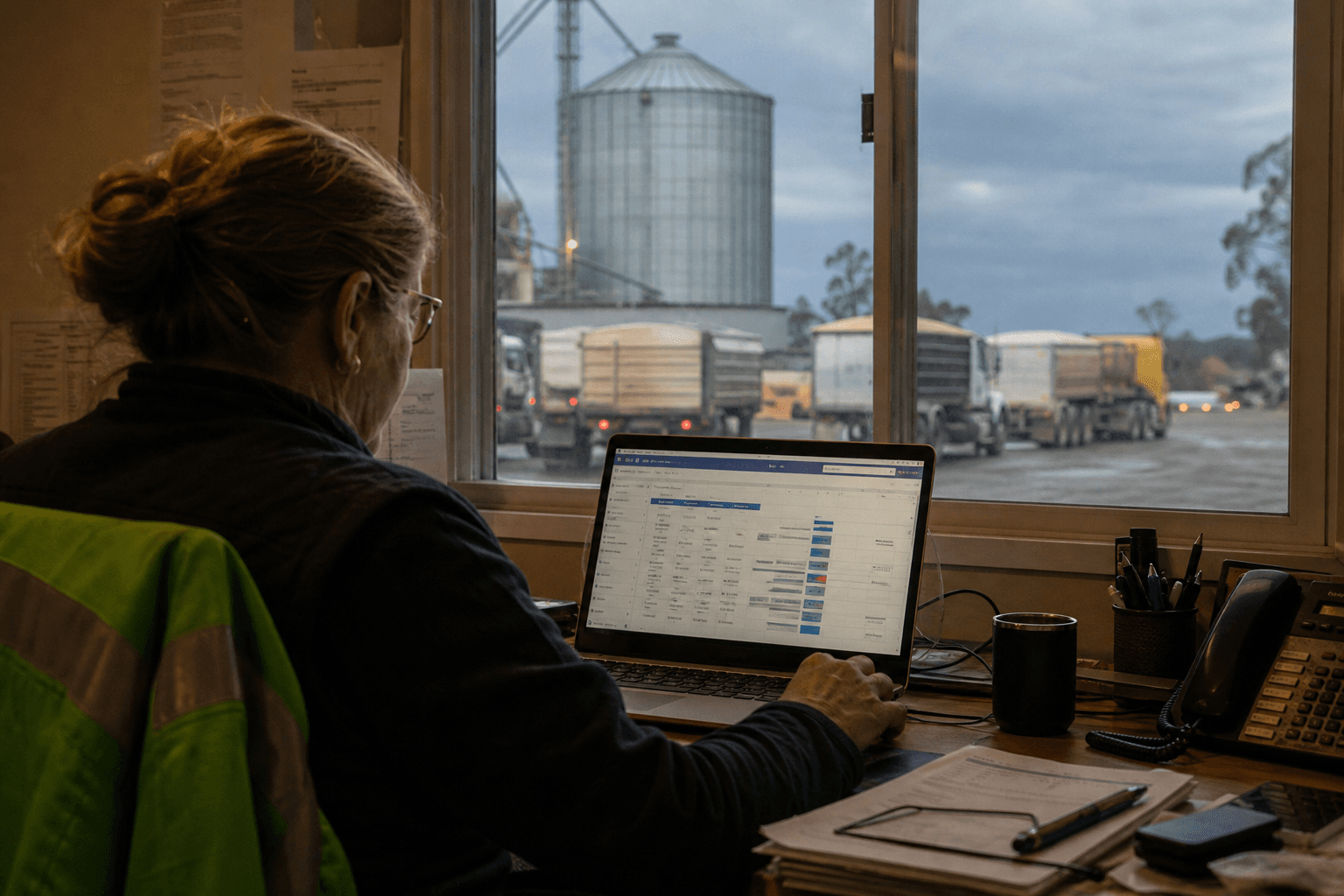
For grain and bulk agricultural exporters in South Australia and Western Australia, AI in logistics does three concrete things: it forecasts seasonal capacity needs before harvest hits, it coordinates load scheduling across road, rail and port handoffs so trucks and wagons aren't sitting idle, and it cleans up the weighbridge and consignment data that every forecasting model depends on. None of this replaces your transport management system — it layers on top of what you already run, using data you already collect.
That's the short answer. The rest of this article explains how each piece works, and where the honest answer is that bulk ag-specific benchmarks are still emerging. We'd rather be upfront about that than overstate what's proven.
What makes grain and bulk ag freight different from general freight?
Bulk agricultural freight is the movement of unpackaged commodities — grain, pulses, oilseeds — from farm or regional storage through to export terminals, typically combining road haulage, rail freight, and port handling in a single supply chain. Unlike parcel or pallet freight, volumes are extremely seasonal, loads are measured and priced by weight rather than unit count, and a single shipment might touch three transport modes and two or three handling facilities before it reaches a vessel.
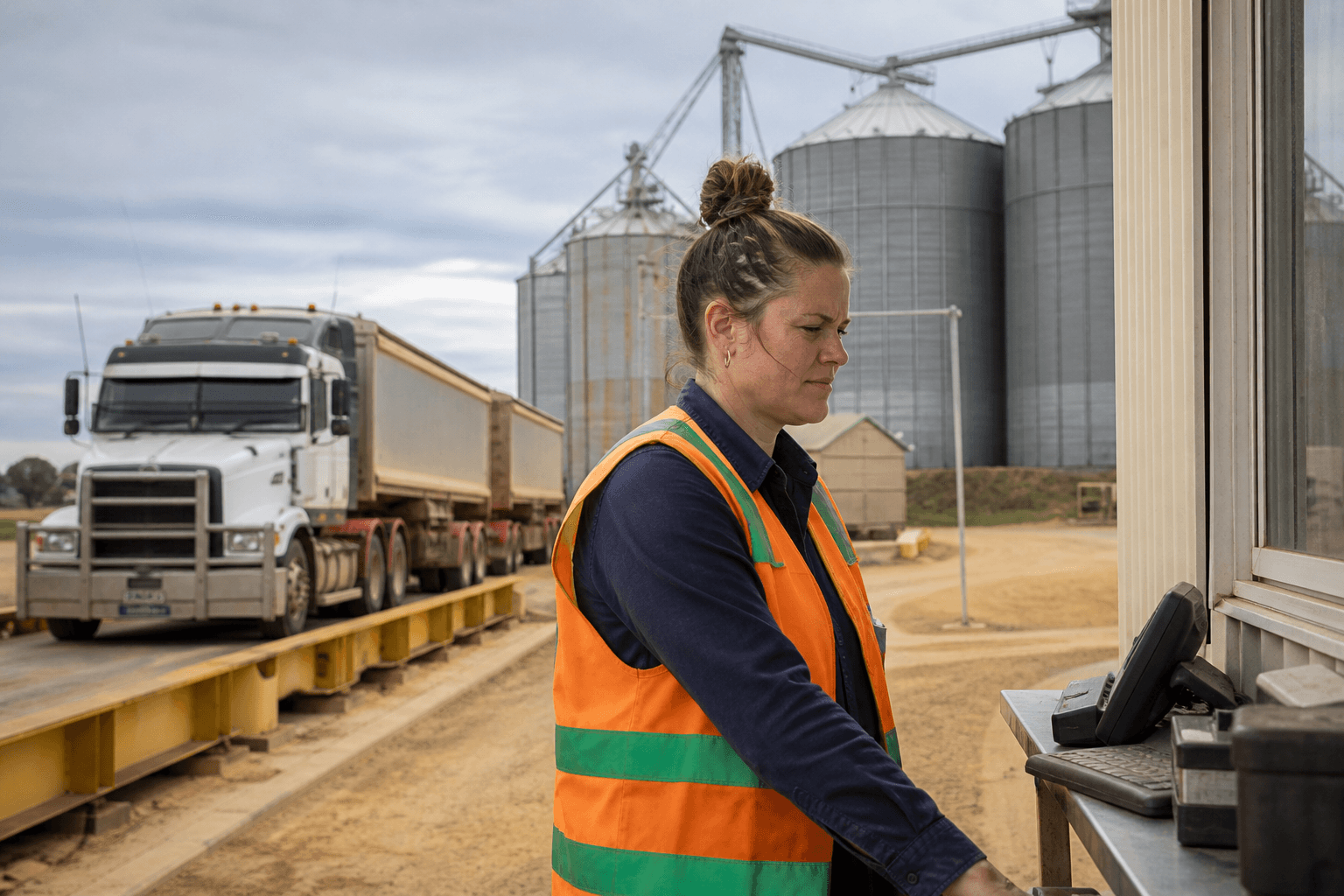
That seasonality is the core planning challenge. Harvest-driven demand means fleets, weighbridges, and rail paths that sit underused for much of the year suddenly need to run at or near capacity for a concentrated window. Getting that capacity plan wrong — too few trucks booked, a rail slot missed, a weighbridge queue blowing out — has a direct cost in grower wait times, demurrage, and missed vessel loading windows.
How can AI help with seasonal capacity planning?
AI-assisted capacity planning uses historical movement data, booking patterns, and external signals (like forecast harvest tonnage or rail path availability) to predict where and when freight demand will peak, so operators can pre-book capacity and stagger inbound deliveries before bottlenecks occur. The underlying techniques — demand forecasting and predictive analytics — are well established in general freight and apply directly to grain haulage scheduling.
Most regional operators already have years of weighbridge tickets, consignment notes, and booking records sitting in legacy systems. Rather than replacing a transport management system (TMS) entirely — a costly and disruptive step — AI can often be layered on top of existing systems to extract and structure this historical data, surface seasonal demand patterns, and feed better forecasts into capacity planning. This matters because many mid-market logistics operators are still running TMS or warehouse management system (WMS) platforms implemented a decade or more ago, often stitched together with spreadsheets, which limits what modern forecasting tools can plug into without some integration work. A structured ai readiness assessment is typically the first step in working out what's feasible before committing to a build.
What role does AI play in load scheduling across road, rail and port handoffs?
Load scheduling across multi-modal handoffs is the process of sequencing road deliveries, rail wagon allocations, and port berth or shed slots so that grain moves through the supply chain without idle trucks, missed rail paths, or demurrage at the port. AI-supported scheduling tools apply route optimisation and predictive modelling to this sequencing problem, treating it less like a single freight leg and more like a connected system with multiple constraints.

The practical value is in reducing the manual coordination load on dispatch teams during peak season — fewer phone calls and spreadsheet reconciliations between the transport desk, the rail operator, and the terminal, and more visibility into where a load actually is in the chain. We go into the general mechanics of this in our piece on route optimisation, which applies to bulk and general freight alike, even though grain-specific rail and port integration adds complexity that general freight doesn't face. Route optimisation Australia-wide typically starts with mapping existing constraints before any scheduling model goes live.
Why does weighbridge and load data accuracy matter for AI scheduling models?
Weighbridge and load data accuracy matters because every AI forecasting or scheduling model is only as good as the data feeding it — and in grain freight, weight data also has direct financial and compliance consequences beyond logistics planning. A weighbridge reading errors into grower payments, contract tolerances, and vessel load declarations, so any AI layer sitting on top of this data needs clean, consistent capture at the point of weighing, not reconciled after the fact.
This is also where document intelligence becomes relevant. Many regional operators still handle consignment notes, weighbridge tickets, and rail manifests as paper or scanned PDFs. Tools that can extract and structure this data automatically reduce the manual re-keying that introduces errors in the first place, and give forecasting models a cleaner dataset to work from. The same clean-data discipline underpins Scope 3 emissions logistics reporting, since fuel and freight-movement records that feed AASB S2 compliance logistics work are often captured in the same legacy weighbridge and consignment systems.
Legacy approach vs AI-layered approach: a qualitative comparison
| Planning activity | Typical legacy approach | AI-layered approach |
|---|---|---|
| Seasonal capacity forecasting | Manual estimate from last year's spreadsheet, adjusted by gut feel | Historical booking and weighbridge data combined with external signals to flag likely peak windows earlier |
| Load scheduling across modes | Phone and email coordination between transport desk, rail operator and terminal | Scheduling model that treats road, rail and port slots as one connected sequencing problem |
| Weighbridge and consignment data | Paper tickets and manual re-keying into finance and payment systems | Automated extraction into a structured dataset, reducing transcription errors |
| Visibility during peak season | Reactive — problems surface once a truck is already queued or a rail path is missed | Earlier warning of likely bottlenecks, based on patterns in historical data |
This is a qualitative comparison, not a benchmark claim — bulk ag-specific performance data for AI-layered scheduling is still limited, and results depend heavily on the quality of the underlying data and the maturity of existing systems.
Where to start
If your operation is grappling with harvest-season capacity planning, multi-modal scheduling headaches, or weighbridge data that doesn't talk cleanly to your TMS, the sensible first step isn't a full platform build — it's an ai readiness assessment to work out what's actually feasible given your systems and data. For operators also facing AASB S2 or NGER reporting obligations, emissions reporting work often draws on the same freight movement and fuel data used in capacity planning, so it's worth considering both together. You can find more insights on AI in logistics on our blog.
If you want to talk through what this looks like for your operation specifically, get in touch.
Zero Footprint
The Zero Footprint team — AI modernisation for Australian logistics.